Ali Sethi and Haya Waseem on Loving a Tradition Enough to Change It
The musician and filmmaker talk about mantra, quiet subversion, and the challenges of working with 65 mm film for the making of “I Wait.”
August 26, 2026
Four years ago, in a studio in Los Angeles, Ali Sethi was humming through something he’d composed that morning when one of the musicians in the room told him it sounded like the blues. He was singing in a raag called Shivaranjani. A raag (or “raga”), if you grew up on Western classical music, is the organizing unit of Hindustani classical music—not quite a scale or a melody, but closer to a framework for a mood. The raag tells you which notes you get, how to climb through them and work your way back down, which to rest on, and how to make feelings come alive. And the Shivaranjani raag has a pentatonic scale, which resembles the minor pentatonic scale of the American blues.
Sethi had spent years in his home of Lahore studying the rules of the raag and honoring them, but in the studio that day, he gave himself room to play. You can hear that experimentation on his latest record Room Jhoom (opens in new window)—a dry, dissonant horn from the ensemble blasts through the album’s highlight “I Wait,” (opens in new window) cutting against the song’s meditative longing. “It’s this kind of sound which is not allowed in this [Hindustani classical music] world, right?” Sethi said. “But it thrilled me—I started shivering.”
Finding the intersections between regional traditions is at the core of the Pakistani American musician’s work. He’s spent a decade setting his training alongside and against sounds from other parts of the world: “Pasoori,” his 2022 song with Shae Gill, came out of hearing reggaeton from a passing car in New York City, deciding it sounded like the Indian dance music style of bhangra, and folding in the raag he happened to be humming. He calls the result “ragaton,” and it immediately hit with the South Asian diaspora—the song has been streamed over 400 million times on Spotify. On 2023’s Intiha, Sethi floated Urdu language and poetry over the ambient electronics of Chilean American producer Nicolás Jaar. And the Los Angeles studio session he spoke of landed on Room Jhoom, his collaborative record with drummer and composer Gregory Rogove. What started as a follow-up to “Pasoori” turned into something much quieter and odder: a drone, a programmed beat, Sethi picking a poem and a raag and singing over the top while Rogove built everything else around his voice.
When Brooklyn-based filmmaker Haya Waseem (opens in new window) heard the record, she messaged Sethi on Instagram and asked if he would be up for collaborating on a visual interpretation for one of the songs. “Since I was a kid, I was into qawwalis and that yearning sort of emotion,” she said, reflecting on what drew her to Sethi’s music. For Waseem, “I Wait” conjured images of a celebratory event that was anything but—a bride quietly, anxiously awaiting the moment she’ll be married to someone she isn’t in love with. With Sethi’s blessing, Waseem and Object & Animal producer Zara Saraon set about bringing that narrative to life on a limited budget and timeline, with just four rolls of 65 mm film. It was a community affair, with family and friends coming on to assist on styling, casting, and highlighting the traditions depicted in the video while signaling the beauty and tension in them. As the tension of the song builds, we watch a family member feed the bride a bite of gulab jamun. An auntie reaches over to perfect the styling of her jewelry. Nobody seems aware of her distance, and every gesture becomes a hand guiding her toward a life she didn’t pick.
At a New Museum event celebrating the premiere of “I Wait,” I talked with Sethi and Waseem about the collaboration and what they learned from the process of working together. Sethi built the album on the birahini tradition, where men sing in the voices of women and Hindu and Muslim devotional registers blur into one another—a form that reads as sublime or, as he puts it, “borderline blasphemous,” depending on who’s listening. It’s a useful mode for an artist who has been blocked from streaming and social media platforms in India (opens in new window) amid ongoing tensions between the country and Pakistan, and who wears adaptability as a source of exploration. For Waseem the question is equally personal: “I was born in Pakistan, I was raised in Switzerland, I moved to New York, so it’s confusing,” she said. “Who am I? Where am I from?”
This conversation took place on July 10, 2026, at the New Museum, hosted by the production studio Object & Animal. The last question was posed to Sethi by a member of the audience, and the interview has been edited and condensed for clarity.
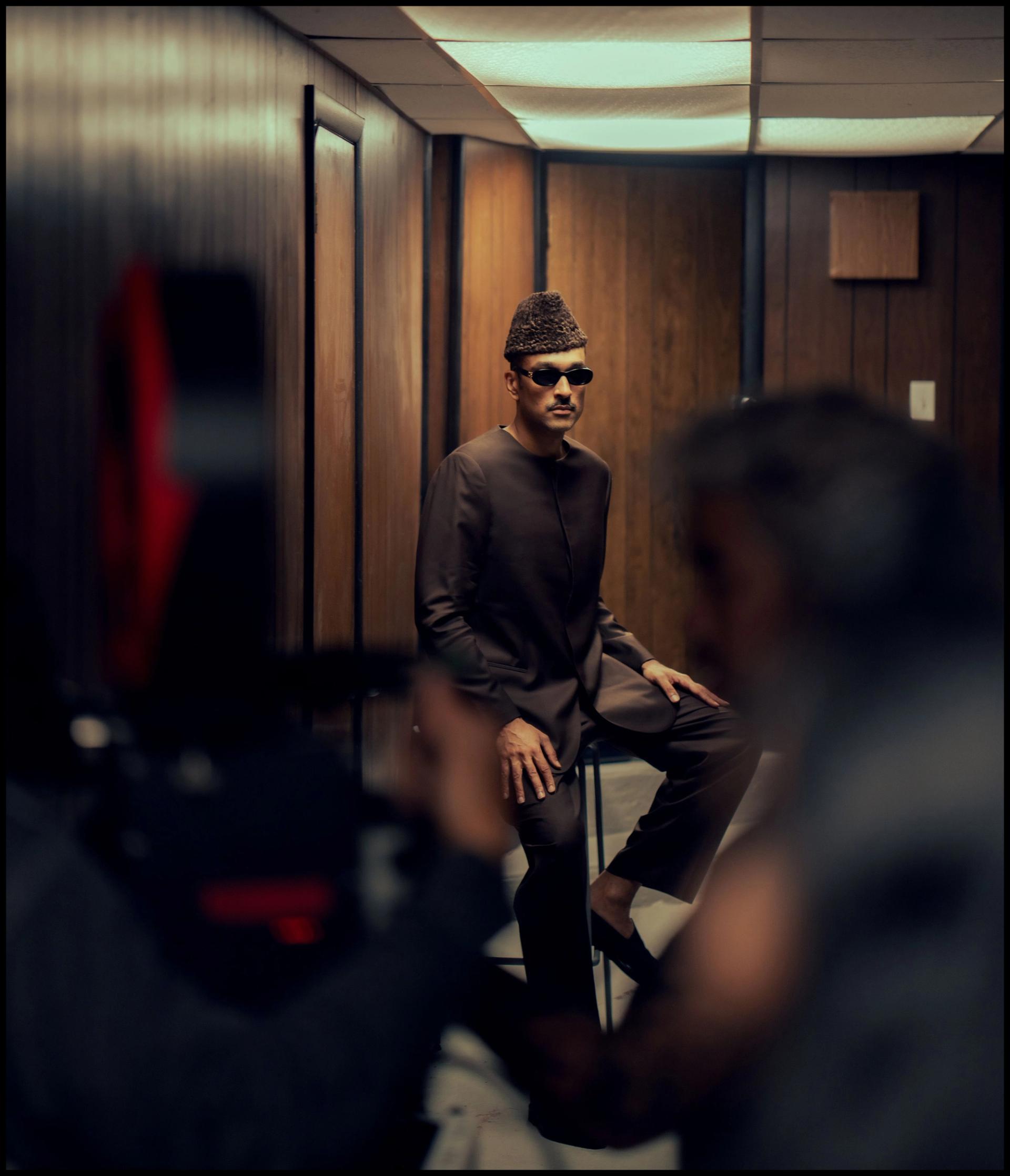
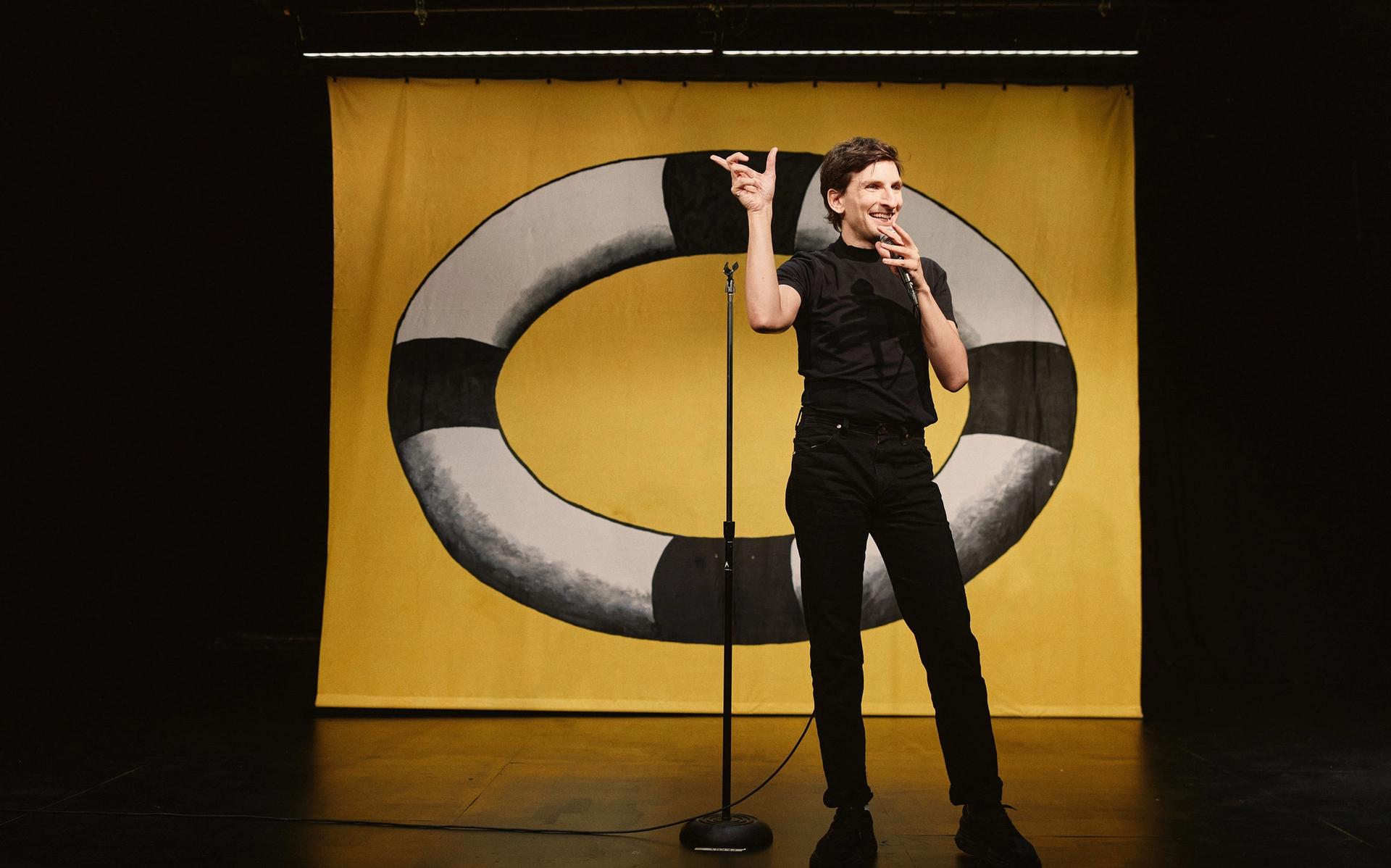
Ali Sethi on the set of “I Wait.”
Credit: Photograph by Anumeha SinhaI want to start with the song itself. Ali, this is the opening track of your most recent album, Room Jhoom, and I was reading about your process for the record. It seems like you riffed over a drone or beat, or you did a raga over it, and then Gregory Rogove, who was working with you on it, built melodies around that. Can you talk a little bit about the process for making the music itself?
Ali Sethi: A few years ago, I had breakfast with an amazing writer, Siddhartha Mukherjee, who wrote a wonderful book called Emperor of All Maladies. He’s a scientist, a doctor, and also a part-time singer. He asked, “You know what makes our music interesting?” Our music—which is classical music, Indian classical music, Hindustani music, Sufi music, these streams we drink from as South Asians. He said, “What makes it interesting, or what renews it every few decades, is someone who resists rehearsing those same old received feelings of nostalgia, patriarchy, nationalism, religiosity.”
So much of our music is a part of received ritual, and yet it feeds the loneliest part of us. How do you renew or revise these traditions when you have spent years and years, as I did, sort of toiling away happily with your guru? I was searching for exactly that when he said it to me. I thought it was really interesting, because in literature, in art, this is so readily apparent—one knows artists and writers and so many creative people who are engaging with form and pushing the boundaries of form. I started thinking, I love ragas and I love thumris and I love bhajans—I love all of this. But when you bring it down to the elemental, how can this music travel? How can this go to those other places where I also happen to belong? Can I take this into unfamiliar places?
So I found myself in LA four years ago, in a beautiful studio with these musicians that I had met, and I started singing this little piece that I had composed that morning. I had a raag that I was thinking of. The raag is called “Shivaranjani.” In Punjab, we call it “Malti.” It’s a pentatonic scale. I was humming this thing, and this guy was like, “That’s so bluesy,” and I was like, “Okay, show me.” So I gave myself that freedom. In that moment, where previously I would have been bound by the rules of the raag, I allowed room. There was an amazing flugelhorn player called Jordan Katz. He started playing these dry, dissonant horns. You hear them in “I Wait.” It’s like this kind of sound, which is not allowed in this world [of Hindustani classical music], right? But it thrilled me—I started shivering. I was like, “Oh yes, give me more of this.”
I think that is also what happened when Haya reached out to me and said, “I have something in mind.” I thought, “Who better than Haya Waseem to make something with this music?”
Haya, you had messaged Ali about his record, and I’m curious what drew you to the song “I Wait” in particular. As a director, what was coming to you when you were listening to this? Did it conjure any immediate images?
Haya Waseem: Since I was a kid, I was into qawwalis and just that yearning sort of emotion. As a five-year-old, I could sit alone and just listen to qawwalis. And Ali’s music is singular in that it feels modern and classic—all the things—without having to explain it. With my work as a filmmaker, I’m always trying to make it in that effortless sort of way, and so the music allowed me to bring that emotional past and memory and experience into something that felt modern. A tragic love story felt fitting for this yearning sort of track, and the sad bride became the main figure for the video.
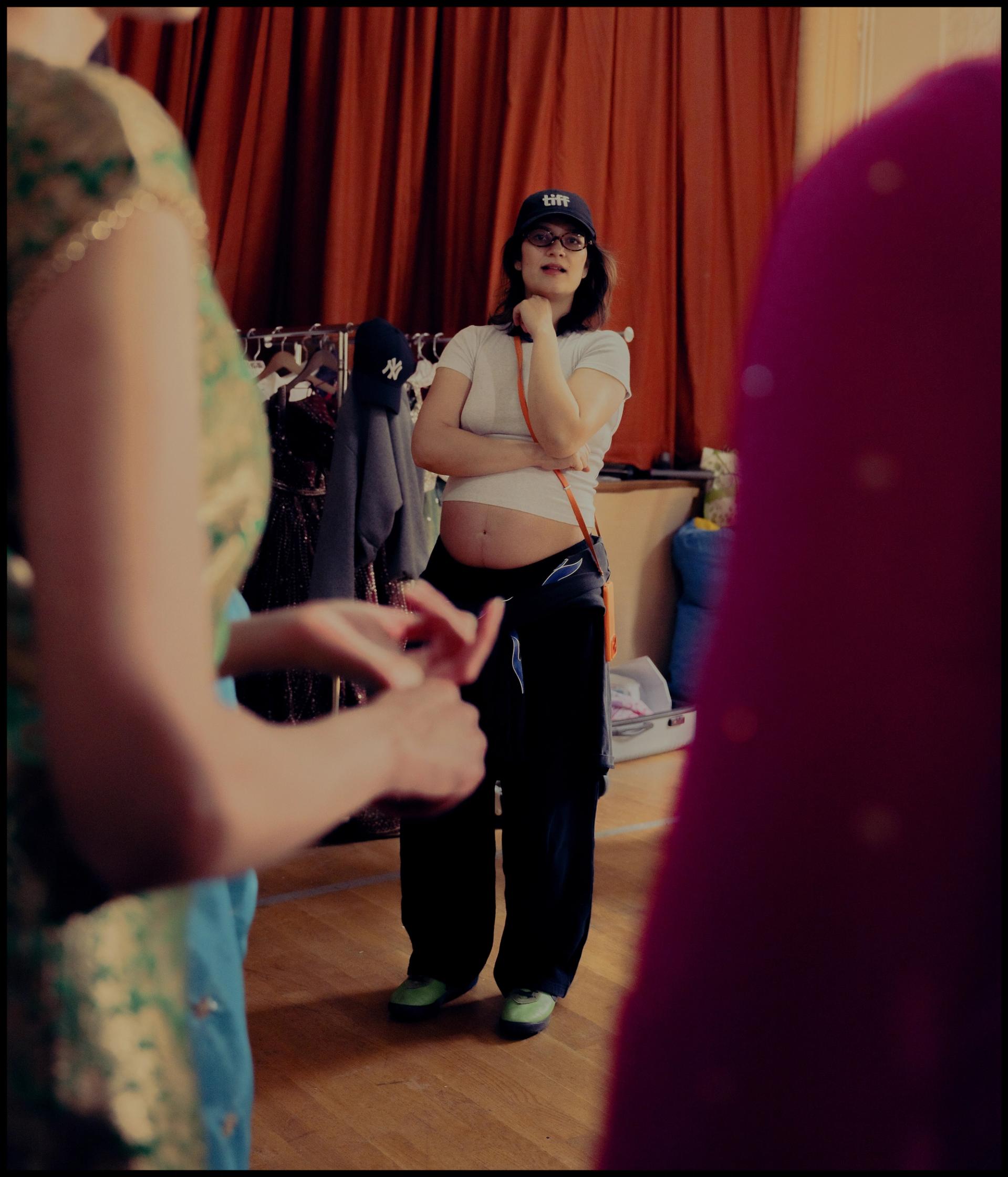
Haya Waseem on the set of “I Wait.”
Credit: Photograph by Anumeha SinhaWas a wedding the first thing that came to your mind when you were thinking about this tragic love story?
HW: It wasn’t a wedding, particularly. I wanted to shoot in Pakistan with a woman at the train station waiting for her lover to show up—she ran away from home—and instead her family shows up and brings her back and forces her to marry. So that was where the marriage part came in—[the question of] being bound by what your elders or your community sort of enforces on you. When we pulled the idea from Pakistan to New York, the bride and the wedding, and the contrast of someone celebrating you—colorful, vibrant—while you’re harboring some other emotion became the emotional contrast that I stuck with.
With this song and also within the record, I feel like you were pursuing the birahini tradition, which in itself is amorphic and adaptable, and purposefully exploratory. Can you talk about that tradition, because I think it informs so much of the overall project.
AS: Absolutely. If you have been to India, Pakistan, Bangladesh, you will have encountered a man singing a song in the persona of a woman. You go to a shrine, you go to a dargah, you go to a temple, and someone is singing Krishna bhakti, someone is singing [the words of] Bulleh Shah. It’s inevitably this big, paan-chewing gent. I’m thinking of one character in particular with a Sindhi topi, singing and doing this thing—they’re singing, “Oh, girls, I’ve been a bad girl tonight. I’m so hot and bothered, and people will find out what I’ve been up to in the forest.” Or, “He’s so fickle, and he says he loves me, but he never will. I have to go back to my conventional life.”
Everybody treats this as completely normal, respectable behavior, right? This is totally respectable. So I had always been onto this. Obviously, as a queer child, I was like, “This is me and this is them, so there’s obviously some distance to be squared here.” Like, I feel totally at home when this happens, and all my oppressors also feel at home when this happens, so obviously there is a solution in sight. There’s a way to unpartition this whole business.
Last year, my Instagram got blocked in India after the little India-Pakistan skirmish. I have cracked a joke about this and said, “Pakistan downed five Indian jets. India downed five Pakistani musicians.” There’s like eight people blocked on Instagram, and I have remained blocked on Instagram. My main audience is in India. Sixty percent of my YouTube subscribers are in India. My song “Pasoori,” which was a big hit in India, has been targeted and blocked on Spotify for a whole year. It’s sitting at over 400 million streams on Spotify. Meanwhile, people continue to watch it on YouTube. So, I was feeling kind of exiled, and I wanted to say a little “eff you” to the establishment, and I also wanted to make music. I wanted to make music that felt rigorous, that felt rooted in what I had, what I still love.
And what’s nice about the birahini tradition is that not only is it gender-bending, but it’s also Hindu singers, Muslim singers. It’s extremely subversive, sometimes borderline blasphemous, while appearing to be extremely sublime and elevated. It’s full of paradox and pun. It’s chimerical. It changes color. Your grandfather will tell you, “It’s kamatlib ye hai”—you know, this means this. Whereas your slightly Marxist uncle, who’s estranged from the family, will say, “No, no, it’s a critique. What are you saying?” And somebody else says, “No, this person just wanted to get laid. What are you talking about?” That is my MO, also in life: the art of plausible deniability. You want to sneak into people’s hearts through this apparent friendliness and flirtation. So that is what I was thinking. I wanted to marshal this trope that everybody had relegated to, “Oh, this is like old-fashioned stuff,” in a contemporary space, musically and also thematically.
In the video, Ali’s voice becomes this almost inner monologue for the bride. He appears at the beginning and never again.
HW: Yeah, I think what Ali’s saying—it felt so natural that that’s her inner monologue, her emotion, and so Ali became the narrator that sort of allows us to go into the story, and then we live in that world. That was always something that we talked about from the beginning. I was like, “This could be the way that we enter the film,” and then we just felt like we could live with the bride, and still Ali is present in that; there’s no difference between what I’m seeing and what I’m hearing in that experience.
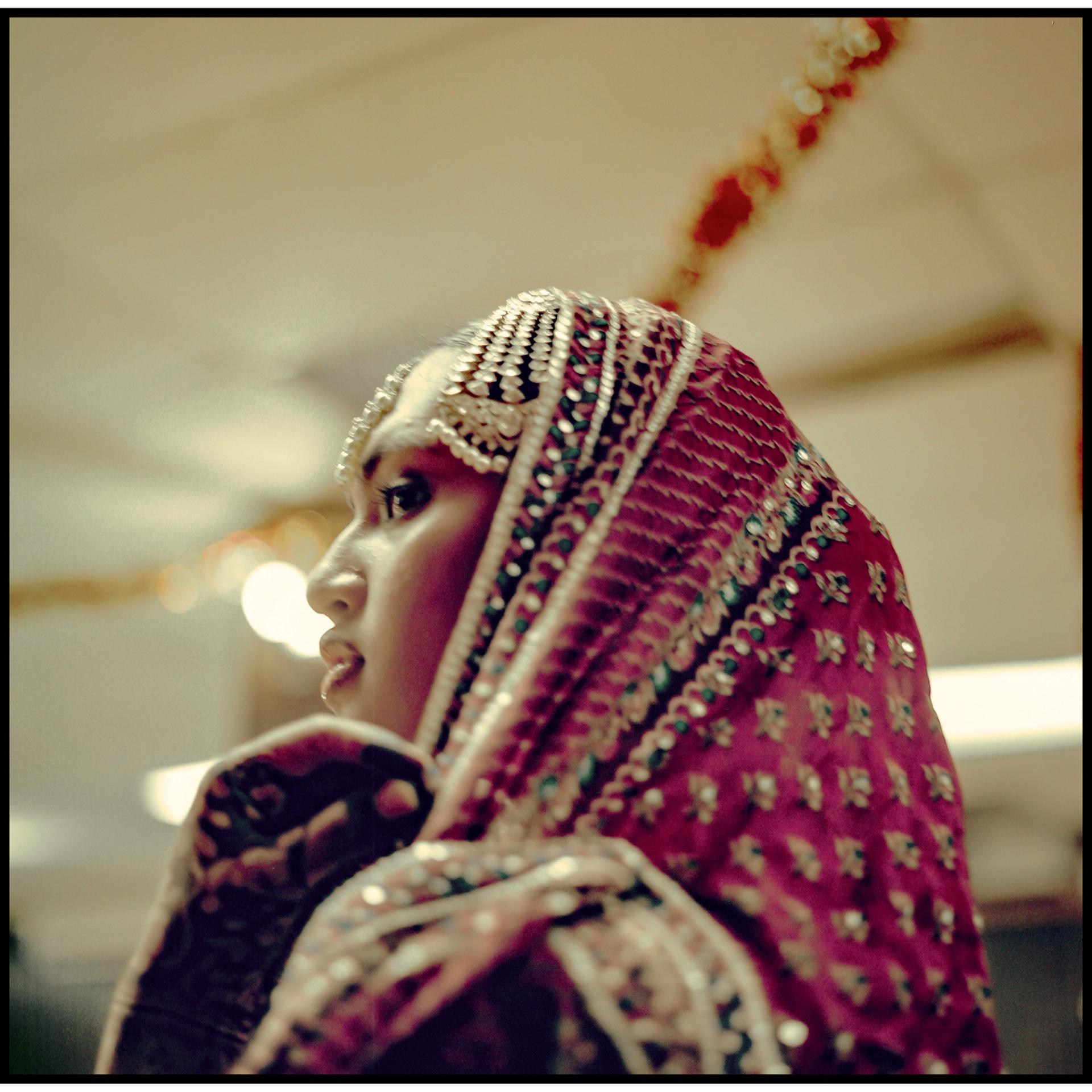
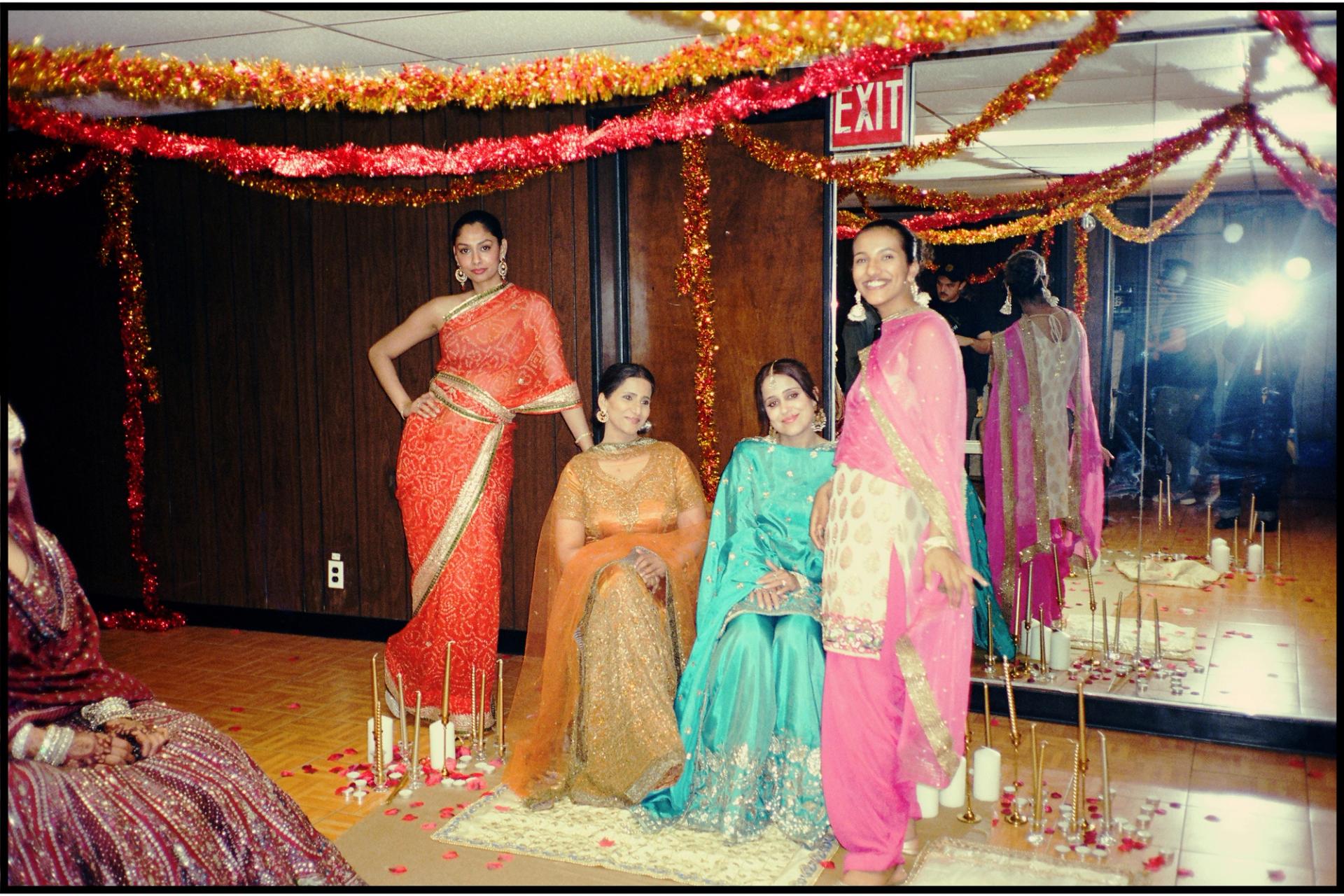
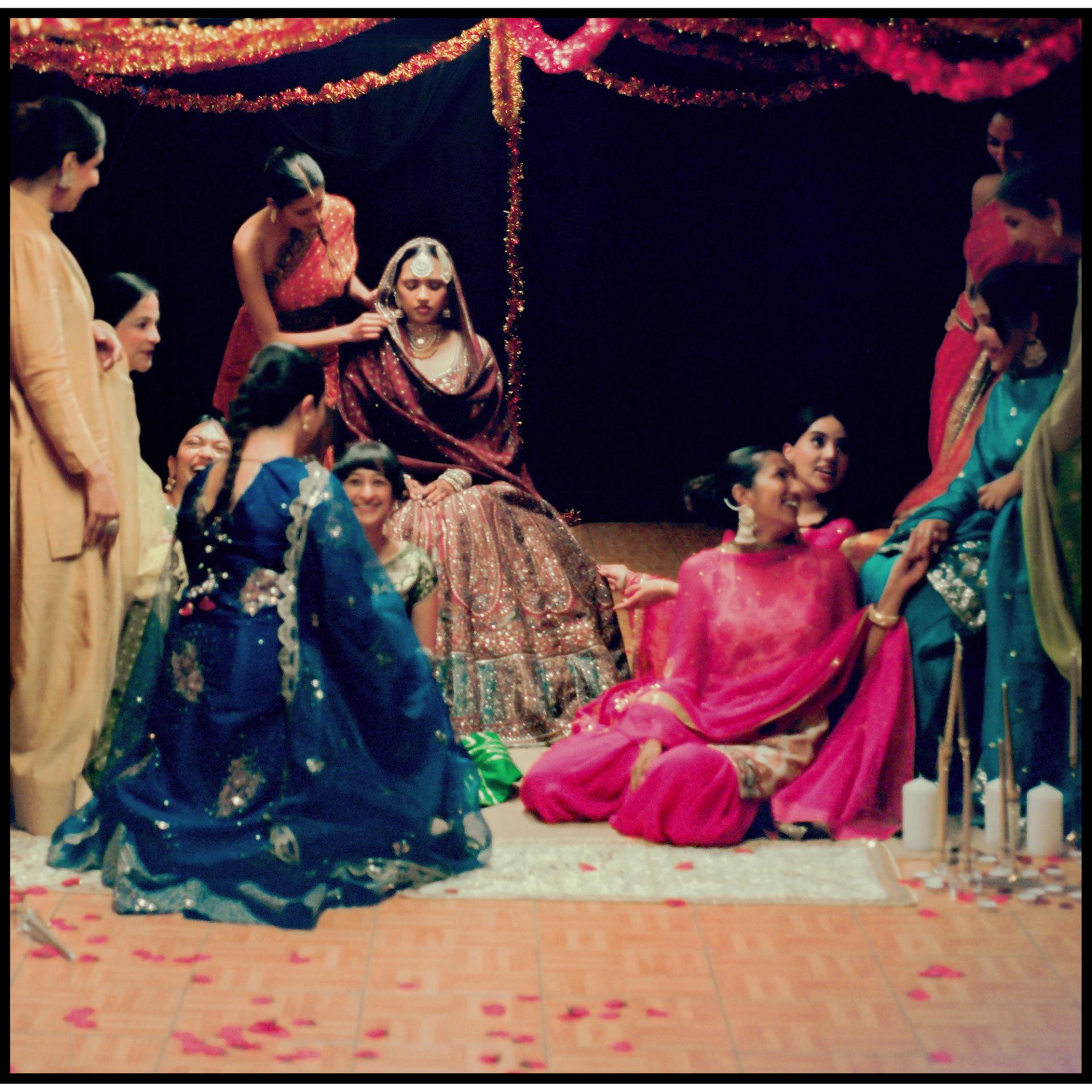
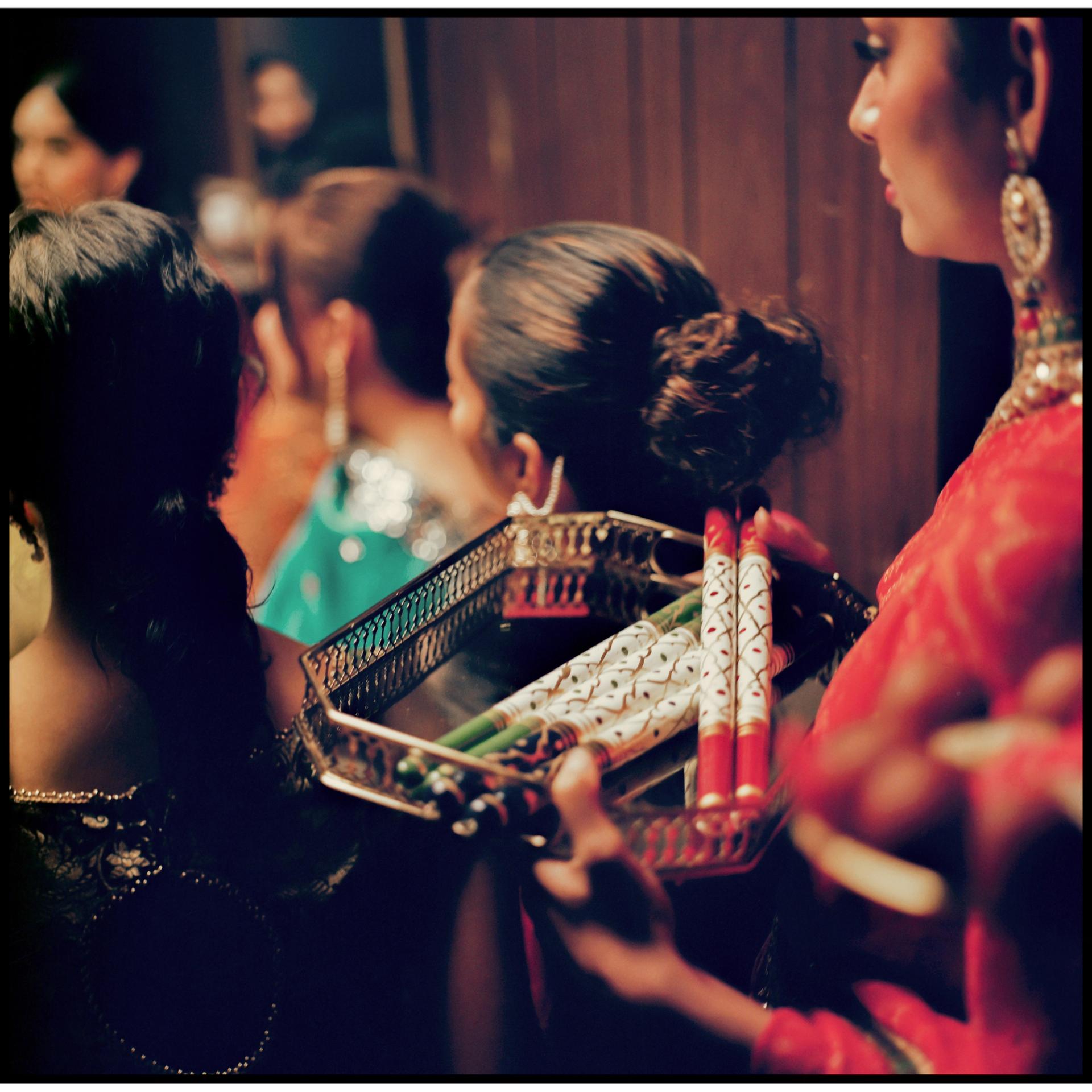
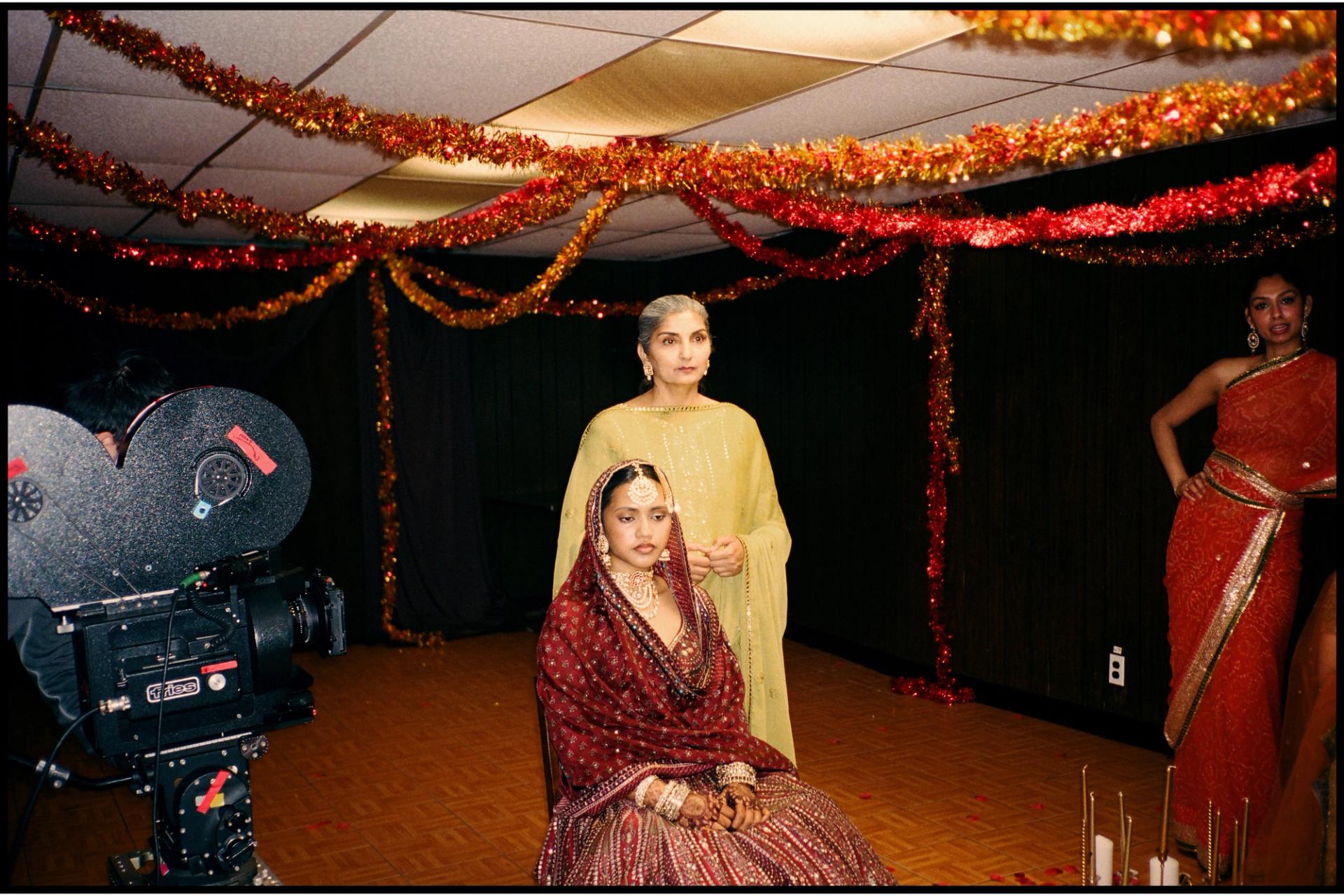
This seemed like a community endeavor in all of the ways: the funding, the casting, the styling, everything. I think some of what felt so moving and realistic about the video is that you cast real people. They’re not actors. So can you talk a little bit about the casting and how you found Arifa, the bride in the video?
HW: I believe it’s her first role in a film. We had a casting director, Nouri Hassan, who Zara Saraon, the producer—who’s incredible—put me in touch with. I knew, working in this South Asian sphere, that community comes together. I don’t need professional actors; I need people who want to be seen on screen and are excited. And Ali is someone who brings people together, so there was immediately a lot of interest, and then Arifa was actually submitted to be in the party. There was something about her that I was like, “I want to call her back for this role,” and we did a callback over Zoom. I like to speak to the actors, and there’s almost like an invisible thread that connects with the actor, and they move at the pace and blink at the pace and breathe at the pace that I start talking to them. And Arifa had that even over Zoom. So that’s how she became the bride.
I heard from Zara about a note that you gave to the cast, which was that no one, cast or crew, was allowed to speak to Arifa during the shoot. I have a sense that was to isolate her and have her in the moment—can you tell me about that? And also, if that was torturous or useful or both?
HW: That was something that came up because there’s so much love in all the actors. All the women and the groom on the shoot didn’t know each other before, but they built such a friendship, and it became a wedding party. Everyone was laughing together and sharing traditions, and so I thought Arifa would become a part of that as well. But she has to be separated emotionally from them, and so maybe it was an instinct to separate her from them. And that was just the way that we progressed, because I’m sure everyone would have wrapped their arms around her [otherwise]—and they did. There were moments where I was like, “Okay, you’re laughing and having fun with them,” but the reason was to create a little separation. It must have been torturous.
Arifa said it helped a lot. I also noticed that there were a few moments where you walk the line between love and affection, and scrutiny or being forced to do something. The gulab jamun moment, the auntie fixing the earrings. Were those things that you highlighted in edit, or were you very purposeful about shooting in that way? Those little traditions that you were trying to signify could feel a little uncomfortable for the person?
HW: Yeah, we were shooting on 65 mm, so every shot that we shot is in the film—there’s nothing that wasn’t used. It was very intentional. And it fit. When the footage came back after a week, which was a long wait to see the footage, the edit came together in two or three hours because it was already predetermined. Those traditions were part of the shot list. We listened to the track and kind of divided it into minichapters, and then [we asked ourselves], “How do we progress and make each scene within the track feel unique?” And yeah, I think there’s just the sense of like duty that—I feel like I’m an eldest daughter, and you feel like you have to kind of go with what’s coming your way, and so the movement and all those things signified that.
65 mm camera test for “I Wait,” featuring director Haya Waseem.
Credit: Director of photography Chris LewI want to talk about why you did it on 65 mm. It’s a demanding way to shoot this, an expensive way to shoot this. The camera is loud and unforgiving. Can you tell us why you chose that format given all the constraints that you had?
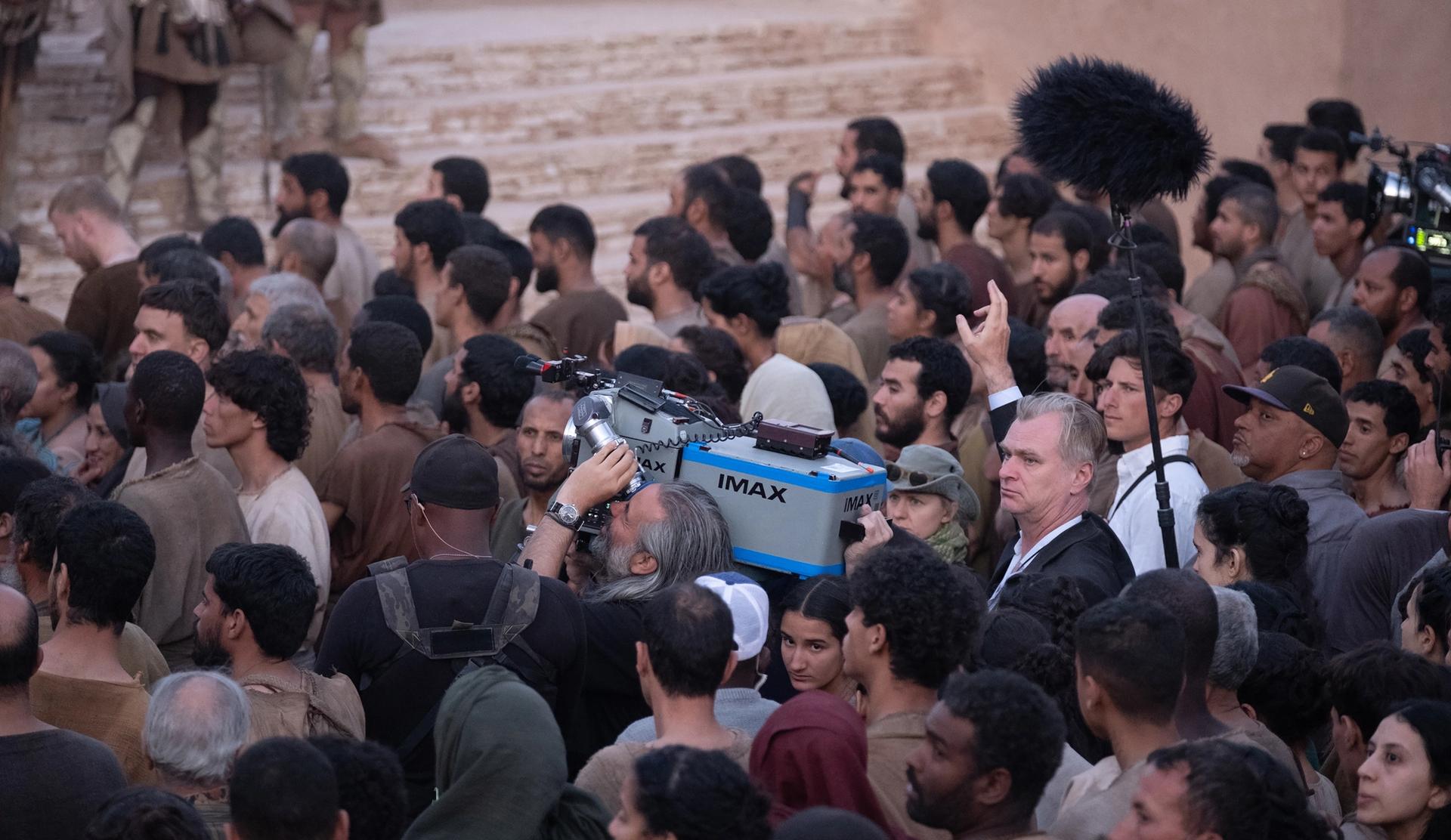
HW: When we decided to shoot in New York, I wanted each piece to feel very special, from the wardrobe and the styling to the format that we shot on, because we didn’t have a lot of resources. So, film became something that I almost wanted to submit to, and it is not forgiving. Like the day started with film jams in the camera, and after every take, the camera stopped working. But I think it reminded me what a privilege, first of all, it is to make things like this, and to just be patient. Shooting on film makes you very present to begin with, and shooting on 65 makes you even more so. Literally we had four rolls of film, which was like 20 minutes of shooting time. So it makes you very, very aware of the process.
Ali, you gave a note to Haya about mantra and leaning into that as she was trying to shoot and get the vibe of what your music was trying to convey. Tell us about that note, and then, Haya, how you followed that note.
AS: The great Mira Nair is here. We are all children of the Monsoon Wedding (opens in new window). First of all, I so admire Haya and the way in which she’s made this and her team, Reva and styling and everybody else. I would have loved to be a filmmaker, but I’m just not that organized in my life. Filmmakers I know are so organized. I’ve worked with Mira on a set. I’ve seen how rigorous and how exacting and how precise the process has to be, and even as I’m watching this, I was standing here thinking, “Wow, you have to know the pulse of the song to be able to write to it and to be able to get the score, the music, the sound to match the movements precisely,” and then the music sounds sad, but the visual that corresponds with it is not sad, and it opens up a pathway of possibility.
The note I had shared with Haya was that we who live in the West, or have Western educations, are constantly told that novelty is key, invention is key, newness is key. What is the future? What are you doing next? It’s what’s-next-ism. And actually, this is rooted in a 300-year-old extractive, capitalist mindset, which is you just have to keep plundering and keep renewing and keep plundering. There’s a discomfort with repetition. There’s a profound discomfort. My friend Prabal [Gurung], who advises me on this stuff over martinis, will often say to me, “Sit with yourself. Learn to sit with yourself.” And that is what Hindustani music teaches you. If you are ever a disciple in this tradition, that is the first thing you will hear: Stay with the note. You know, my wonderful teacher Ustaad Naseeruddin Saami, he would say—and I will say it Urdu and then translate for you—he would say, “Hamaari vaahid mosiqi hai jo qayaam maangti hai—ours is the only music in the world.” I don’t know if it’s the only music in the world, but certainly it’s the main musical tradition in the world that demands presence, that demands holding and staying [with] the note.
You know, he would play maqam to me, Arabic maqam and flamenco. And then I played Adele to him once, “Hello,” and he said, “Avaz me power hai or kush ni kaya.” [“She has a powerful voice, but didn’t do much else.”] He said, “You gotta sit with it. What you’re doing is you’re eliminating the tremor constantly, and then you say the phrase, and then you repeat the phrase.” And mantra is exactly that, right? It’s something that is to be said over and over again. Now, somehow, in the West, people think if you repeat yourself, you’re stupid, right? Or it’s a mindless process. Whereas, actually, you’re sinking deeper through the phrase into the sound, into the consonants and the vowels, until you reach something else.
So it’s a stripping away. My grandmother would say her prayers five times a day and wake up to offer tahajjud prayers in the morning, and that was also a form of radical repetition. It’s not a conservative thing. It’s a journeying. And so that is what I really wanted to do with this record. It’s made up of phrases that are repeated over and over and over again, which is how so many of us who are displaced or who are away from our homes, how we sustain ourselves—we say or sing or listen repeatedly and hold on through that process. To find collaborators who get it and then are able to bring their own visual richness to that, I think is amazing.
Haya, I’m sure Ali gave you that speech also at the beginning of this process. But how did that manifest for you?
HW: I’ve just craved creative collaborators like that. It’s like Ali allowed me to sink into the emotion of what I wanted to express. So for me, a lot of it became permission, and a lot of it was inspiring. This Eastern reminder of Eastern philosophies and qualities just made me feel more whole. There’s another thing you said. You dropped a lot of gems, but one of them was “Yeh fusion nahi, confusion hai.” [“This isn’t fusion, it’s confusion.”] And that really stuck with me, too. I was born in Pakistan, I was raised in Switzerland, I moved to New York, so it’s confusing. Who am I? Where am I from? What’s fusion versus confusion? And so for me, just hearing these things about Eastern philosophy and mantras and repetition made me feel very confident and gave me a space where I felt like I wasn’t thinking about the confusion parts of it. Like, “What’s your identity? What do you want to say?” I wasn’t thinking about any of that in making this.
Ali and I were talking about this idea of defamiliarization, which is taking things that you know so well, they are inherent to you, they represent who you are, but then purposely messing them up, making them feel strange and new, and newly consumable, almost. Was there one moment that you really felt yourself saying, “I need to take this image or this scene and twist it a little bit to make it feel new”?
HW: I think the craft feels like something that I learned—like pacing and editing and learning that craft and working with collaborators who really take the craft seriously, whether it’s what we shoot on or how we create the color palette for the wardrobe or how I work with actors. So that feels like the base, and then everything that felt like a twist was the material itself, like putting all these women on screen and having a dandiya dance. Our production designer, Madeline Sadowslo, had to research and work with my cousin Graana Khan [on] what a pre-wedding celebration looks like, and how you make something with very little and candles and garlands. I feel like the ingredients between the craft and the story were sort of the twist for me.
How do you take an art form like Hindustani classical and push the bounds to make it modern, while thinking about staying within the genre or style’s set of guidelines? And what’s the biggest challenge for you to do that?
AS: Thank you. My biggest challenge is my fans who say, “Lord, our vapors, please! Enough experimentation. We don't want to hear this. We want to hear the old you.”
I think what drew me to Hindustani music in the first place, actually, as a child, was that it is extremely intricate and all about beauty. I have always found it to be kind of baroque and camp as well, which I’m very drawn to. Like, it’s long where you want it to be short, it’s short where you want it to be long. It’s full of these trills and all this lovely complication. When you pare it down, when you kind of come to the root of it, it’s about breath work. So when you have encountered all these aspects of it and [are] engaged with them, you can be walking in downtown New York and hear a car go by playing reggaeton, like I did four years ago—I instantly thought, this is exactly like bhangra.
I was humming raag Pilu, with reggaeton going by, and that little bit became that bridge in “Pasoori.” That’s a dissonant moment, right? That’s not in the scale, but we worked it seamlessly into the thing because it just fits. Like Haya was saying, you’re not alone in this when you are working with other people who are coming from the same fruitful world. It somehow all kind of comes together. It really is a kind of form of magic.
You know, there’s a lovely word, two words: upadj and ahmad. Upadj from the Sanskrit and ahmad from Farsi, which both mean receiving, almost like a revelation or an epiphany. And if you’re a maker of art in some shape or form, you have had this experience. You have wandered and you have struggled and you have taken the thing that has given you intoxicated visions and gone with it and knocked on doors and your head is stuffed with it and there’s no solution. And then, years later, one day, there it is, you know? And you have just been a zariya, a vessel for this thing, and you are marveling that it has happened. And you are so relieved because you no longer have to deal with it, you know. This is, at the best of times, this is what happens. You just have to stick to what you love, I think, and also allow yourself to explore and be among people who encourage you to explore.
Header and media carousel: Photographs by Anumeha Sinha