Morgan Bassichis Found Frank Maya and Made Him Unforgettable
In their acclaimed show about the gay comedian, the performance artist had to strike a balance between “being useful” and not.
June 24, 2026
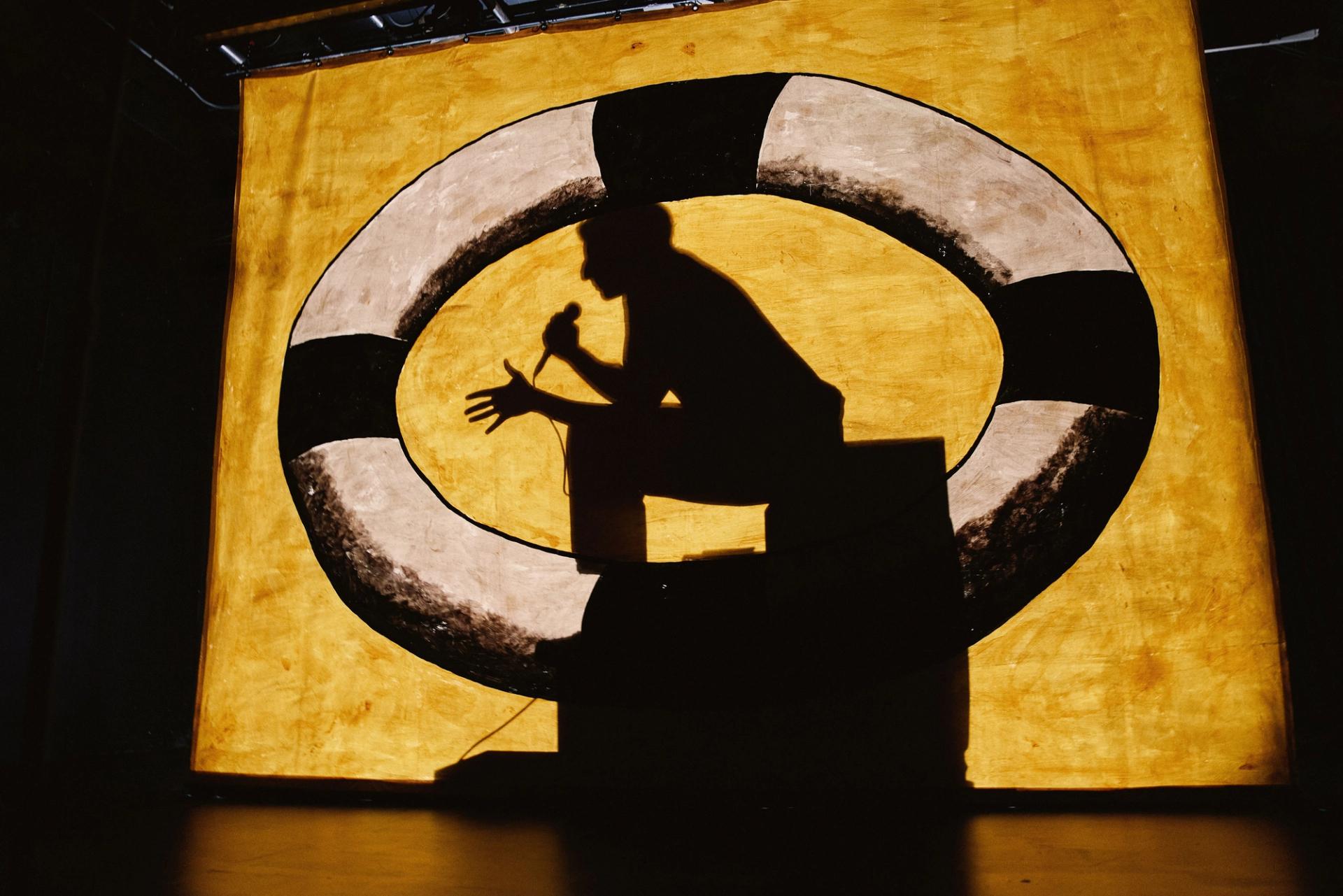
The last time I saw Morgan Bassichis before our interview in June was at a protest in Midtown, two months earlier. The performance artist and writer’s profile has skyrocketed over the past year thanks to Can I Be Frank? (opens in new window), their smash hit solo off-Broadway show, now in its second run at Manhattan’s SoHo Playhouse after winning two Obie Awards in January. Blending theater with cabaret and stand-up comedy, the production finds Bassichis staging a séance of sorts as they channel the largely forgotten gay performance artist Frank Maya, who died of AIDS-related complications in 1995, detailing their obsession to a thoroughly rapt audience while trying to explain why Maya’s work entrances them so.
The protest, organized by Jewish Voice for Peace, called on New York’s senators, Kirsten Gillibrand and Chuck Schumer, to block the sale of weapons to Israel in a then-upcoming vote. (Neither of them did.) There, Bassichis was engaged in a different sort of theater—the kind that might, and did in the end, result in dozens of arrests. As they corralled the protesters and led us through chants, they managed, impressively, to move us through different lyrics as needed through simple, wordless pantomimes: using their hand to write through the air to shift us from “Fund health care!” to “Fund students!”, and then on to “Fund housing!” by using their arms to make a pointy roof over their head. It had the energy of an elementary school music class—which was funny, because I wouldn’t describe Bassichis’s work as “educational.” Sure, Can I Be Frank? might teach its audience a whole lot about Maya—like his talent for crafting earwormy pop songs, his complicated yet unquenchable yearning for fame, or his scathing stand-up set about Liberace’s cowardice, delivered just one month after the closeted pianist’s death. And yes, the show reflects its author’s political clarity on Zionism, nationalism, pinkwashing, self-tokenizing, and more. None of it is didactic, though, and it never gives off the air of a TED Talk. It’s thrilling, moving, alive—and above all, upsettingly funny, much like Maya himself.
“I’m not exactly sure I know what ‘dialectics’ means,” they said with a laugh, “but I think my show is a dialectic—the generative dialogue, or tension, between my desire to be clear and agitational and propagandistic and also my desire to not be useful. There’s a lot to play with in that tension. Staying in the funny was how I found a way through—staying in what’s genuinely funny to me helped me thread that needle, and say what I wanted to say without being pedantic about it.”
Bassichis might be alone onstage, but Can I Be Frank? plays like a duet with an unseen partner, a performer and their icon melding into a figure who is both at once. It’s fitting, they told me, as their humor has always been a collaborative affair. “You know how comedy and your sense of humor are things you kind of develop together with other people? With friends, to make them laugh, all the inside jokes that create deep-set grooves in how you speak?” they asked me. “My best friend from high school, Hannah, came to the show and told me, ‘Oh, this is what you’ve always been doing. It’s like having a conversation with you where we’re trying to make each other laugh.’ I’ve always been trying to make people laugh. It’s been a gift, but it’s also been a survival strategy. So, it’s fraught. It cuts both ways. There are many nights when I get up onstage and I deeply don’t feel funny or lighthearted. It can feel like a trap of my own making.”
In our interview, we dug further into what moves them as an artist. We also talked about how they made Can I Be Frank?, why Frank Maya’s work resonates so strongly with them, what their next project will be, and why—spoiler alert—it’s about Amy Winehouse.
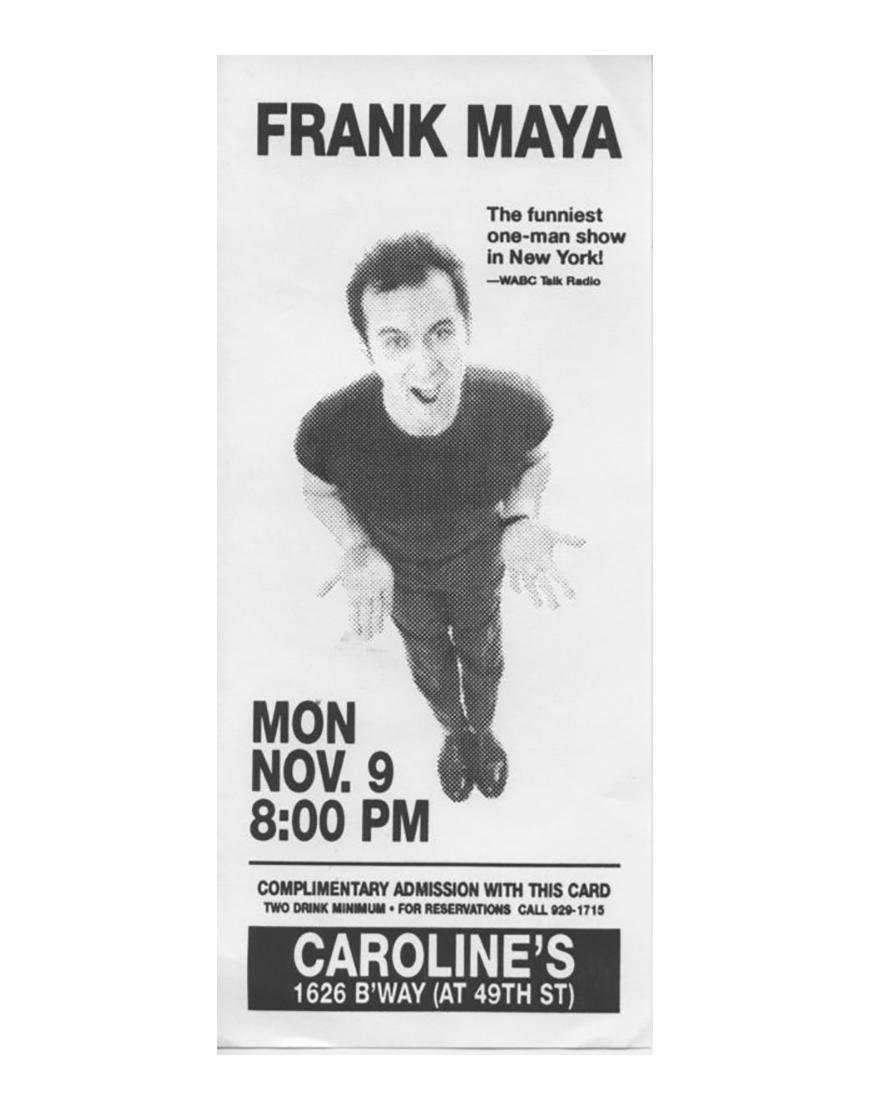
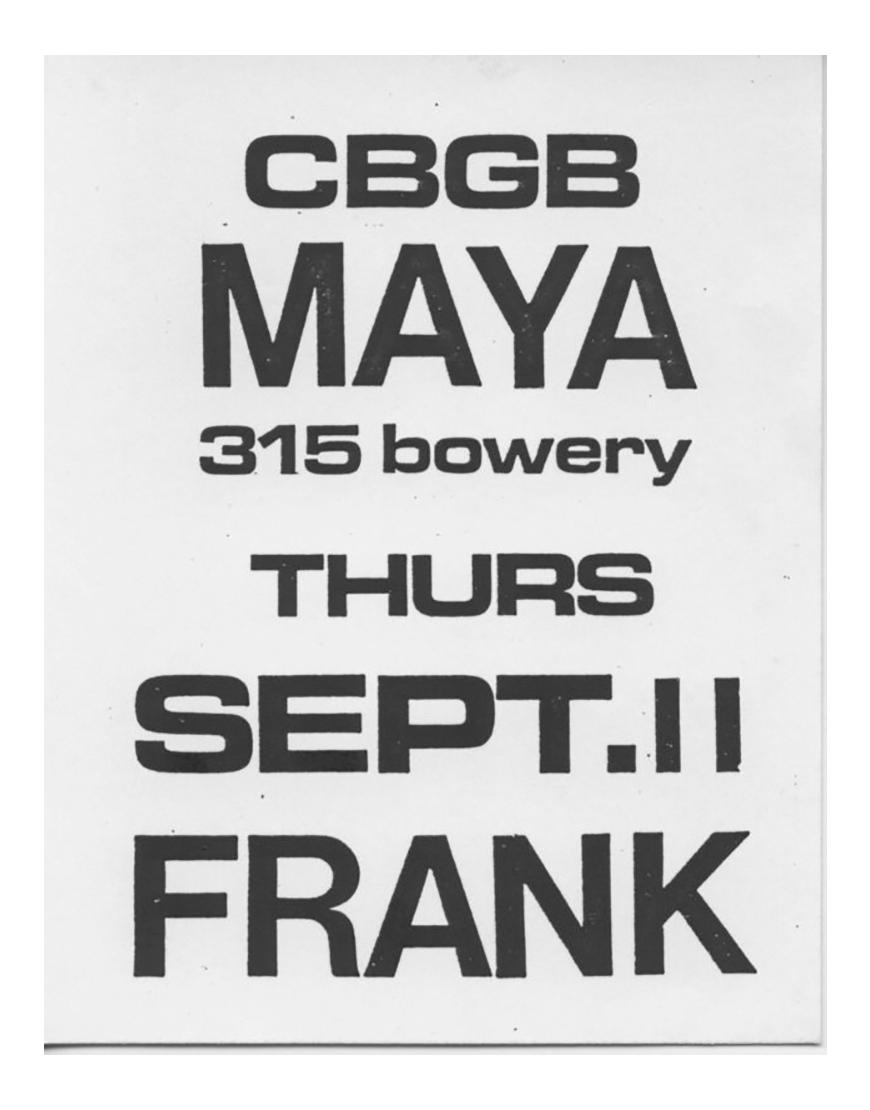
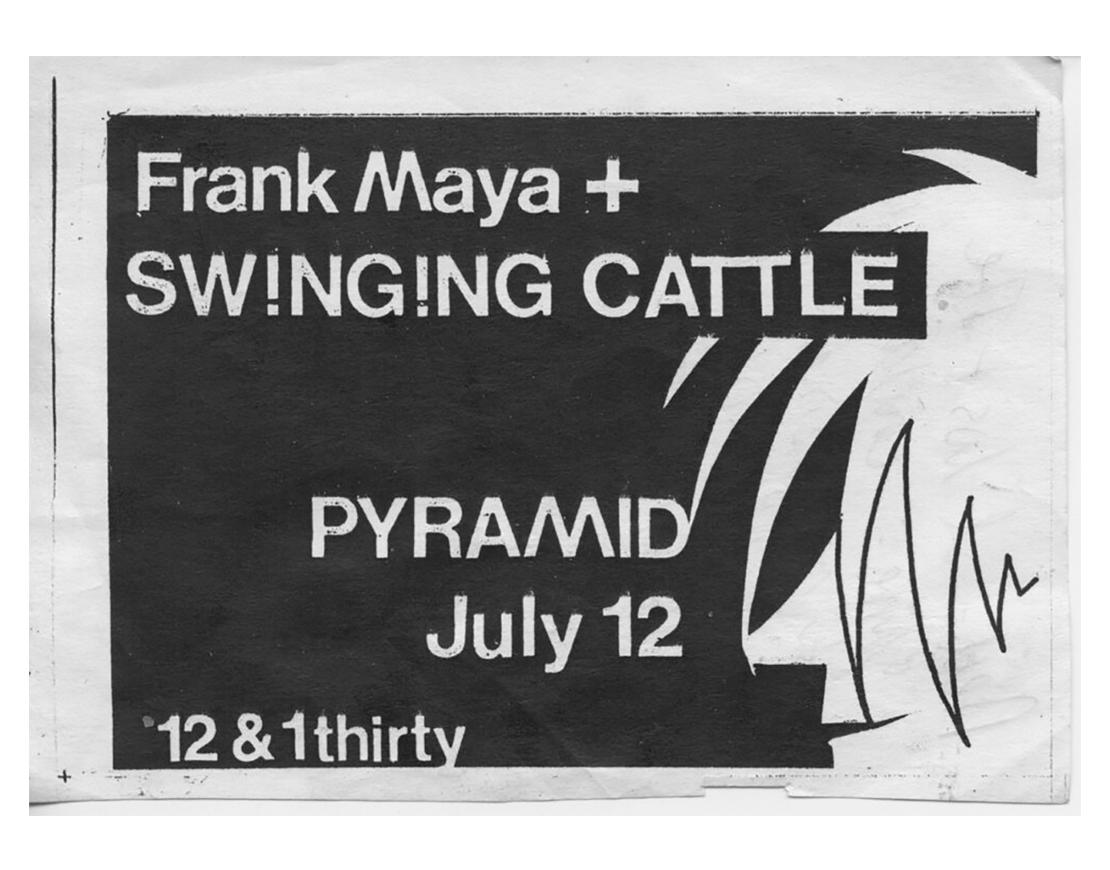
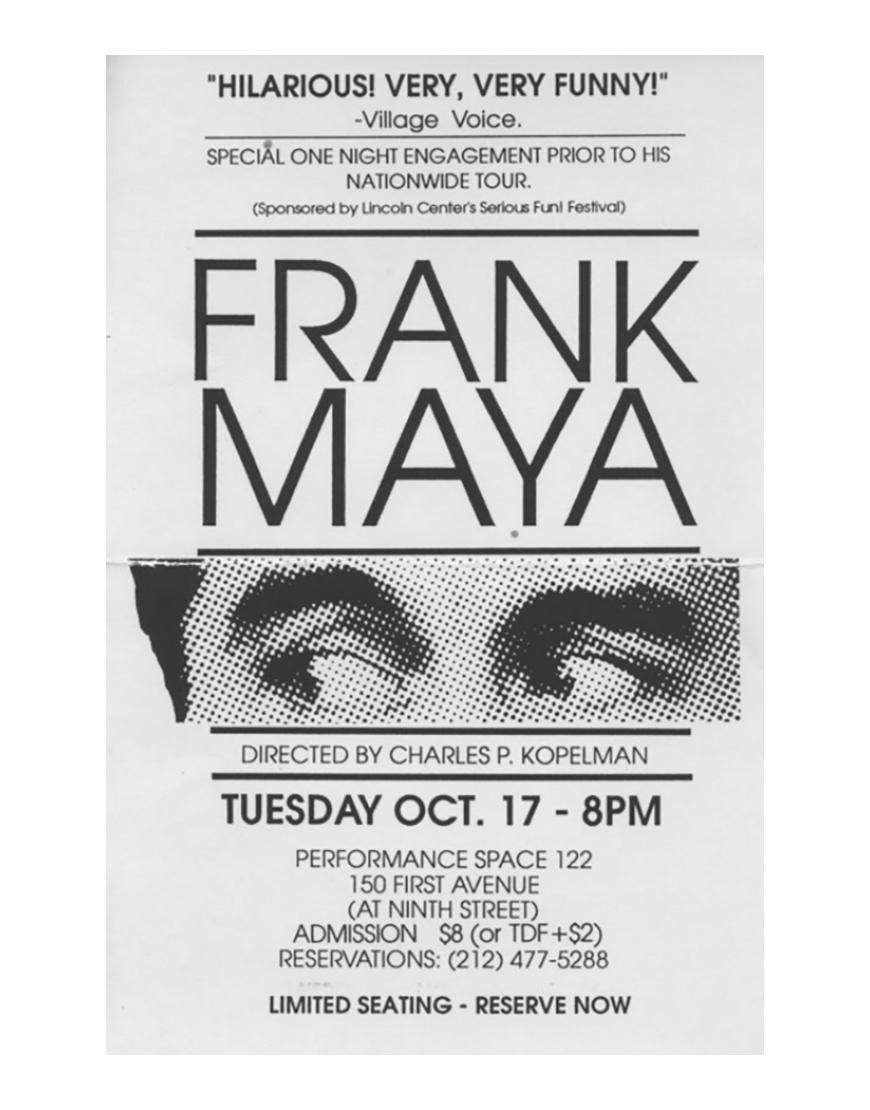
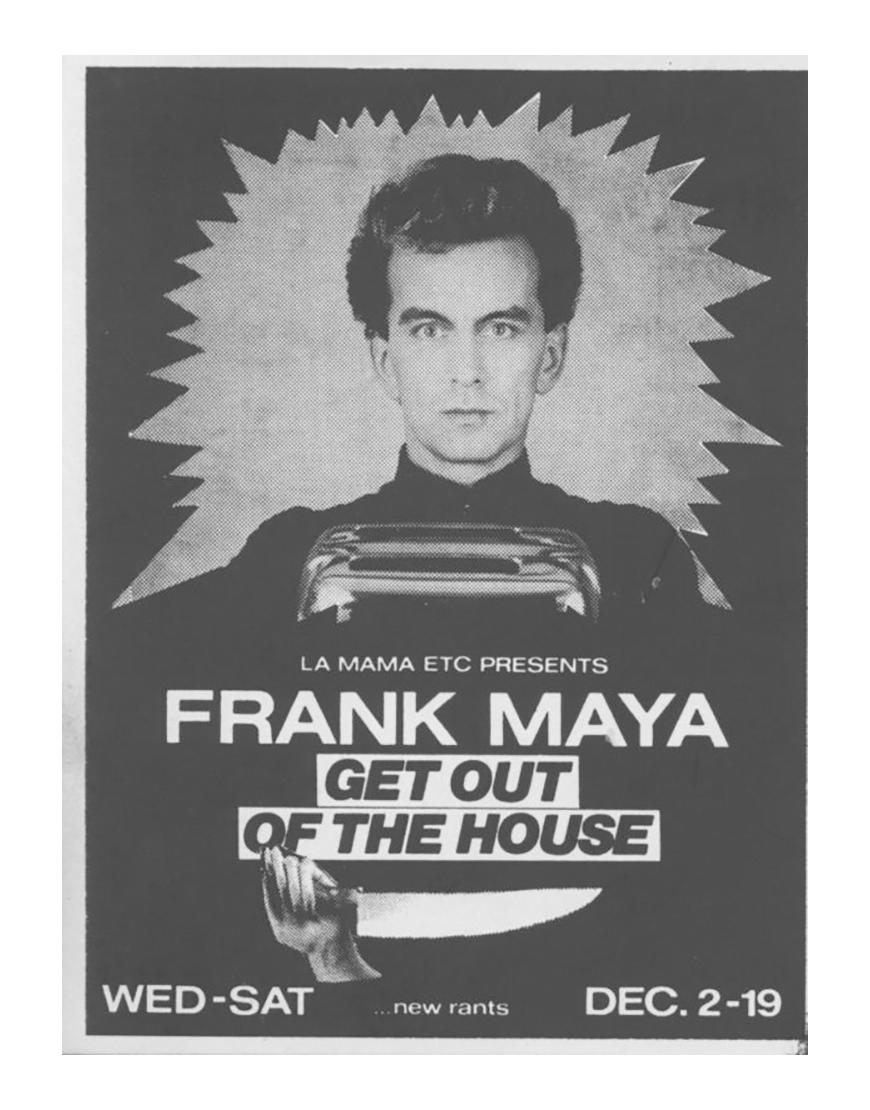
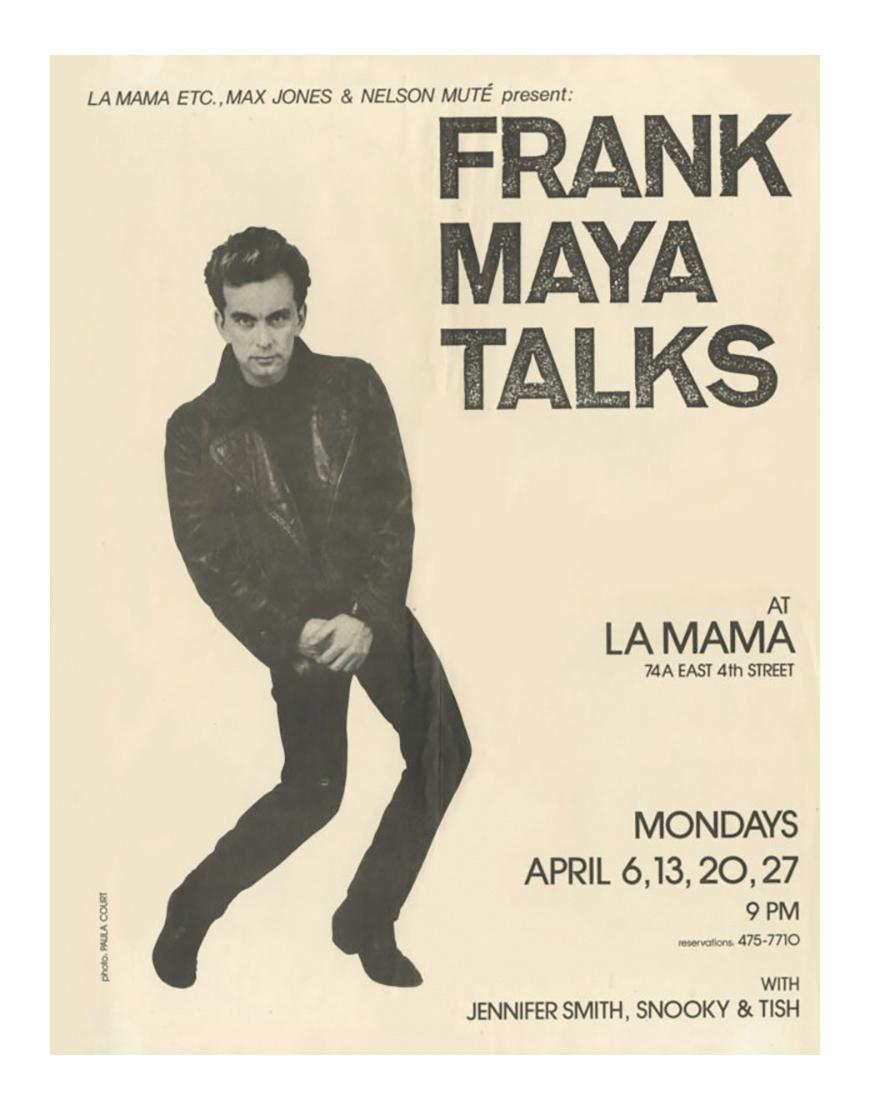
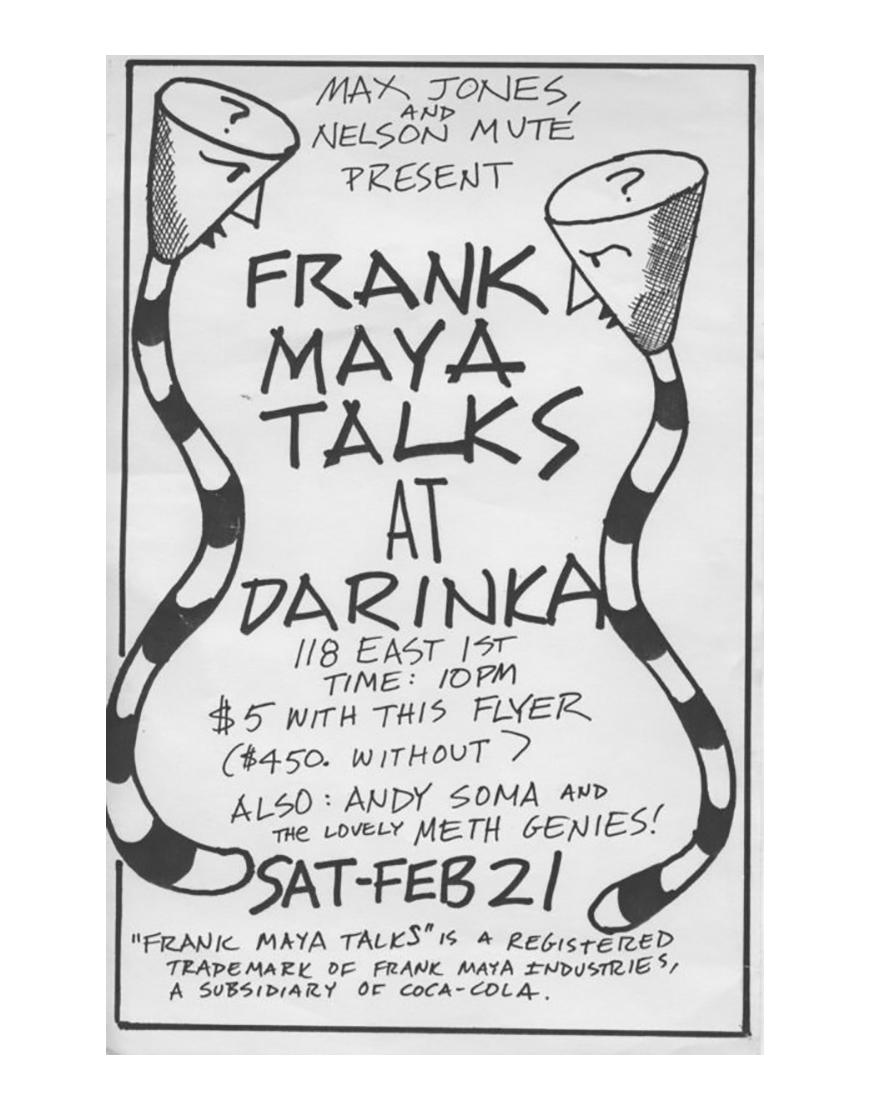
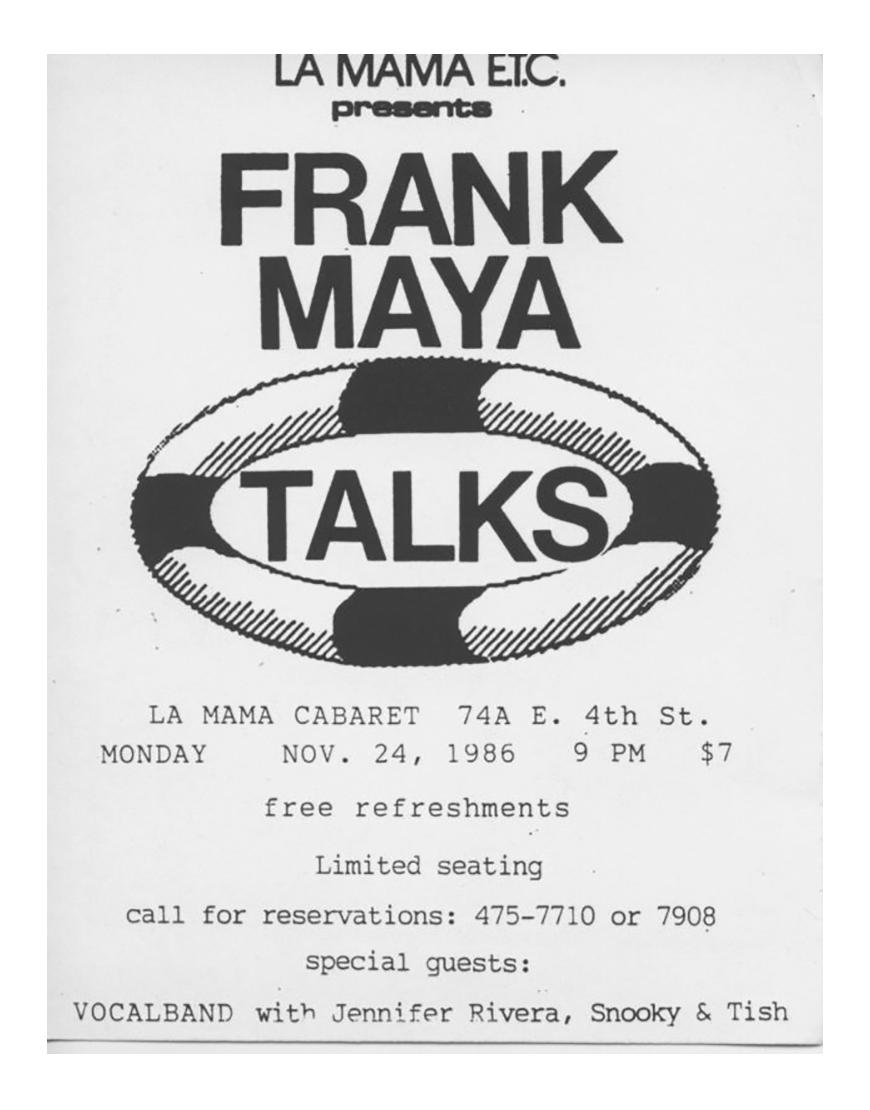
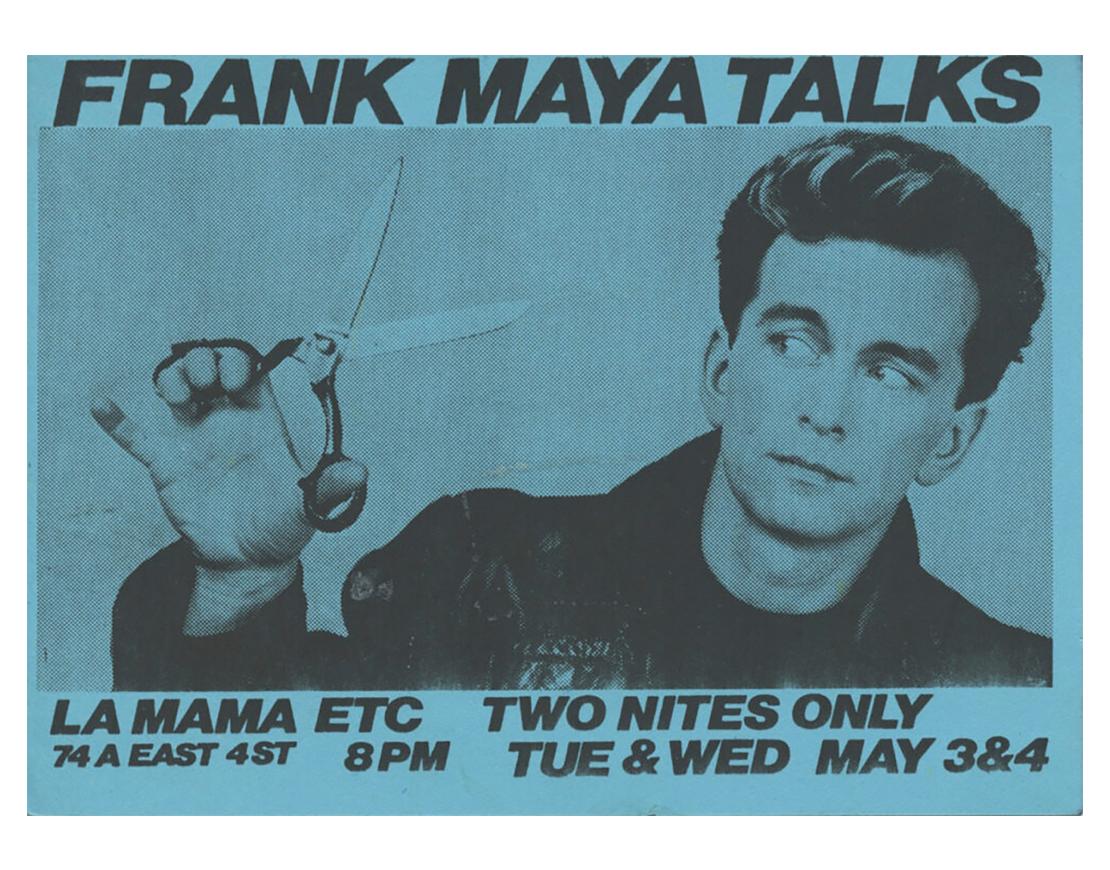
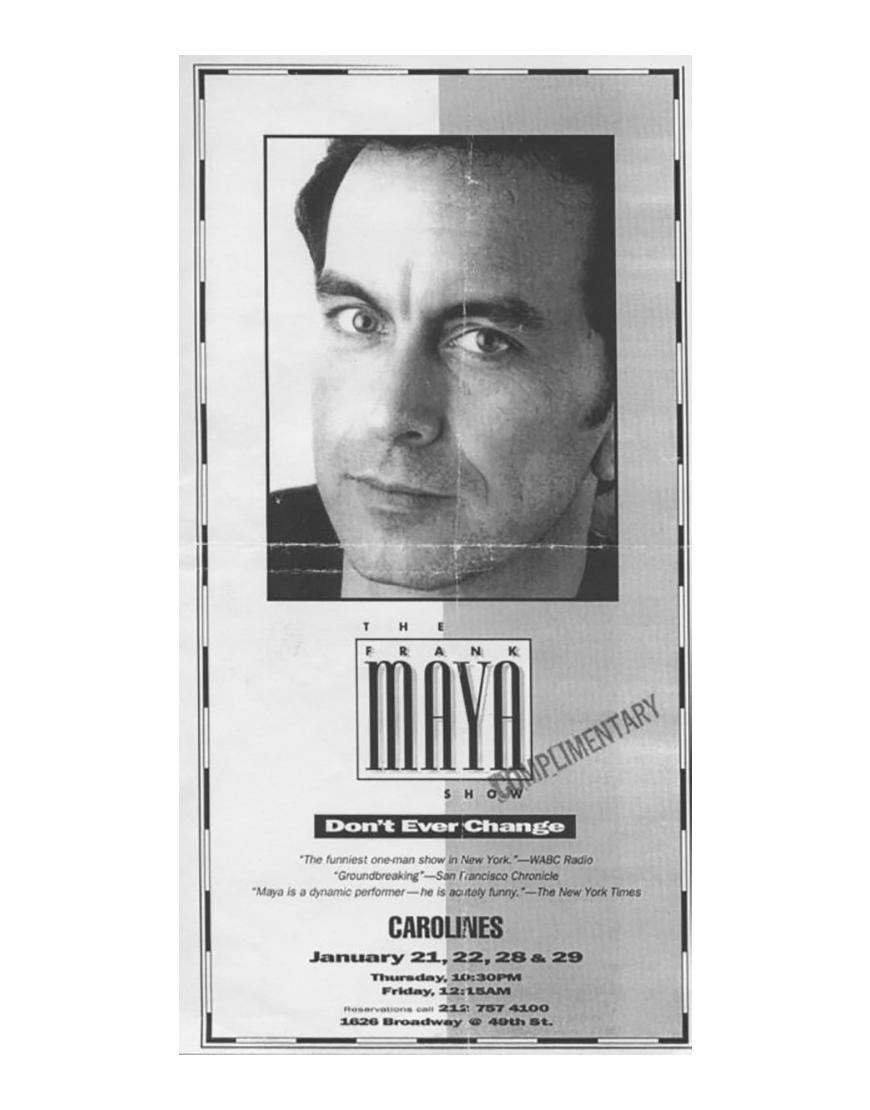
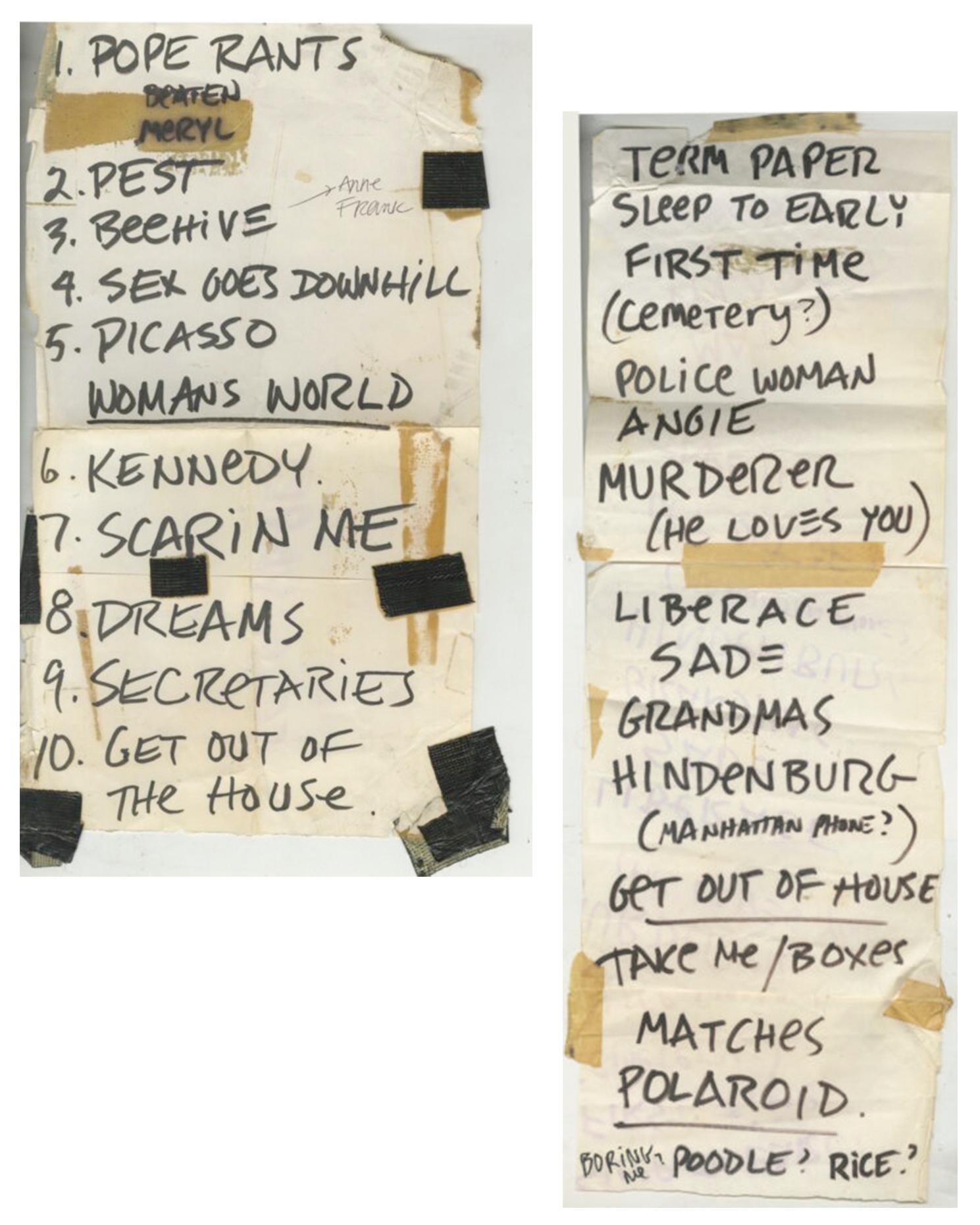
Ephemera courtesy of Neil Greenberg
In the show, you talk about how you first encountered Frank Maya’s work. Can you describe that first encounter?
Yes, so I was working on a whole different project about the Jewish High Holidays and Zionism at this art residency in Sag Harbor. [An art residency, as Bassichis helpfully explains in the show, “is when you go somewhere else to have sex with people.”] While I was there, I had a chance encounter with Frank Maya’s brother. I had never heard of Frank. It all felt very kismet. I told him I’m a performance artist who does comedy, and he started telling me about his brother who was a performance artist who did comedy. I looked up some clips and saw this one where he made a joke about being jealous of Anne Frank’s apartment, and I was like, “What’s going on right now?!” It felt like discovering you have this family member who was a revolutionary Bundist or something. Like, what…you’re in the family?!
What was it about his work that resonated with you?
The political irreverence. Playing with his ego. And the music! I’d click on a video and immediately be like, “That’s Performance Space!” I recognized all those venues. We all know when we walk into The Kitchen or Performance Space or La MaMa or Dixon Place or the Poetry Project that we’re walking into places with a lot of ghosts, many of whom we don’t know. There’s a certain kind of grief that I can imagine for people who are like, “Wow, you don’t know my name? I literally made you possible, and you don’t know my name?!” Or, “That was my friend! You don’t know my friend’s name?!” For many of us, we feel a responsibility to know their names and not act like we’re the first, and here was this comedian doing a kind of queer comedy in all these familiar spaces. I felt so much resonance there. It all kind of rhymed with the stuff that I’ve been making.
I really loved how much you appreciated the fact that, at the end of the day, Frank just wanted to be famous. It felt really unexpected but also really real—like yes, even though he’s a queer artist who’s no longer here and even though the show is honoring him, he was still a person with self-centered wants.
I was taking my cues from his friends who jokingly called his memorial, which was at The Kitchen in 1995, his “canonization ceremony.” They were joking about making this person who was clearly not a saint into a saint, which was them making fun of how people were doing that to people who were dying of AIDS. These people who were not saints suddenly now had to be perfect? I think we do that to our quote, unquote “ancestors,” and I think it’s not right. They were just as imperfect as we are and just as complex. So much of his material was about trying to reach the masses and get on TV. Sometimes, he thought of it as a political thing—in terms of, like, being an out person—but sometimes I think he just wanted to be on TV. I love that. We’re all full of contradictions. We don’t have to be perfect political beings to be remembered and cared about and valued. That’s such a trap.
Did you ever see the show Veneno (opens in new window)?
Yes!
For anyone who hasn’t seen it, it’s about this real-life Spanish transsexual media personality from the ’90s. What I love about it is that it doesn’t turn her into this tortured, flawless saint. It presents her as flawed, a fabulist, a fabulous woman—basically, she gets to be a real person. The show actually tries to reflect the complexity of its subject, which is something Can I Be Frank? tries to do, too.
Wow, you’re bringing me back. I actually watched that show with Miss Major (opens in new window). We had to turn it off because she got so upset while watching it. I haven’t returned to it since. Major—who, of course, passed back in October—was always so clear in insisting that none of us are fucking angels. That all of us just wanna get laid or whatever, and we deserve all of it. I loved her insistence about that. She said what she wanted to say, and she didn’t need to be an angel to be powerful.
You met Major back in San Francisco over a decade ago, is that right?
Oh, my God! I mean, 20 years ago…indelibly, definitely one of the most formative relationships. I met her when I was around 20 or 22, something like that. We organized together for many years but really became family. Her life partner, Beck, and our friends Una [Aya Osato] and Michi [Ilona Osato]—it was like an extended family. When she moved to Little Rock and felt called to start House of gg (opens in new window), we’d go there every year. We got to be there for the birth of her baby, and then just a couple years later got to be there as she passed. She was just the fucking best. Just such a good time, and I miss her. I really miss her all the time. Her sense of perseverance is really with me. Just fucking keep going.
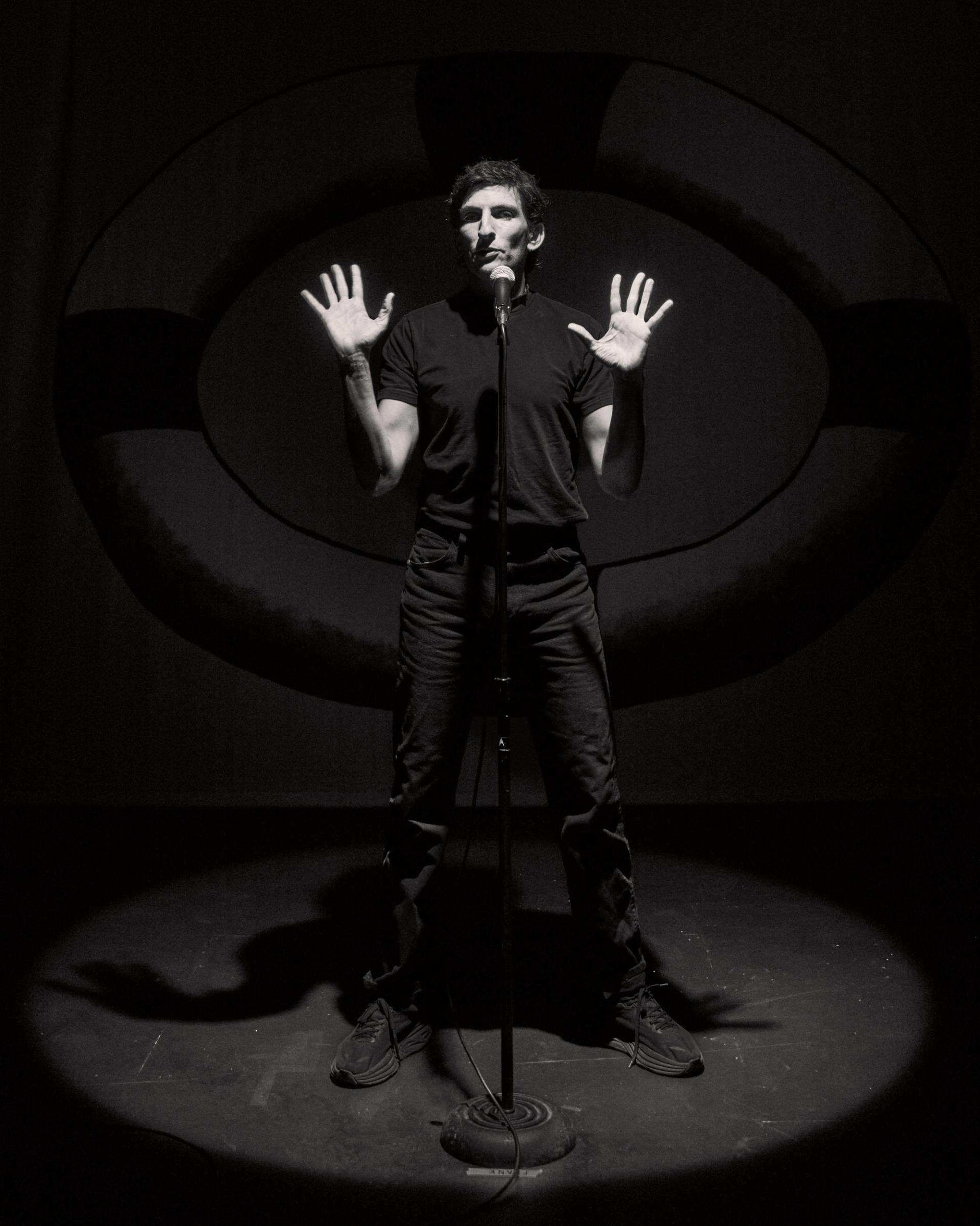
Morgan Bassichis in Can I Be Frank?
Credit: Photograph by Emilio MadridTell me more about the conversations you had with people who knew Frank while you were putting this show together. First, there was Frank’s brother. Who did you speak with next?
The next person was Neil Greenberg, who is a choreographer whose work I’d seen at La MaMa. He had been meticulously digitizing Frank’s performance footage from VHS, ensuring that his archives would be scanned into the Visual AIDS Artist Registry (opens in new window), like so many lovers and friends of people who died of AIDS have done. Like, thank God he did! That was the reason why I was able to look up Frank’s work and have a relationship to it, because of Neil. He’d scanned every interview he could find. His reviews, conversations in print—and some on-camera interviews. That was a really amazing way to get to know Frank. Neil had also digitized a bunch of ephemera—posters and pamphlets and thank-you notes. You can learn a lot from acknowledgements in a program.
I always love looking at the acknowledgements in books to find out who’s actually friends.
No, exactly! And then, there’s an anthology of queer humor that Frank’s in. This entire project is because of Neil. I sent him a Facebook message and was like, “I need to talk to you immediately!” [laughs]. He was like, “OK,” and was just so openhearted. He gave me his blessing, and because he’s an artist he was just like, “You’re going to make your own work. You don’t need to represent my dear person. You can make your own piece of work.” When do we get that kind of blessing?! He introduced me to tons of Frank’s loved ones, who I then interviewed. He was really such a collaborator on every part of the process.
How many people did you speak with for this project? Did they all react like Neil—just immediate full blessing?
I talked to nearly 30 people: bandmates, exes, friends, family members, audience members, curators. Every single person was really happy to bring attention to Frank’s work, and everybody was rightly pissed that his contribution had gotten lost in the shuffle of history. The wounds were still fresh, even after 30 years. There’s still so much pain to revisit from that time, but people were happy that his work would be coming back into circulation.
What’s one piece of Frank’s work that has really stayed with you?
The second song I do in the show is called “Boxes of You.” It’s just one of the most beautiful songs. It’s referencing a TV but also keeping your ex-lover’s stuff—like, “What do I do with all your stuff?”—but then also watching them on the screen. It felt so directly related to how I felt about Frank. I have all your stuff and all these tapes of you, and I can’t stop watching you.
That’s the number in the show where you sit down and watch him on TV, right? There’s something very childlike about it.
We learn who we are through our obsessions with other people. We’re social beings. And then I also really related to the way he relates to “the audience.” I’m not a psychoanalyst, so I don’t know if it’s the correct word, but we both have a kind of transferential relationship to “the audience,” which is itself not a real thing. It’s a fantasy, as if there’s one monolithic audience. I love that song. I love that it’s about this endless need and how we project it onto our need from the audience.
Maya performing in 1987 at La MaMa Experimental Theatre Club, New York City.
Credit: Courtesy of Neil GreenbergThere’s a joke in the show that’s so “this show in a nutshell” to me, since it’s interrogating both the cynical hunger for fame but also the genuine desire to learn more about the legacies we’re operating in as artists. You say something about how great it would be if your show managed to get more people to know who Frank was, which would also be great because that would mean they’d have to learn your name, too. A year on from the initial off-Broadway run, how does it feel to have found such success in a way that’s so indebted to Frank?
I feel like we’re doing a kind of duet—hopefully, consensually! [Laughs.] If someone who isn’t alive even can consent to anything. I feel like we’re doing this thing together. His ex-boyfriend Blake West said this amazing thing to me. I was saying something about how sad it was that we wouldn’t get to know what Frank would’ve gone on to make, and Blake was like, “Well, this is part of what he was making.” I feel incredibly grateful to have been able to do this show so many times. It’s very rare. I’ve learned so much about myself as a performer, and I feel like we’ve done it together. It’s just like fabric. We’re just in this thing together.
Is there anything new you’re working on?
Well, it’s interesting…actually, I don’t know if it’s interesting.
I’ll be the judge of that.
Yeah, we’ll leave that to the critics. But another person I’ve been obsessed with for many years is Amy Winehouse. Her first show in the United States was at Joe’s Pub—
Stop.
—in 2007, so I’m going to do her set from that night at Joe’s Pub 20 years after she did it there. There’s a lot to interpret from that night because basically all that exists is her set list.
Oh, so it wasn’t filmed?
There’s little clips on YouTube, 30 seconds or so each, but it really wasn’t filmed. I’m gonna talk to people who were there. The Frank show started in the room where he did it—at La MaMa—so I’m doing something similar, but with a person everybody knows.
Morgan Bassichis in Can I Be Frank?
Credit: Photograph by Emilio MadridHearing about that and thinking about Can I Be Frank?, there’s something so beautiful about how they’re both creating an archive of these ephemeral, unarchived performances that were all kind of unarchivable by nature—just the whole medium of onstage performance—and that you’re using that same medium to create a kind of archive, after the fact. Maybe someone in 30 years will make a Can I Be Frank, Too? about both of you.
It’s about being a dues-paying member of the audience! How do we pay our dues as audience members? I think one of the ways we can do that is by inhabiting and embodying the work of others and seeing what happens.
There’s a joke of Frank’s you reference in the show about how the only cure for homosexuality is fame—the joke being that gay people had to be closeted in order to be famous in the ’80s and ’90s. Now that you’ve achieved a whole lot of fame and won all those awards, I have to ask: Has the fame cured you?
Guess what.
What?
No. [Laughs.] It doesn’t work.
You’ll just have to go to Broadway then!
You just have to keep going.