The “Debut” Mary H.K. Choi Didn’t Know She Needed to Write
The bestselling YA author on her first foray into adult fiction, her fashion obsession, and writing for Hollywood.
June 15, 2026
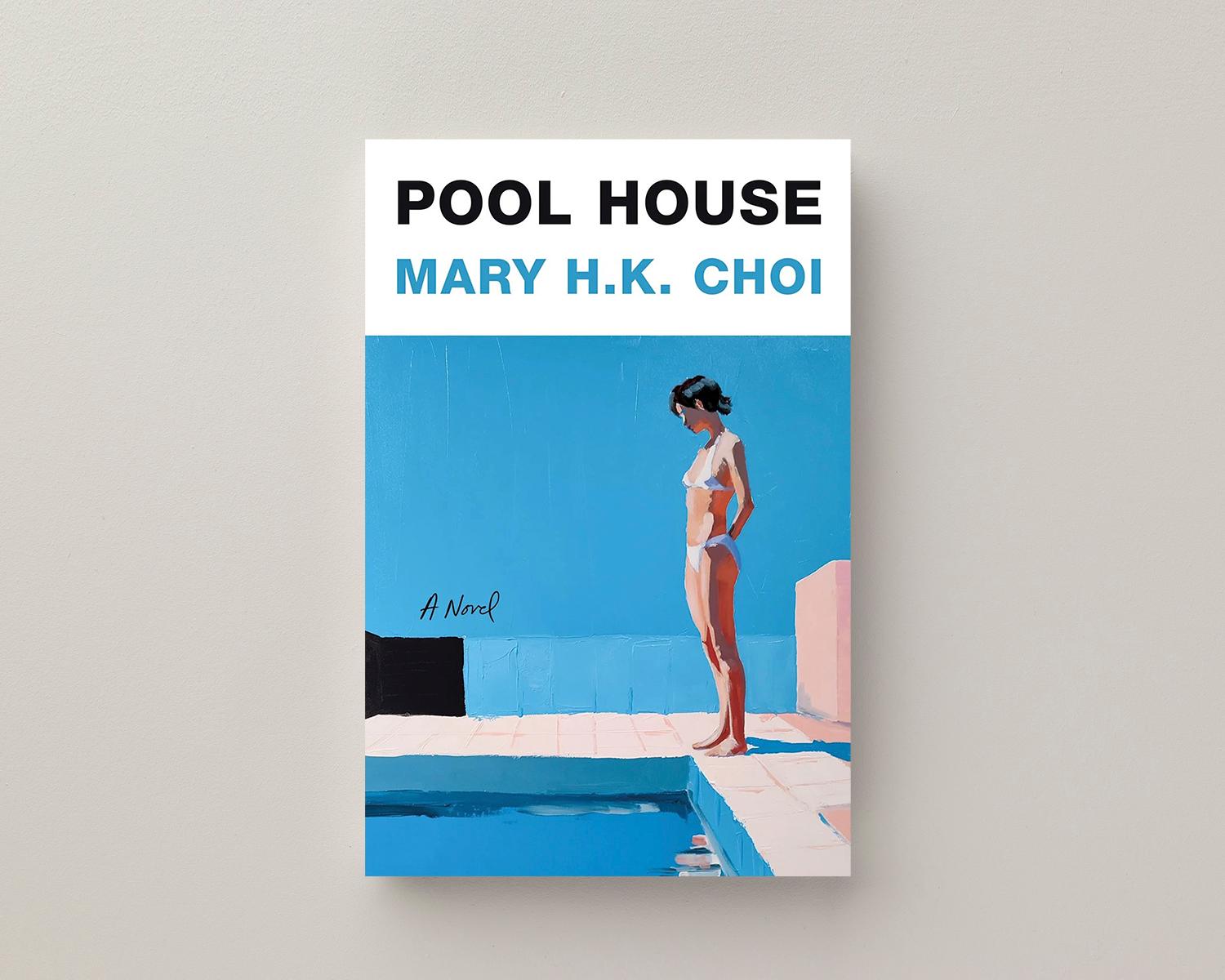
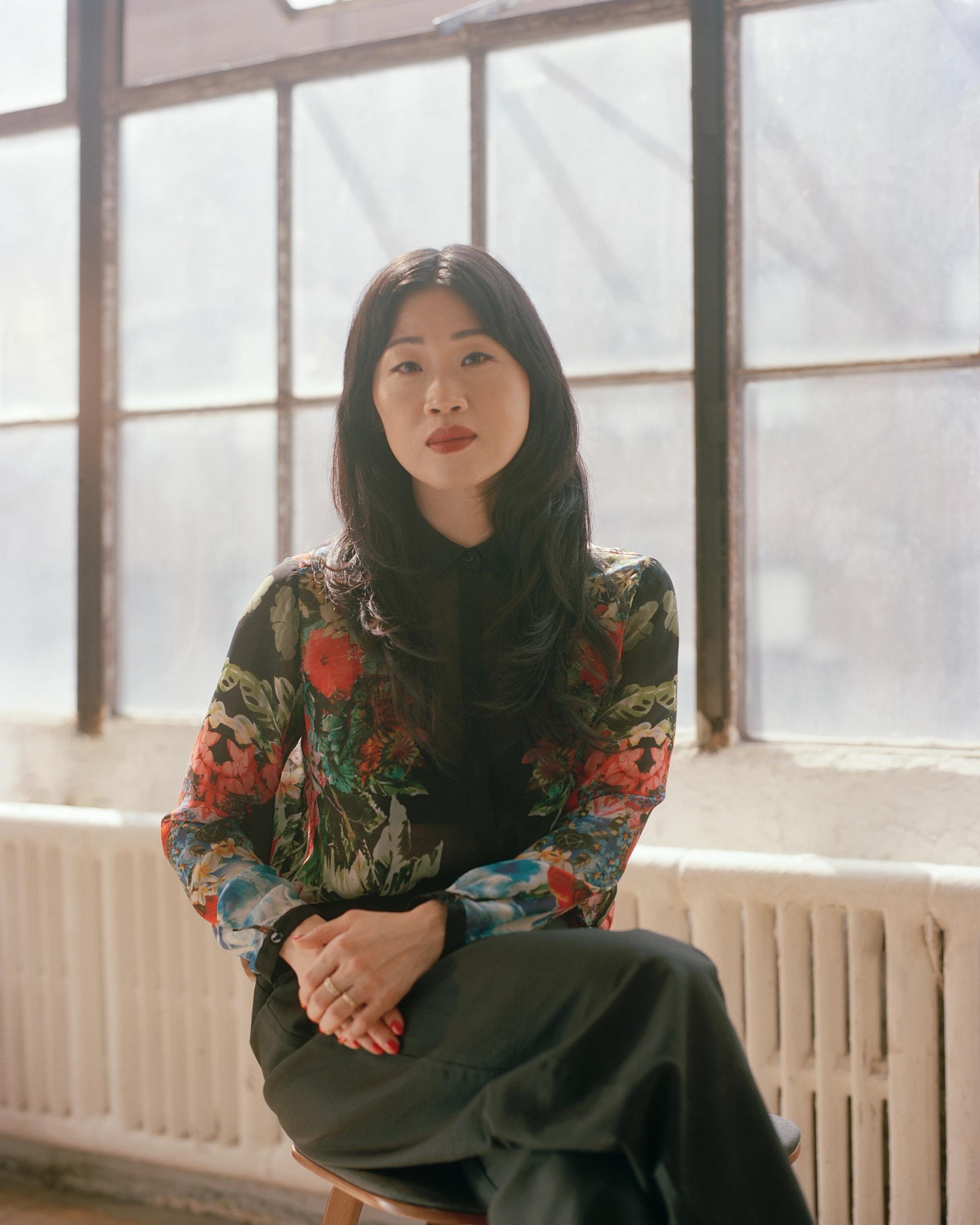
Mary H.K. Choi has published three bestselling young adult novels and an essay collection, hosted a podcast, founded a magazine, written Marvel comics, cowritten a book with DJ Khaled, and worked in newsrooms, TV writers’ rooms, and at a Red Lobster. She speaks four languages; she has lived in Seoul, Hong Kong, suburban San Antonio, Los Angeles, and New York. But with her new novel, Pool House (opens in new window), her first foray into adult fiction, Choi finds herself in uncharted territory. “It feels like a debut,” she said.
Pool House follows the complicated relationships between actress and recovering alcoholic Delilah Moon; her daughter, Stevie, a headstrong only child who grudgingly lives with her mother in the titular pool house; and Moon’s former costar (and Stevie’s childhood crush), Adam. We meet the trio as they reel from the unexpected death of their ersatz patriarch, Mac. Choi writes with wry exactitude about the weirdness of Hollywood, the intimacy and claustrophobia of family and found family, and the growing pains of being twentysomething and thirtysomething and fortysomething.
“It’s not going to be everyone’s cup of tea,” she said. “I had someone ask me, ‘Is it a beach read?’” Choi thought, well, it’s not not a beach read. “But like, I don’t know your life. I think it is.”
Ahead of the novel’s release, I spoke with Choi about writing through grief, adapting her books for the screen, her enduring love for nineties fashion, and trusting her gut while killing her darlings.
Did you always know you wanted to write this book?
No! This feels woo-woo, but the truth is, whatever book I want to write just sort of arrives, and then I write it. That makes it sound like my eyes roll in the back of my head and I start writing in Victorian-looking cursive, and then ectoplasm comes shooting out my ears. It’s not that dramatic. But I really don’t get much of a say in whatever signals I end up capturing and transcribing.
So you don’t plan out your novels?
Not at all. I’m a relatively quick writer—I tend to be incredibly dispassionate and incredibly confident in my first drafts. It is the confidence of a completely ignorant person, just false bravado. I do allow that first draft to be really ugly. But there is no browbeating or bullying it into submission. If anything, the story ends up pushing me around a little bit.
When I was writing this book, my dad died, and he’d been sick for a while. There’s a patriarch that appears in the book, and everything becomes a reaction to this incredible loss. That will give you an indication of how much or how little agency I ultimately have in my stories. I’m like, “Oh, I have to figure this out,” and then I start writing around it and through it and seeing what happens. I really don’t know how to write in any other way.
The book alternates between three perspectives, plus interspersed vignettes. How did you decide on the structure?
It came to me as I wrote. I don’t know what other people’s operating systems look like, but I can’t think or plan out with that sense of conceptual accuracy. I just wrote a bunch. Sometimes I would spend four months trying to graft a vignette onto a paragraph and then find that paragraph suddenly, like, seven thousand words long. It was a Gordian knot. I was so snow-blind that I needed someone to point me towards due north and be like, “We’ll figure it out.” There’s an editor I’ve had the unbelievable privilege of working with across many publications and all of my books, Mark Lotto. The vignettes came as a result of this person who is not me, who has that impartiality and bird’s-eye view, being like, “Don’t fucking worry about the vignettes or the tense or the POV or the subheadings. Just vomit up the parts the way you see them, and we’ll worry about that at the end.” Writing this book, burying my dad, going through the pandemic, I was so tired, like a spiritual exhaustion, and so brain-fogged, and I had forgotten the cardinal rule of writing books, or book-length things, which is, by God, just get to the end of it, because that’s the only way you’ll see any of it.
One of the comments I got from someone else, an agent who read Pool House, said it was very rich, akin to eating a cake’s worth of truffle. I cut a lot from that point—probably 50 to 60 thousand words.
Wow. The finished version is very lean.
Coming from a magazine background, I’m unsentimental when it comes to slashing and cutting. I was also inspired by another author friend of mine, Reese (R. O. Kwon). For her last book, Exhibit, I was her conversation partner when she came to New York to tour it, and she said she cut something like a third from the penultimate draft, which was eye-opening—that a person who has been living with a book for so long can have that ruthlessness and eye to precision. I really admired that.
When you’re writing, how do you know when something isn’t working?
I don’t think it’s a product of effort or anything. It’s more that if any self-consciousness seeps into it—so the second I am no longer inside myself and inhabiting the moment, the second I am sitting in my own audience, so to speak, wondering what the reception to something will be—that’s when I’ve taken a wrong turn.
Do you read other fiction while you write?
I do. I have a collection of things I keep returning to. I don’t know if this is being autistic, but it’s like learning how to be a person all over again whenever I sit to write. There are books I love to read because they orient me, and I’ll read a page or two before sitting down to write.
What were some of those books?
Severance by Ling Ma is a book I love. It’s almost like putting on a VR headset: This is how space works, this is how atmosphere works, this is how people sound when they’re speaking. I have the same sort of thing with Katie Kitamura’s books, particularly Audition and A Separation. All her work is so closely observed. I go to those books when I need to watch a movie in my head of how people move in a space or make microexpressions at each other. And Amy and Isabelle by Elizabeth Strout. It’s about a mother and daughter, and they are also living in a really small house, seething and thrumming with resentment, both so lonely and unable to talk to each other. It’s the most beautiful encapsulation of a mother and daughter who cannot get away from each other, and who by all intents and purposes are living for each other.
Pool House has so much atmosphere. I know you used to live in LA—what was it like to build that setting?
I knew this book was going to be set in LA, not only because of the Hollywood of it all. I liked the idea of having this beautiful purgatorial sense invade the days of this strange family in the aftermath of this death, because the instant someone dies, the day after, you’re like, “What am I supposed to do with my day?” There was a corollary with that feeling of time that I wanted to capture, and LA was a perfect place for it. Being in LA was like being on Mars. I’d never been in a place that felt so oppressively indifferent to whether I lived or died. LA is so fucking huge, and it is such a desert—if you look around and see the scale of the plants, you’re like, “This prehistoric place cannot wait to brush off all the human bodies and continue being a desert.”
Tell me about the role fashion and clothing play in the book. You obviously have such a deep knowledge of the subject.
There’s something in things looming large for you because of the age you were when you first fell in love with them. I used to work retail, specifically at Neiman Marcus Last Call, where we would get these clothes in—a lot of the time, a $30,000 gown won’t sell at retail, and it would come to us. I remember just being with the clothes, looking at the seams, and falling in love with fashion at a time that was so intoxicating: the nineties, the era of the supermodel. The thing I loved about this book is you could say it’s basically a Gen X mom and a Gen Z kid, and that’s my story in many ways: I’m a Gen X person who has to deal with Gen Z culture all the time. I had never anticipated that, in 2026, the nineties would be so back. I know the exact Galliano dress Moon is wearing to the funeral. That’s a fun thing about being old: You can be truly balls to the wall and lock in and be nostalgic and precise and nerdy. It’s an Easter egg for whoever enjoys it—like the mesh Gaultier with the butterflies.
Yes, the Gaultier top that Stevie steals from Moon’s closet. It works so well because the Gen Z daughter would steal her mom’s nineties clothes.
When Stevie puts on her mother’s clothes, it’s like a talisman. It’s this electrifying reckoning. I’m sure you remember the first time you dressed in a way that was recognizable to you, where you’re like, “Oh, there I am.” When that reference is your mother, that’s incredibly loaded. Clothes are powerful. Also, as an autistic person, I think I was obsessed with fashion because of the power it confers, but also the power in masking.
You’ve adapted your books into screenplays and TV scripts. What’s it like to reconsider your work through a different medium?
On one hand, it’s dazzling—the prospect that someone wants to make it for the big screen, to have a director or a producer attached, to have the book optioned. But inevitably, writing a novel is such a solo enterprise, and you get to make unilateral decisions. Then it becomes an issue of translation: How do you take something where you have basically infinity words to explain it and stick the landing, versus as few words as possible to make into a 360-degree immersive landscape that’s universally understandable, where any hesitation or false move is a mind-boggling amount of waste and money and resources? It’s like taking a novel and turning it into a map, and at every step, you’re changing the map a little bit, depending on who you’re pitching to, and the trick is to thread that needle—and use as many metaphors as possible!—to make it jibe with your intentions.
Do you enjoy it?
I worked on The Summer I Turned Pretty season three, and I enjoyed that so much. Working in a writers’ room was like getting my entire brain massaged, especially in a room that’s working well and being led well. It was like I was in an orchestra, just playing my position. It was unfathomable how good it felt. Development is a very different prospect. It’s like a war of attrition; like, what pain threshold do you have for taking notes from completely disparate sources ad infinitum? Does anyone enjoy that? I’m not sure. But I see how it’s a necessary gauntlet to endure. I’m really interested in writing for the screen. I hope I one day learn enough to be able to do it well, and I would love for Pool House to become a movie.
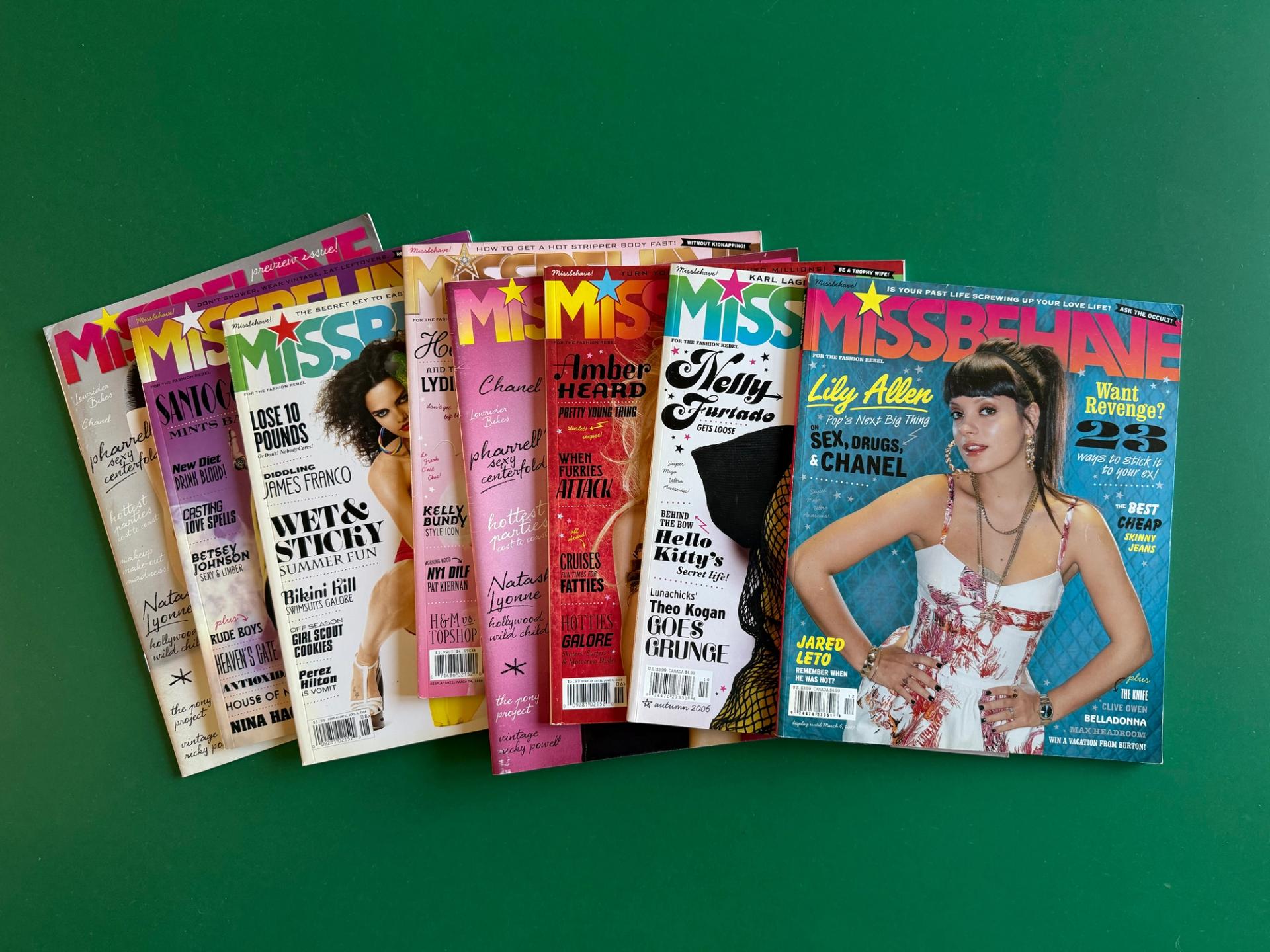
Covers of Missbehave.
Credit: Courtesy of Mary H.K. ChoiYou also have a long history writing for magazines.
Magazines are my first true love. I launched a magazine when I was 27, called Missbehave, and it killed me, it broke my heart. I think there’s something really beautiful about that. I know in 2026 there are all these different reviews and magazines and small journals, and I think a bunch of magazines are gonna break a bunch of people’s hearts. I’m not saying that with some perverse thrill. It’s like each of us is deciding we want to make opera, and everyone is like, “That seems hard,” or “I don’t know if the marketplace…,” or “What’s the value proposition?”—but for some reason we all keep doing it. Of all the work I do, I still am unsure if any has beaten the pure satisfaction and thrill I get from populating those little sections that become an entire magazine. And then it closes. It’s almost like restaurant service: Once that issue is over, it’s done. I love that feeling.
Do you think you’d ever write a novel about making a magazine?
I remember when I was running Missbehave they always wanted to make a goddamn reality show about it.
Really?
Yeah, and I was like, “I don’t think so.” But there is a book I’m sort of working on now, and I’m wondering about something like that. There’s something about the appetite or circadian rhythm or just the quality of New York that feels so magazine to me. I could definitely see a New York book about the media landscape in this moment.
Header photograph by June Kim