Susan Orlean Goes In Blind
The Joyride author and New Yorker journalist on the interview style that fueled The Orchid Thief and other classic stories.
May 18, 2026
From the perspective of today’s besieged legacy media world, the range of Susan Orlean’s career looks like a distant golden age. In her 2025 memoir Joyride, the literary journalist and best-selling author takes the reader on a sweeping tour of her time spent at indie papers in the 1970s and ’80s and on through more than three decades on staff at the New Yorker, the publication of a dozen books, and two feature film adaptations—in one of which, Adaptation (2002), she is played by Meryl Streep.
The book provides a welcome counterpoint to the glitzy reminiscences (opens in new window) of Condé Nast’s heyday (opens in new window), or the films that refashion and glamorize what it is to be a magazine writer. Rather than telling tales of mind-boggling excess, Joyride focuses on the craft of being a journalist. Orlean’s oeuvre is free-wheeling, and her creative flexibility has always seemed absolute: across subjects ranging from Bhutan (opens in new window) to Bhagwan Shree Rajneesh (opens in new window), Southern gospel singers (opens in new window) to a single 10-year-old (opens in new window), Hollywood’s favorite German Shepherd (opens in new window) to, most famously, orchid thievery (opens in new window), she convinces her readers that the small, seemingly ordinary stories she has committed her life to telling are indeed as fascinating as she finds them.
I spoke with Susan Orlean about interviewing technique, writing a great opening, and fighting for your stories.
I was quite shocked to read in the book that you prefer to go into interviews without any preparation or research. Has that approach carried through your career?
By and large. I don’t want to overstate my ignorance, but I prefer to throw myself in and figure it out on the fly. And, in some ways, that’s a lot harder, because you’re really learning on the job and being in the moment trying to figure out what you’re learning. On the other hand, I also feel like I really am entering it with a very open mind: “What is this? Who are you? What’s the story? Tell me more about that.” Instead of thinking, “Alright, this is what I know, let’s just have you confirm what I know.”
I think when you are profiling a well-known person, it’s a matter of respect that you know about them and their work. I’ve profiled Hillary Clinton for Vogue. That’s quite different from writing about the people whom I’m generally writing about. But, overall, I’m an advocate for throwing yourself in and forcing yourself to really see what you’re seeing and not simply the cognitive bias of already having decided what you’re going to see.
I imagine, also, when you’re interviewing someone who’s not Hillary Clinton, such as a gospel singer or a 10-year-old boy, it would be weird to them if you come in saying, “Oh, I know your favorite color is green.” That’s unsettling, I think.
It can seem creepy. I’d rather say to them, “What’s your favorite color?” They may expound at length about why it’s their favorite color and how they came to choose that. I think the engine of a lot of what I do is delighting in discovery and anything I can do to further that is important. If there’s no discovery happening, it’s hard to fake it. So preparation of the sort that we’re talking about begins chipping away at the possibility of you feeling animated by the discoveries you’re making.
It seems like you’re very comfortable playing the outsider. Do you think that’s a quirk of personality, or do people learn how to do that professionally? Did you have to learn that?
I think it’s very much part of my personality. A lot of it is about removing that part of your ego, of not wanting to be caught off guard or looking a little bit uncertain. And I’ve said this before, even though it’s perhaps a gendered observation, but I think men have a harder time with this. I think men tend to want to be on top of things, and they’re not as comfortable being vulnerable that way. It is vulnerable. You can look like you’re not knowledgeable. But if you ask a basic question, it often leads to a very interesting answer.
I always feel like that’s why I’m doing the story. I’m there to receive this information and to get the feeling of what it’s like for them to tell me their story. Because so much of it isn’t just factual. How does someone describe themselves? How do they answer questions?
I also liked how you wrote about how to develop a good resting face that’s not too detached and not too engaged for interviews. I have a reporter friend who told me they always sit across the table and make sure that they have their arms and hands sort of extended, almost literally. They say this always gets people talking. Are there other postures that have been helpful to you over the years?
If you stand with your arms crossed and you’re kind of protecting yourself, it’s not an opening to people to approach you. A lot of times, when you feel really awkward, it’s because you’re in a setting with a bunch of strangers. I like to be scribbling notes, and I feel like, first of all, it gives me something to do, but secondly, it often interests people and they want to know what I’m writing about. They may sidle over and say, “What are you doing?” And you say, “Oh, I’m here writing a story.” And it goes from there. Boom.
But I do think you need to have a posture of quiet confidence. You need to be open to being approached, but you also may be standing by yourself for a while, and you need to be okay with that. What most people hate the most about being alive is standing by themselves, observing a group of people who all know each other. The wonderful thing when you’re in a setting with people you’re writing about is that you can remind yourself that it’s not about whether they like you or not, that there’s no judgment implied in anybody reacting to you. I find it very liberating to feel like, “Well, I’m just a stranger here.” Whereas if I go to a party with people who are my peers, and I don’t know anybody and nobody’s talking to me, I feel awkward.
“It is vulnerable. You can look like you’re not knowledgeable. But if you ask a basic question, it often leads to a very interesting answer.”
You also mentioned that you’d rather take notes than use a tape recorder. That makes sense too, because I think people treat someone walking around with the tape recorder very differently than if you’re jotting down into a notebook.
A tape recorder has a chilling effect on people. I think they feel self-conscious about how they talk and what they’re saying, and it’s this physical object between you and them. And I think people feel nervous about being quoted exactly, or recorded exactly. By contrast, scribbling notes just doesn’t seem to bother people. It’s much sloppier, and there’s more action and activity. A tape recorder is one step away from a camera, and obviously, with cameras, people are very different.
It’s interesting that it can have such a different effect on people.
I had an interview recently with someone who was typing on her iPad. That’s how she was taking notes, and I found it very off-putting. Even though she was good at maintaining eye contact, I knew that she was kind of glancing down, and also it felt like she wasn’t listening as much. I think typing onto a phone is the same thing. Look, there are people who’ve mastered all of these different techniques, so I am not dogmatic about it.
Zoom has a great feature, which is that I’m not looking at you with a tape recorder, and it can feel like we’re just having a conversation in spite of the fact that it’s being recorded. But I think you’ve got to think about technique as a person in the creative act. It’s important to think, “All right, is this really doing as good a job as I need it to be doing?”
Something I also found amazing in the book is that you write the lede first when you’re working on a piece, and you have to have it in place before you can do anything else. Do you usually start drafting by hand, or are you staring at the screen typing a million ledes and then deciding until the right one sticks?
I do a lot of stuff by hand, but I’m a really good typist, so it feels easy to work on a computer. And so there’s a lot of sitting there and staring; a lot of trying half a sentence and then going, “Oh God, no, this is awful.” Throw it out, try it again. Try something and then think, “Maybe I will [use this later].” I don’t want to throw it out, so I’ll save it and open a new document and keep trying, so that I’m not deleting it, but it’s not in front of my face anymore.
What’s the longest you’ve spent on that first sentence?
I spent a lot of time working on the lede for The Orchid Thief. It was such a multifaceted story that I thought, “I don’t even know where to begin.” And I knew that most people reading it wouldn’t know anything about wild orchids or that part of Florida. I tried and threw out a lot of ledes. And then I came back to my original thought, which is that I think people are more interested in people than in places or subjects. So I started with [the horticulturist] John Laroche, because he was such an interesting character, and it seemed like the easiest way to get you hooked was to dangle this curious personality in front of you.
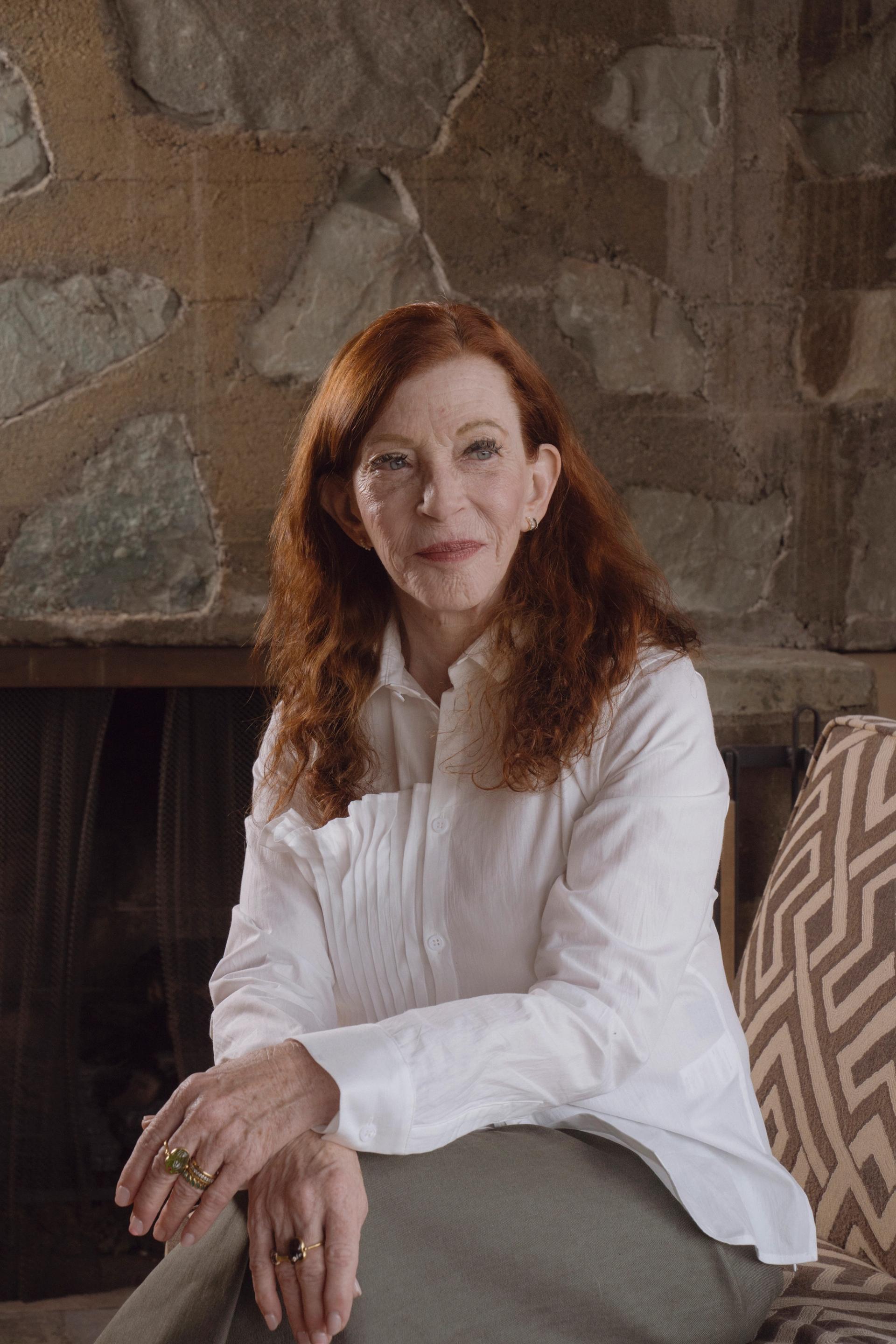
To me, the most alluring part of your career is that you’ve gotten to write stories that you were genuinely interested in and that weren’t in service of internet traffic trends. What is your secret sauce for convincing people to let you go down these rabbit holes? You mentioned that Tina Brown used to say your stories are all in the execution. Is that the secret sauce—you just have to be a fantastic writer?
Obviously I got started in a different era of journalism, before the metrics of readership were so sophisticated that you could say, “Well, a lot of people read this first paragraph, but then 32 percent of them didn’t read the second paragraph.” It’s frightening, because the incentive to cater to that is huge.
I think the secret sauce is a few things. I do think you’ve got to have these stories done better than good, because you are saying to people, “Look, I know you have no interest in this subject, but I’m going to make you see why it’s actually really interesting.” That’s a high bar. As opposed to, I’m going to profile Macaulay Culkin. You think, “Okay, well, I’ll read any celebrity profile.” I get it. I’m that kind of reader. We all are, which is, this is a familiar subject, a famous person or a murder or something that’s very naturally interesting.
So they have to be executed at a level higher than those stories that automatically attract an audience. And I think that what has to be conveyed authentically is that the writer really has to believe in them. And while that may sound a little wifty, I think it’s the single irreplaceable quality. I don’t think you can fake that. Readers are smart, and they can read the meta story about the writer within the story. I’m not just talking about how you have to craft beautiful sentences. I think you have to convey somehow that you truly were interested in this story and you will not rest until you tell the reader about why it was so interesting to you.
It’s not easy to define that. I feel that writers have gotten so frightened by the emphasis on the algorithmically attractive story that they’ve gotten scared to try to think of what they are genuinely interested in. And that’s nobody's fault. It’s the nature of the business to think, “Well, my editor only wants stories that are going to track really well.”
So you’ve got to be brave enough to figure out what animates you and charges your curiosity and desire, and fight like crazy to get the chance to give it a try. Who really would’ve thought that a book about a toothless guy who steals orchids would be a bestseller? I’m not suggesting that writers have failed. And editors are under a lot of pressure to say, “Well, I don't know if we can sell any ads against this. It’s tough. But if you don’t try, you’ll never know if you’re going to have that opportunity.
At least you’ve given future generations a template.
If people are inspired, what I most want them to be inspired about is learning how to identify the things they really want to learn about and to cultivate that. And you do need to begin to demonstrate that you can pull it off. It can’t be so obscure and so out there that there is no common ground with a reader.
To go back to The Orchid Thief, I thought, “Look, there’s an innate curiosity about the state of Florida, so I’ve got that going for me.” People are curious about eccentrics. And people like reading about crazy schemes. Are people interested in orchids? Well, a lot of people are interested in the natural world, so it’s not a slam dunk, but it’s relatable, particularly because orchids have become so commonly available now that they can be bought for $19. Even though it’s a weird, eccentric story, it’s not alienating. A story can be strange and unusual and kind of obscure if there’s some way that a reader’s curiosity can get hooked.
“Sometimes writing a sentence is such intense pleasure—making it say what you want it to say and knowing that it's beautiful or funny or interesting. And that is just between me and the screen. Nobody else has read it yet. Today, I find it maybe the greatest thrill.”
Is that what’s attractive about sticking with the New Yorker—the editors who are willing to play ball in this way?
Well, first of all, I think the New Yorker is an incredible institution. Their willingness to engage in the kinds of stories that I’m interested in has remained pretty steady, and that means a lot to me. Also, I’ve been working with my editors there for a long time, and that relationship is such a wonderful one to sustain over the years. And I have a lot of freedom. It’s like the best boyfriend in the world, where I can have affairs occasionally with other individuals, but they’re always there for me.
I can’t believe that you used to sit next to David Remnick before he became the editor. That's such great lore.
We were little grunts in our little offices. When I first heard that he was being made the editor, I just thought, “That is the silliest thing I’ve ever heard. Wait a minute, what are you talking about? He’s a writer!”
I think this book succeeds in making your career sound like a literal joy ride; it sounds like you’ve had such a dream life and career. But I was also very struck by—and appreciative of—how bittersweet a lot of your reflections were, especially in terms of how lonely the writer’s life is. You have this great line: “Sometimes it makes you feel insane, like you have chosen the saddest, most desolate life imaginable.” I’m curious if that still feels true sometimes for you?
It’s that feeling of sitting in front of a blank screen, where nobody can help you. Even if you call your editor and say, “I can’t think of a lede”—well, they’re not going to write your lede. They don’t know the material. And it’s so singularly your responsibility to create this thing that doesn’t exist. I’m a very good editor of my own work, and I always feel like, “Oh my God, this is so easy. It’s already there. Now I’m just making it better.” But getting it there can feel so naked.
It’s also very funny because the reporting part of your job is the exact opposite. You’re out in a social setting, talking to people, listening to people, hearing their stories. There’s this weird contrast when you suddenly come home and you’re locked in your office, and it’s you and your computer.
I’m lucky because I often will talk through stories with my husband, so I don’t feel quite as much like I am literally out here on a raft in the ocean alone. But it can be intensely lonely, and the pressure of a creative enterprise is huge. It’s not just that you're writing it to satisfy yourself—you then have layers of audience, and that can make the pressure very intense and very acute.
It’s funny, because I worked on the second season of How to With John Wilson, and I know tons of people who write for television, and I always think, “Why didn’t I become a TV writer?” I’m really social. I would’ve really preferred being in a room and having snacks and working stories out together. Yet somehow that didn’t happen. And I feel like I robbed myself. Obviously, I love what I do and the experiences I’ve had—I hung out with backpackers in Bangkok, and I climbed Mount Fuji, and then I spent two weeks in a trailer park, and then I hung out with a 10-year-old boy. Those adventures have been so marvelous. But the cost is, of course, that you come back and have to make sense of it, and that is something you have to do very much on your own.
Even when you’re talking about that part though just now, you’re lit up. You can’t help but smile when you’re talking about the agony of typing alone.
I’ll admit that sometimes writing a sentence is such intense pleasure—making it say what you want it to say and knowing that it’s beautiful or funny or interesting. It’s massively satisfying. And that is just between me and the screen. Nobody else has read it yet. It’s just me thinking, “I made that sentence.” Today, I find it maybe the greatest thrill.