At Paul Carmichael’s Table, the Caribbean Comes Home
The acclaimed Kabawa chef channels the region’s layered histories and bold flavors into an intentional, intimate experience.
May 18, 2026
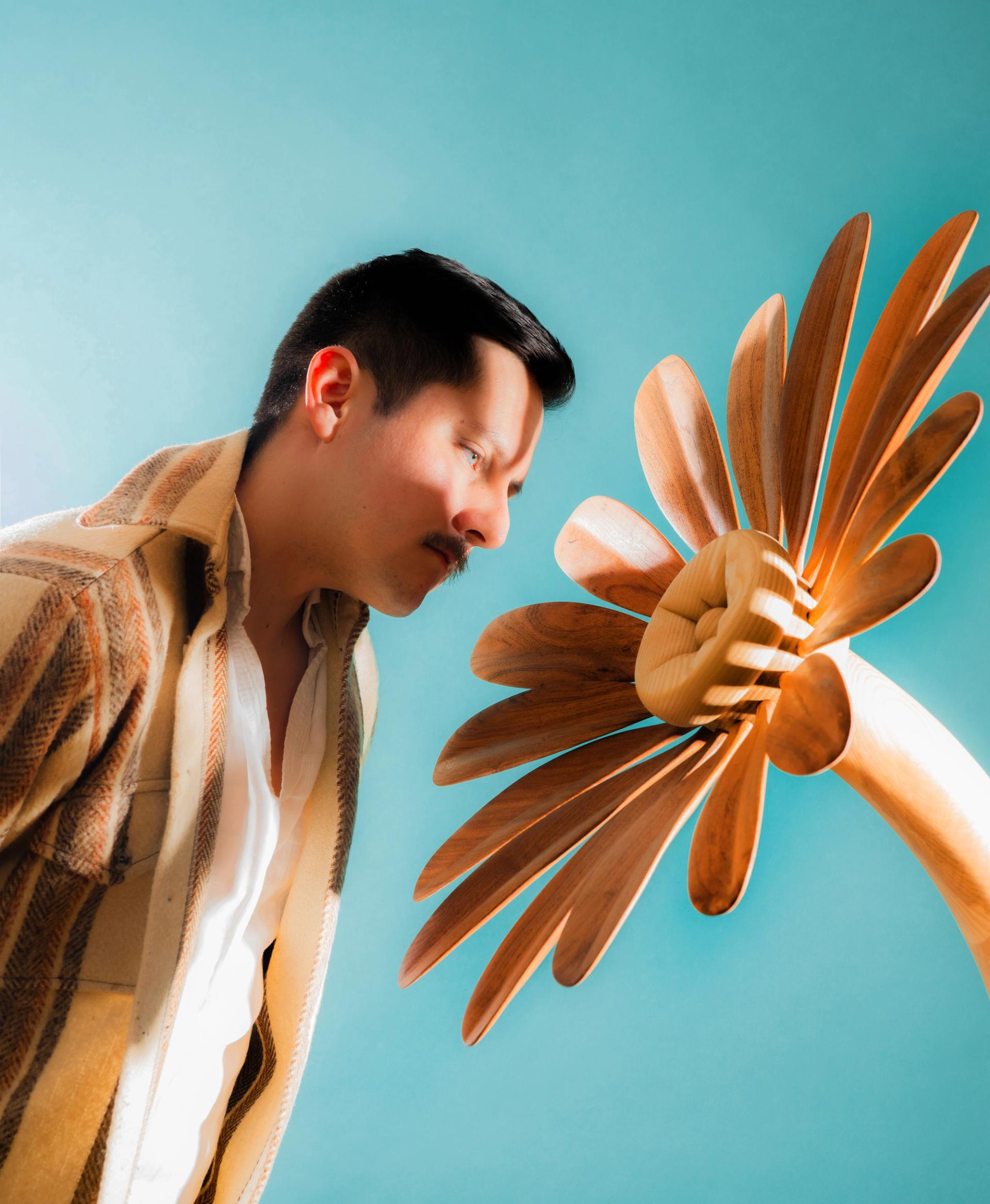
When building Kabawa, it was not enough for chef Paul Carmichael to be influenced by the Caribbean—he wanted people to feel like they were actually there, a feat marked by the frequency with which a Jamaican or a Trinidadian or a St. Lucian comes into the restaurant and feels nostalgic. Carmichael spent a lot of time thinking about the restaurant’s design. He gushed while talking about “the height of the chairs, the temperature the air’s supposed to be, the plates, the glassware, the freaking colors,” all of the “little details that everybody else would be like”—here, during an interview last summer, he affected boredom—“oh, that’s cool.” The New York Times would award Kabawa three stars (opens in new window), and call it one of the top 50 restaurants in America (opens in new window) mere months after its opening in 2025. More recently, it took the top spot in the paper’s annual ranking of the best restaurants in New York City (opens in new window), while Food & Wine named it the best in the country (opens in new window). But the menu was, in many ways, his last step.
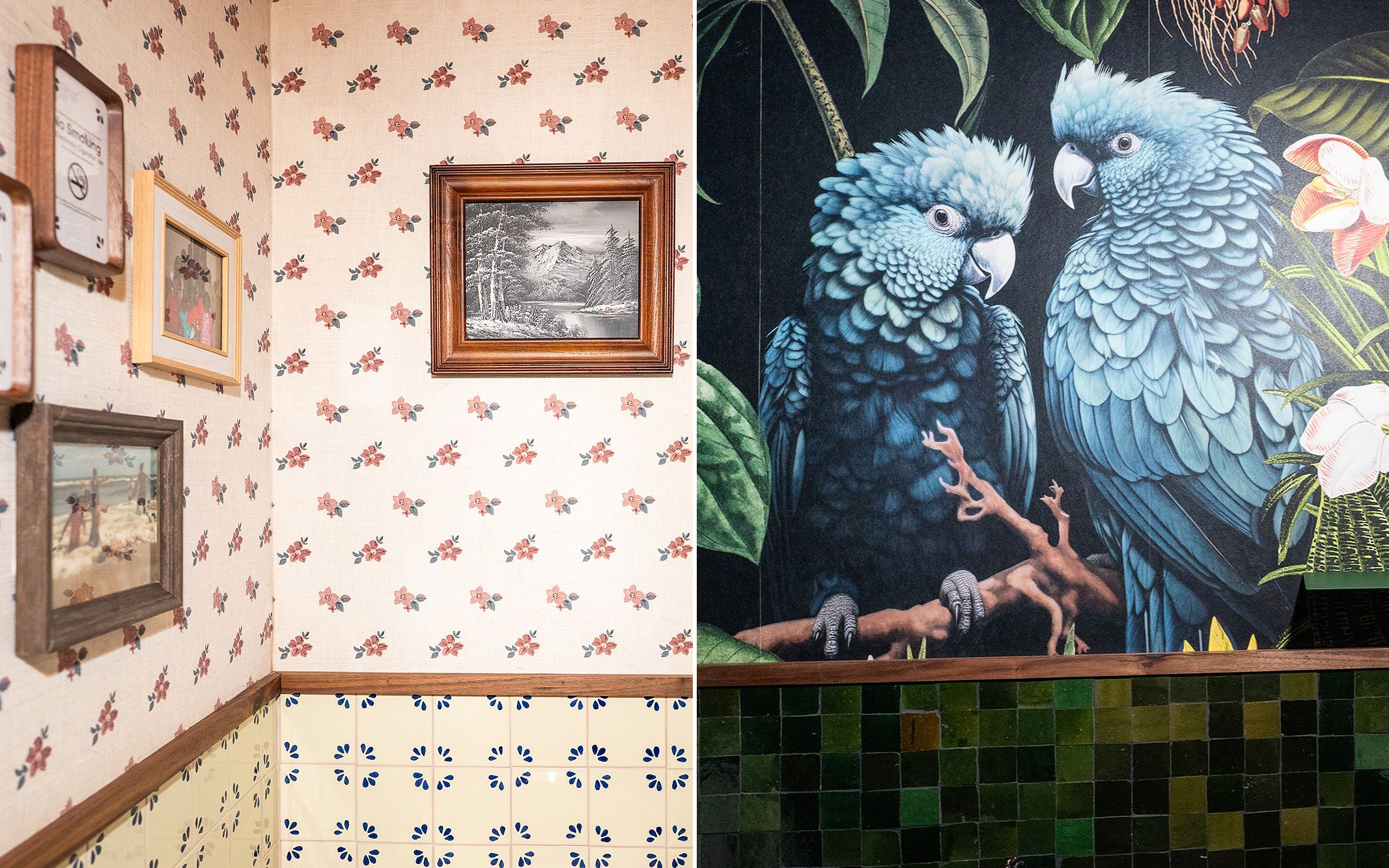
That attention to detail is suffused throughout the entire space, right down to the two immersive bathrooms. One evokes Puerto Rico, where Carmichael spent a chunk of his time in his twenties, and its tropical rainforest of El Yunque, with flowers the color of rum punch and birds in full plume stark against black wallpaper. It’s soundtracked by the distinctive sound—co-kee—of the coquí frog, a symbol of Puerto Rican national pride. Another transports diners to Barbados, where Carmichael grew up, via speakers that play a 2025 speech (opens in new window) from the beloved prime minister Mia Mottley to the African Union, pledging a renewed connection between the island and the continent. The walls are covered in family portraits, sourced from his staff, in mismatched frames. Carmichael is affable and self-deprecating and quick to joke, prompting a boyish smile that complements his waist-long locs. He wanted the Barbados bathroom to feel homey yet incidental, “like a grandparent’s place—bits and pieces of stuff, but it kind of works,” he said. “Because you’re not a designer—you’re just a person who needs a place to put towels.”
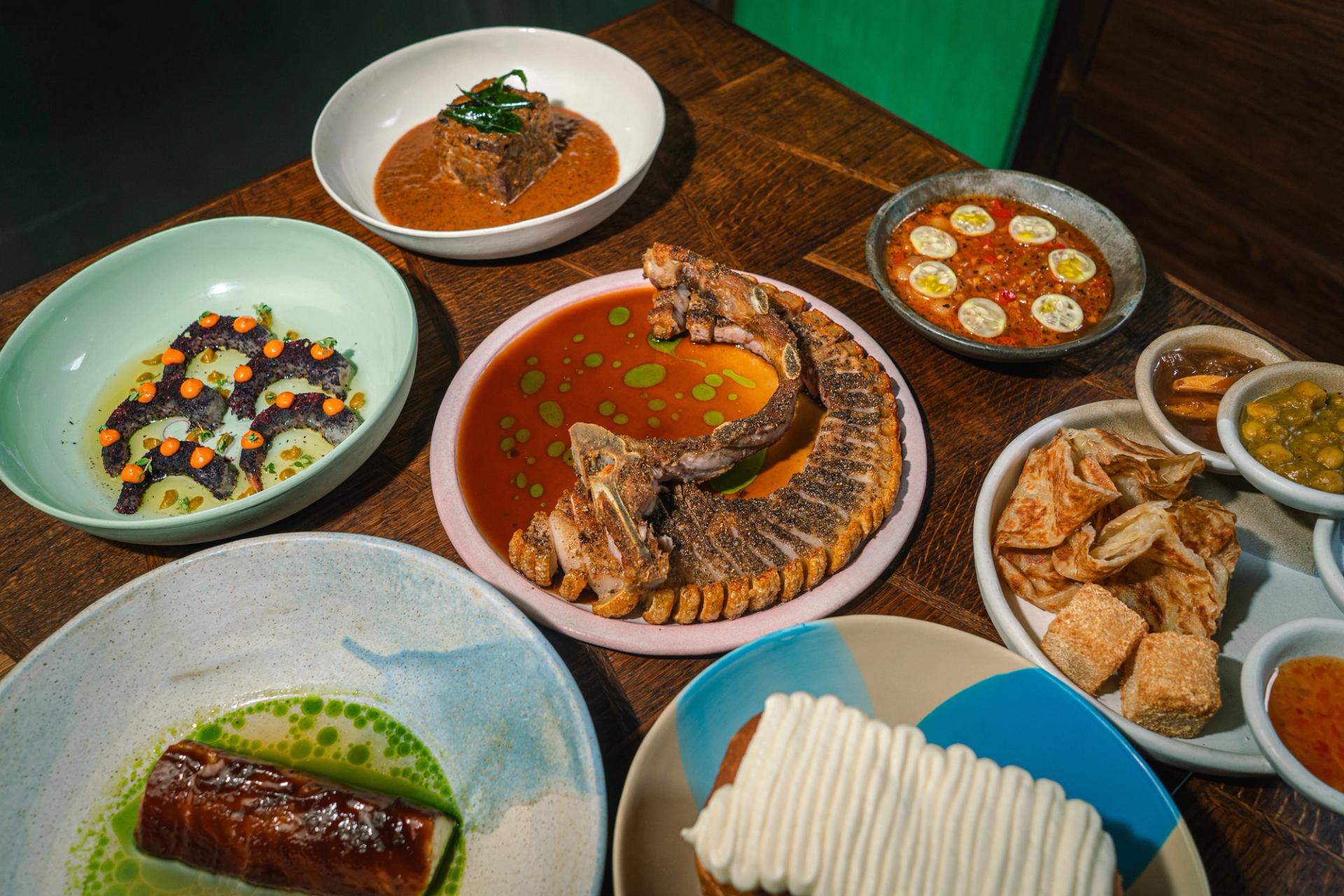
In the dining room, you’ll find bright and memorable dishes, ferrying patrons between Caribbean islands better than any cruise ship. Carmichael thought about the menu in two distinct ways: the “verbatim” dishes are traditional island recipes made with his own creative liberties, while the other half are more like remixes, combining ingredients and techniques with Carmichael’s own taste. The spicy, tart pepper shrimp, for example, is based on the traditional Jamaican offering, but modified to reflect where you are when you eat it. Due to overfishing, he said, shrimp is easier to source in New York than Jamaica. So instead of frying it like they do back home, why not serve it raw? The chuletas can can, a sweeping cut of pork, and the hearty, vegan legume are taken straight from Puerto Rican and Haitian culinary tradition.
The less traditional dishes put Carmichael’s prowess even more on display. “Maybe the islands, individually, wouldn’t do it like that,” he said, but Carmichael does. “If you have this knowledge of different islands’ cooking, and if you’ve lived in different places, you can do this thing with ingredients from the region, but put together in a way that shows what it could be if you were to mash up Puerto Rico and Martinique, or Trinidad and Haiti.” These dishes are ingredient-driven: A crispy, flaky breadfruit tostón is covered in juicy slices of octopus and doused in spicy “dog sauce,” made from herbs, chiles, and lime. “You’re not gonna go anywhere and find that dish other than Kabawa, because it is tostónes, based on a Puerto Rican dish, but made in our own way, with a sauce from Martinique and a technique from Kabawa. It’s a mashup of things to create our own thing, but that celebrates these two ingredients and two countries.”
All this is something of a departure for the Momofuku group, whose flagship space—once home to Ko, founding chef David Chang’s 10-course tasting menu experience—Kabawa now occupies. Between opening Momofuku Noodle Bar in New York in 2004 and eventually peaking at 13 restaurants worldwide in 2021, Momofuku reinvented Asian American cuisine, from noodles to pork buns to bo ssäm. “It was the center of the culinary conversation, and in a way that transcended the borders of New York,” said Brett Martin, a longtime food writer. Chang became a celebrity chef, playing himself on the HBO drama Treme, serving as a judge on Top Chef: All-Stars, and hosting three different food shows on Netflix. His restaurants have permanently influenced restaurant culture, not only with their food, but also innovations like Ko’s online-only, real-time reservation system. “The style of dining, what we expect from restaurants, and what they expect from us, was, to a tremendous degree, shaped by Momofuku,” said Martin.
Then the pandemic walloped the restaurant industry. Momofuku started closing restaurants—aside from Kabawa and its offshoot Bar Kabawa, five remain, plus a couple of outposts of the takeout spot Bang Bar—and Chang expanded to grocery store products, launching the separate Momofuku Goods company and putting chili crunch and restaurant-grade tamari in Whole Foods. When it opened, Kabawa was Momofuku’s first new restaurant in six years, and Carmichael has been tapped to play a central role in the evolution of the group, “instrumental in shaping the next generation of chefs at Momofuku” and “build[ing] a legacy through mentorship,” as Chang told the Times (opens in new window) in 2024.
Carmichael has been with the company since 2010, working first at Ma Pêche in Midtown Manhattan and then in 2015 taking over Momofuku Seiōbo, in Sydney, Australia. (Or, as Carmichael put it, “I got banished to fucking Australia!”) But if he was angry, he didn’t show it. Prior to Carmichael’s arrival, working at Seiōbo “was extremely intense and everything felt on the line,” Momofuku CEO Marguerite Zabar Mariscal said. The reviews were glowing, the restaurant was full, but morale was low. Carmichael was able to replicate that success without the strain, an approach he called “burning clean,” instead of “burning dirty.” “There’s a lot of people who say that success comes at a cost, or that the attitude needs to be one of winning, and that’s antithetical to a culture that is optimistic and happy. What Paul was able to do was prove that you can have both,” said Mariscal.
Carmichael also reshaped the food at Seiōbo. He had been thinking for decades about how to highlight the sophistication and history of Caribbean cuisine without the clichéd tourist trappings, and he found that Australia’s tropical offerings paired well with his mind’s tongue. So he started integrating island staples like coconuts, plantains, and cassava. In 2016, a year into his tenure, Gourmet Traveller named Seiōbo the best restaurant in the country; two years later, it received the coveted three hats from the Australian Good Food Guide. “The humble and affable personality that he presents sort of masks the level of difficulty to which he’s trying to execute,” Chang said in a phone call. “And because it’s food of the Caribbean, it’s very subversive, and that’s exactly the point.”
Each dish on Kabawa’s menu is inflected with the history of different islands, whether it be politics or migration. The menu is roughly categorized, in Carmichael’s mind, by colonizer (English, Spanish, French, Dutch), though Carmichael is wary of a culinary pedantry, of shoveling food and lessons down his diners’ throats. But if they are curious about the history of the dishes—the real history—Carmichael is happy to share. His senior thesis at the Culinary Institute of America was about the Caribbean’s food and ingredients as related to the trans-Atlantic slave trade. He mentioned a white couple who came in and asked him about a dish. “And it was like, ‘Do you want the real answer?’ They were from Mississippi, and when I started talking about it, they got uncomfortable, and it was like, ‘Well, this is what actually happened. I’m not trying to make you feel bad, but that’s the reality of the situation.’” Above all, though, Carmichael wants to deepen the popular understanding of the region’s fare outside of Jamaican staples like jerk chicken (which doesn’t appear on the menu).
He bristles at any suggestion that he is “elevating” the cuisine, which has often been denigrated as solely street or resort food. “I don’t like to think of it as elevated—I just think of it as now in its place,” he said. “When people talk about elevation, especially for cuisines, you’re doing a disservice to the hundreds of years, and sometimes thousands, before you. I’m but a vessel.”
This sense of history and place carries through in Carmichael’s attention to aesthetic detail. He sent his own photos from his neighborhood in Barbados to Kabawa’s mosaic designer for a back wall, wanting to evoke specifics, not just a general vibe. The structures that look like lighthouses in the mosaic are actually holdover towers from slavery that allowed individual plantations to spread the word of an uprising. He knew not everyone would notice all the touches from home, like rattan chairs and slatted doors, but he wanted to do it for the people who would, who would take everything in and immediately be transported elsewhere.
Carmichael wears humility well. He doesn’t not like the good reviews, but either way, he will continue what he’s doing. “I’ve worked incredibly hard on these spaces to try to create something that’s right, that could speak to my people in a way that nothing really speaks to us,” he said. “A woman walked in here the other day and she was like, ‘Oh my God, that reminds me of my bedroom growing up.’ I was like, ‘I’m from Barbados, you’re from Jamaica, same thing.’”
In-Depth
The Roti Paul Carmichael Worked for Years to Perfect
The first taste in your mouth at Kabawa is a flaky, buttery roti, the West Indian flatbread. The dish traveled to the Caribbean in the mid-19th century: British-ruled India, intending to replace the labor from recently emancipated slaves, sent over one million people to the region to work as indentured servants. “It’s become a part of our food—you have roti, no one’s like, ‘What’s that?’” Carmichael said. “It’s in Caribbean culture as far as food is concerned.”
Carmichael has been tweaking his roti for a decade. At first, he doubted such a simple dish could need so much tinkering: “I was like, ‘Oh yeah, I got this, it’s roti, I know what I’m doing,’ but no, that was garbage.” Roti is typically served as a flatbread, but Carmichael’s goal was something flaky, buttery, crispy, almost croissant-like. “I made it a bunch of times, but that wasn’t happening. It was a matter of technique,” he said. He experimented with dough recipes, layer thickness, and different hydrations. “The temperature is incredibly important, how it’s laminated is important, it being frozen is important,” he said. “But all that emerged over time.” The long-toiled-over result sprang from a desire to make the dish unique, “which is why it was difficult, because you’re taking this thing that has existed for probably over a thousand years, and you’re trying to make it yours.”
Carmichael believes that when a chef is a technical machine—working not with touch or intuition but rote action—you can feel it in their food. He told his managers that he wants the kitchen to feel like jazz, not classical music: “It needs to be able to change and be malleable,” he said. To be a good jazz musician, you’ve got to know the fundamentals, so that you can futz with them. “You can break the rules when you know the rules.”
That willingness for repetition was seeded early in Carmichael’s career, which began when he was 14, working in a hotel kitchen in Barbados. He wasn’t even being paid for the first year and a half—he was just happy to be there, “because I like working, and I like learning.” If his shift was supposed to start at 2 p.m., but the chef came in at 9 a.m., he’d be there at 8:30 a.m., ready to help. One man took Carmichael under his wing and allowed him to help: “He was a baker, so I made hundreds of thousands of crepes.”
There’s no heartwarming story of a parent or an older cousin teaching a young Carmichael how to cook, passing on a cherished family tradition. He just picked it up by watching what everyone else was doing. That started when he was around three. “Cooking was something, for me, that was very innate. My parents had told me, before I could walk, I would crawl to the kitchen and pull out pots and pans.” When doubt was cast that he could’ve possibly started cooking at such a young age, he pulled out a picture of a glowing, chunky kid in front of a stove: “My mom put me on a stool and I just started making bacon and eggs.”
Noodles and casserole—made from whatever was around—were some of his earliest dishes. Everyone in the house cooked, and everyone shared. “My parents always are very giving people, that’s just rubbed off on me,” he said. “We were the family that, on holidays, the doors were open to everybody, and mom or dad would drive around the neighborhood and pick up the old people, or the homeless.”
After getting his degree in computer programming from Barbados Community College— mostly to pacify his parents—he moved to New York to attend the Culinary Institute of America. But that didn’t come without pressure, which he still feels today: Could this kid from a working-class neighborhood on a tiny island succeed? That question was answered when he worked at influential restaurants like Wylie Dufresne’s wd~50 and Marcus Samuelsson’s Aquavit, but, “I grew up in a time where our own stuff wasn’t even celebrated in that way,” he said. “Food was celebrated, but never on this grand scale where you have people from the island thinking about their own food in the same way they think about French food, or Chinese food, or Italian food. It’s important to value your own shit, especially when your shit is good.”
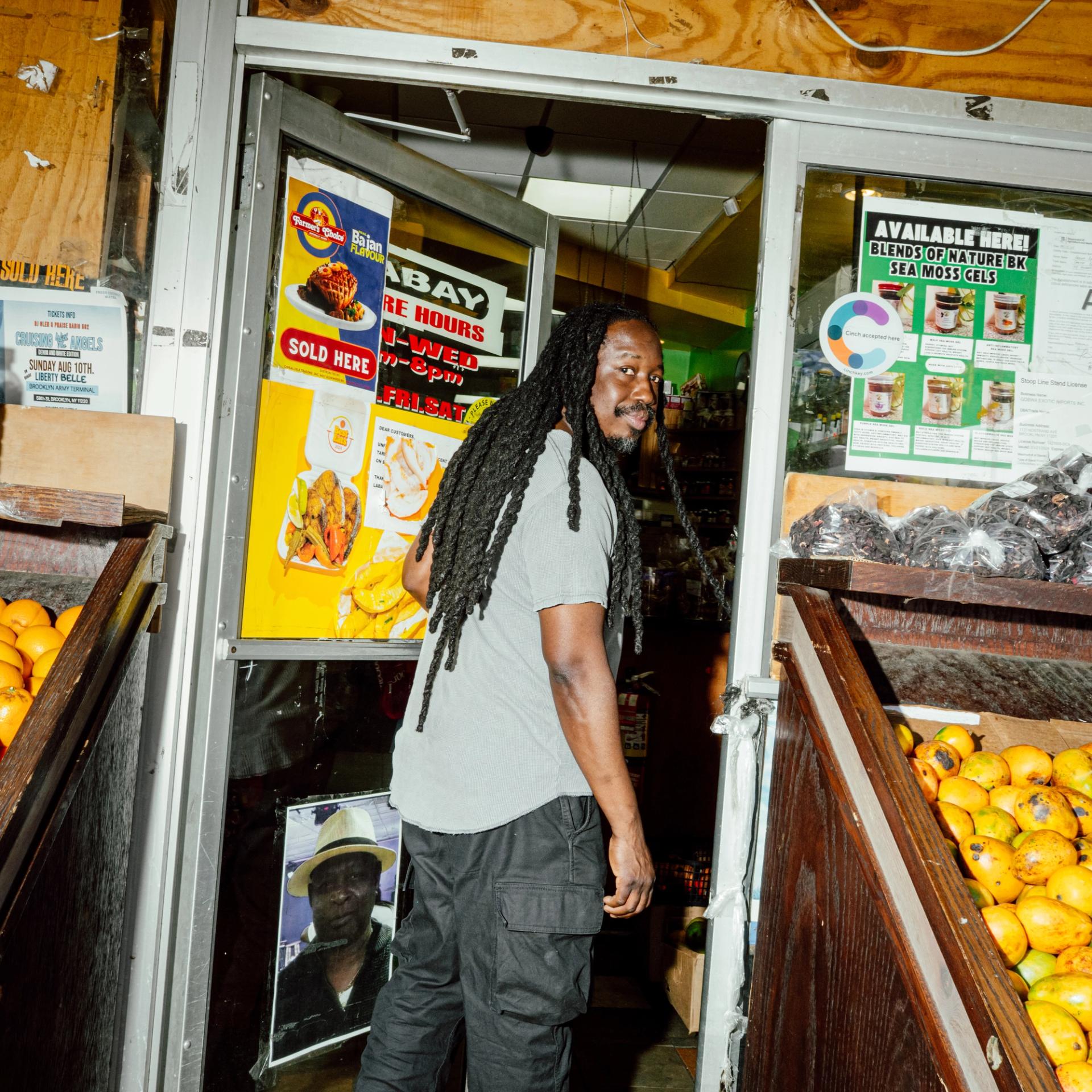
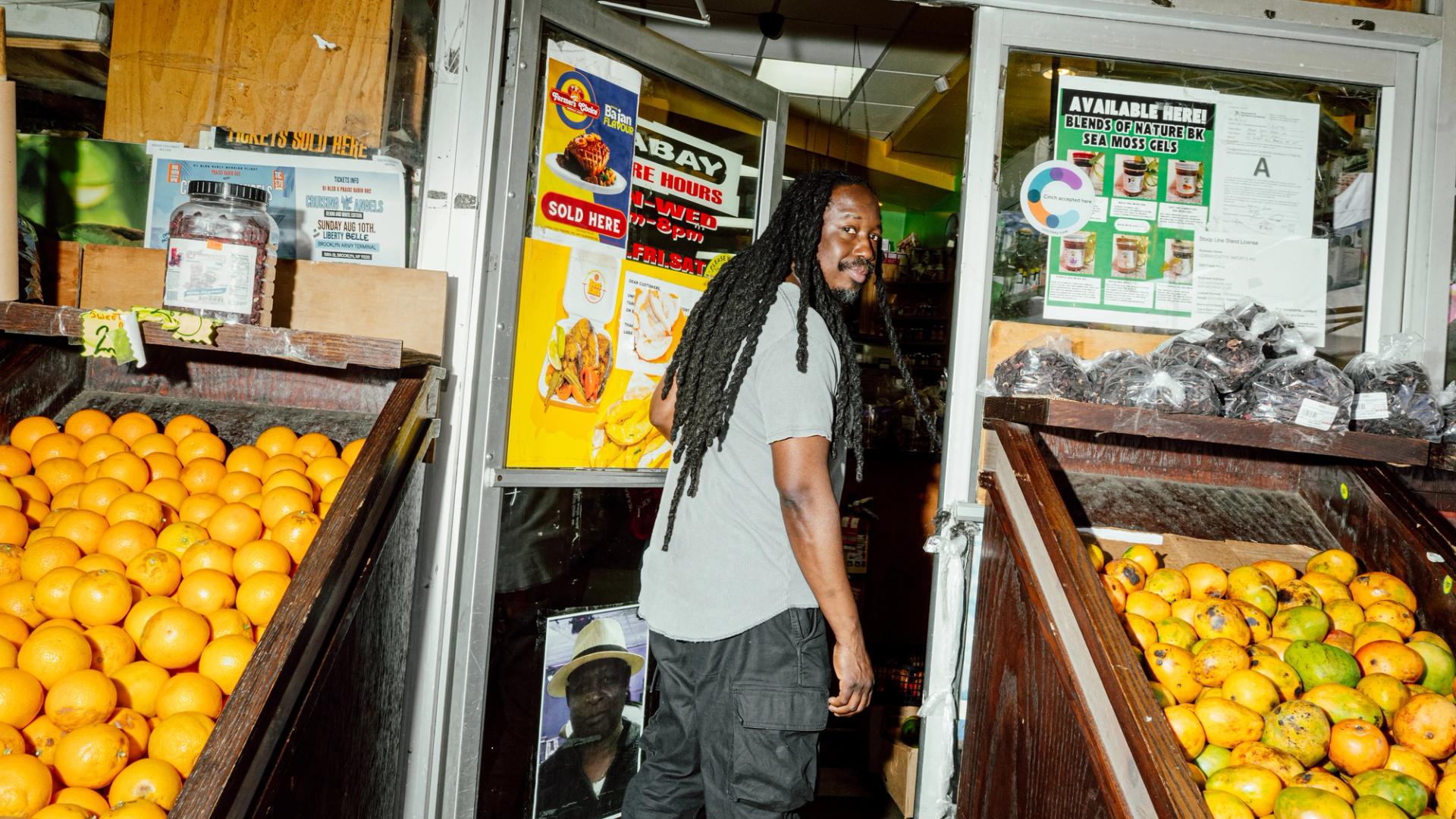
Carmichael lives in Flatbush, Brooklyn, also known as Little Caribbean, where boxes of breadfruit and callaloo line the streets. “In New York, everything’s here—you might have to pay for it, you might have to work hard for it, but you have access to everything,” he said. He had to prove himself worthy of being supplied coconuts by Labay Market: “It took him”—referring to Big Mac, the store’s Grenadian owner—“a little while to believe that I was a legit human,” Carmichael laughed, sitting at a table in the front of Kabawa. Getting Big Mac to actually go into business with him was as difficult as “finding hen’s teeth.”
Labay Market is not a spot where words like “Momofuku” or “David Chang” will immediately cause a person to whip their head around. Carmichael is the same type of low-key, a devotee of flavor above all. (“Who fucking cares?” he said at one point, in response to the stressors that can arise in a busy kitchen. “It’s just food. It’s future poop.”) He wanted a staff to reflect that—more than just talented people, he sought out kind people, “people that want to give a bit of themselves to somebody else, to someone nameless.”
“That’s just how I was raised—I like people to feel good,” he said. The New Yorker review of Kabawa (opens in new window) rated Carmichael’s personality, as a tone-setter of the restaurant, as highly as the food itself, noting that Carmichael punctuates fun moments in the restaurant by ringing a bell. “You should feel good when you leave a restaurant, or any space—sometimes you feel good leaving a clothing store, and it’s just a simple interaction that could change everything. You didn’t eat anything, you didn’t consume anything, sometimes you don’t even buy anything—just, ‘ah, well, that was nice.’”
It’s this chilled-out approach that made him so appealing to the Momofuku group. Well, that and his wild expertise: Mariscal called Carmichael a “generational talent,” and David Chang, who has known Carmichael for over two decades, called him one of the best chefs in the world, in part because of his diversity of style. “He is as well-rounded as you can get as a chef,” Chang said. “More importantly, over the years, he’s proven time and time again that it’s not just about being the person who can cook the best,” he added. “It’s being able to be a leader, to be somebody that can change your perspective on things, both from the dining perspective but also the people in the kitchen and the front of the house.”
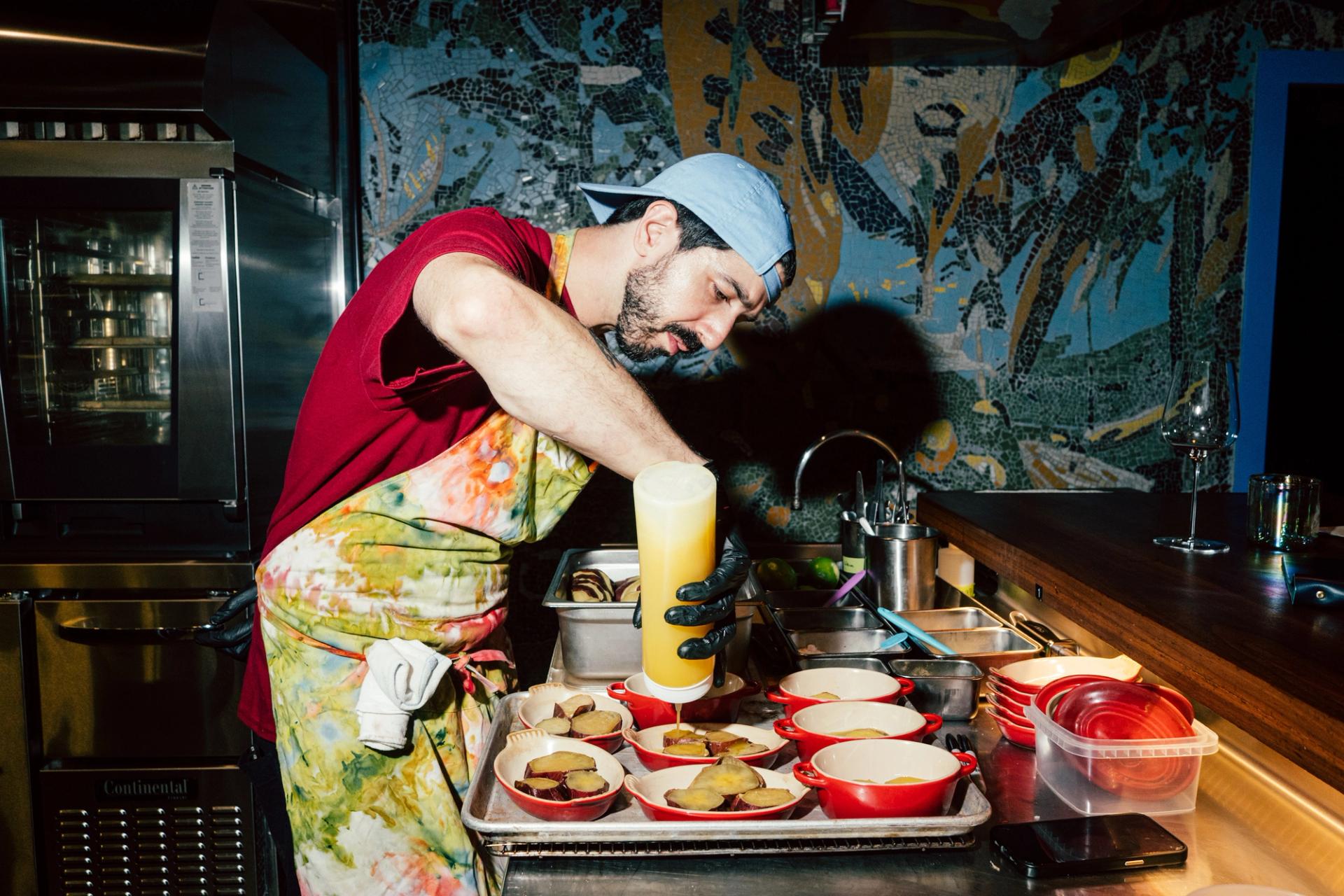
Mariscal pressed that the company’s approach is simply to invest in and listen to Carmichael, which also means changing the popular perception of the company as one that focuses exclusively on Asian cuisine. “There was never the idea that he was going to come back and make pork buns,” said Mariscal. “It was always to have him come and build something that was reflective of him.”
Kabawa, then, opened right on time. Though Caribbean restaurants have long had a stronghold in the city’s outer boroughs, they’re starting to make the voyage into Manhattan. Maison Passerelle, the new French restaurant inside of the department store Printemps, is helmed by Haitian American chef Gregory Gourdet, who has dotted the menu with items like Haitian rice and scotch bonnets in a nod to the relationship between colonizer and colonized. The scent of sorrel-glazed chicken wings and plantain wafts out of Omar’s Kitchen, a Caribbean restaurant on the Lower East Side. Kabawa is most likely, though, to be compared to Tatiana, Kwame Onwuachi’s celebrated restaurant in Lincoln Center, though the latter restaurant’s menu, while traveling through the African diaspora, only makes a pit stop in the Caribbean. (Onwuachi has also opened a patty shop at Citi Field.)
There’s a similarity to Chang’s and Carmichael’s respective roles in introducing New York diners to new flavors: Both chefs sense that a dish should either look familiar and taste different, or look unfamiliar and have a familiar taste. Chang says one of his favorite dishes on Kabawa’s menu, the birthday cake, a stick-to-the-roof-of-your-mouth cut of flan topped with whipped cream and rainbow sprinkles, is emblematic of Carmichael’s artistic approach to cooking. Not everything needs to be fancy—some things are better led by feeling than form.
Carmichael waves off the significance of becoming the new face of the famous food group. “I don’t really want to buy into the idea of me taking Momofuku in another direction, but what I do want to say is that if we do well, we have an opportunity to share more and spread the idea of the Caribbean.” He’s excited by the promise of additional spaces, like a fast-casual spot or a bakery, or even a cooking school. Either way, it’ll further his purpose: to get people to look beyond the sun and sand of the Caribbean, to have the region be taken as seriously as any other. “What I want to do here is be best in class,” he said. “I want the person that makes the best pudding and souse”—a Bajan mainstay of pork and sweet potatoes—“to come in, have a little snicker, and be like, ‘It’s not as good as mine, but it was pretty damn good.’”