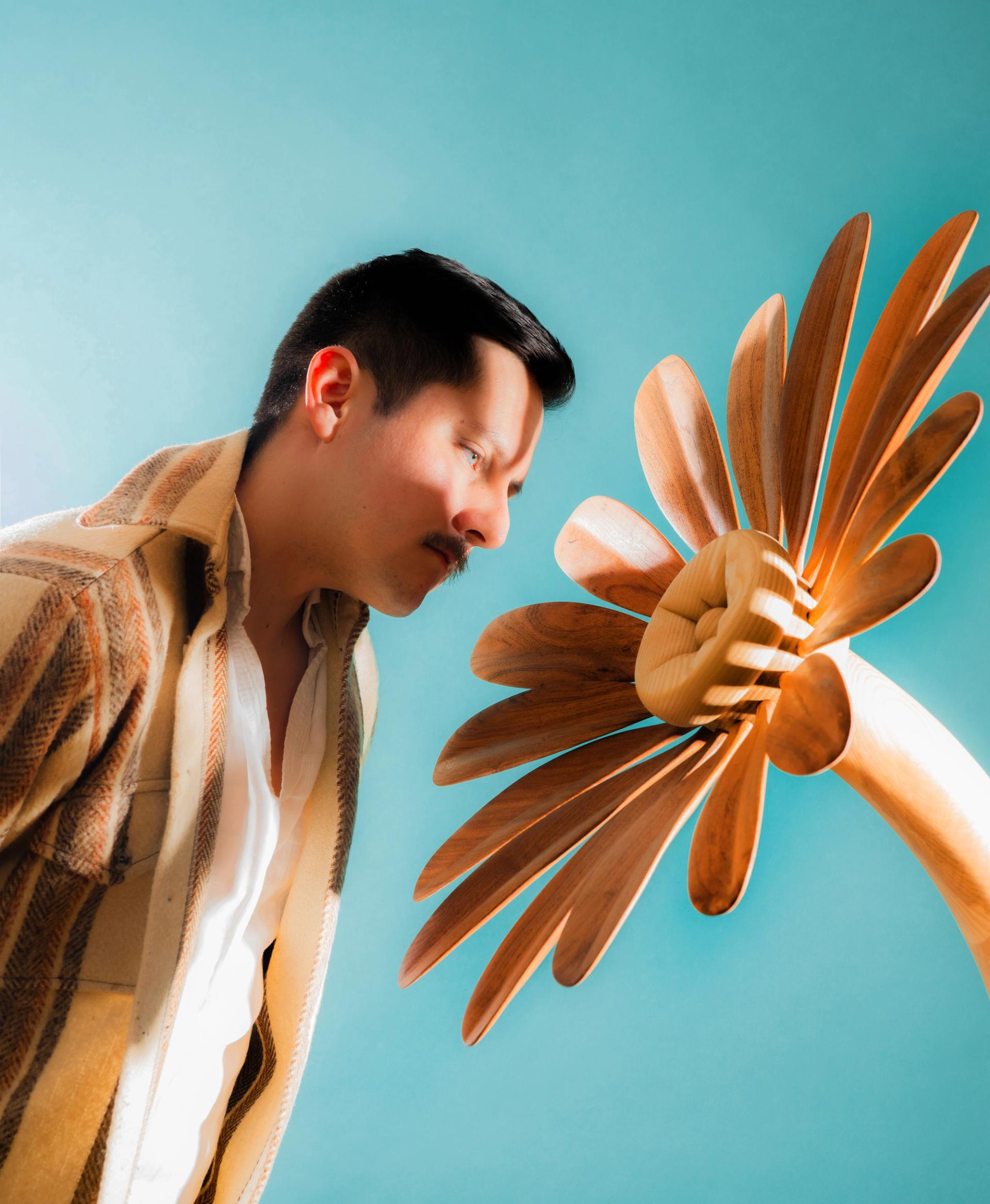
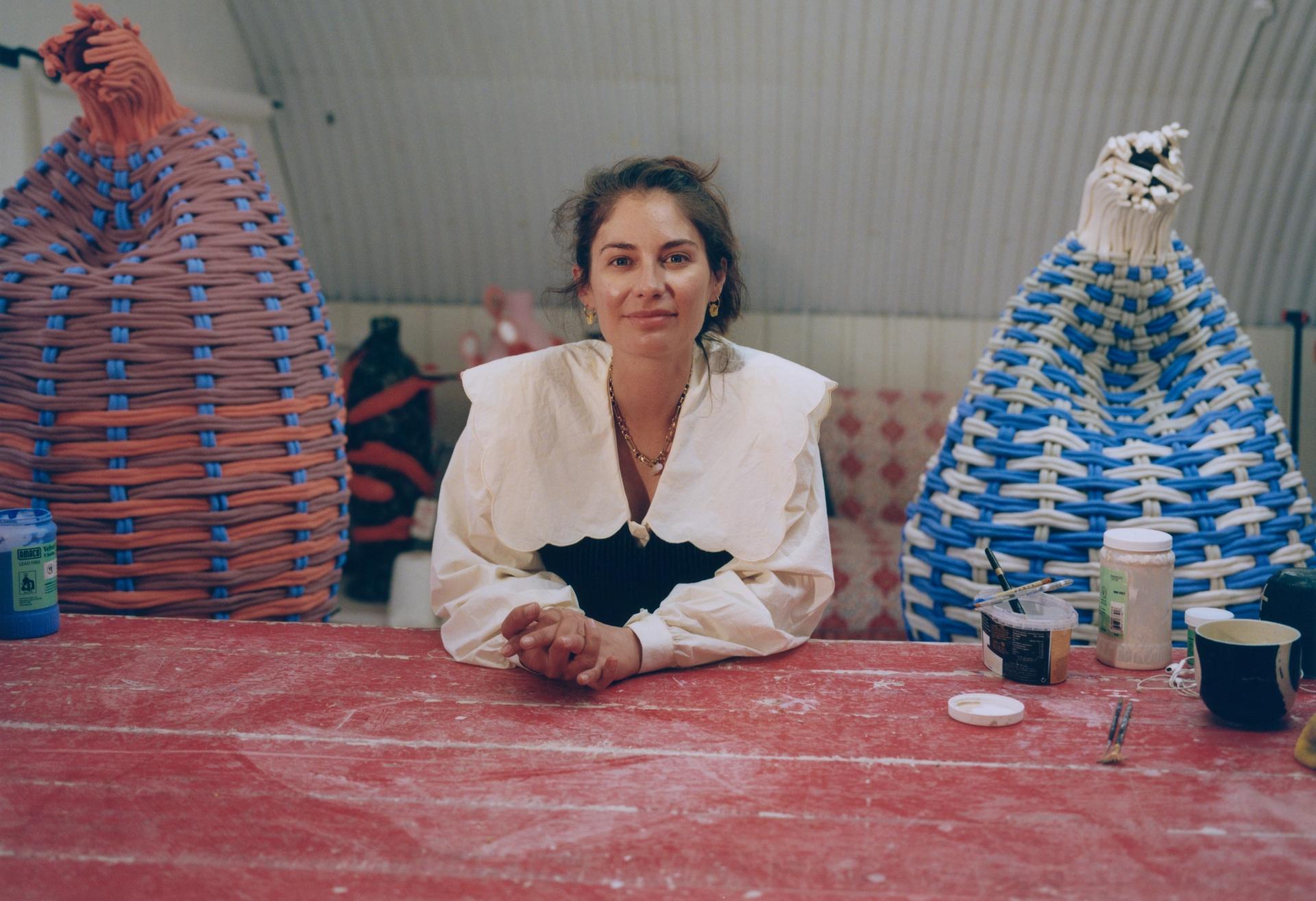
How Lily Kwong Engineered a Living Sculpture from Soil
The artist embraced technology to construct a slyly subversive organic sculpture, in the center of San Francisco’s Financial District, that celebrates communion with nature.
July 21, 2026
“As soon as I stepped into this grove of redwood trees, I immediately saw the dome,” Lily Kwong said. The artist was speaking of the giant redwoods in the Transamerica Redwood Park, right in the middle of San Francisco, that form the backdrop to her latest work of art, titled Earthseed Dome (opens in new window) (2026).
The dome is 12 feet high and roughly 30 feet across, with thick, curled walls, a tapered arch that resembles twisted fabric, and live plants sprouting from its crevices and nooks. Its skin is a seed-soil mix, buttressed by an outer shell of recycled stone, lime, and sand. It is large enough for more than one person to walk underneath and linger below its leafy vault. It’s Kwong’s largest work to date, and it’s alive: The soil was studded with germinating seeds that have budded and bloomed over the sculpture’s lifetime.

Lily Kwong in collaboration with Atelio, installation view of EARTHSEED DOME (2026).
Earthseed Dome was commissioned and organized by the Institute of Contemporary Art San Francisco (ICA SF). The project is close to home for Kwong. She was raised in Mill Valley, California, beside Muir Woods National Monument and its abundance of old-growth redwoods, and when she visited the majestic trees in the city park, her vision for the installation materialized at once. She had been primed by her recent immersion in the work of Ruth Asawa, who shared her fondness for undulating organic forms and a deep connection to the natural world.
“As an Asian woman growing up in the Bay Area and an aspiring artist, in high school, Ruth Asawa loomed large,” Kwong said. Re-encountering Asawa’s work in 2025 at SFMOMA’s compendious retrospective (opens in new window)—which included many of her plant-inspired, woven-wire sculptures—was “life-changing.” Kwong read a biography of the artist and met her now-adult children on a visit to her former home. Kwong, a mother of two, was moved by the way Asawa, a mother of six, “wove motherhood and children into her creative practice.” It resonated with a central theme of the “womb-like” Earthseed Dome: nurturing life.
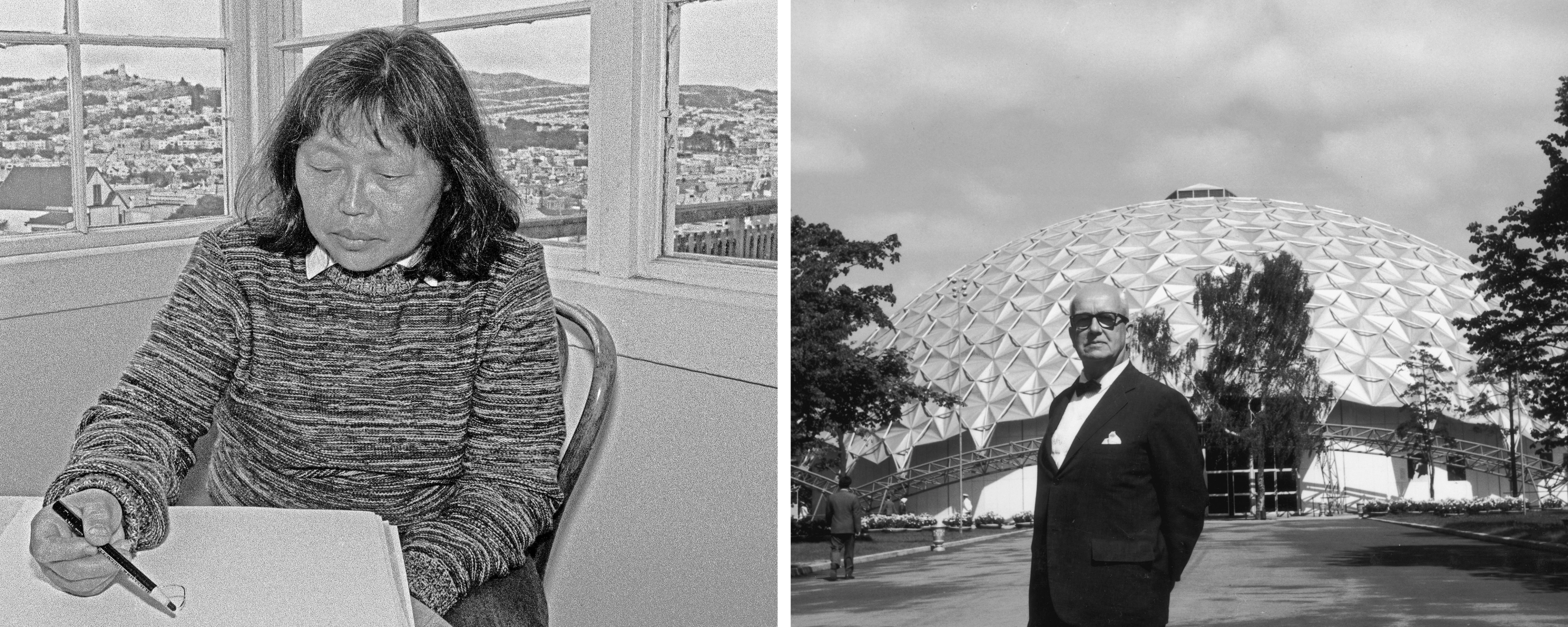
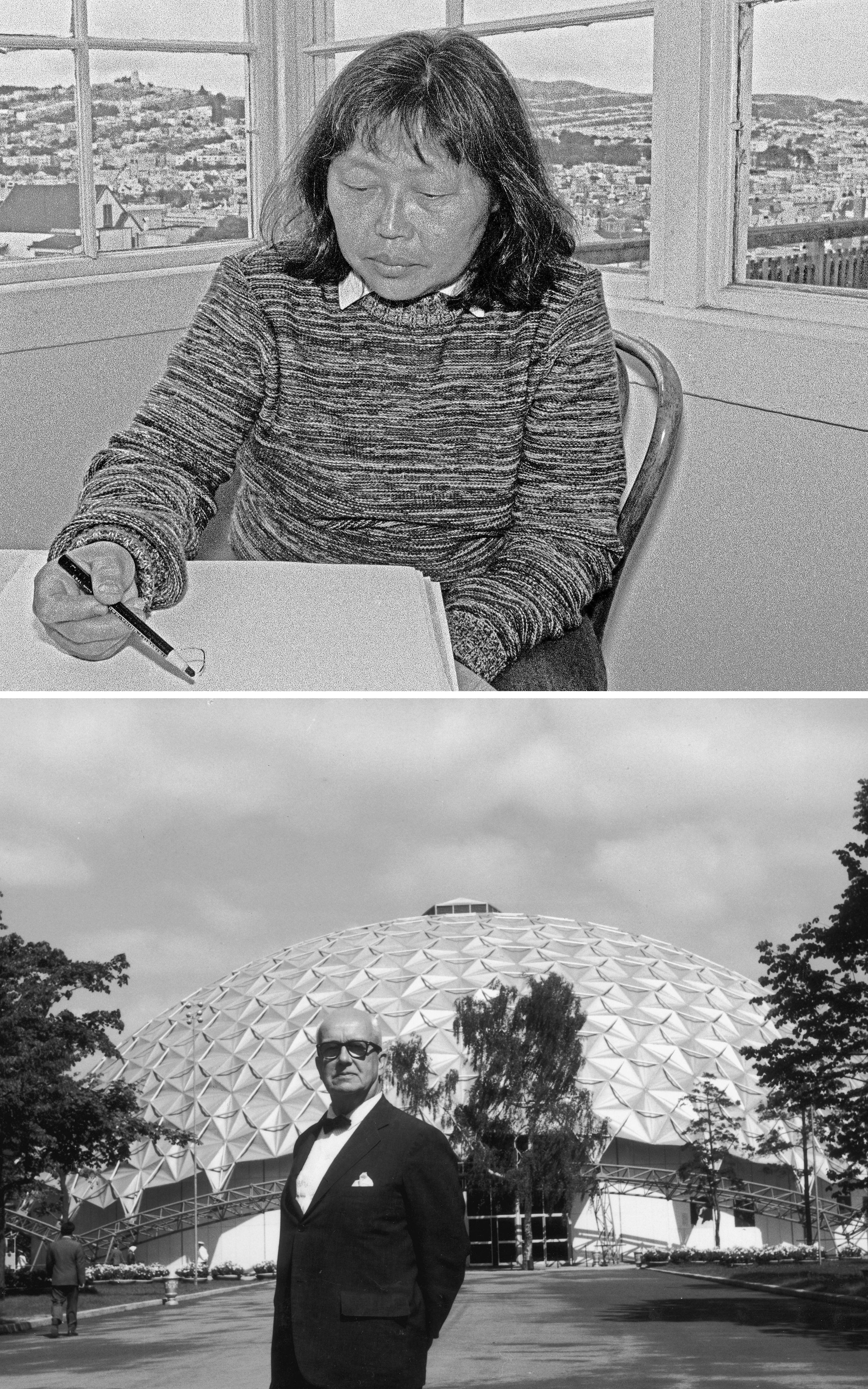
Ruth Asawa in 1980; Buckminster Fuller posing in front of a geodesic dome in 1960.
Credit: Photograph by Robert Clay / Alamy; Hulton Archive / Getty ImagesKwong also learned that Asawa was a close friend and disciple of Buckminster Fuller, the modernist architect best known for his geodesic domes (opens in new window), which he developed as a utopian expression of social progress, resource sharing, and living in tandem with nature. For Fuller, Kwong said, “the dome as a shape was about a harmonious and ecologically sound future.”
“I was inspired by that, and wanted to honor that, but I also wanted to push it a step towards my own interest and curiosity in Earth-based wisdom and ancient technologies,” Kwong added. The dome shape appealed to her in part because of its millennia-long history as a basic building unit in human societies around the world. She wanted her installation to be “not just a utopian vision for the future, but something grounded in our very meaningful past.”
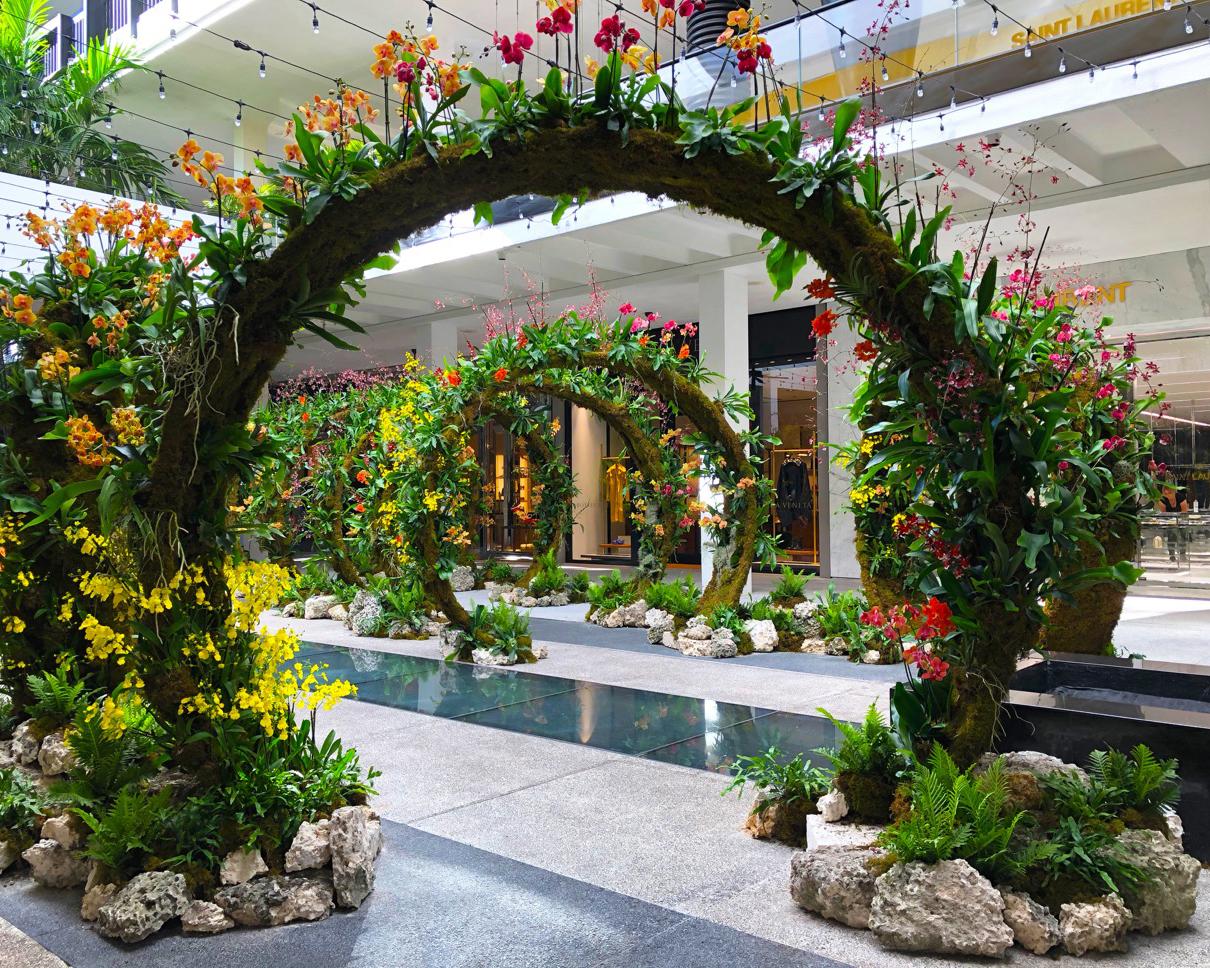
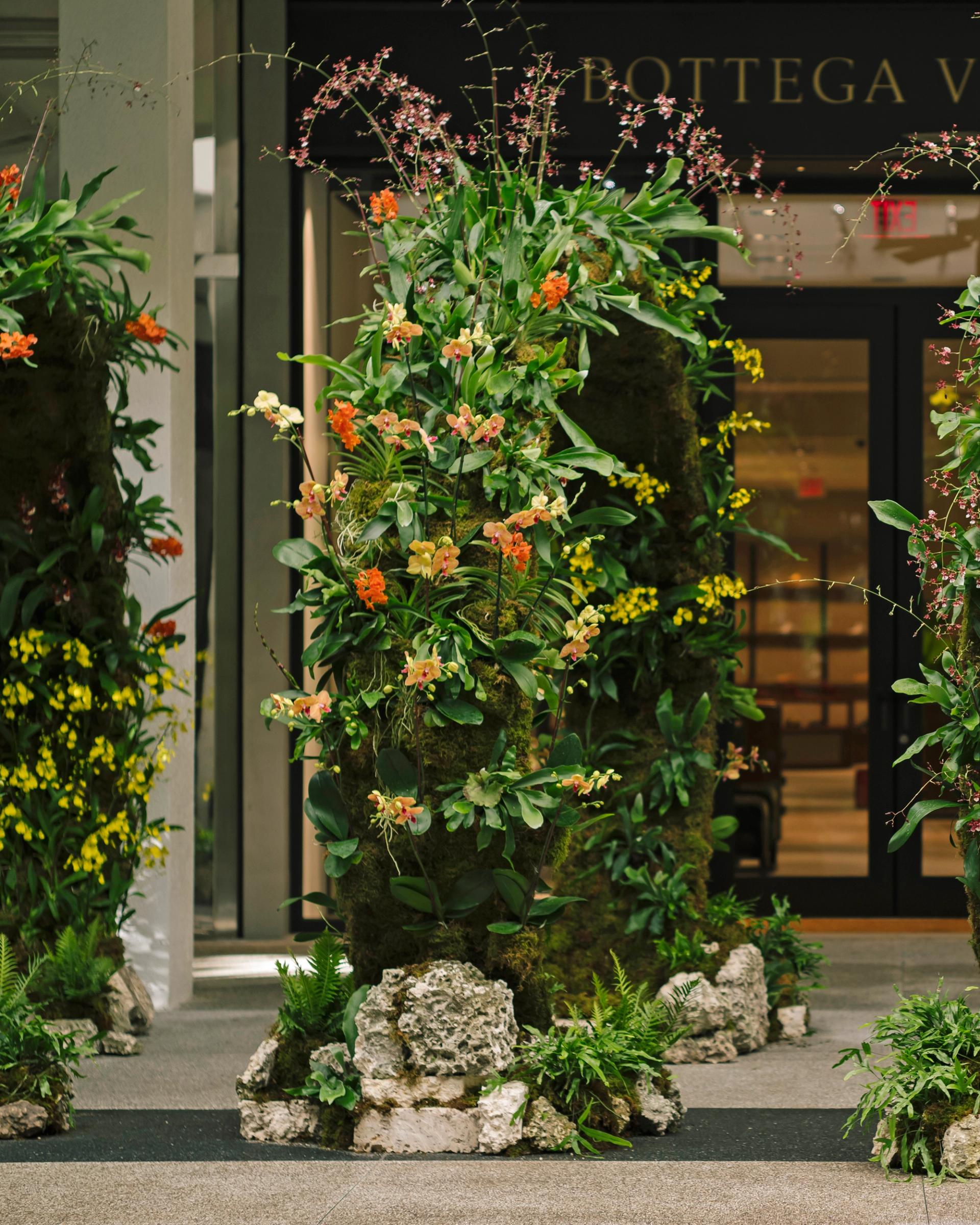
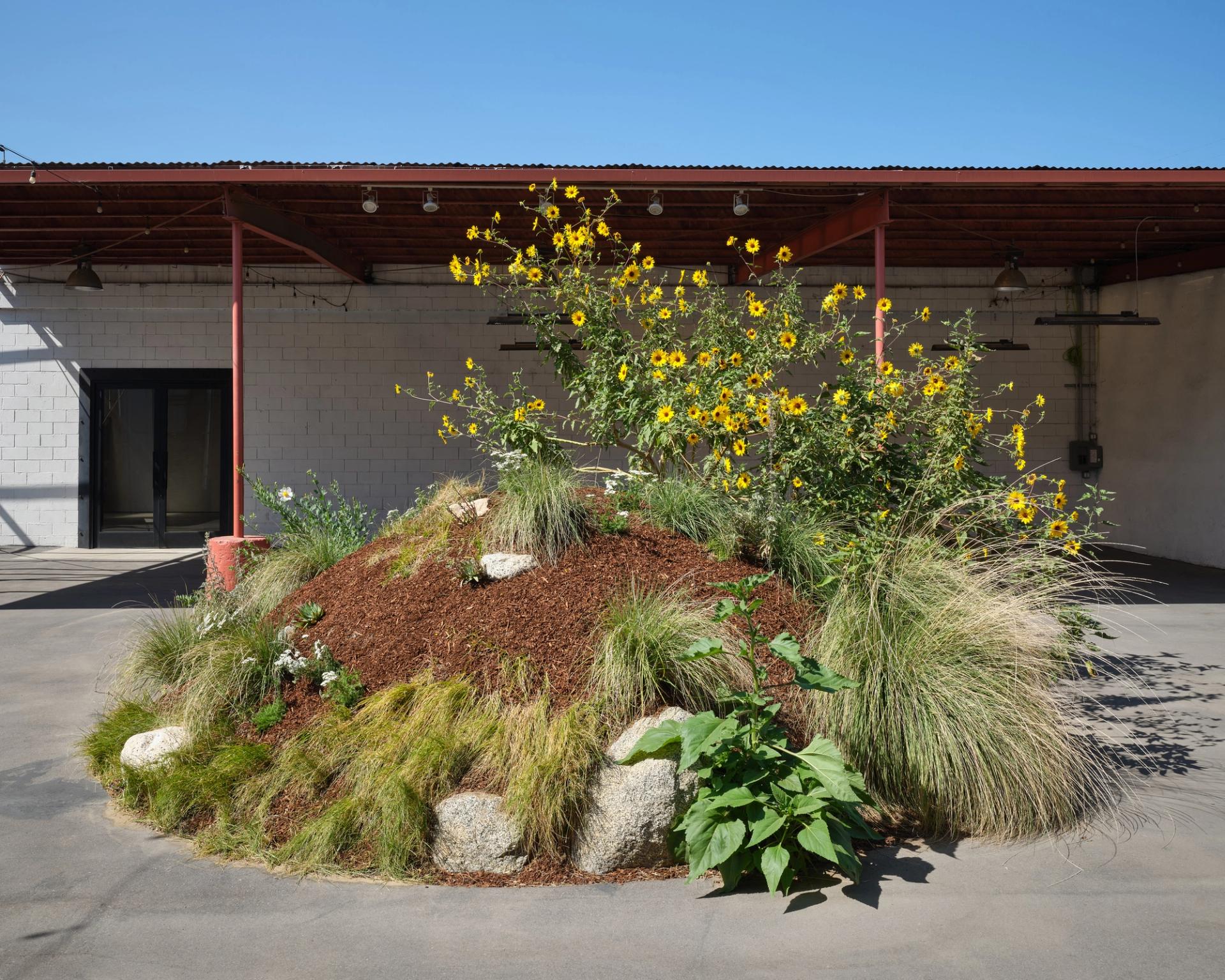
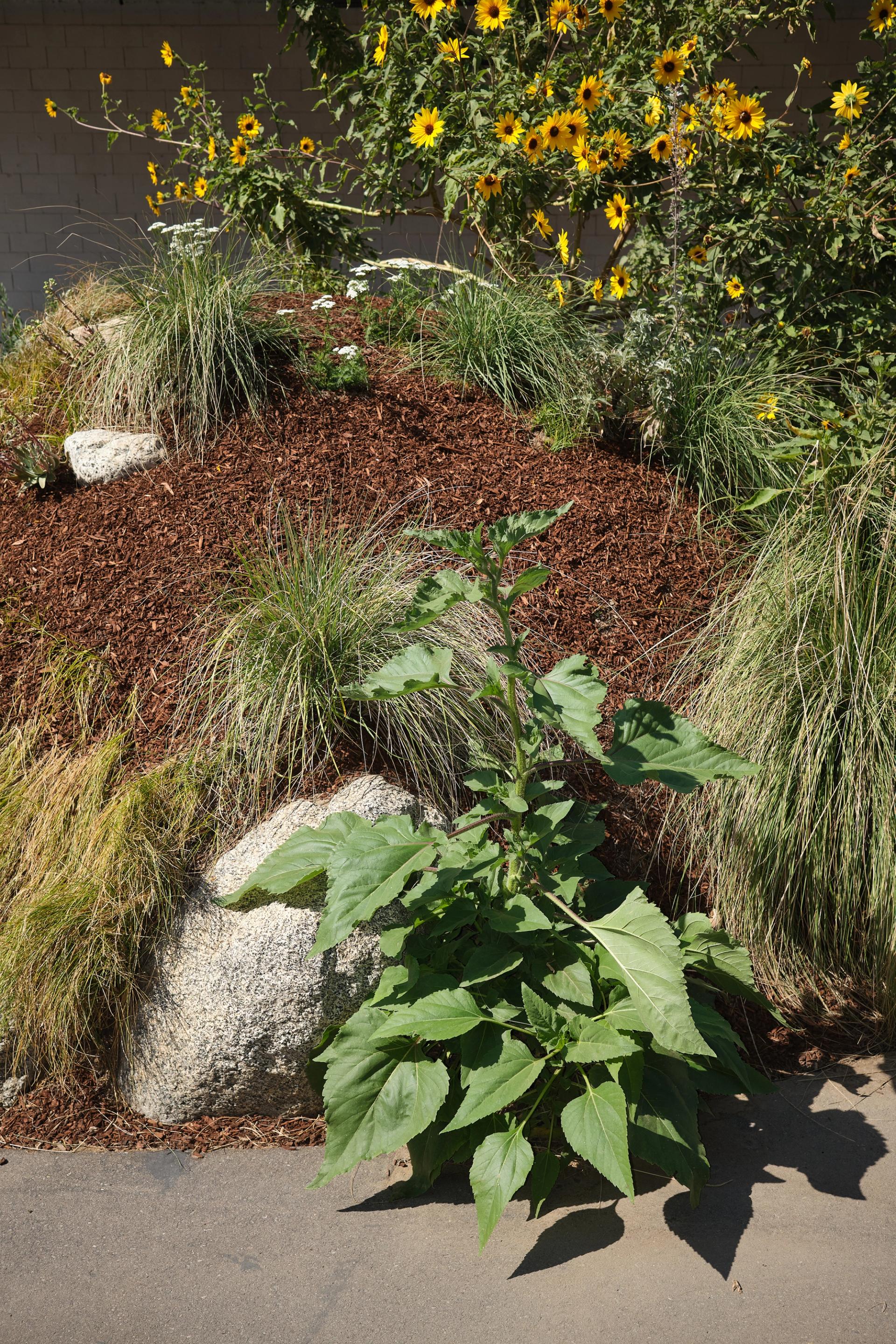
Kwong worked in landscape architecture before turning to her artistic practice, and she has always drawn on her botanical and design training. Several ambitious projects prefigured Earthseed Dome: Moongates (opens in new window) (2019), a series of nine-foot-tall flowering arches; Subterrestrial (opens in new window) (2024), a self-irrigating earthen mound in downtown Los Angeles; and Gardens of Renewal (opens in new window) (2025), an installation in New York City’s Madison Square Park featuring 50 species of local flora. But Kwong had never created something as structurally experimental, or as challenging, as the ICA SF commission.
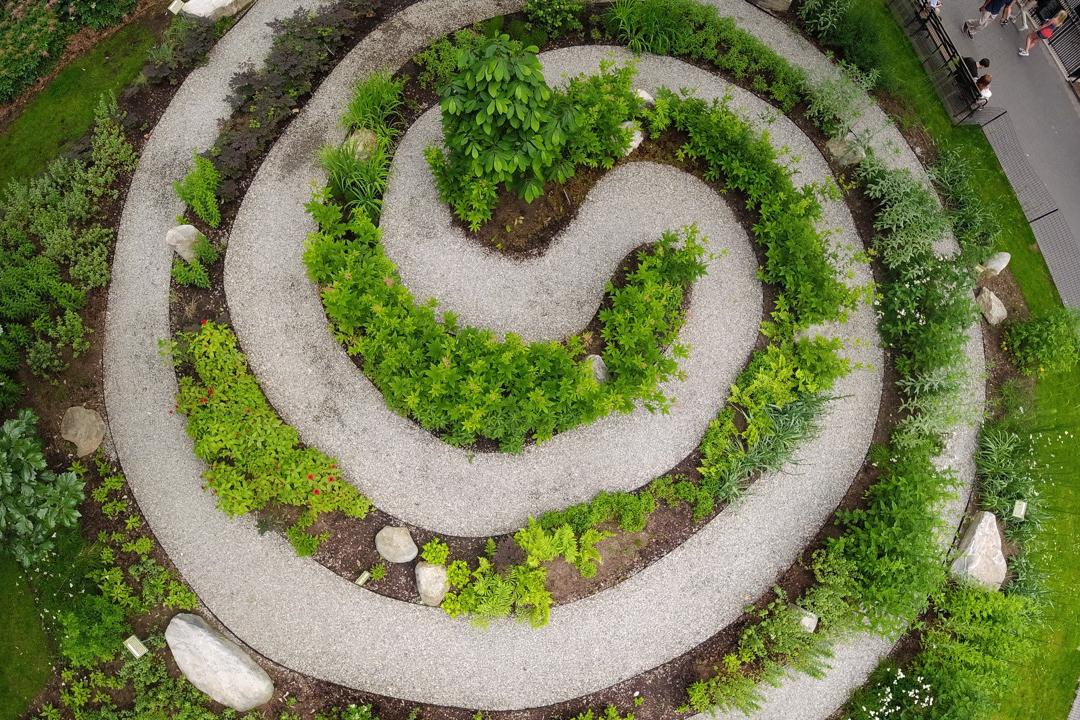
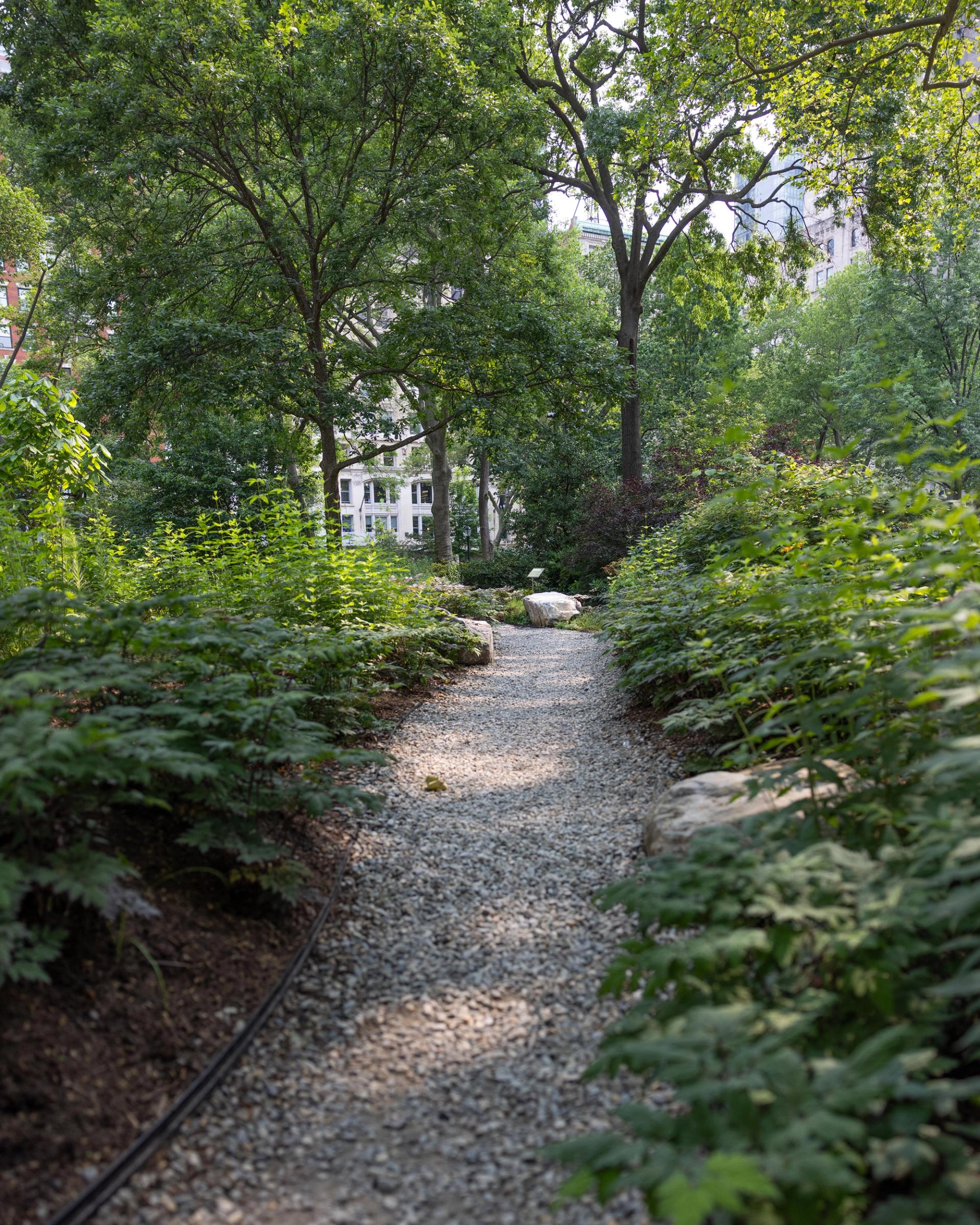
Soil and organic materials are unwieldy. They crumble, change, and flout design specs. When Kwong tried to make earth sculptures in the past, she was unable to achieve the level of precision or structural integrity required to host plant life. The most important question that followed her vision was how she was going to build it.
She reached out to David Shimmel and Adrienne Allard of Atelio, a studio that specializes in 3D printing. Shimmel and Allard, who share a background in landscape architecture, were keen to collaborate, though they were unfamiliar with printing soil as a material. They enlisted the help of Italian firm Wasp 3D, one of the only companies in the world with experience making large-scale, 3D-printed soil structures.
After months of discussion and digital rendering, Kwong and her team settled on a two-pronged plan. The dome would consist of mounds of seeded soil, supported by a shell of more than one hundred lightly curved blocks made from GeoMix, an environmentally sustainable, concrete-like blend of lime, sand, and recycled marble fines. “GeoMix is primarily natural ingredients,” explained Shimmel. “It’s similar to a mortar, but it’s not cement-based.”
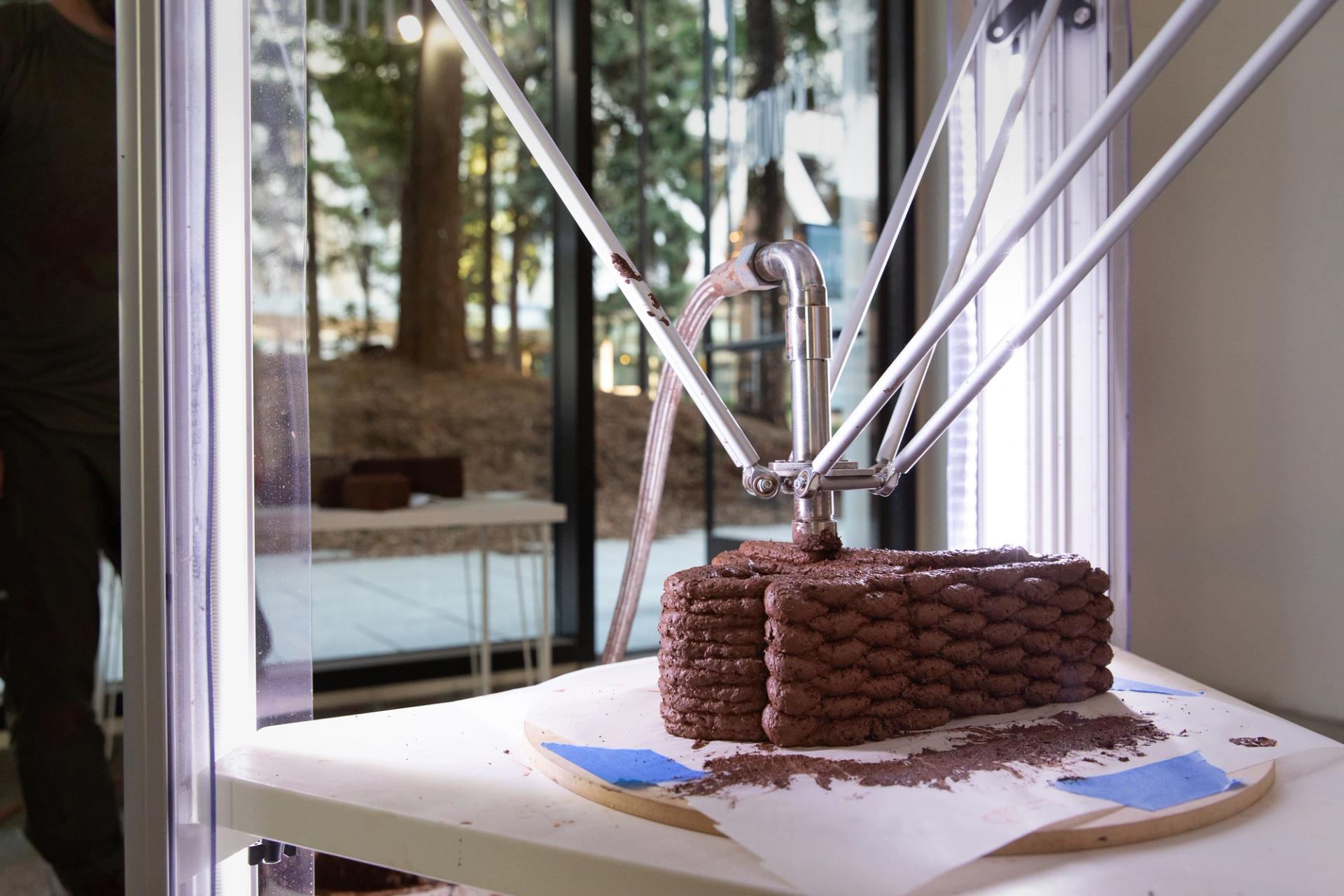
In-progress fabrication of the GeoMix blocks for Lily Kwong’s Earthseed Dome.
The blocks were produced in various curvatures and lengths depending on which part of the shell they constituted. Some bulge outward to create small, soil-filled pockets from which plants, in the finished piece, sprout. “It’s a complicated geometry to engineer,” Shimmel said. “We’ve gone through lots of different iterations to make this work.”
Shimmel spoke from Atelio’s studio in Salem, Massachusetts, in December, surrounded by miniature versions of the finished sculpture—some dry, some wet and fresh from the printer—and modular blocks in various earthen tones. The 3D printer stood with its robotic arm poised wide, among pots of soil, straw, compost, clay, starch binder, rice hulls, and fine, sandy loam. The team had spent months tinkering with different proportions to find a blend that wouldn’t clog or come apart in the printing process, that would thrive in the city’s cool, foggy climate, and that contained enough fiber to bind the mixture.
“The fiber is important because it gives strength to the print as it’s extruding from the nozzle of the printer,” said Shimmel. “It basically makes it self-supporting, and it also provides porosity to the seed mix, which allows light and oxygen in for seed germination.”
Once they hit on the optimal soil mix, they began printing the blocks in San Francisco, working in a glass-walled, ground-floor room next to the installation site, where visitors and passersby could watch the live fabrication. A pressurized tank regulated the flow of material into the extruder (the component that shapes the material) and out through the printing nozzle. The mixture piped out slowly and consistently, emerging like an endless sausage layering back on itself, over and over, until each block was complete. They were printed one by one and left to dry. Soon, beige and brown blocks, some tufted with straw, stretched across the floor space, looking like a village of thatched mud brick huts in a diorama of Neolithic life.
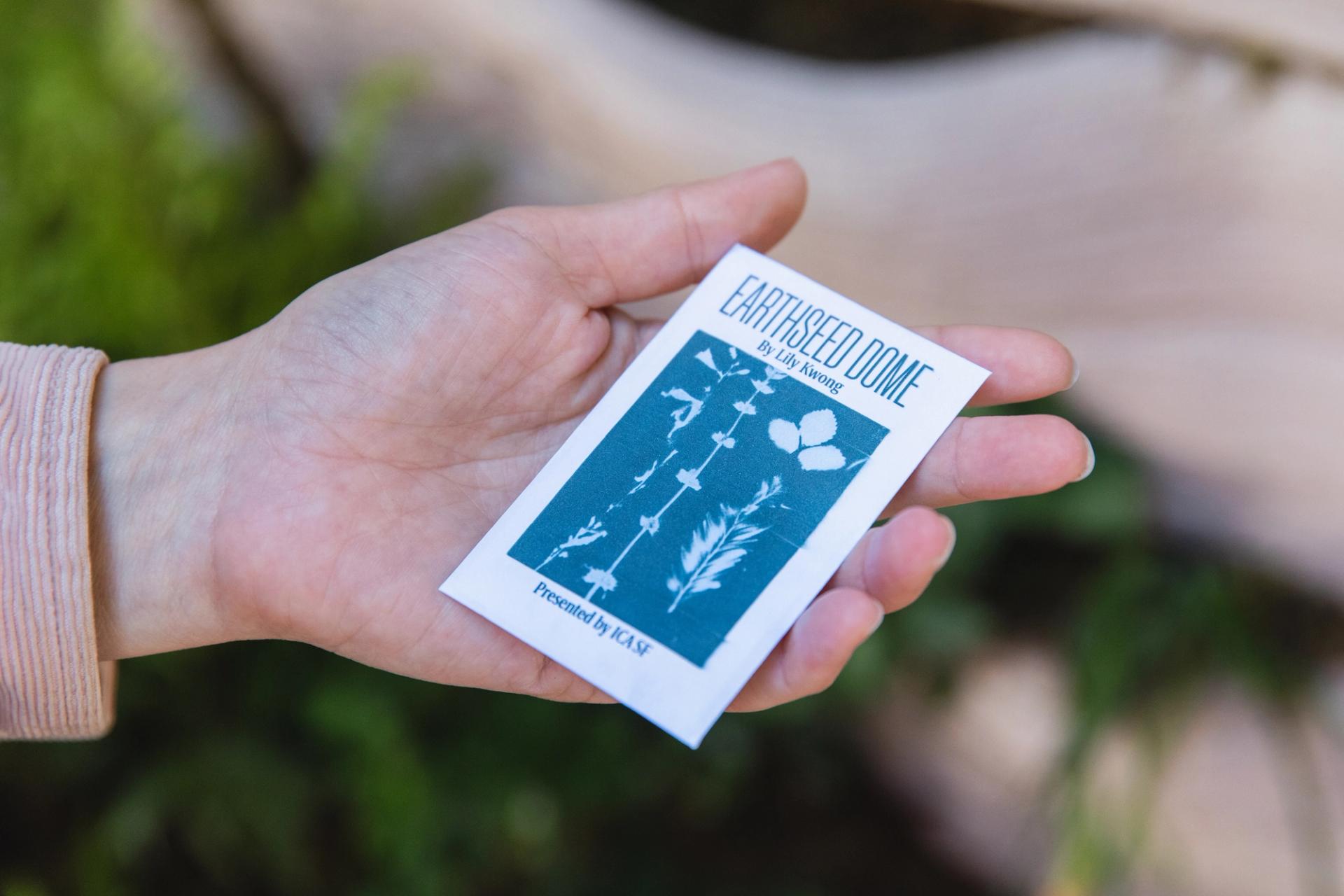
Seed packets distributed to visitors at Earthseed Dome.
Credit: Photograph by Nicholas Leo Bruno. Courtesy of ICA SF“What this project is doing too is telling the story of technology and innovation in the construction world, and showcasing that technology,” said Shimmel.
Kwong sees the installation as a “seed dispersal hub” as well as a work of art and engineering. Every plant species planted in Earthseed Dome is local to the Bay Area: mountain garland, farewell-to-spring, purple Chinese houses, mountain phlox, five spot, bird’s-eye gilia, and baby blue eyes. Visitors are handed packets of seeds, decorated with artworks made by Kwong’s children and their preschool classmates, which they are encouraged to sow directly into the soil of the dome. In doing so, Kwong said, they transition “from observers to collaborators.”
“We’re not printing a static object,” Kwong told me when we first spoke in December, before Earthseed Dome was installed. “The seeds are going to germinate, and the mycelium roots are going to reshape the sculpture.”
The site-specificity extends beyond the sculpture’s use of local flora and Kwong’s personal connection to the Bay Area and its redwoods. The hundreds of technology companies that populate the high-rises surrounding Earthseed Dome—that world of messianic techno-optimism and breakneck, even heedless, innovation—loom in the artist’s consciousness too.

Lily Kwong in collaboration with Atelio, detail of Earthseed Dome (2026).
“San Francisco is the heart and hub of this technological revolution,” Kwong said. “Earthseed Dome is about community and social sculpture and public art...and yet technology is at the absolute center of this piece. I’m uncomfortable with, but interested in, this dialectic between ancient wisdom and technological innovation, and program versus the irregularities and poetry of the earth.”
The dome is in many ways a microcosm of this tension. It sits in a privately owned park but requires public participation to flourish. It owes its existence to the collaboration of humans and machines. It is rooted in, and vulnerable to, the vagaries of the natural world, in a city that has staked itself on the digital and speculatively post-human.
When I caught up with Kwong in May, she told me that, after the dome was finished, what struck her most was the human labor and collaboration required to make it: the masons who hauled and stacked the blocks, the horticulturalists who tended to the seedlings, the volunteers who dedicated their free time to carrying materials and watering plants. “It was this incredibly tactile, very community-driven, very local undertaking,” said Kwong.
The machine inputs for Earthseed Dome are now complete, and so are the artist’s. The dome stands by itself now, shaded by the redwoods that tower over it and that are dwarfed, as they never are in nature, by skyscrapers. It is still changing, but at the slower pace of plant life, in accordance with the seasons and the fluctuating weather of each new day.
Header photograph by Dolly Faibyshev.