Han Seungmin’s White Picket Chair
Modeled on the stainless steel fencing of New York’s immigrant enclaves, the designer’s White Picket Chair is a playful commentary on the iconography of the American dream.
The brownstones that line the streets of Sunset Park, a Chinese enclave in Brooklyn, are largely unremarkable expressions of New York’s architectural vernacular. Yet many are adorned with an additional eye-catching feature: ornate, polished stainless steel fences and stoop balustrades bedecked with finials, spindles, and geometric shapes. Against the brick and cement facades of ordinary homes, they shine conspicuously in the sun. And when Brooklyn-based designer Han Seungmin (opens in new window) first encountered them in New York, they sparked an idea.
This style of steel fencing, a hallmark of many immigrant neighborhoods across New York’s outer boroughs, was first mass-produced in China in the 1980s and spread outward from there—first to South Korea and other neighboring countries, then to the United States. Han, born in Incheon, South Korea, was familiar with the fences and railings from childhood. “They weren’t anything that anybody would take notice of,” he recalled. “It was just a fact of the built environment.” But at the age of 12, he and his family relocated to Washington State, and the detail faded from his memory.
So when Han moved to New York in 2019, he didn’t expect to see rows of houses lined with glittering stainless steel. “I was walking down to get Sichuan food with my friends in Sunset Park, and one of the blocks was just filled with them,” he said. “I was like, ‘Oh my gosh, that’s something we had back in Korea.’”
Han, who goes by Sonny, is now a 33-year-old designer at the firm Post Company, where he works on furniture, interiors, and architecture. In his personal practice, he transforms overlooked, everyday objects into considered design pieces. (In one recent series (opens in new window) of tables, for instance, he used industrial hardware—washers, brackets, hinges—to form traditional Korean decorative motifs.) Once Han recognized the fences, his next reaction was, “Wouldn’t it be funny if these became a chair?”
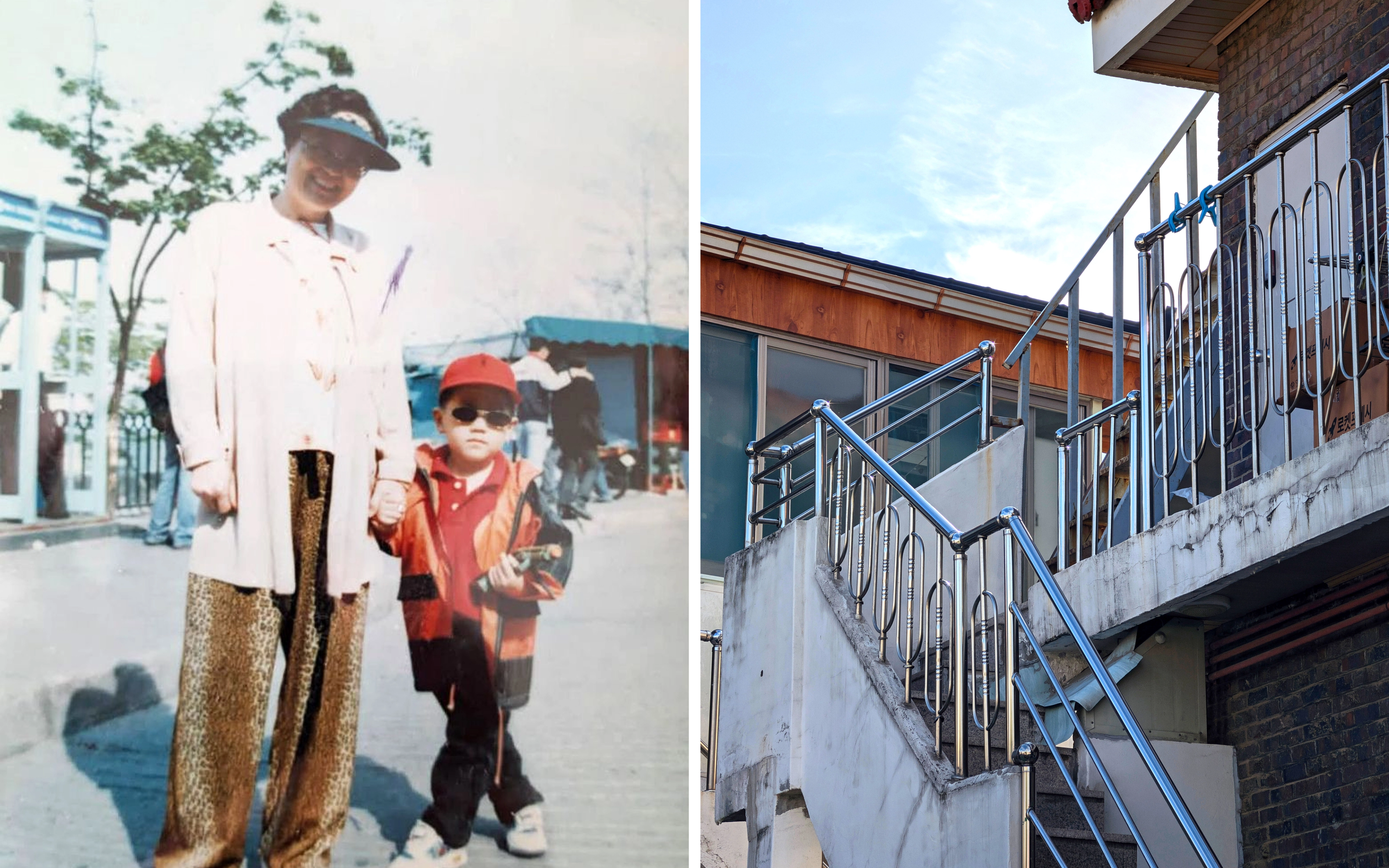
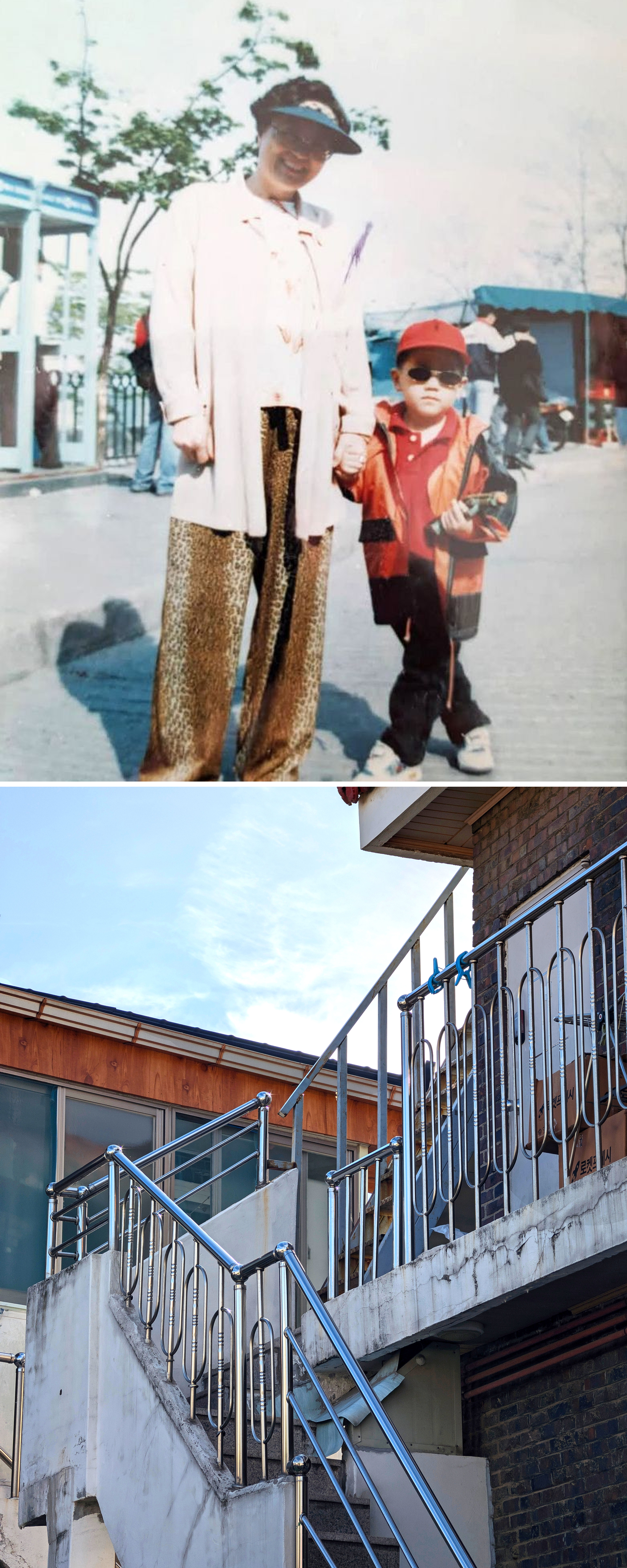
Han and his grandmother in South Korea, c. 1996; balustrade in Incheon, South Korea, 2026.
Credit: Courtesy of Han Seungmin.Years later, that stray thought yielded the White Picket Chair (opens in new window)—a sturdy seat made from the same distinctive metalwork and polished stainless steel as the iconic fences. In form, it’s the simplest expression of a chair, as if you asked a child to draw one, but bejeweled with the fencing’s signature ornamentation. Ball finials cap four uprights forming the legs. An arched top rail with three floral medallions creates a backrest akin to a gate. Twisted rods, typically used as pickets, lie horizontally to make a seat.
Straddling the line between art and functionality, the chair is unique enough to be featured at a design fair, yet versatile enough to fit in any home. It’s also surprisingly light, thanks to its material, and could likely withstand enthusiastic everyday use. When I asked Han if it was comfortable, his response was swift and certain. “Actually, yes,” he said, “for about 15 minutes.” (After sitting in one for 10, I agree, but it’s nothing a cushion couldn’t fix.)
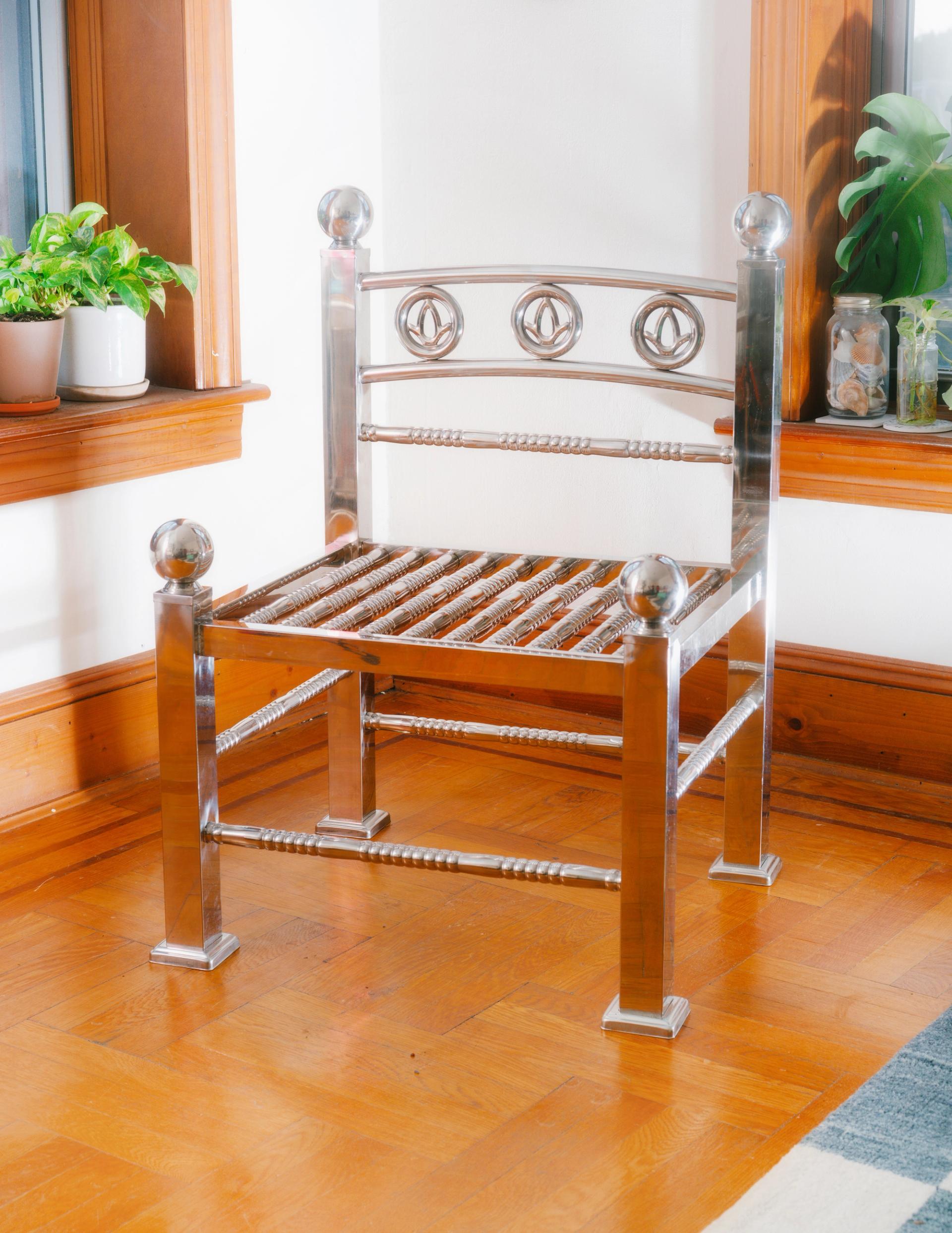
Han knew it was crucial for the design to read immediately as both chair and fence, striking a “happy balance” between the two forms. Despite the chair’s seeming simplicity, it took several passes to find that sweet spot. “I didn’t really want to be so removed that it started to become nonreferential, so that people didn’t really recognize where it was from,” he said. “I also didn’t want it to be like, ‘Oh, it’s literally a fence.’”
Han had also considered making a table but determined that the shape too easily evoked a fence turned on its side. A chair, on the other hand, offered just the right amount of deviation from the original form. “You want to be challenging the image you have of the stainless steel fence in a way that is different enough that it makes it interesting,” Han said.
Once Han settled on a design, he had to find someone who could build it. One thing was nonnegotiable: using the exact same stock material as the fences. The typical choice would have been a furniture maker, but he ultimately decided to try what made the most sense for the material: “I could just go to somebody who was making these fences, and say, ‘Hey, I have this idea and it’s kind of silly, but would you be willing to do it?’”
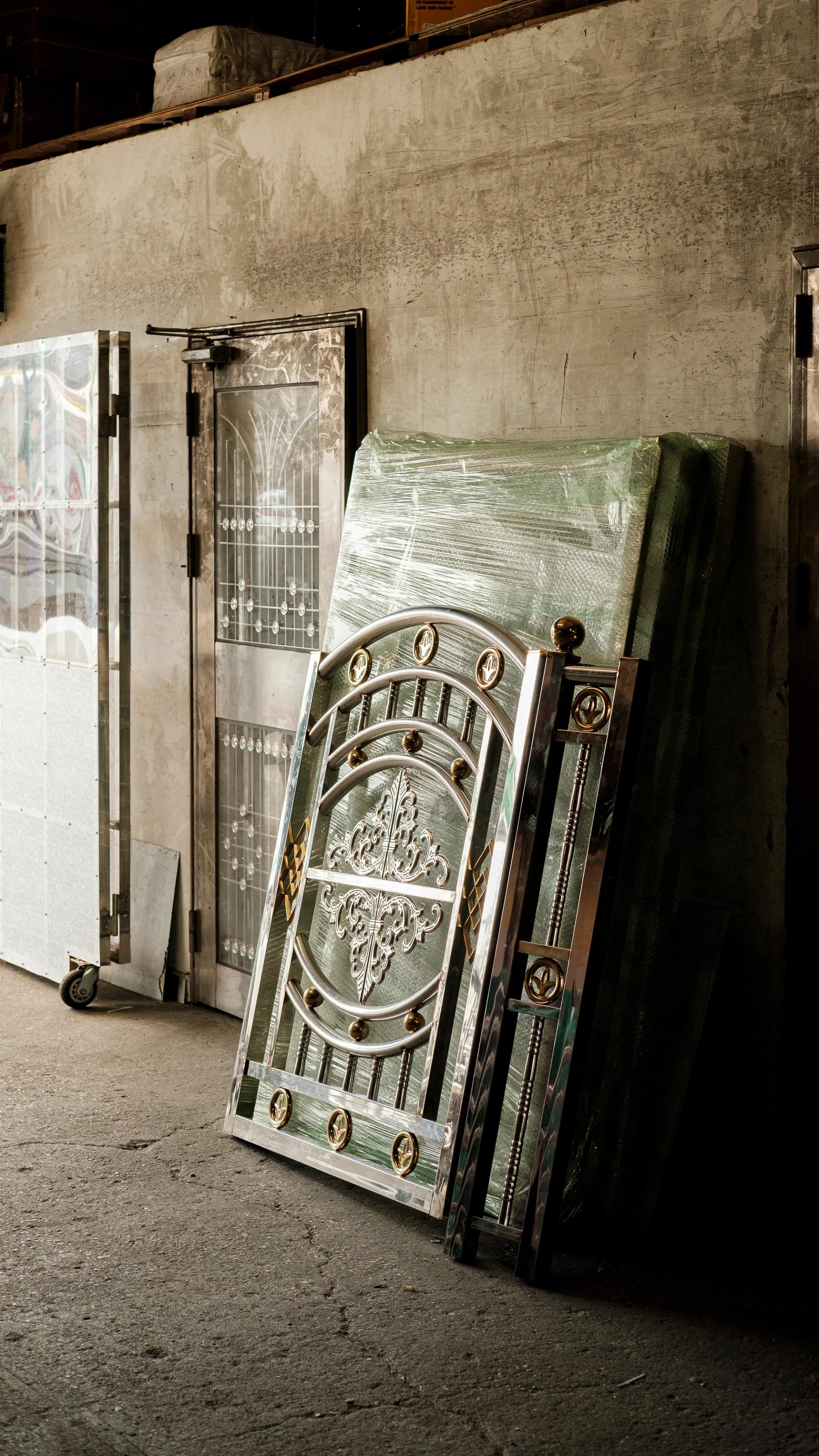
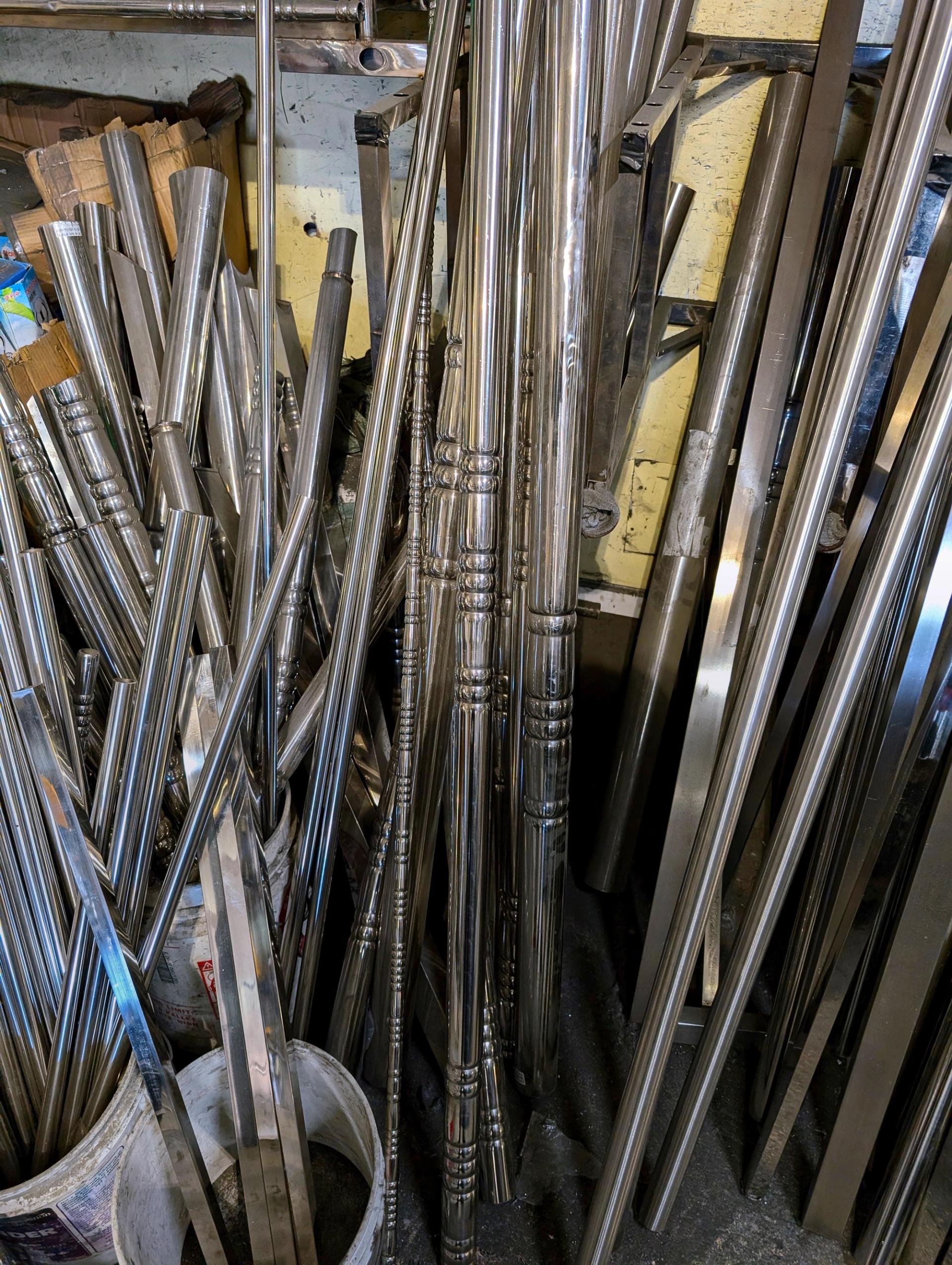
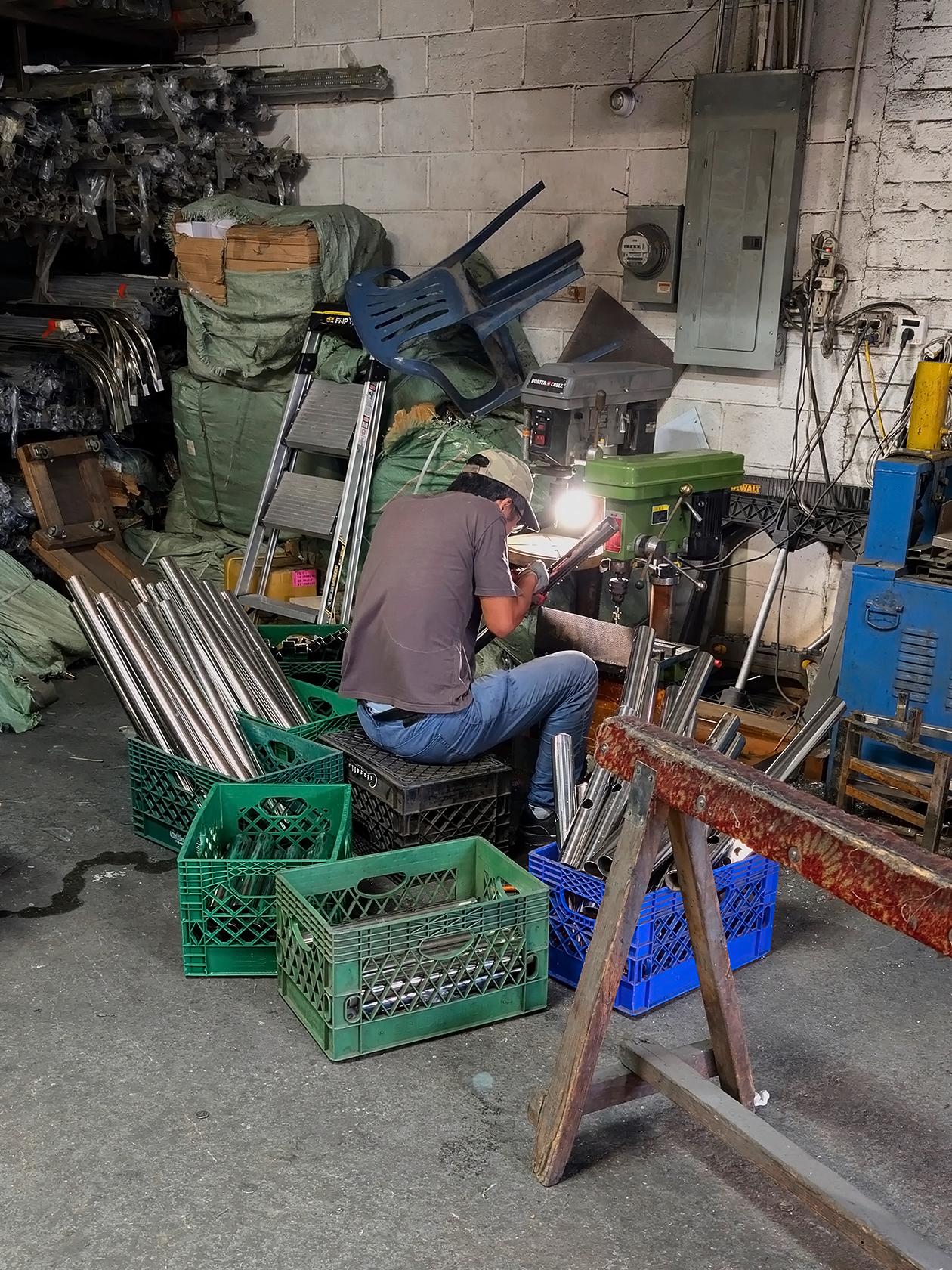
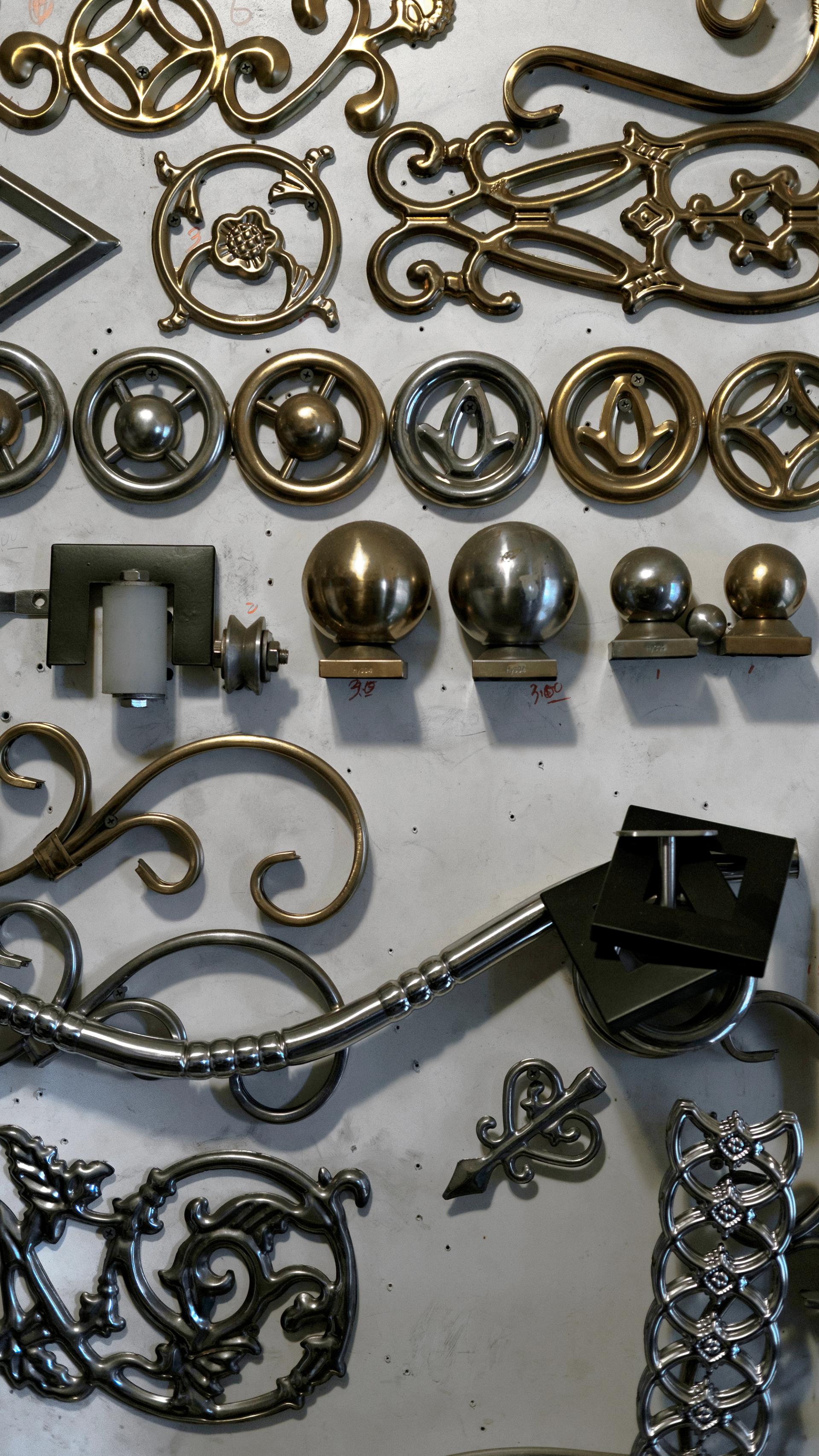
Detail shots of fabrication at Brooklyn Stainless Steel. Courtesy of Han Seungmin.
He cold-called fabricators around the city until one finally picked up: Brooklyn Stainless Steel. The process from there was remarkably easy. “I showed them the photo [rendering], and they were like, ‘Yeah, you can do that,’” Han recalled. He’s been working closely with them to produce the chairs ever since.
Han released the White Picket Chair in March, sharing images to his Instagram. The public reaction was immediate—and, in Han’s view, revealing. Those who caught the reference, including Han’s parents, largely found the piece clever and resonant. Such was the dominant response when the design magazine Dezeen covered (opens in new window) the chair that same month and shared the story online. But some commenters had negative reactions, saying the seat looked “ugly” and “uncomfortable.” The split is fitting, given that the source material has long divided opinion as well. “These fences are so out there—they’re very unapologetic,” Han said. “They’re very polarizing, which is really interesting. Some people absolutely hate them.”
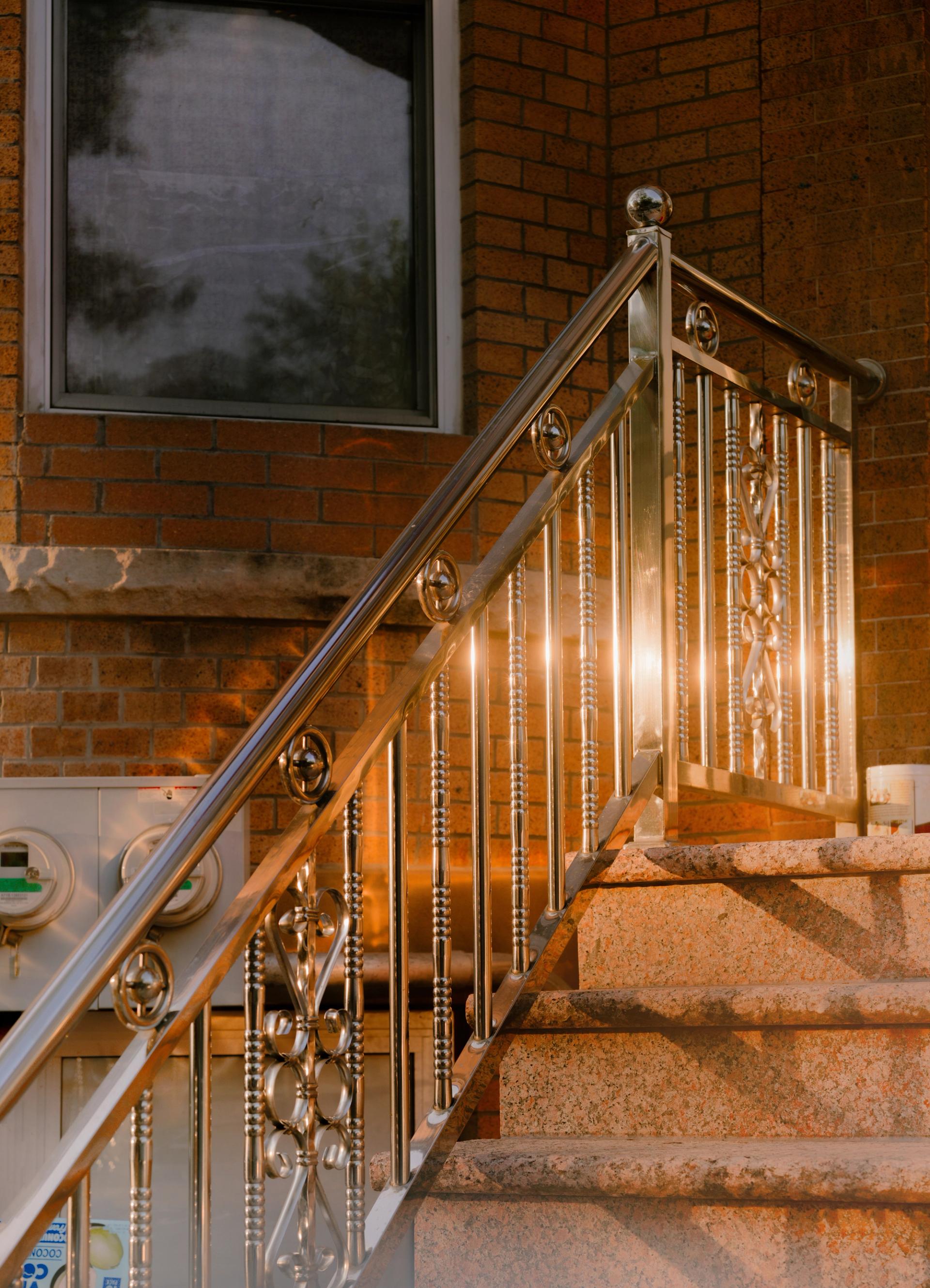
That polarization is, in part, what drew Han to the flashy fencing. As previously noted in features for The Margins (opens in new window) and the New York Times (opens in new window), for many Asian and West Indian immigrant families in neighborhoods like Sunset Park, Flushing, Richmond Hill, and Queens Village, the fences function as both a silent announcement of cultural affiliation and a kind of status symbol—a sign of “making it” in America. Unlike wrought iron, which needs regular repainting, stainless steel requires just a quick wipe-down to maintain a like-new sheen. The design of the fencing also invites personalization, with details sometimes including lotus flowers and “om” symbols. Rather than assimilating to the American dream of the white picket fence, the arriviste aesthetic of the embellished steel insists on calling attention to itself, leaving its own mark on the block instead of blending in.
The fact that some residents reportedly see the fences as an eyesore is less about the fencing itself, Han believes, and more an expression of distaste for a certain kind of visibility. “You can equate the immigrant presence to the presence of those fences in the grand scheme [of things],” he said. “And how people react to it—is it related to how people react to immigrants’ presence in general?” With the White Picket Chair, he distills that proud claim to place into a single object, bringing it from the street to the living room.
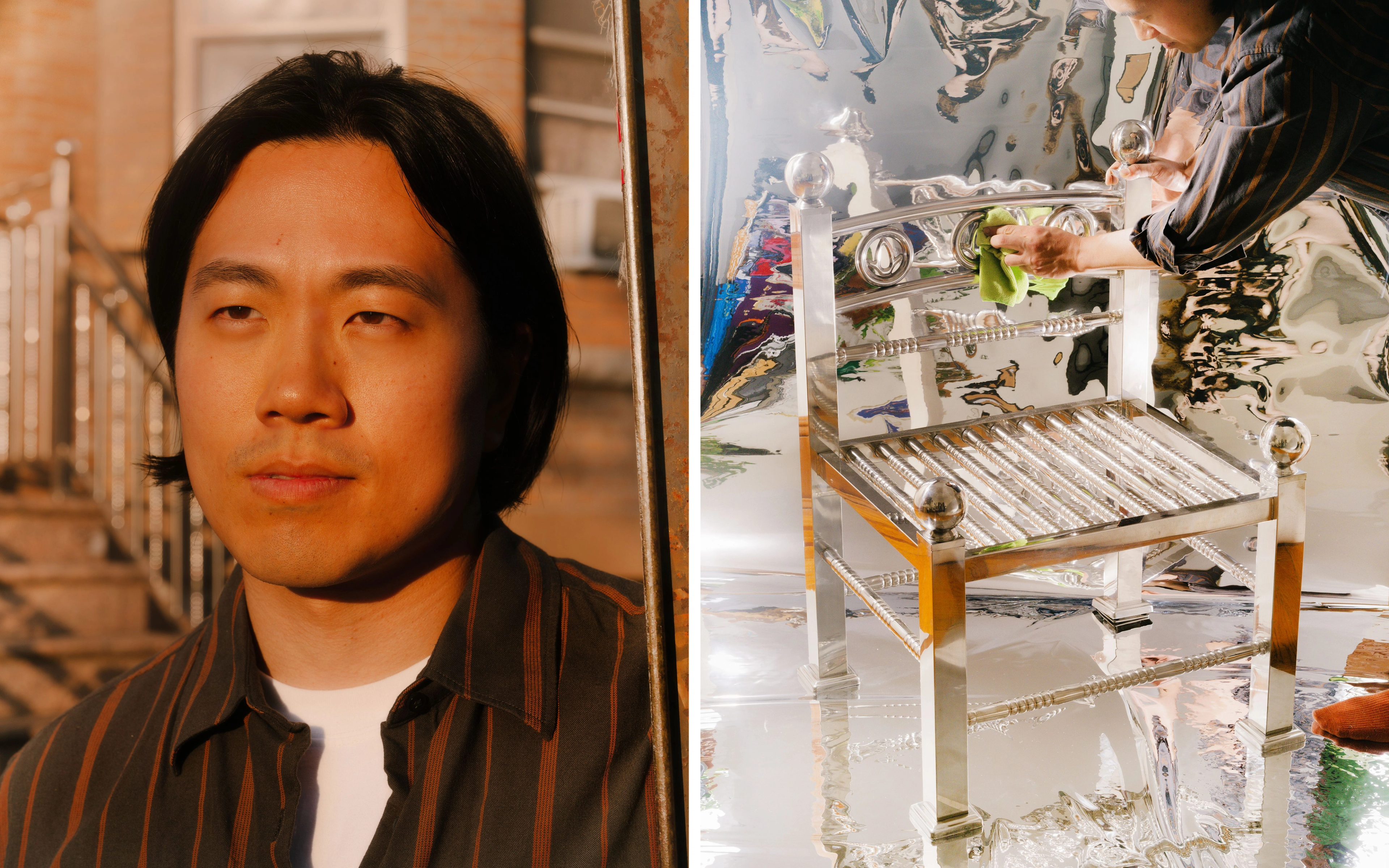
Today, visitors to the design studio and showroom Lichen in Ridgewood, Queens, can see and order two versions (opens in new window) of the chair. In addition to the original, Han has designed a new model more directly inspired by the specific version of the fences that he remembers from Korea, with a tight row of spindles bent to form the chair’s back and arms. Han has no plans to move away from chairs but is interested in exploring how the material can take other forms. Light fixtures are possibly on the horizon. He also mentioned a sculptural seat, like a bench-fence hybrid—“very impractical.”
For Han, success is a matter of connection. When his work resonates with others who recognize the chair’s material for what it is, that’s the payoff. “Once I got into an Uber when I was picking up one of the chairs,” Han recalled. “And the driver was like, ‘I love your chair so much.’ It was so nice to see that there’s someone who really, genuinely loves that fence and the aesthetic and everything that comes around it.”