How La Marzocco Perfected the Espresso Machine
Beloved by coffee enthusiasts, the century-old brand has built a philosophy based on timeless design, reliability, and watching baristas at work.
June 9, 2026
The smell is intoxicating, all burnt toast and brown sugar topped with violet flowers and sticky summer fruit. The liquid has the color and texture of tempered chocolate, the crema the approximate consistency of a nimbus cloud. Stefano Della Pietra, La Marzocco’s product design and innovation manager, raised a steaming cup and smiled: “Cheers!”
There are many ways to brew a cup of coffee: filter, drip, siphon, French press, moka pot, pour-over, capsule, even cold brew. But here in Tuscany, at La Marzocco’s design headquarters, there’s really only one: espresso.
But the real secret to great espresso, Della Pietra says, is consistency, in both senses of the word. A perfect cup of coffee depends on getting temperature and water pressure just so, then being able to repeat that perfection ad infinitum. “A good barista can pull a thousand shots a day,” he explained. If you’re running a coffee shop, your whole business relies on the 999th shot of the day tasting just as good as the first.
Even if you’re not the kind of coffee snob who can discern a V60 from a Chemex by sight, you’ve almost certainly had coffee made on a La Marzocco—if you’re reading this in a coffee shop, you may be doing so right now. The Italian brand, which has been hand building espresso machines in the Tuscan countryside since 1927, has been widely dubbed the “Ferrari of coffee,” although it might be more apt to say that La Marzocco machines have become to baristas what the Ford F-150 is to American tradespeople: that is, both status symbol and indispensable tool. When I put this to Della Pietra, he was tickled by the idea: “That’s it: beautiful trucks!”
With their classical proportions, midcentury aesthetic, and sturdy build, La Marzocco machines are a ubiquitous bartop feature of third-wave coffee shops from Berlin to Brooklyn, Seattle to São Paulo. Indie cafés rely on them; so do coffee-forward chains such as Blue Bottle, Stumptown, and Intelligentsia. “It’s the gold standard,” said Sarah Allen, the founder and editor in chief of Barista magazine. “If I walk into a shop in the middle of nowhere but they have a La Marzocco, I’m gonna have faith that they’re going to serve me good coffee.”
It’s consistency that has made La Marzocco synonymous with high-end coffee culture, with celebrity fans (David Beckham, Ryan Reynolds, Jimmy Butler) and luxury brands (Porsche, Rimowa, Aimé Leon Dore) queuing up to collaborate. “It has a cool factor that a lot of brands never land on,” Allen said. It also doesn’t come cheap: Professional machines can start at around $10,000, and a high-end model with multiple group heads (that is, one that is able to dispense several espresso shots simultaneously) can run upwards of $25,000. Alongside a high-performance coffee grinder—which La Marzocco also sells, for upwards of $4,500—the espresso machine is the centerpiece of any serious café, and likely its biggest investment outside of staff and real estate. Therefore, Della Pietra said, reliability is everything. “The coffee machine has to work as you expect,” he said. “Then it can be as many other things as you want.”
But there’s a higher responsibility too. “It has to respect the work that has been done in the months and years before, to pick that coffee from the tree, then to transport it all over the world, roast it, grind it,” he said. Espresso, in other words, is about a lot more than a good shot of coffee.
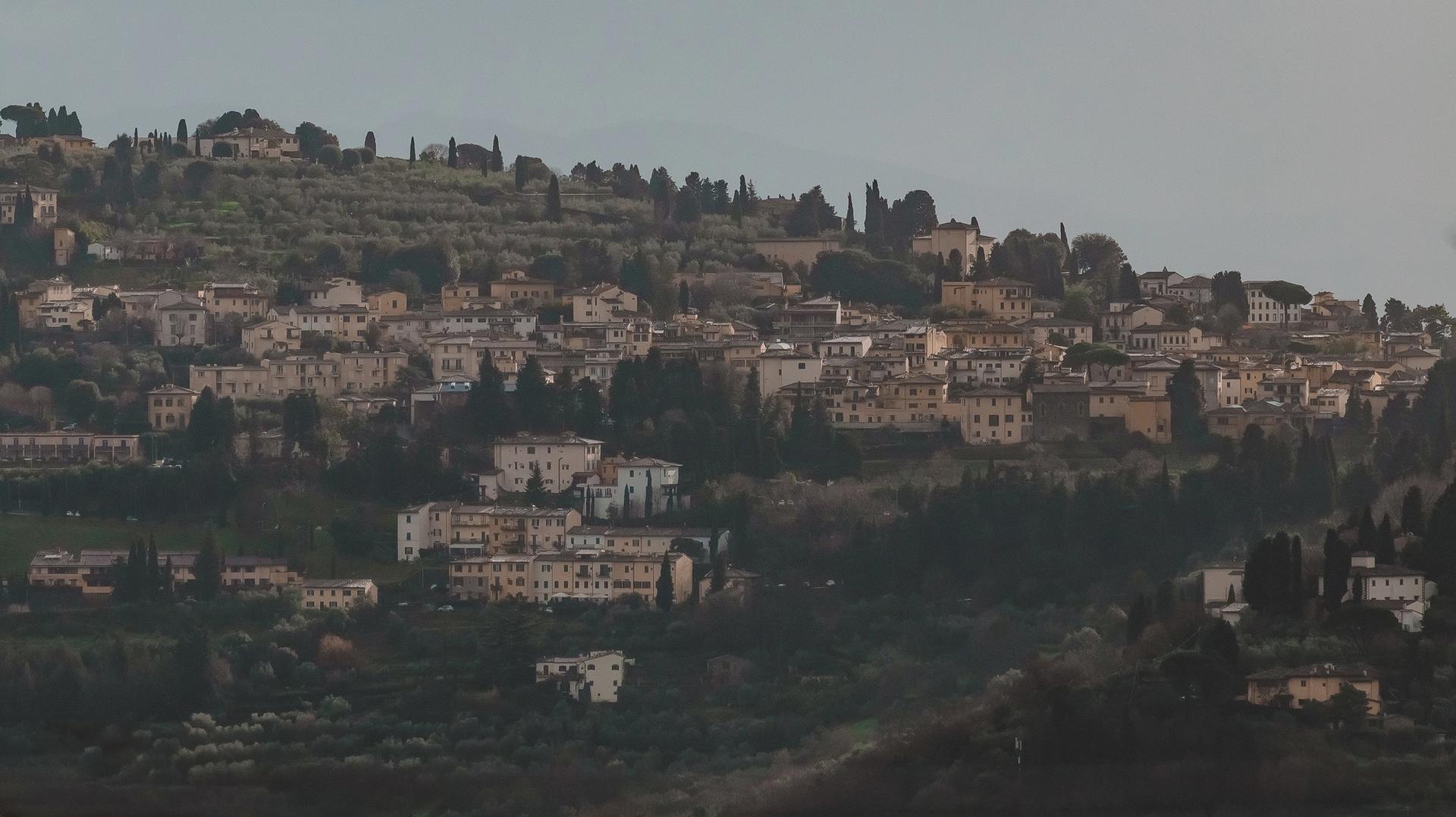
View of Fiesole, Italy.
Credit: Photograph by Francesco Merlini for ToteiThe Accademia Del Caffé Espresso, La Marzocco’s design headquarters, sits among oil groves and vineyards in Pian de St Bartolo-Trespiano, a tiny hilltop village north of Florence. This former factory is where La Marzocco assembled its machines from 1960 to 2009, until it moved to a bigger facility in nearby Scarperia. Today, this building functions as a combination of office, events space, museum, and custom shop. Around the edges of the light- and plant-filled atrium are a series of glass-fronted labs and design studios. In one, its engineers are testing roasting techniques; in another, a local potter is throwing handmade espresso cups.
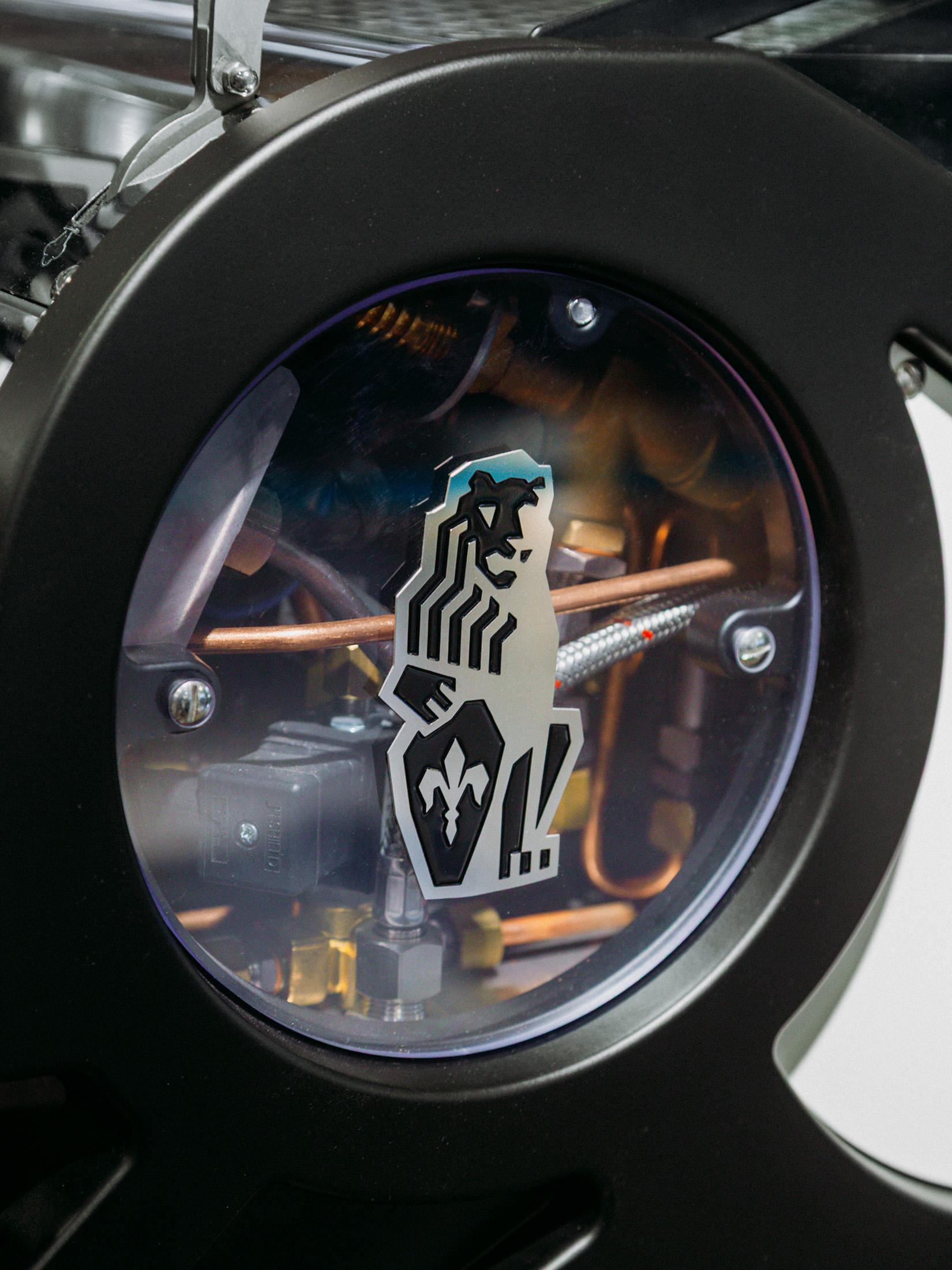
La Marzocco was founded in 1927 by Giuseppe and Bruno Bambi, two Florentine metalworkers who had been commissioned to build an espresso machine for a local entrepreneur. The businessman abandoned the idea following poor sales, but the Bambi brothers continued selling them to bars and restaurants around Florence. They took the name La Marzocco (“the Lion”), from the heraldic symbol of Florence, once the cradle of the Italian Renaissance. Its logo, a lion holding a shield, is based on Donatello’s sculpture Marzocco (opens in new window), which still stands in the city’s Bargello museum.
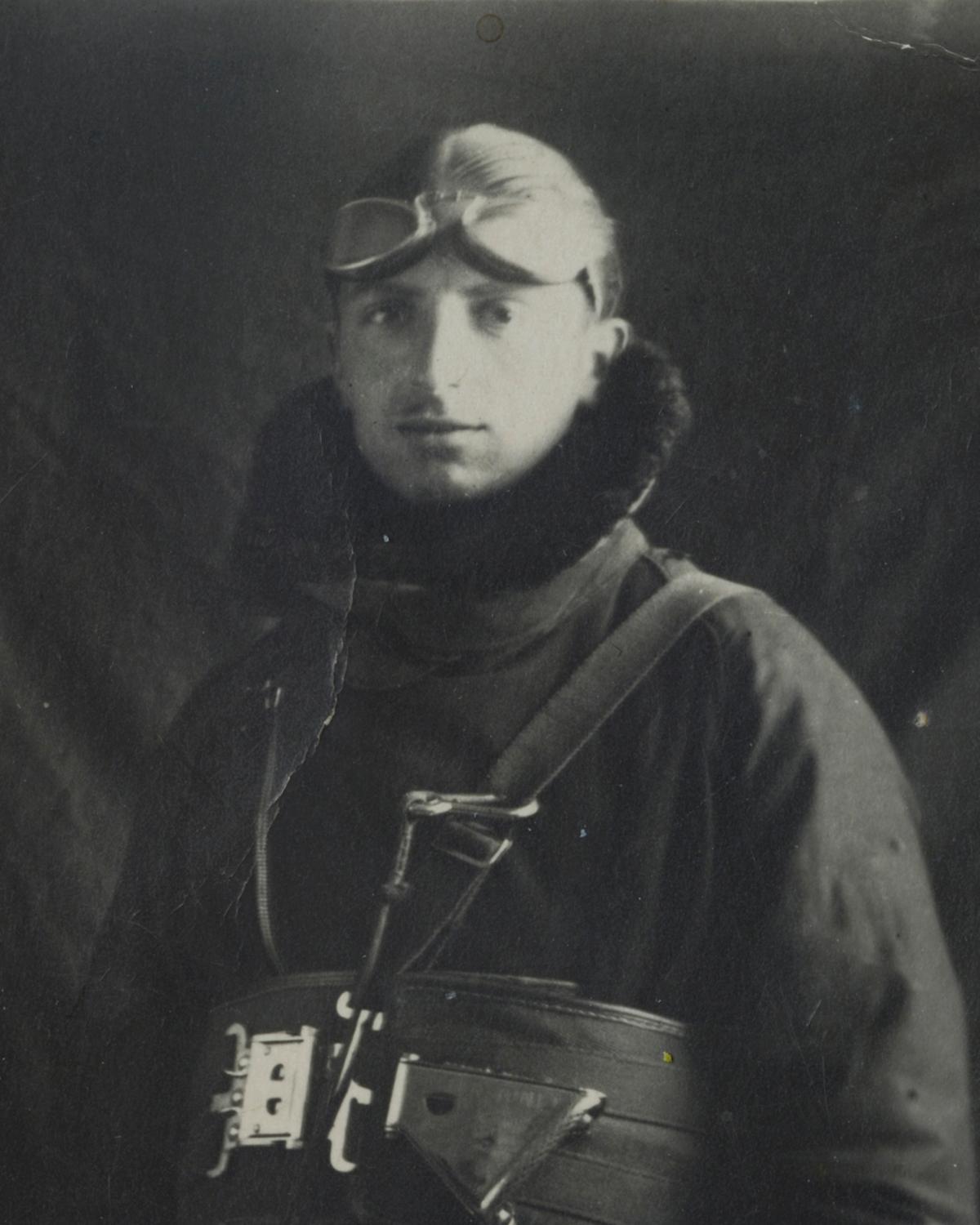
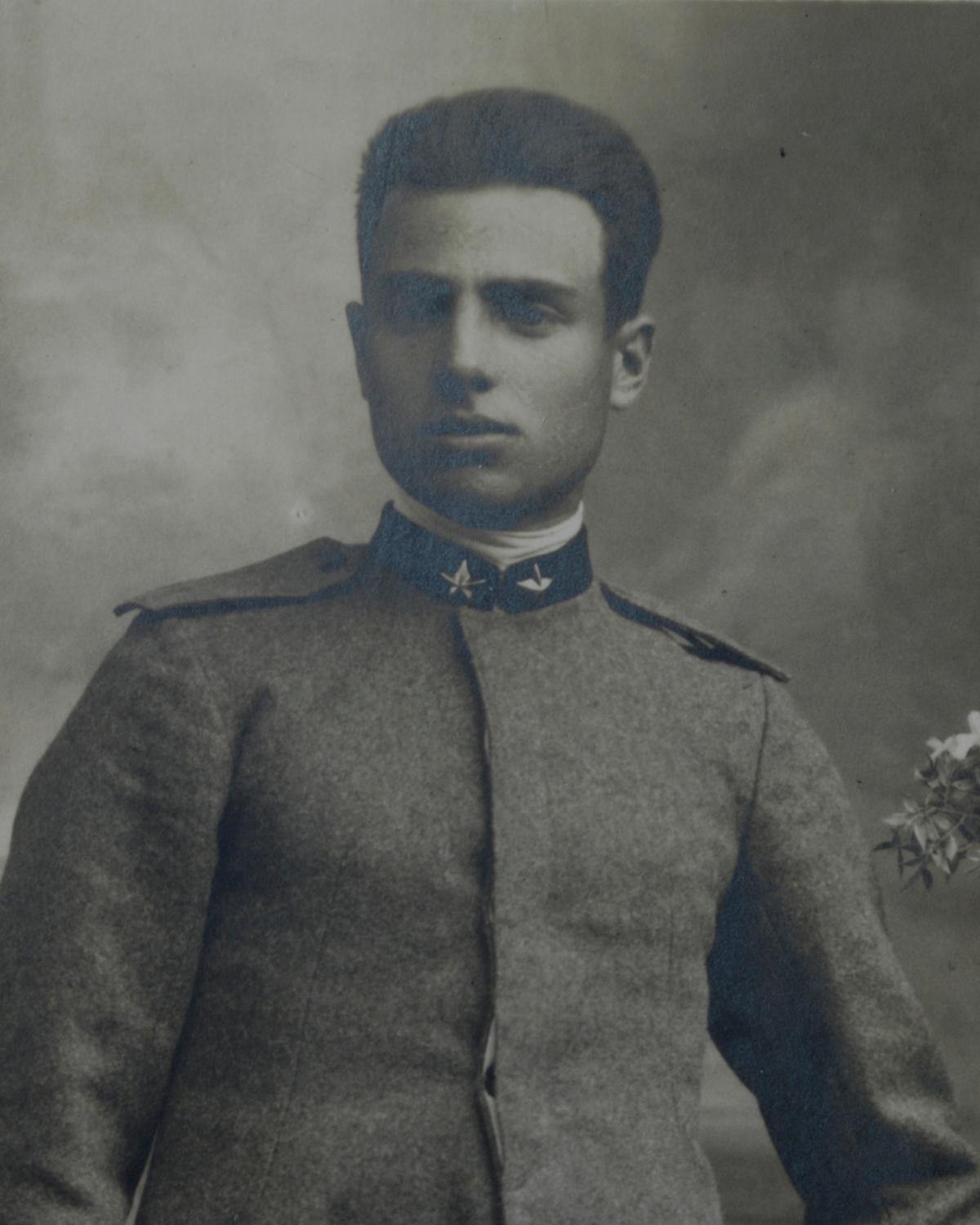
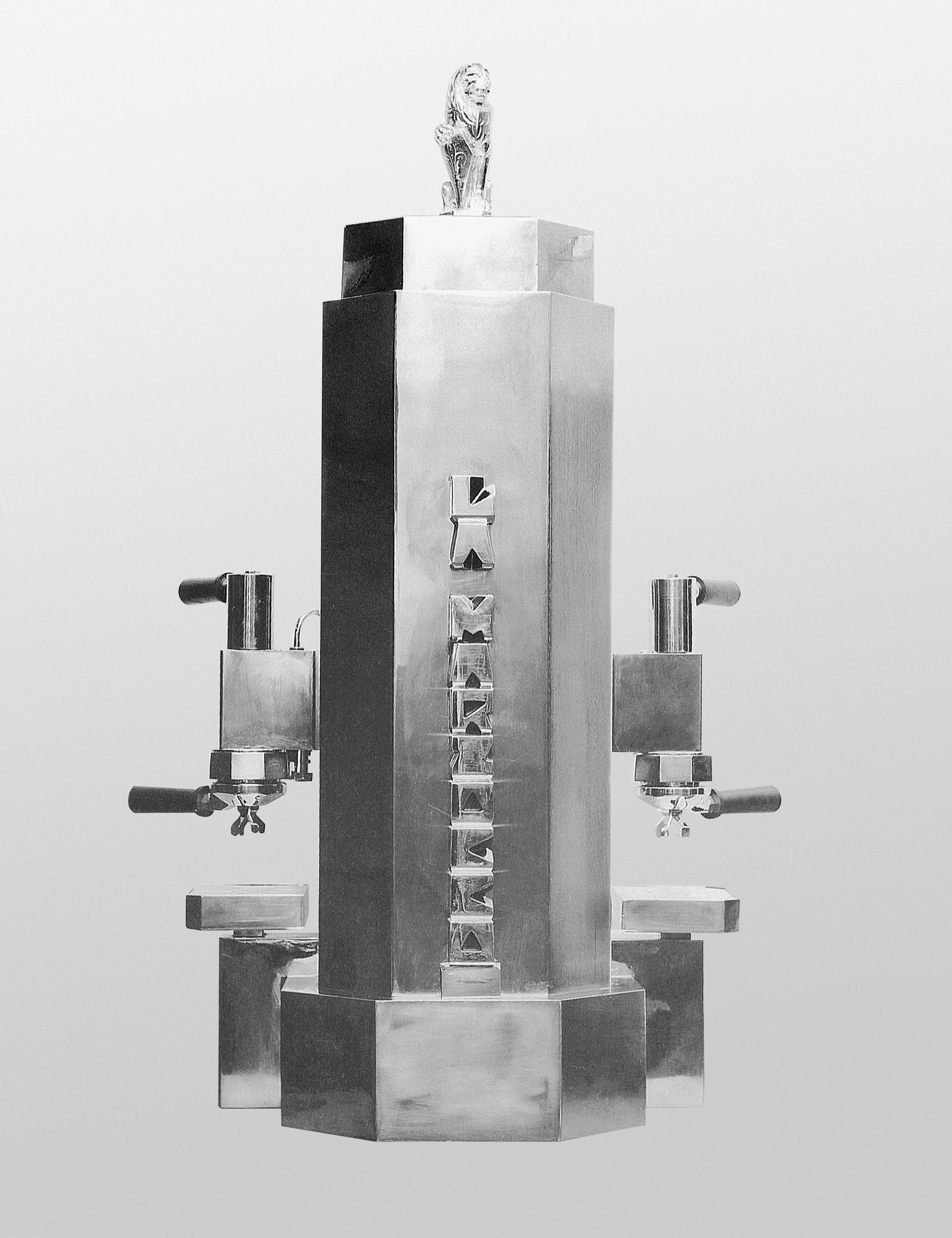
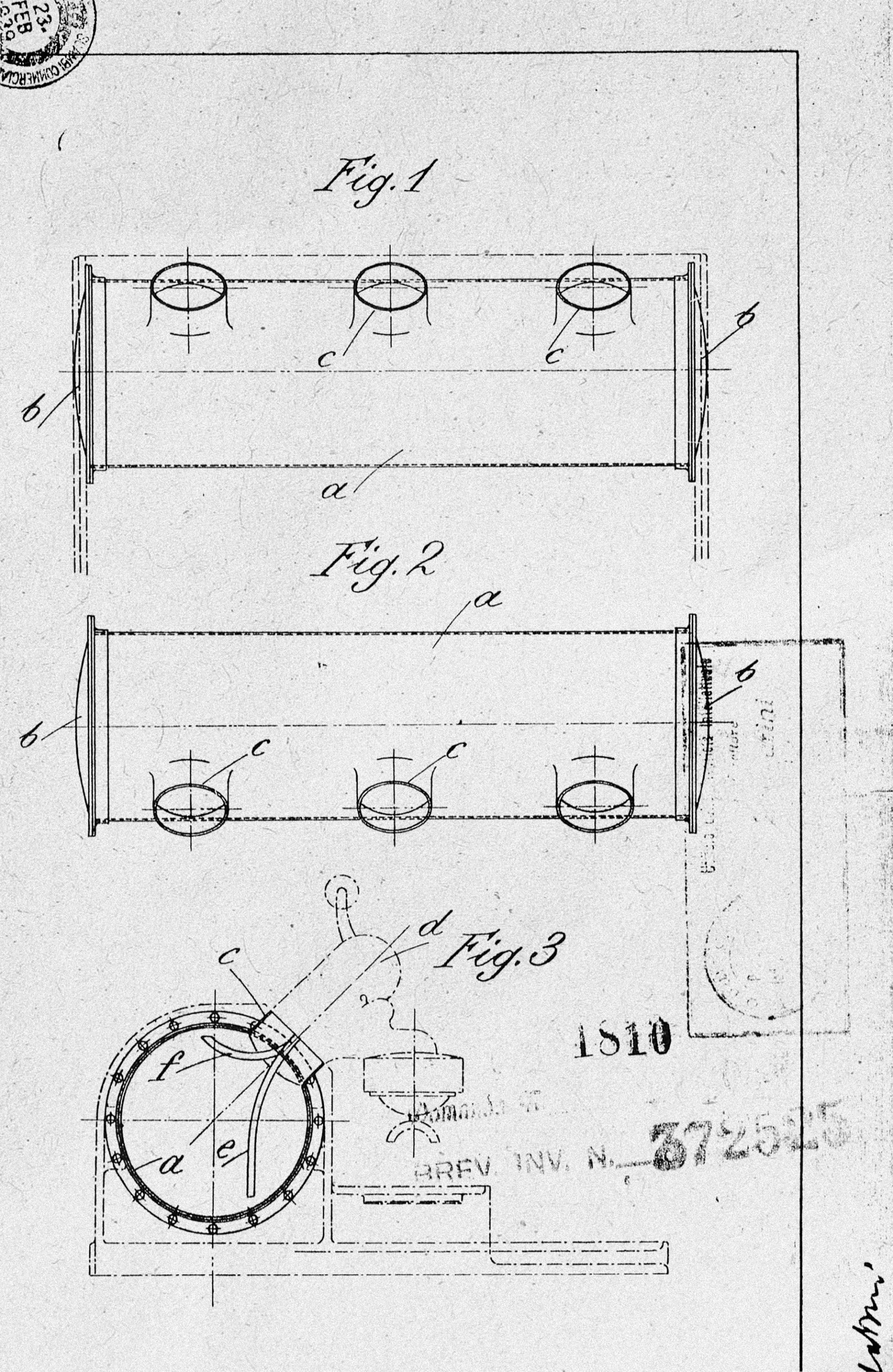
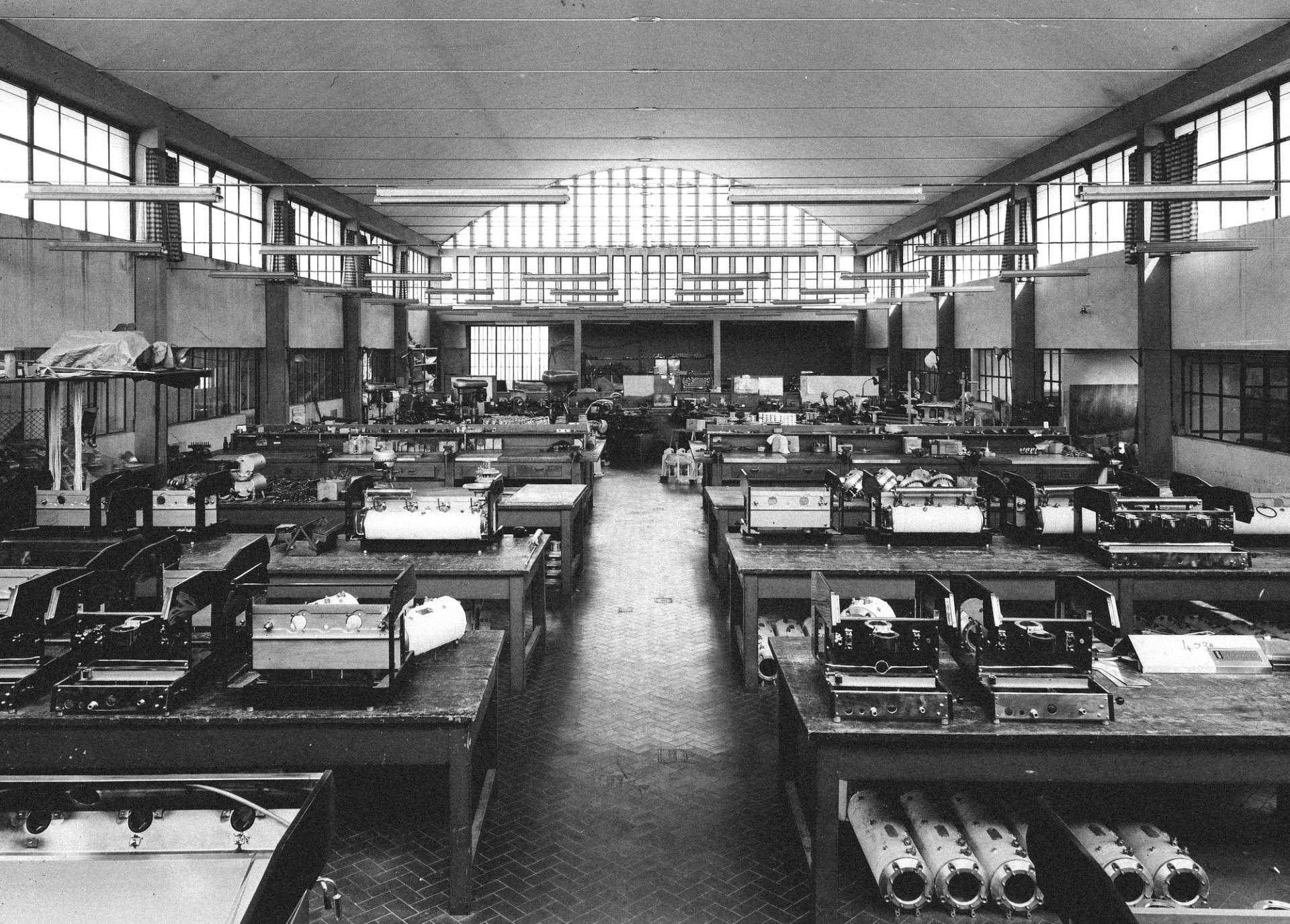
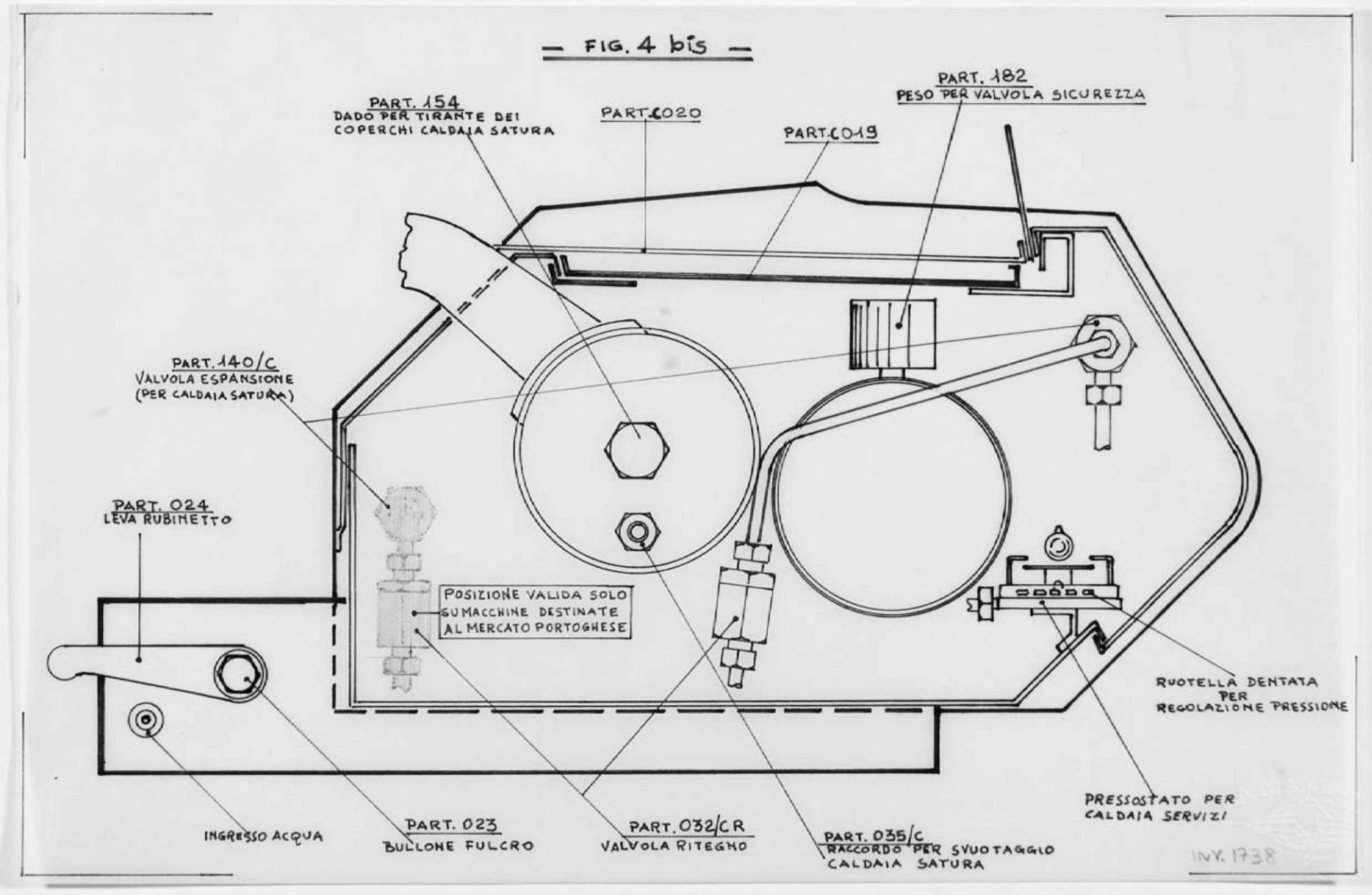
In the slow-moving and traditional world of specialty coffee, La Marzocco made its name as an innovator. In 1939, it patented the first espresso machine with a horizontal boiler, saving space on the countertop; in 1970, it patented the GS, the first machine with a dual boiler. “A steam boiler dedicated for steaming, and another for coffee extraction, to have consistency and high volume on both,” explained Della Pietra. “This led to us being strong in the Anglo-Saxon world, where there is a lot of milk drinking”—that is, foamed drinks like cappuccinos, lattes, and flat whites, which are less popular in Italy, where espresso is still drunk straight, often standing up at bars.
Those innovative features were partly why, in the 1980s, La Marzocco machines were adopted by a tiny Seattle coffee chain looking to spread espresso culture in America: Starbucks. For more than a decade, La Marzocco supplied machines to the chain as it exploded in popularity, until Starbucks adopted super-automatic machines in the early 2000s. Afterwards, when Starbucks stores sold off their old machines, it created a secondhand market for La Marzocco’s machines and spare parts in America, enabling a generation of entrepreneurial baristas to launch their own shops. “The development of espresso owes a lot to the La Marzocco company,” David Schomer, founder of the famed Seattle coffee bar Espresso Vivace, told me.
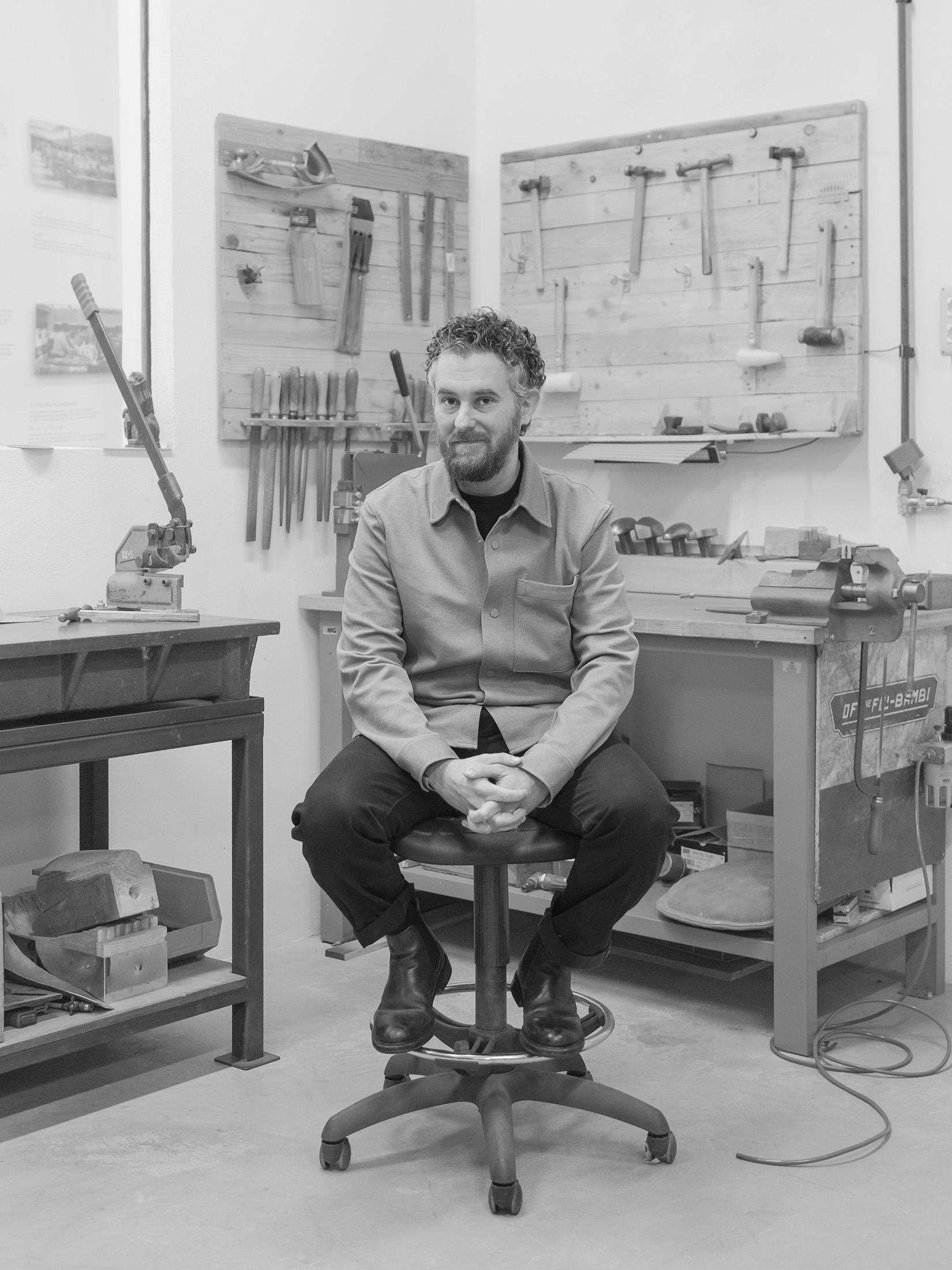
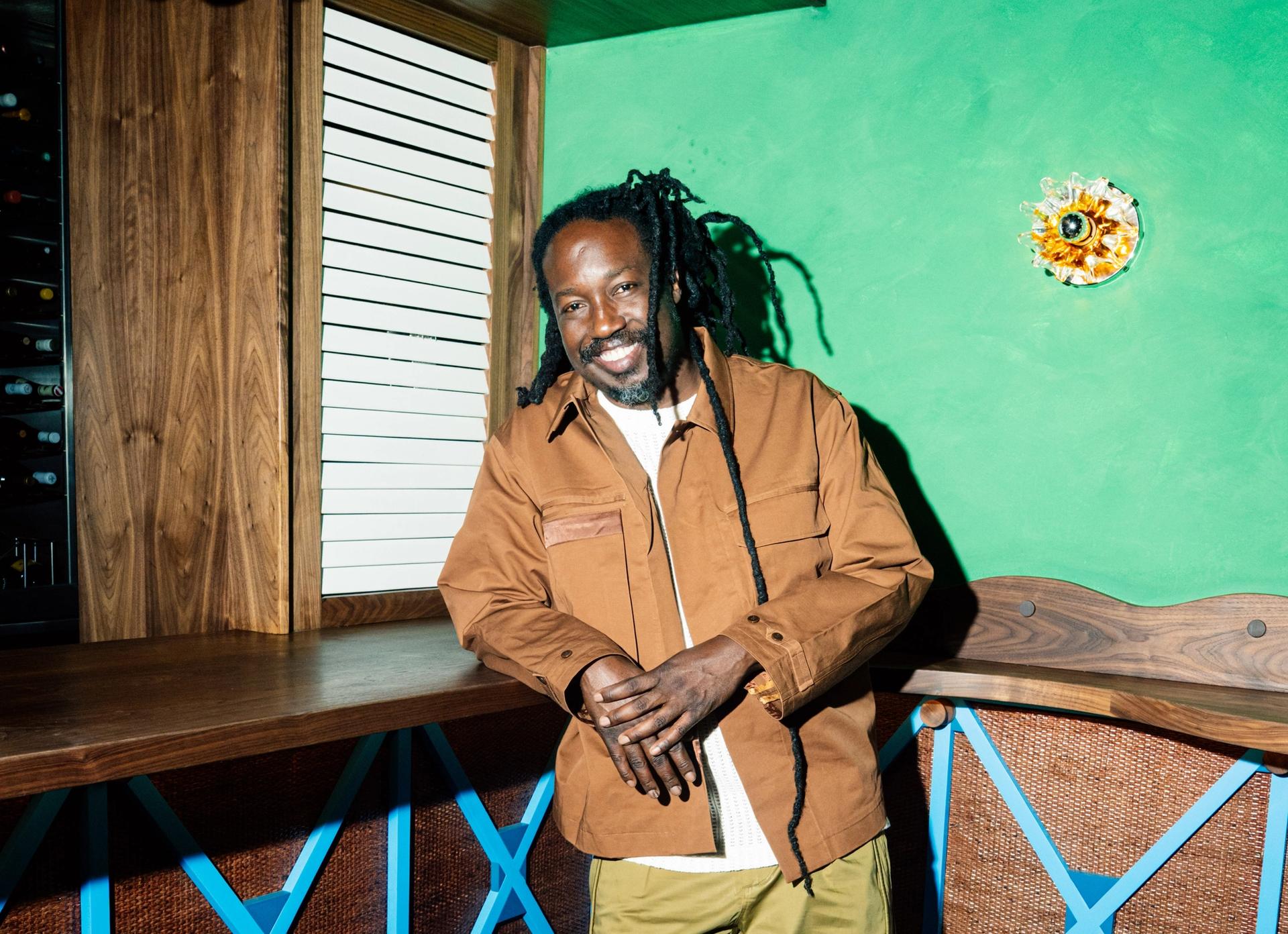
Stefano Della Pietra, photographed inside Officine Fratelli Bambi, La Marzocco’s in-house customization workshop.
Credit: Photograph by Francesco Merlini for ToteiDella Pietra joined the company in 2013. He’d wanted to be a motorcycle designer, but instead landed a job in La Marzocco’s components department. There, he caught the eye of Giuseppe Bambi’s son, Piero, who was by then the company’s design lead. “Piero Bambi saw me drawing and asked if I wanted to become a designer,” he said. “I spent four or five years with Piero, every day. He was 80 years old but still with a huge desire to teach.”
It was the late Bambi who, from the 1970s until his passing in 2020, defined the La Marzocco aesthetic. Lisa Gigli, another of the company’s designers, described it as “shapes that can last as long as the machine can last.” The Linea, for example, takes its tapered body from the pentagonal shield of Donatello’s Marzocco (and by extension, the company’s logo). La Marzocco machines are part appliance, part furniture—when the brand started out, they designed entire espresso bars, machine included, and that eye on the flow of a space is still evident in its lines and profile. So too is its focus on baristas, with its chunky analogue controls instead of slick electronics.
It’s an aesthetic that still stands out in a coffee market dominated by designs that either lean towards steampunk (the exaggerated dials and levers on a Lelit or Rocket) or towards austere, Silicon Valley minimalism (the Decent, which is essentially just a touchscreen). But Della Pietra isn’t swayed by the competition. “We try to create classics,” he said. “A classic doesn’t follow the fashion of the moment. It’s something that has to last.”
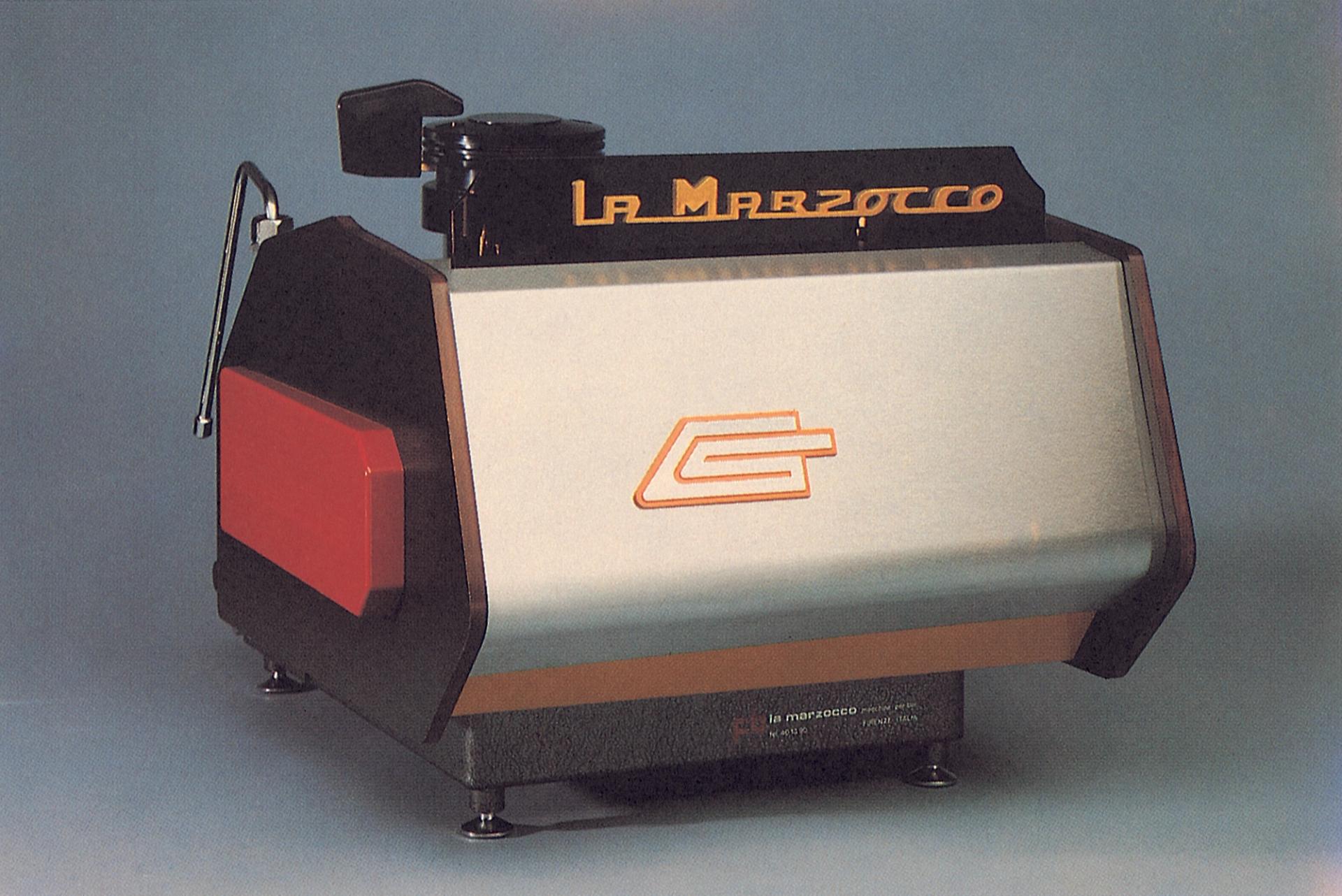
The design cycle for a La Marzocco product is typically 18 months to two years from initial sketch to completion. “If everything runs as it should,” Della Pietra said, “so almost never.”
The biggest challenge is restraint. While most tech companies are under constant pressure to introduce new models every year, La Marzocco rarely releases new products. The relaunch of the Linea in 2013, for example, was that machine’s first major restyling since 1990. “Consider that the life of our coffee machines in general is really long,” said Riccardo Gatti, who leads the research and development of the internal components. “You can install an old GS from the 1970s in a coffee shop [today].”
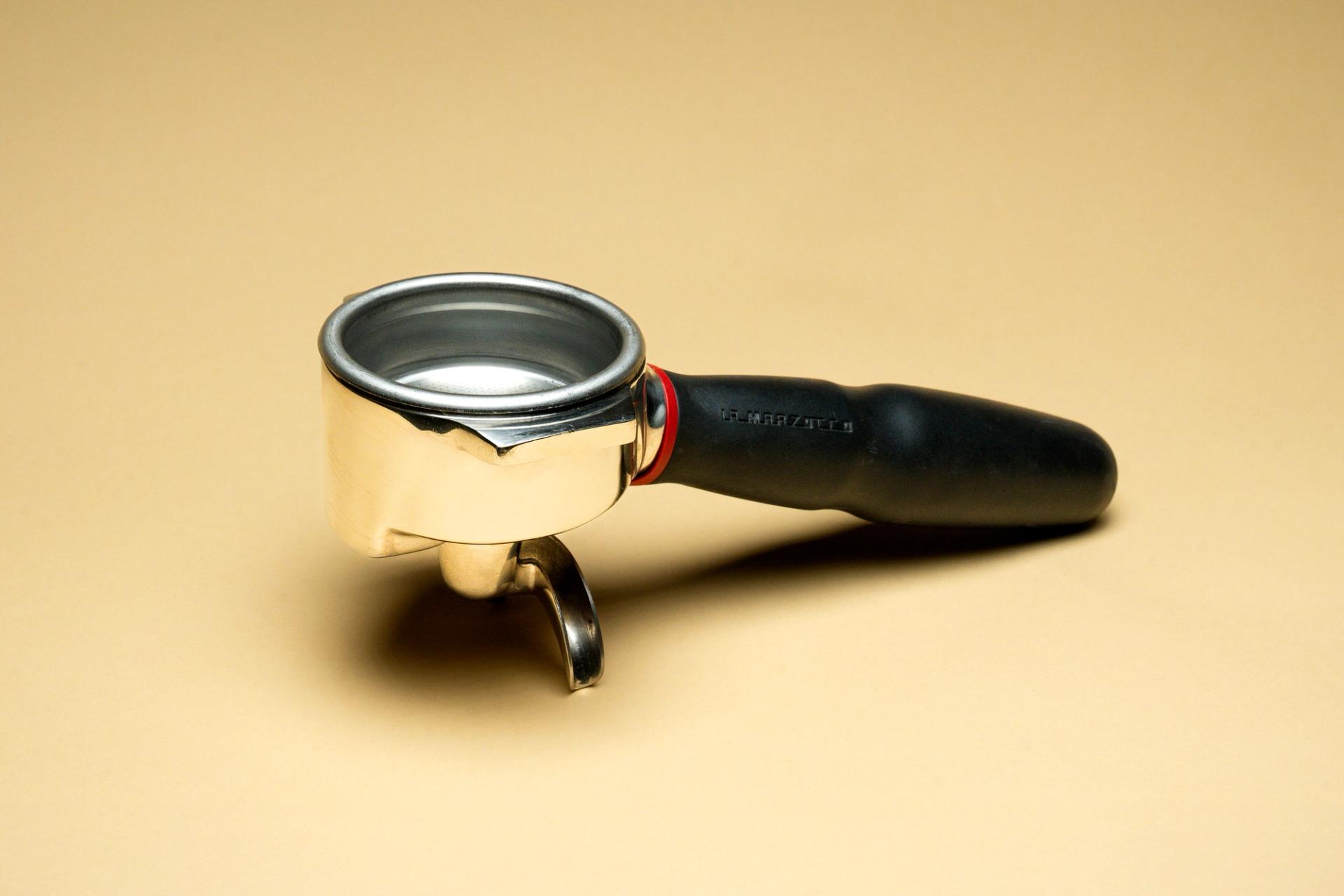
“We don’t change just for change,” Della Pietra said. “If we have to change, it’s because there is something functional that works better.” Take the KB90, introduced in 2019. For more than a century, espresso machines have used portafilters—the spoon-shaped attachment into which you tamp the coffee grounds—that twist onto the brewing head with a bayonet mechanism, like a lightbulb. But that movement takes effort, sucks for left-handers, and can lead to repetitive strain injury known as “barista wrist.” (Legend has it that rising RSI claims are partly why Starbucks switched to automated machines.) So for the KB90, Della Pietra’s design team created a straight-loading portafilter, which uses a novel sprung jaw design to hold it in place. “The idea was to create a machine that was an ergonomic step forward,” Della Pietra said, “making the life of the barista easier.”
To ensure reliability, the R&D department prototypes through every design phase, testing both in their own labs and in the field. When Della Pietra’s team road tested the KB90 in Barcelona, they discovered that baristas in a rush would slam the new straight-in portafilters into the machine, spilling the grounds and spoiling the coffee. “Testing in the lab—not as a barista [moving] at one hundred kilometers per hour—we had not been able to see it,” Della Pietra said. So they redesigned the mechanism with a bumper that softened the impact.
Other than usability, the other La Marzocco cornerstone is durability: Its machines are known to last decades. “One of our main competitors is used La Marzoccos,” said Andrea Simonelli, the brand’s product manager, who for years ran its after-sales department. According to a recent New York Times story, a secondhand Rondine can go for as much as $40,000 (opens in new window).
Inside the company’s R&D lab, every new component is tested for thousands of cycles to ensure it can stand up to wear, heat, and moisture. “One of my first projects that I did, the life cycle of a component was 100,000 cycles. Not bad,” said Della Pietra. “But I remember the R&D manager coming to me and saying, ‘100,000 means if they are making 1,000 espressos in a day, it will last three months.’” (The component wasn’t used.)
Unlike many modern appliance brands, La Marzocco still assembles its machines in Italy, at the Scarperia factory, using mostly Italian components.
Inside, the factory is bright and modern. Each product has its own assembly line, and espresso machines move easily between workstations on trolleys or pneumatic workbenches. On the line, workers add the boilers, piping, wiring, electronics, dials, and, finally, the casings, which are polished and boxed before shipping. Both components and finished machines are tested relentlessly. I watched a Zeiss robotic arm take millimeter-precise measurements of internal gaskets; another machine tests the structure of stainless steel components. After all, Della Pietra said, “if it doesn’t work, the coffee shop closes.”
The assembly line has a welcoming, family feel; one worker told me his brother works on another line, as did his father, until his recent retirement. This has always been fundamental to La Marzocco’s success, said Simonelli. “Because we were making machines with people that cared about what they were doing,” he said. “It’s an obsession. You feel that when you are a customer. If you look inside a La Marzocco, you understand that.”
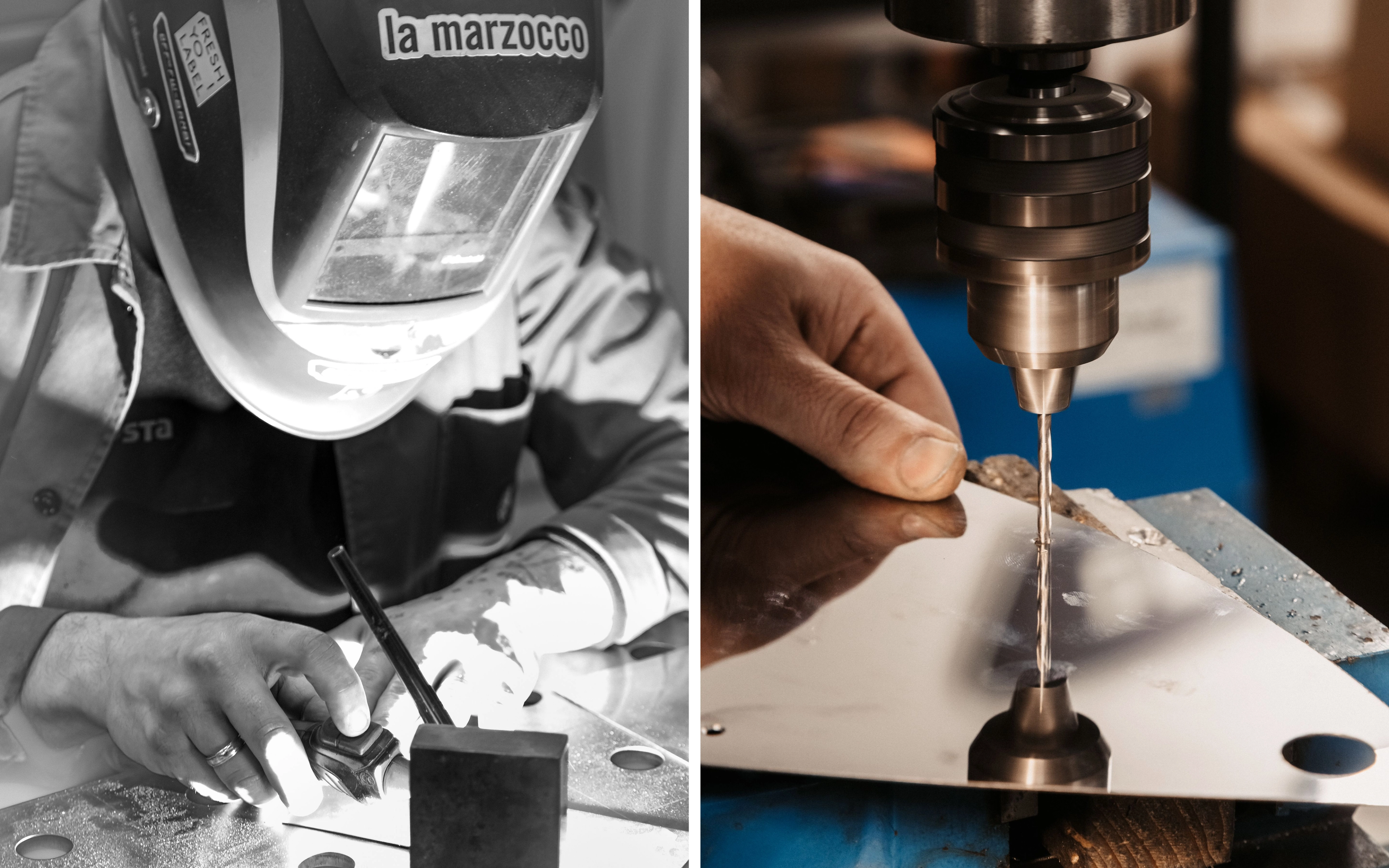
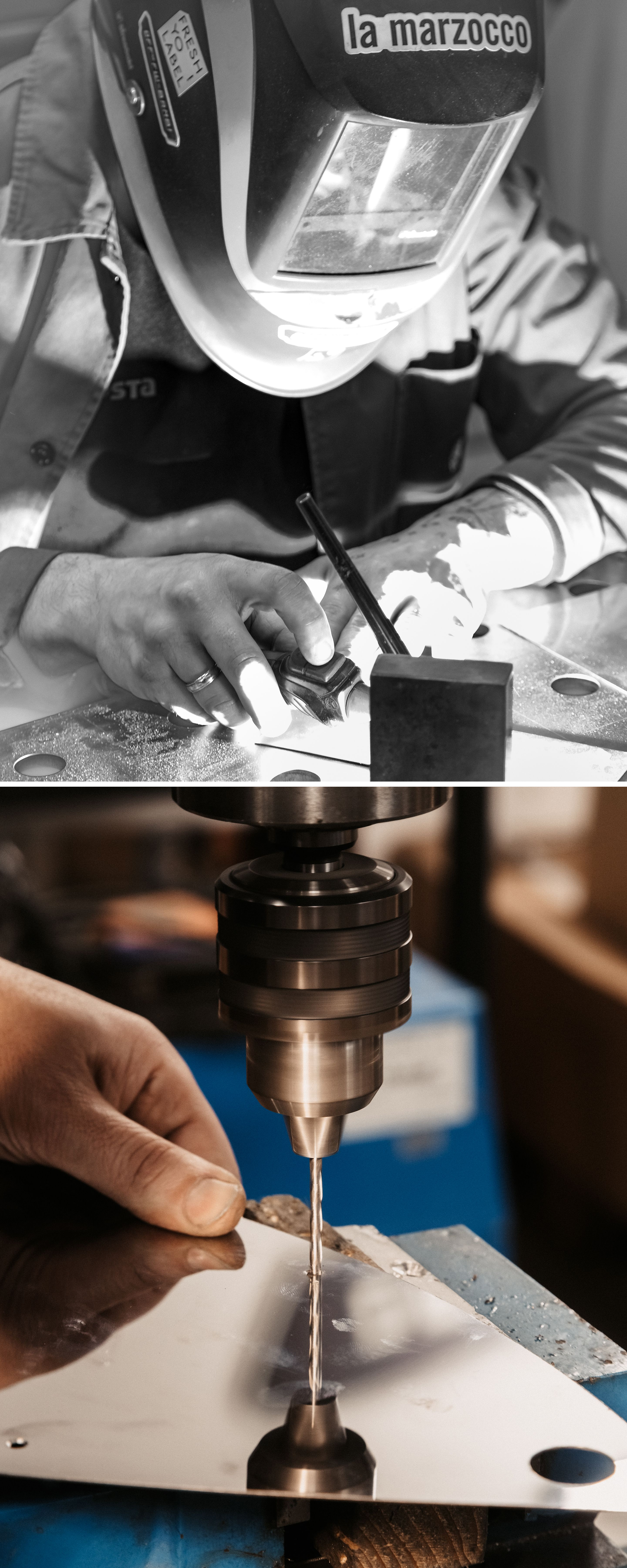
A welder at work in the Officine Del Fratelli Bambi.
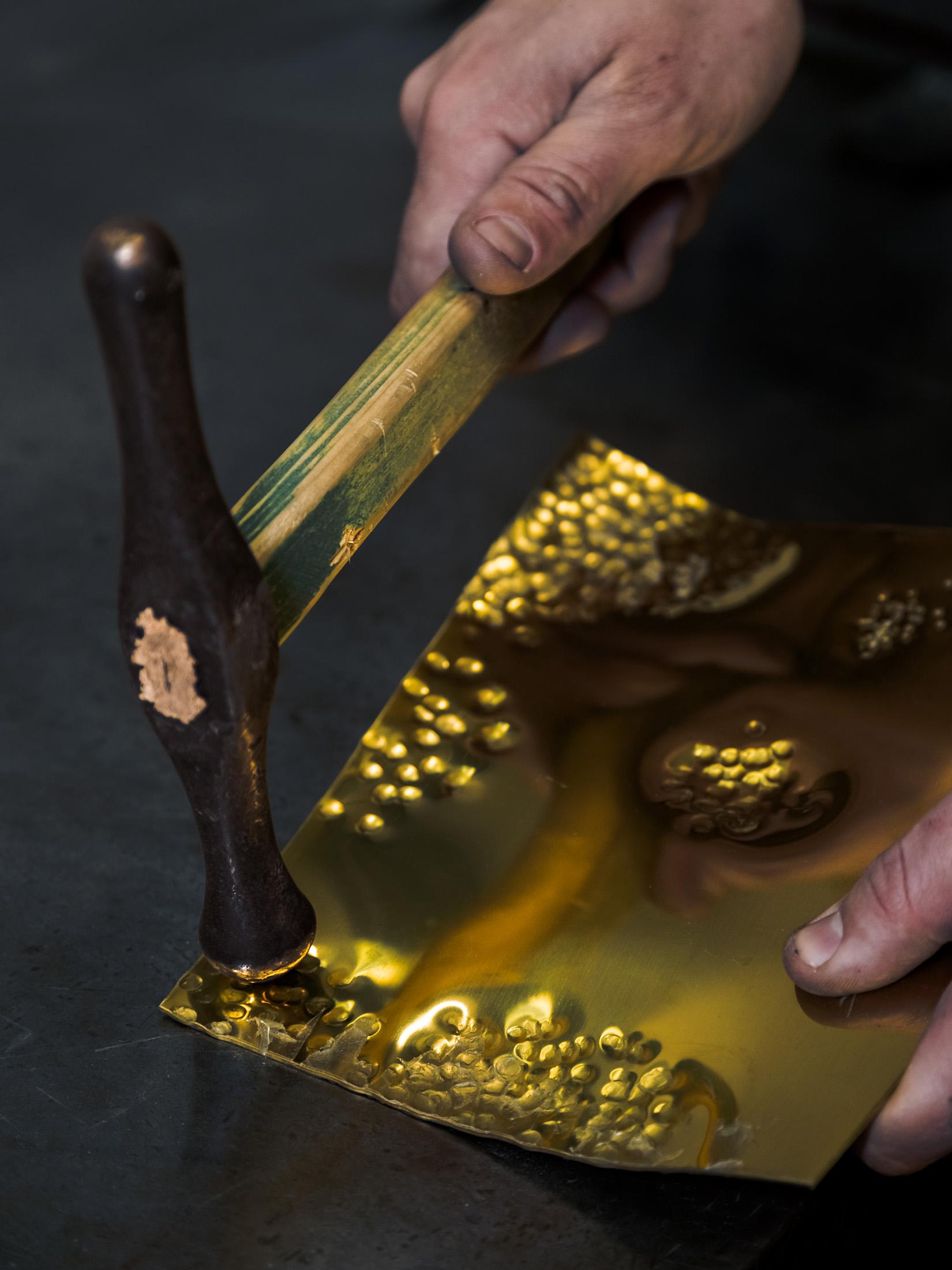
Credit: Video by Francesco Merlini for ToteiLa Marzocco’s commitment to craft is exemplified by its custom workshop in the basement of the Accademia Del Caffé Espresso. The Officine Del Fratelli Bambi—named for the Bambi brothers’ original metalworking shop—is where a small team of artisans hand finish bespoke machines, from prototypes to designer collaborations. “Every new shape, every new piece of ergonomics starts from here,” Della Pietra said.
Compared with the efficient, rhythmic expanse of the factory floor, the Officine is old-school: wooden benches, vintage sheet-bending machines, walls lined with racks of hammers and wrenches and metalworking shears. “What we try to do here is bring back our heritage and our roots,” Della Pietra explained. The Officine’s chief welder, Lorenzo Carcasci, has worked at La Marzocco since 1994. “The three artisans who work here are probably the most skilled persons we have.”
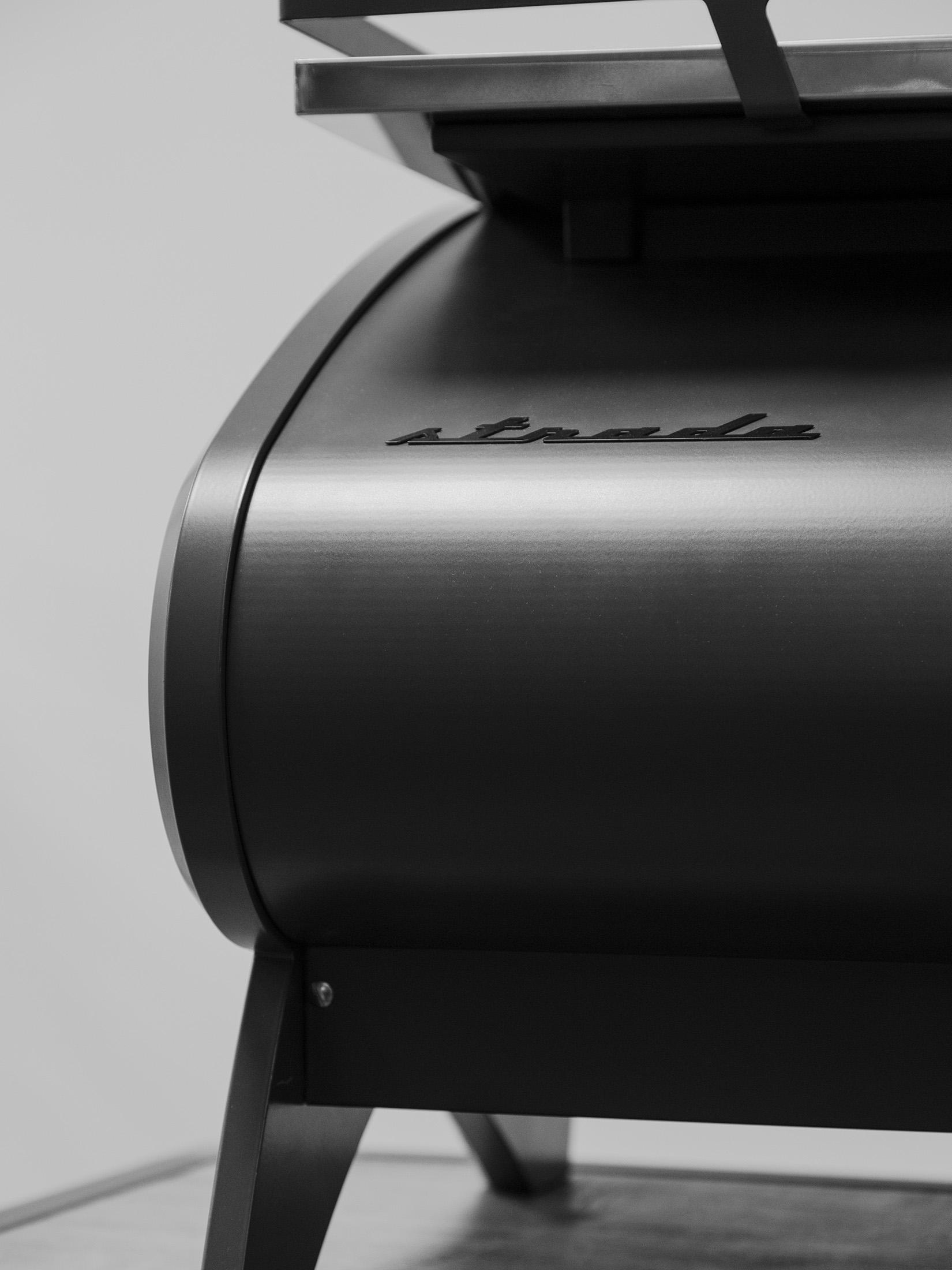
On two of the benches are machines in progress for the New York fashion brand Aimé Leon Dore, finished in olive green with gold script and hand carved walnut detailing, bound for Los Angeles and Dubai. On another stands a Strada, the company’s most advanced product line, being built for the electronic dance festival Tomorrowland. It’s wrapped in ornate brass, with transparent glass panels and a sweeping futuristic design. “It was really challenging,” Gigli said of the Strada X. “There were so many different things that we have never made before.”
In-Depth
How La Marzocco Designed the Strada X
The Strada X.
Credit: Photographs by Giancarlo Barzagli for ToteiLa Marzocco often takes design inspiration from the baristas and obsessives pushing coffee culture forward. This was the basis for the Strada (Italian for “street”) series, first launched in 2009. “It was designed by a group of baristas, so this is why: It was coming from the street,” Della Pietra said. For the Strada X, released in 2023, Della Pietra wanted to design its most advanced machine yet, “for those really high-end coffee shops where you are going to taste the difference between every extraction,” Della Pietra said. The process took eight years.
La Marzocco’s engineers started by talking to a group of 30 baristas and industry experts, and watching baristas at work in real coffee shops. From that, they identified two areas of focus. The first was pre-infusion: When you first begin pouring a shot, the grounds in the portafilter basket are soaked with a small amount of water, compressing the coffee into a uniform “puck.” This is important in getting a smooth and balanced flavor. “You want to have water all over the coffee puck, but not run through the coffee puck,” Della Pietra explained. But, while the amount of water tends to stay the same, the amount of coffee grounds in the puck can change from shot to shot, or barista to barista, which causes inconsistencies in flavor.
That began years of research on saturation. “A lot of testing with different types of coffees, different filters. ‘What happens if I put one gram more? What happens if I put one gram less? What happens if I tamp more?’” Inevitably, Della Pietra said, they hit a lot of dead ends. “The hard part is when you start saying, ‘Maybe we should make it easier. Maybe don’t do this.’ And that is the moment in which you need to push.” Eventually they landed on a solution: a sensor inside the brew head that measures resistance from the coffee puck in real time and uses a proprietary algorithm to detect when each puck has reached saturation point, ensuring a perfect flavor extraction every time.
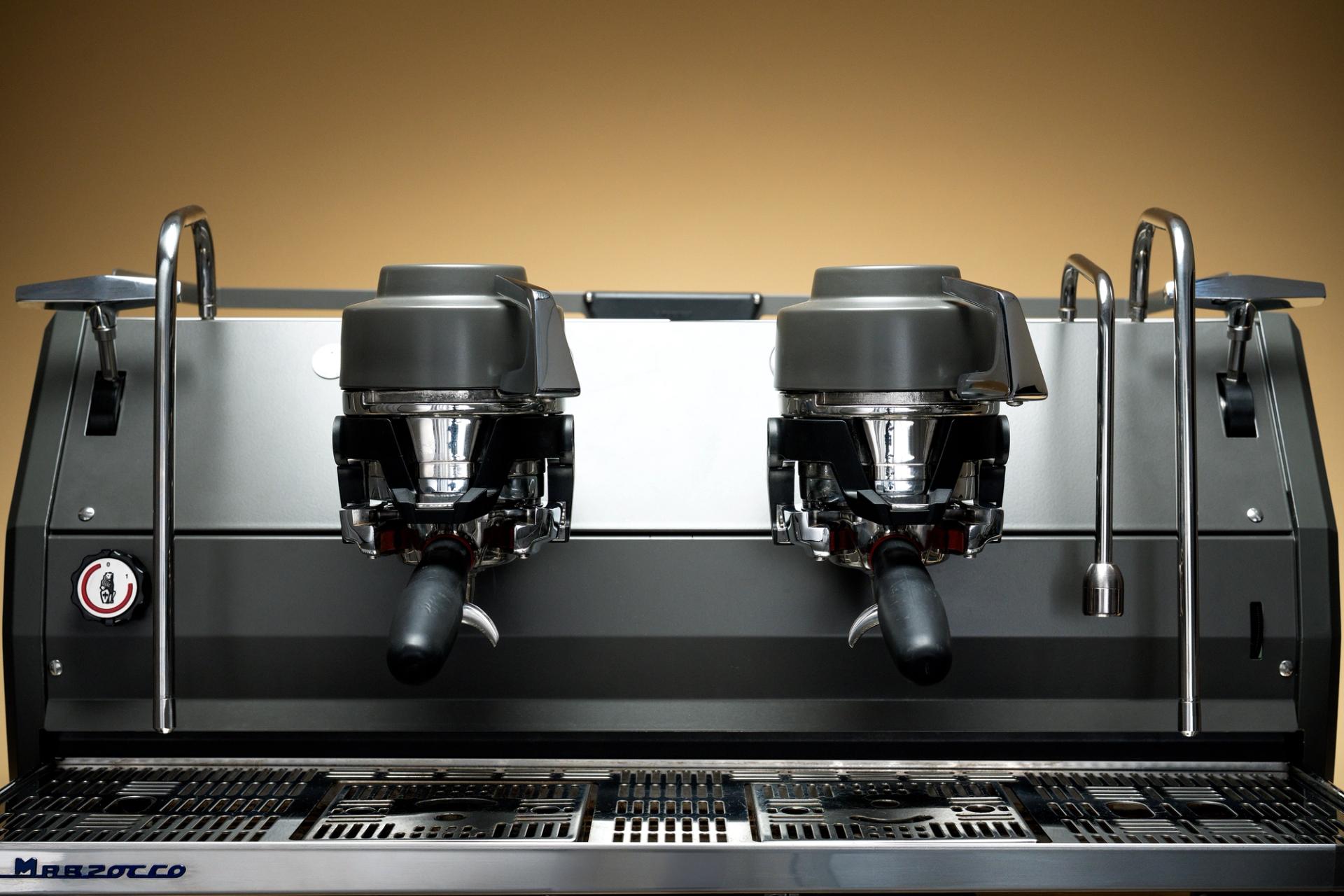
The second challenge was pressure. Expert baristas often vary the water pressure during an espresso pour: Low pressure tends to produce a sweeter, softer cup, while higher pressure extracts a more intense, syrupy shot. By varying the pressure, the theory goes, you can bring out different notes in the coffee. In previous La Marzocco models, baristas could vary the pressure by time, but this didn’t account for changes in the volume or type of coffee. More coffee—and a thicker puck—creates more resistance, and a slower extraction. A thinner puck, the opposite. So with the X, “we change the pressure based on the weight of the coffee in the cup,” Simonelli said, using a built-in scale. “It gives much more consistency.” That means better coffee.
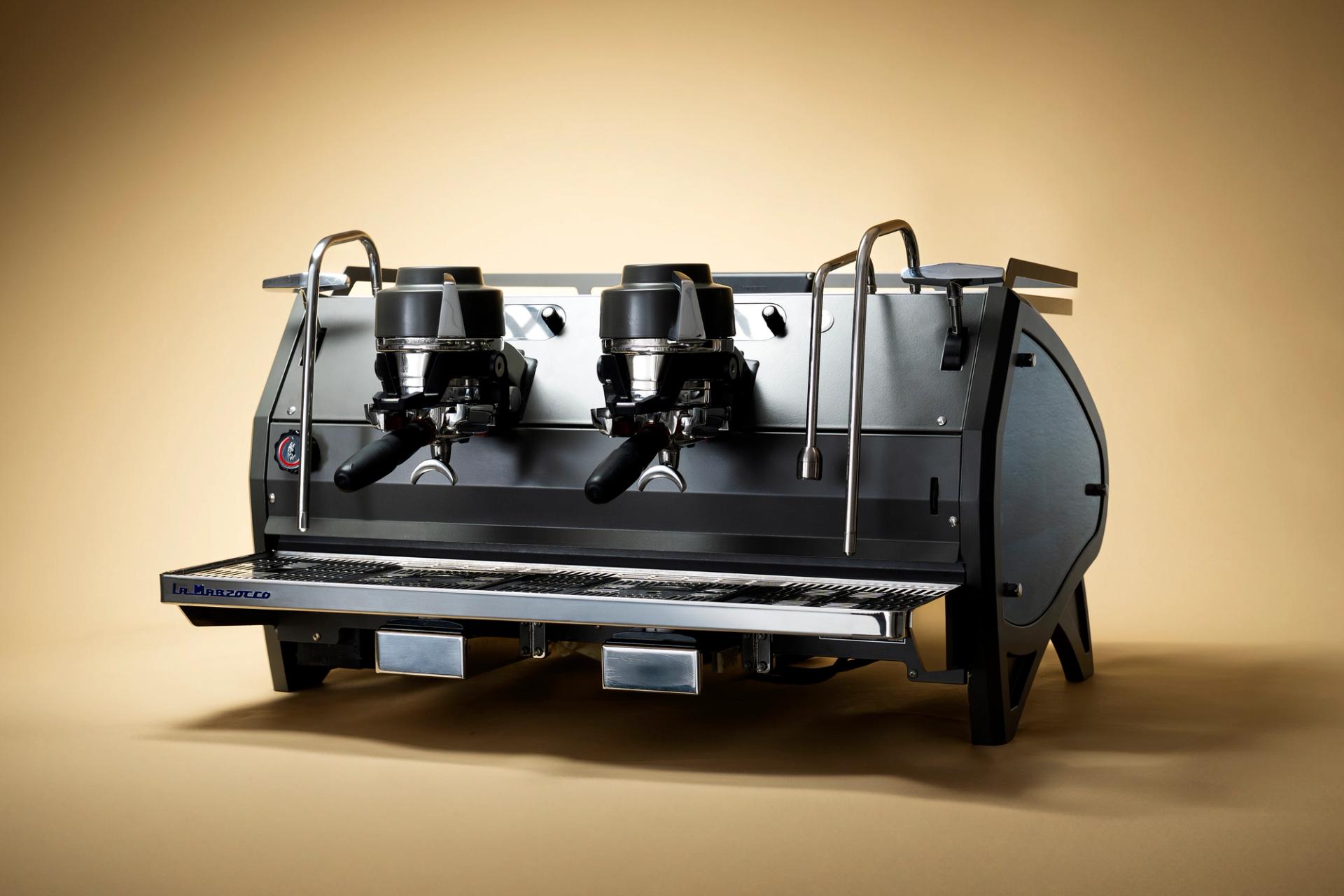
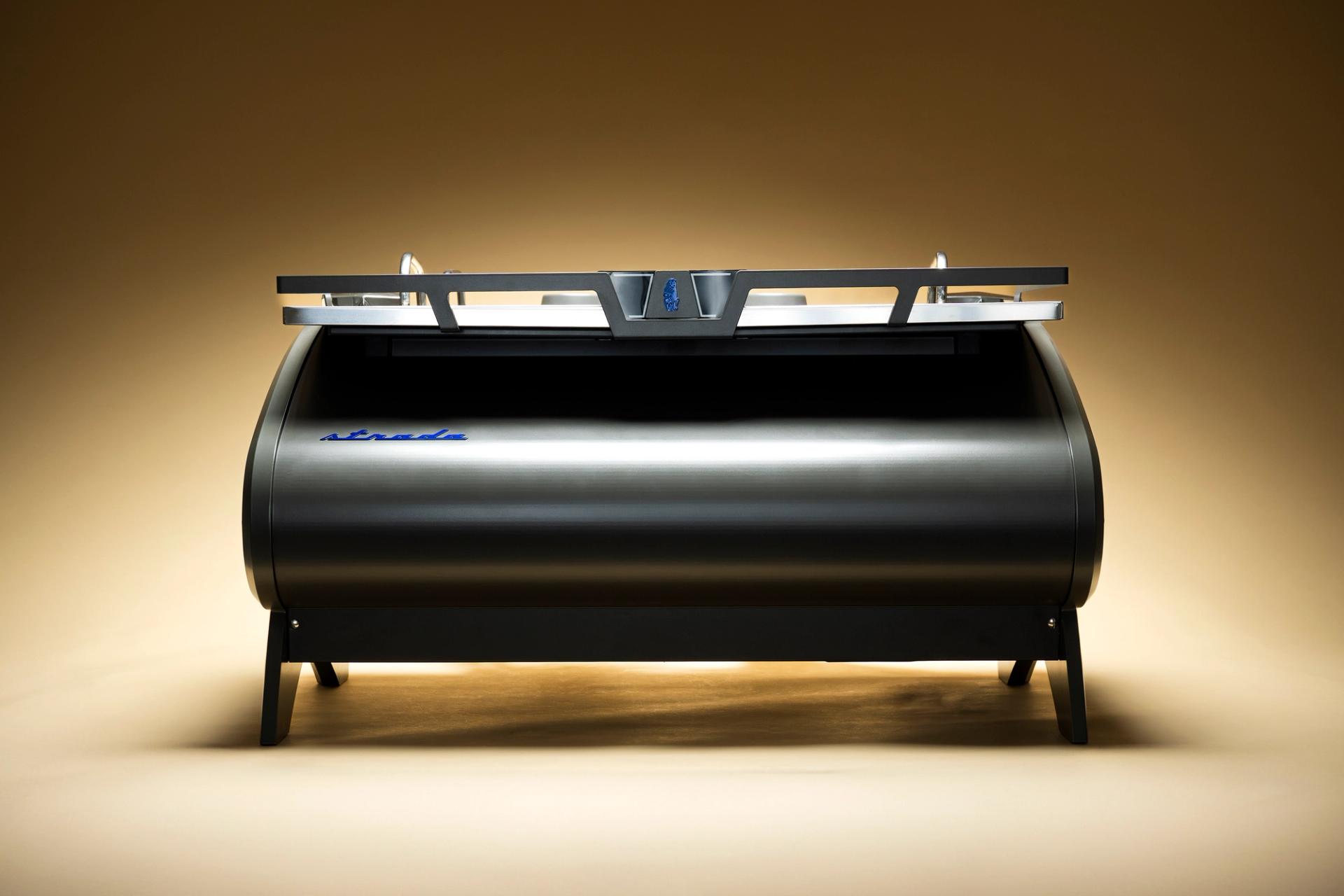
The externals of the Strada X began with a sketch and mock-ups. If the aesthetics of machines like the Linea and GB5 suggest simplicity and reliability, the X is designed to be shown off: Its swooping curves were, in part, inspired by Della Pietra’s love of automotive design. “When we are realizing something that has to be high end, it helps to have a less polite design,” Della Pietra said. The X is “a little more aggressive.” Its transparent casing, showing off the internal electronics, also telegraphs its function as a high performance machine (with a $32,000 price tag to match). But even then, there are nods to history: Look closely, and the polygonal shape of the side is the Marzocco shield, turned on its side.
Even with its most advanced machine, Della Pietra said, La Marzocco’s focus is always on the barista: The X adopts the front-loading portafilters from the KB90, and its advanced programs are simple to use, so that even a barista with no training can still pull a great shot. “To me, that, more than the most innovative machines, represents the essence of La Marzocco,” Gatti said. “We put a really complex technology inside, but at the end the barista just sees a traditional machine.”
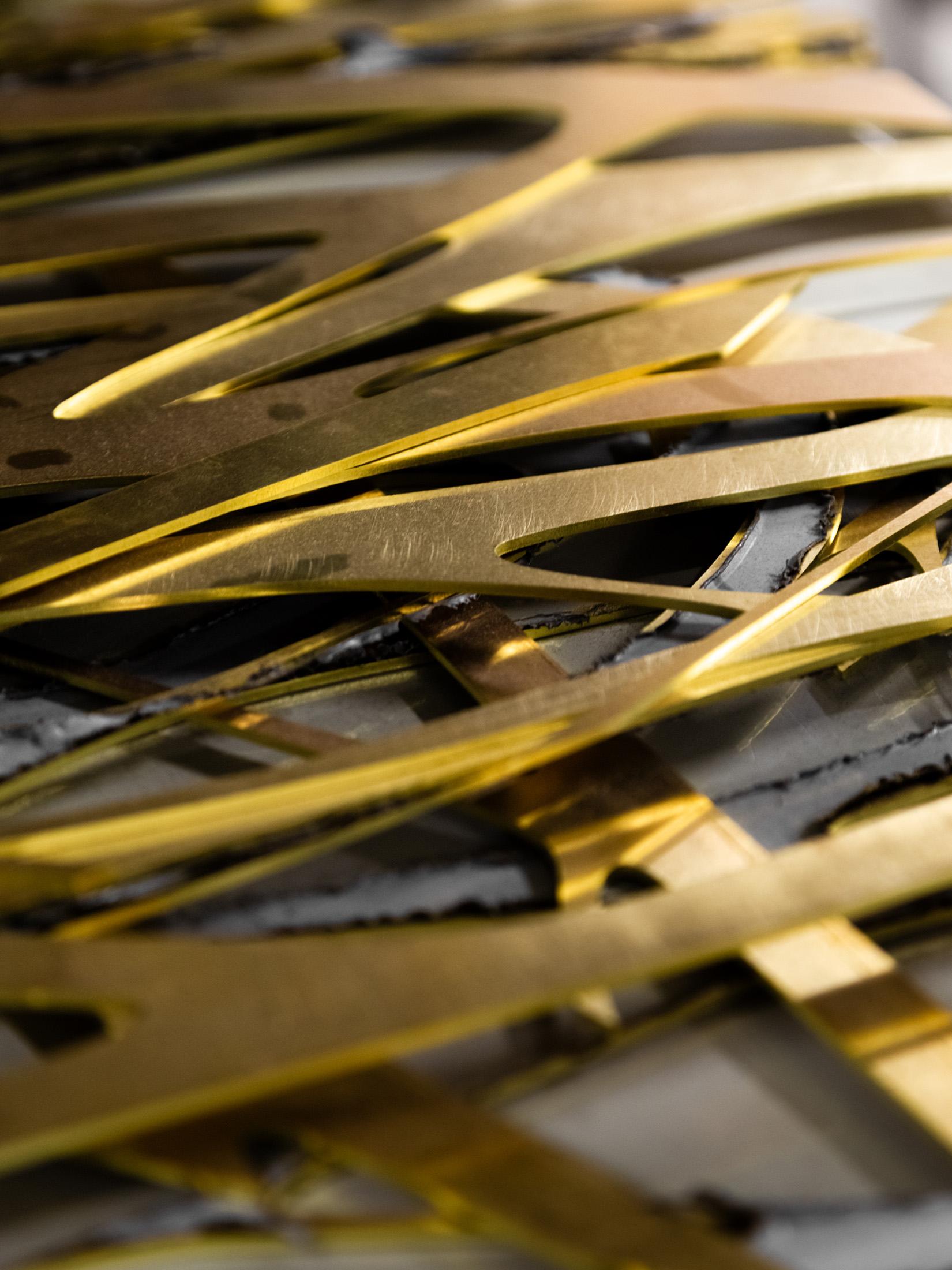
Sometimes, collaborators come to the Officine with a precise vision in mind; other times, Della Pietra said, they “have no idea what they want, which is okay.” He talks them through different options: materials, dials, flame-torched “fiamatta” finishes. Up against the wall are stacks of sheet metal—hammered copper, polished gold plate—that serve as swatches.
It’s sweaty, manual work. Della Pietra holds up a piece of a GS machine, which has been cut, bent, and hammered into shape. “This panel looks quite easy, nothing too special,” he said. “It takes something like 10 hours for a person to have it fully flat, and it’s something you don’t see.” If the desired effect can’t be achieved manually, they will turn to bespoke innovations like 3-D metal printing. But, mostly, they lean on traditional skills. “We try to keep the material as raw as possible. That means you need to have a lot of precision, but the idea here is not to push on numbers, the idea is to push on quality.”
The result is often beautiful. Bespoke custom machines from the Officine start at over $20,000; one custom three-group Strada cost the client over €60,000. But to Della Pietra, the outlay is justified. “It’s a piece of art.”
For all the artisanal skill on display, only around 90 of the 50,000 machines La Marzocco produces a year are made at the Officine. The engine of the company’s growth is one floor up, where a few dozen workers are assembling the Linea Micra and Linea Mini, its high-end home espresso machines.
Photographs by Francesco Merlini for Totei
The pandemic supercharged espresso culture. Suddenly, caffeine addicts needing an espresso fix were spending hours watching YouTube videos from coffee influencer James Hoffmann (opens in new window) and assembling café-level setups at home. La Marzocco has sold a home machine, the Linea Mini, since 2015, but it was a niche product. Today, home machines make up over 50 percent of its sales.
But the home market is a different game. Average consumers are unlikely to understand why a Linea Micra costs $2,000 more than a Sage or Nespresso machine with equivalent specs; the hardcore, on the other hand, can be tempted by startups like Decent Espresso, which offer ultra-technical features. (It hasn’t gone unnoticed in the coffee community that Hoffmann, influencer-in-chief of the coffee world, prefers an Eagle One made by Victoria Arduino, another pedigreed Italian manufacturer that is La Marzocco’s biggest rival.) “Some people are attracted to being a scientist of coffee, but they also want to drink an easy and consistent espresso,” said Della Pietra. “You have to know where your brand is.”
Right now, the buzz among connoisseurs is around grinders, which many will tell you affect flavor more than the machine itself. In coffee, slower brewing methods such as pour-over or French press require larger grinds, whereas the speed of espresso favors finer grounds; the greater surface area of the smaller grounds changes the flavor extraction. That’s particularly important with the recent trend for lighter roasts in Anglocentric countries (Italians still generally prefer their roasts dark). As a result of this trend, La Marzocco recently overhauled its own grinder line, introducing the angular Swan and Jay—luxury machines with custom-built burrs, and the ability to remove static electricity—retailing at over $2,000. “Grinding is the most challenging part of our future,” Gatti said, “and is something we need to spend time in, in order to maintain the position of an innovative company.”
Some in the coffee world are also nervous as to whether La Marzocco can retain its traditions in the face of industry consolidation. In 2024, the Italian coffee giant De’Longhi acquired a majority stake in La Marzocco for $374 million; the brand now sits alongside Eversys, a Swiss maker of automatic coffee machines, as part of De’Longhi’s “professional division.” But De’Longhi’s own machines are not exactly loved or known for reliability in the coffee world, and there’s a fear it could try to cut costs.
There are also dupes: Chinese copycats entering the market, and undermining the high-end brands. “We are not worried that China will start making espresso machines,” Simonelli told me, over a lunch of Tuscan steak and coccoli, fried dough balls, at the local osteria. “If they approach it in a proper manner, we know that we cannot compete cost-wise, right? No competition. We don’t play the same game.”
Simonelli says he’s more concerned with how to retain the Bambis’ ethos as La Marzocco expands from a family enterprise to a luxury brand with more than 1,000 employees. “The risk is that we lose the soul,” he said. “As more people enter, the less people will understand who we are. And that is where we really need all of us—the people that have spent more than five, 10, 20, 30 years here—to pass on those values.”
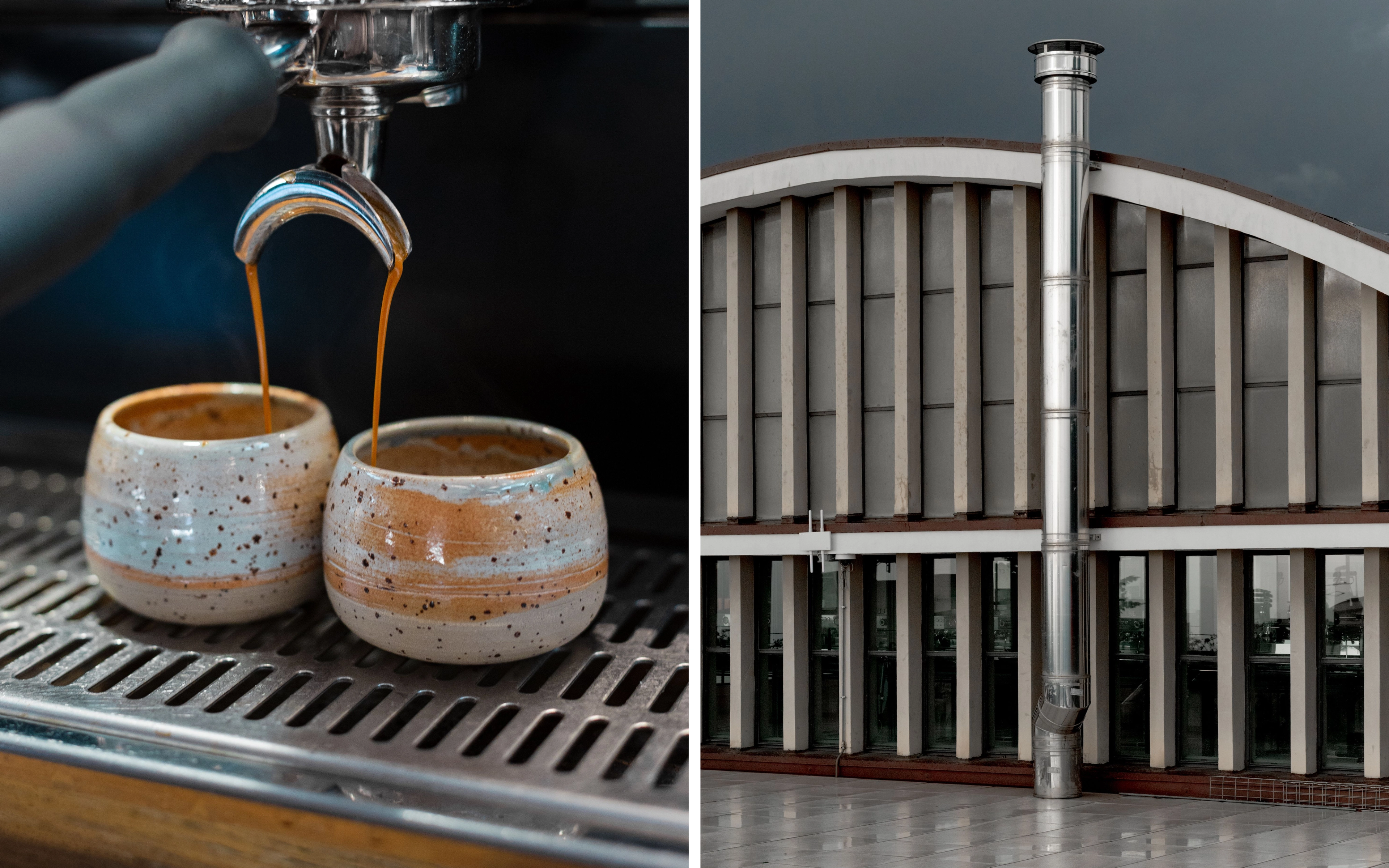
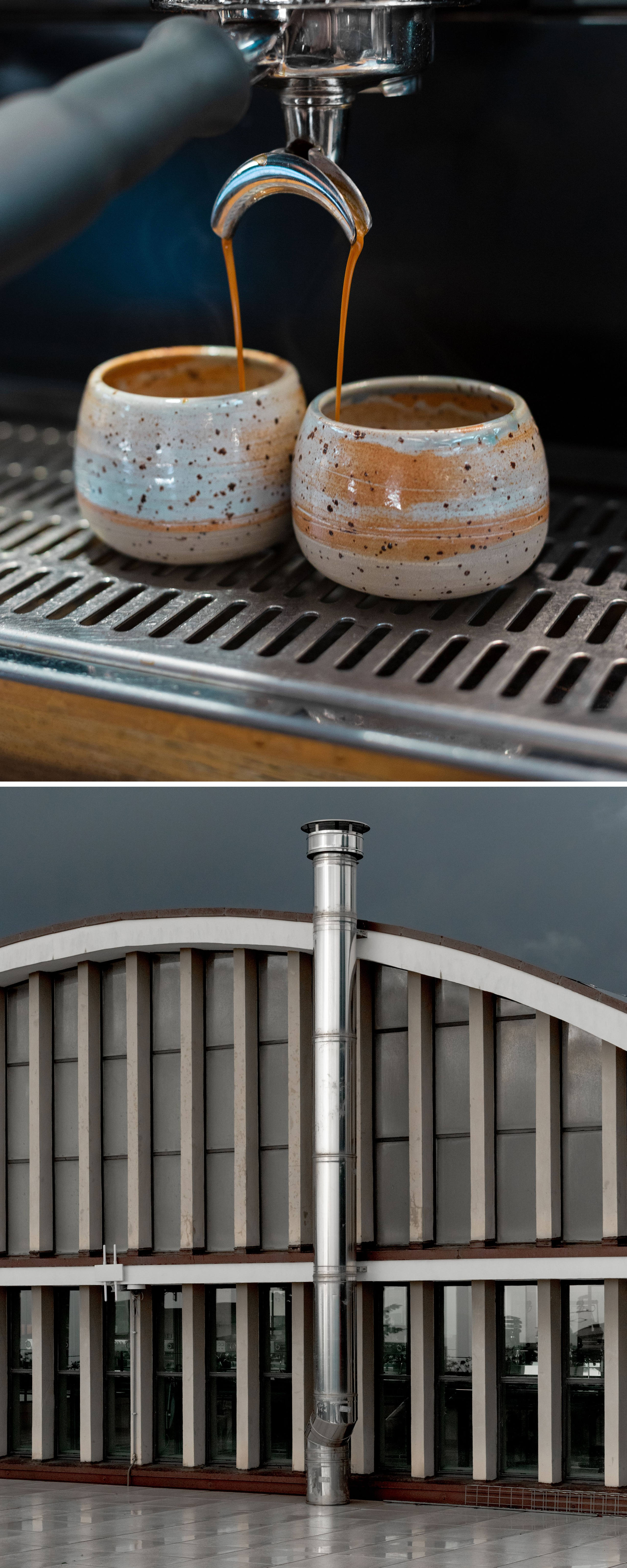
Back at the Accademia, Della Pietra and I walked over to the bar. “Do you want to make your espresso?” he asked.
The centerpiece of the Accademia is the Vespucci, a one-of-a-kind machine featuring brewing technologies from each of the different eras of La Marzocco—the culmination of Della Pietra’s career, and his mentor’s. “This one is standard pressure, without dosing,” he said. He pointed to the Leva, a modern adaptation of the old-fashioned, piston-operated machines: “That one is hydraulic—super geeky, beautiful.” He settled on the brew head from the Strada X, La Marzocco’s most advanced machine and easiest to operate. “This is the one we always use,” Gigli said, laughing.
We selected beans from Businde Washing Station, a prize-winning, single-origin red bourbon grown and picked in the hills of Kayanza, Burundi, and put them through the grinder, which deposited 17 grams of grounds into the portafilter.
In the end, I let him make it for me. Della Pietra leveled and tamped the coffee firmly, before pushing it into the front-loading jaws with a satisfying click. With the press of a button, the boiler whirred into life, pre-infusing, then pouring; 26 seconds later, my cup was filled with 34 grams of beautiful espresso. By my tastebuds, it was perfect.
Archival photographs courtesy of La Marzocco