The View over Vince Gilligan’s Shoulder
The Pluribus showrunner explains how he hatched his Emmy-winning sci-fi hit about the human right to be unhappy.
September 23, 2026
Vince Gilligan brought home an Emmy last week for his writing on the first episode of Pluribus, the high-concept sci-fi drama that asks and attempts to answer the question: What if happiness were unbearable? It was one of two prime-time Emmys awarded to Pluribus, the other having gone to its lead actress, Rhea Seehorn. If the haul was modest at the main ceremony, the awards were a sort of validation for how the show was dreamed up. As Gilligan explained to Totei last year, he had two flashes of inspiration. First came the conceit (“What would it be like if everybody suddenly were so nice to me?” he thought during breaks while making Better Call Saul), and then he arrived at the star (Seehorn). Pluribus took shape from there.
The show puts Gilligan back in science fiction territory for the first time since the end of The X-Files—where he broke into television as a writer and then director—in 2002. Seehorn plays Carol Sturka, a successful romantasy novelist who hates her own books and almost everything other than her wife Helen (Miriam Shor). But then a signal from outer space makes nearly everyone on the planet part of a serene and happy hive mind. Carol—who is grief-stricken when Helen dies during this transformation—and a handful of other people are, for some reason, immune to this psychic joining. And while the other outliers seem fine with the new world order, Carol is determined to restore humanity’s individualism, even if it means causing mass unhappiness in the process.
Last fall, TV critic and author Alan Sepinwall spoke with Gilligan about the origins of the show’s premise, how he approaches storytelling as both a writer and director, why he has more in common with Carol than you would think given his reputation as “the nice guy showrunner,” his fears of AI, and more. Their interview has been edited and condensed from two separate conversations.
How long has this idea been in your head?
It might be as much as 10 years ago. I feel like it’s more like eight. When we were working on Better Call Saul, before I went away to do El Camino, we would have these long lunch breaks. And I would walk around our neighborhood, around the writers’ room, and this idea started percolating. I was thinking, “What would it be like if everybody suddenly were so nice to me?” Where it was a ridiculous supernatural level, where everybody would do anything.
When you get treated well in life, you start to desire even more, to a supernatural degree. I was presupposing a character where nobody could ever be mad at him, nobody could dislike him. They would do anything—move heaven and earth for him. And then you say to yourself, “Is this a show?” It would keep me awake at night wondering about it, until I eventually said, “Yeah, this is a show. Who should star in it?”
Well, Rhea Seehorn—let’s make it a woman, not a man, because I freaking love her. And Better Call Saul’s gonna end, and I want to keep working with her. And then you buckle down. What explains a world of people who would be that nice? Well, the idea of a hive mind, I guess. How does that happen? Well, it’s gotta be science fiction. So that’s where the joining came from. I backed into it. But the desire to talk about happiness and the desire to talk about solicitousness—people being nice to one another or to specific people—that intrigued me.
And then I thought to myself, “Well, that’s kind of like I Dream of Jeannie, isn’t it? It’s kind of like Bewitched.” And then I was pondering those two shows. And I thought to myself, “Why were those guys always so hung up and neurotic and like, ’Oh, Samantha, don’t use your magic powers. Oh, Jeannie, don’t…,’ when they’ve got these two incredibly gorgeous ladies who have magic at their disposal?” And then it dawned on me, duh, from a writer’s point of view, you can’t make a TV show about someone who’s happy. So I started thinking, “Well, maybe it should not be a show about a guy like that—and why does it have to be a guy even?”
And at that point, all of us on Better Call Saul were starting to realize what an asset we had, acting-wise, with Rhea Seehorn. She is tremendous. And I started thinking, “She’s great on Better Call Saul and she’s got such a range. I know she can do so many other things and she can make you cry and she can make you laugh.” And it made me think of Bryan Cranston years and years before that when I’d worked with him on The X-Files—God, this guy can do anything. Well, Rhea can, too.
Do you think 15, 20 years ago, you would’ve had that instinctive thought of, “Does it have to be a guy at the center of this? Could I build the show around a woman?”
Hopefully, if I had worked with Rhea on that episode of X-Files all these years ago, “Drive,” and she had thrilled me and excited me with her acting the way Bryan Cranston did, I would have said that, but maybe not. I’m a guy and I tend to think in terms of building a show around a male protagonist. But if I wouldn’t have done that 20 years ago, I’m glad I did it now, because it stretches my thinking. And it’s interesting writing for a female protagonist.
I was kind of nervous at first because I thought, “Am I going to be able to pull this off? Are all the women in the world who watch going to say that it sounds like a guy wrote that?” Luckily, we have a lot of women in the writers’ room and a lot of really talented writers, period, male and female. But yeah, I don’t know, maybe 20 years ago I wouldn’t have thought of it as quickly or thought of it at all. Hopefully, if that’s the case, then that indicates some sort of growth on my part.
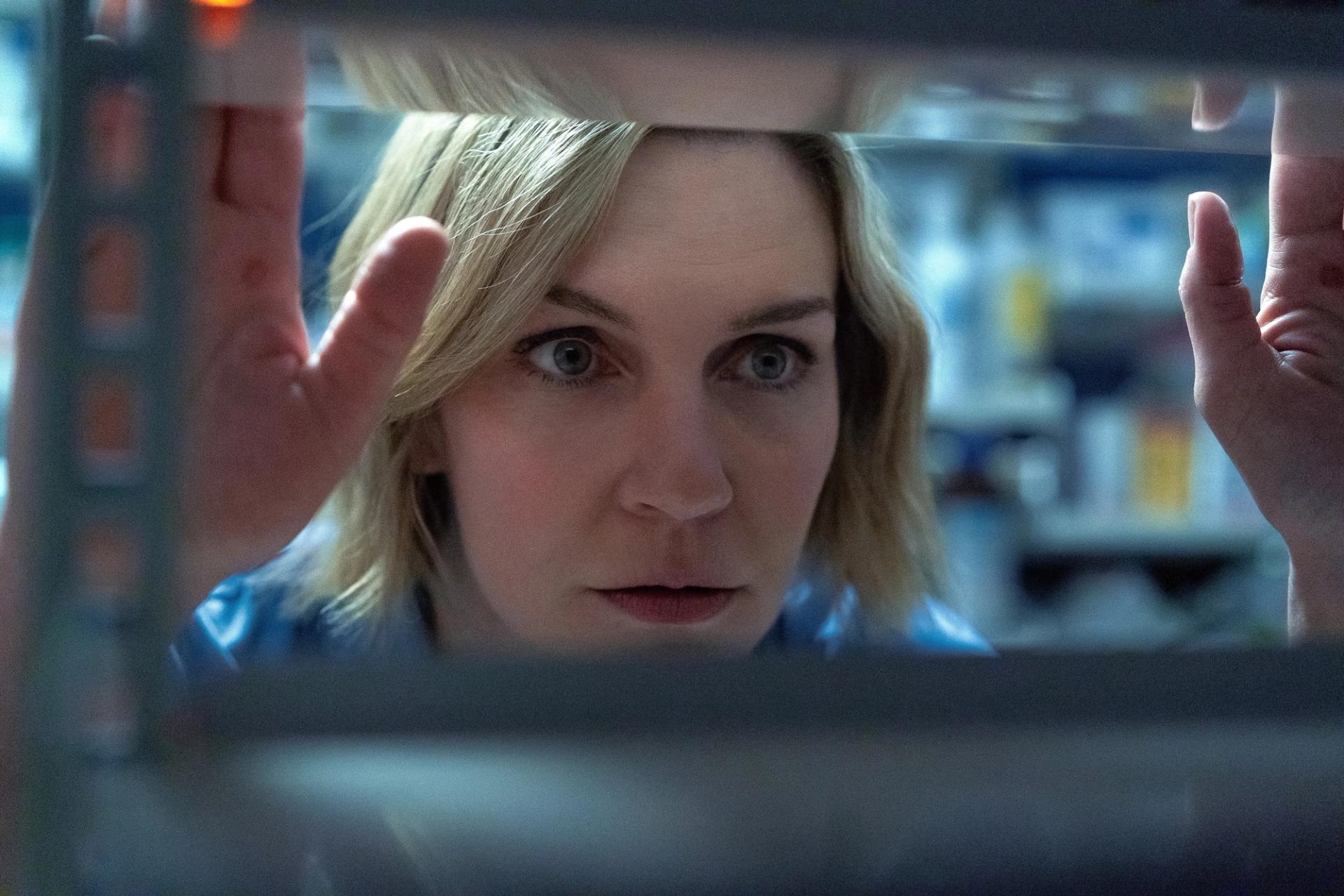
Rhea Seehorn in Pluribus, 2025.
Credit: Courtesy of Apple TVAnyone I’ve ever met who has worked with you will talk about you as among the nicest, most easygoing people in all of the entertainment industry. And you’re making a show where, on the one hand, you’ve got all these nice people who will do anything to make the main character happy, and on the other, it’s centered around this really unhappy and hostile personality. What was it like writing each end of that?
Well, thank you. That’s very sweet. The crabby part of Carol comes a lot easier. It is hard sometimes being nice. And it’s become, in this weird way, kind of a—I don’t want to say it’s become a trap, but I’m known as “the nice-guy showrunner.” And you’ve got to live up to that, even on days you don’t feel like you can live up to it. But I keep telling myself, “We’re not curing cancer here, we’re making a TV show. There’s no reason we have to be jerks to each other. There’s no reason this can’t be as pleasant an experience as humanly possible.”
So that’s where that side of it comes from. What’s the point of being an asshole? And from a very selfish perspective, it doesn’t get you where you need to be. It doesn’t get the best out of people. When I do interviews or when I’m in the writers’ room, I’m trying to be [nice], because it’s nice seeing people smile. But my real self is as much the negative stuff. I’m closer to Carol than people would imagine.
When Carol meets the other unaffected people, they either don’t mind the change to the world or actually think it’s better. And Carol is a profoundly unhappy person. How reliable a narrator are we supposed to find her?
That remains to be seen. She seems to be, until maybe she turns out not to be. I think she’s an honest narrator. But honest doesn’t necessarily mean reliable. I think this is her honest take on things. But would you, the audience, see it the way she does? Perhaps not.
How much thought did you give to all the logistics of the joining and how it works and how everyone else on the planet is experiencing things?
It’s endless. I thought about it until my brain smoked, for months on end, years on end, because it takes me forever. What does it mean to be joined? For instance, as you see in episode 6, if you are that happy and at peace and loving and respectful of all living things, you can’t kill cows anymore and eat hamburgers. But not only that, you can’t cut down corn anymore. So what does that mean? That means you’re gonna starve to death eventually. So what then? What do you have to do? Well, you have to eat human flesh. Don’t want to do it. Gotta do it.
So there’s all these things. Do the others wear jewelry and perfume? No. Why would they need to? Everybody’s seen each other naked. Everybody knows each other intimately, even if they’re on opposite sides of the planet Earth. So do they need to look good anymore? Well, they feel like they do for Carol. They have to be performative for Carol. Then the question is, how often do they bathe? Because you could go back to, like, Old West times, where you take a bath once a month, and you’d probably be okay at a certain point. You have to take a bath just because it’s a health thing. And they have a certain responsibility to the collective to not get ill, if they can help it. But is it okay if they smell, you know? So we think about all this shit endlessly.
When Carol wants to drink with Zosia, she asks, “If you get drunk, does that mean the world gets drunk?” And Zosia says that’s not how it works. Similarly, when Diabaté is having sex with his harem, is the entire world having sex with Diabaté?
The only way this works is there must be some other component in this RNA recipe that makes everybody cool with everything. Because if everybody joined as we suppose in this concept, but they joined just like we are now, everybody on Earth would be dead within 90 seconds. I think everybody would be screaming and freaking out and tearing at each other. I don’t know that anyone would survive. So there has to be this component of happiness—we’re together, and it’s heaven. It’s heaven, it’s the rapture, it’s whatever it is, but we love it, and all sins are forgiven.
It’s a hard thing to swallow. And there’s so many things we didn’t get to in season 1 that I want to get to. I don’t know if we ever will, because you’ve kind of got to go where the characters take it. But my wife, Holly, always says, “I want there to be a heaven.” I don’t know if there is, but I can’t live in a world where there’s no hell, because there’s got to be a place for Vladimir Putin in the afterlife. There’s got to be payback for Hitler and Pol Pot and Charles Manson. I can’t believe in a universe where there isn’t. You know, the wheels of justice grind slowly but exceedingly fine. There’s got to be justice. We haven’t had a character give voice to that yet. I’d like to figure out who might say that at some point, and maybe in season 2. But I think about that all the time.
Over the course of the first season, everyone is still mostly doing cleanup from when the joining happened. But do the joined have entertainment? Do they have romance? What do they do when the world is running the way it’s supposed to run?
That’s a great question. Rhea is a great resource for this stuff. We’ve talked about it for hours. She said there’d be no humor anymore, because at the heart of a joke is surprise. She could teach classes on this stuff. She said there’d be no more art, there’d be no more humor, there’d be no more surprise. And she’s right. These people do not seem to be liars. In fact, we’ve gone to great lengths to point out that they can’t lie. On the face of it, they seem very happy. Who’s to say they really aren’t?
This is a world that presupposes that everybody is happy. I don’t know that we can change the rules at a later date. So what does that mean? It means they’re happy. Do you need to question happiness any further than that? You probably don’t. But obviously some things are lost.
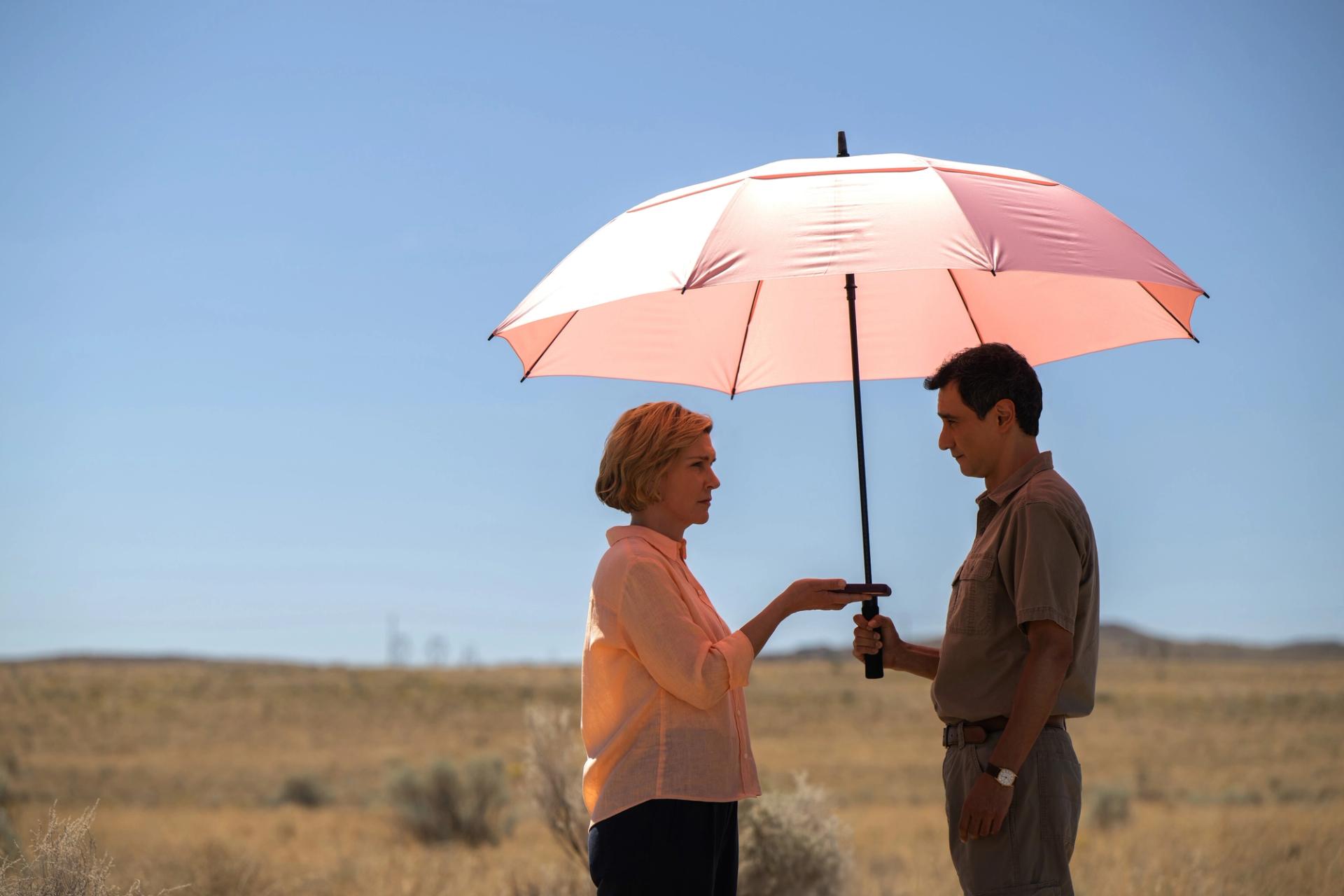
Rhea Seehorn and Carlos Manuel Vesga in Pluribus, 2025.
Credit: Courtesy of Apple TVIt has been almost 25 years since you were regularly writing science fiction. Is that something you were itching to do before you made a left turn to Albuquerque?
I have always loved science fiction. But I go where the story takes me. And if you drill down on that, I go where the character takes me, and the character leads to the story. And in this case, it seemed like a perfect opportunity. In fact, you can’t do this show without having a science fiction element to it, or a fantasy or speculative element to it. And yeah, I did kind of miss doing that, but I did not embark upon this thinking, “Gee, I’ve got to get back to science fiction.” But I do love science fiction, and I’ve got another idea after this one that’s completely different, and that is more science fiction.
You take the story where the character wants it to go. And you’ve always said that you’re not much of a planner. You kind of knew where Breaking Bad and Saul were going to end, but not really, and you certainly did not know what routes you were going to take to get there. With a show like this—with a much bigger, higher-concept idea—do you have to have more of a plan, or are you still basically following what Carol is telling you?
Trying to do the latter. But I will admit that in the writers’ room on all my shows, we talk a lot about the future. We talk a lot about, “Gee, if we can figure out the ending, that would be nothing but a plus.” That would be fantastic. I would not turn that down. And with this particular show, I think we have an idea of where it should end, structurally.
Having said that, we will always jettison everything for the better idea. When a better idea comes along, we’ll throw out our preconceptions. I’m pretty proud of that, because it’s not that easy to do when you spend a lot of blood, sweat, and tears and hours in the writers’ room, coming up with something. And then somebody one morning—could be an assistant or anybody—says, “Hey, what if you did this?” And then your first thought is, “We can’t do that, it’ll destroy all this other stuff we’ve got planned.” But we’re pretty good about sleeping on it and then saying, “Yeah, that would be better.”
But I have more of a thought about where this should go now than I did at this point on Breaking Bad. Doesn’t mean we’ll get there, but we have some thoughts.
The first seasons of the two previous shows radically changed as you were making them, because the characters were telling you, “The show isn’t this; it’s that.” Did anything like that happen here?
Not so much as of yet. But each show is different. There were two really good dramatic ones: on Breaking Bad, keeping Jesse Pinkman alive, and then on Saul, deciding that Jimmy’s brother is a key villain of the piece. So far, no good dramatic stories like that.
Having said that, this was the first time I think we had every episode written before we started shooting, which was a wonderful luxury that I appreciate Apple TV and Sony giving us—that gift of time.
That seems to be the way more shows are being made now. And it’s seemed to me in all of our conversations over the years that, while doing it the other way is a lot more stressful, you were seeing things as you went along that allowed you to have that kind of flexibility. You guys were watching Michael McKean’s performance in Better Call Saul and deciding, “Oh, no, Chuck would never ever want Jimmy to be a lawyer. He’s got to be the bad guy here.”
That’s true. There’s always an upside and a downside to different ways of working. I do prefer having more time. Having said that, I watch old episodes of The X-Files, and I marvel at how much we got done in so little time. We did 22 episodes in 11 months. We did two episodes a month.
And I was not the boss; I was just an employee. But I think to myself, “How the hell did we do that much, that quickly?” And I don’t think I could ever go back there again. But there are times when I think to myself, “Man, I am so spoiled. Have I lost some writerly muscle that I used to possess that I no longer have? And what have I lost because of not being as stressed for time as I used to be?” There’s probably something that’s been lost that is vital and energetic.
I’m trying to get a sense of the scope of the production. Obviously, a lot of it’s in Albuquerque, but some stuff is set elsewhere. And those parts do not look at all like Albuquerque.
We shot in northern Spain and we shot in Gran Canaria and La Palma in the Canary Islands. We also shot in Las Vegas. We had to go all over, and so it took months. But some of that stuff, you’d be surprised to learn, is in New Mexico.
You were able to stretch every single dollar on the previous two shows, just filming in and around Albuquerque. How did it feel to be able to do something with this level of scale and decide you want to go to the Canary Islands, and you could do it?
It was wonderful. But it’s funny—no matter how much money you have, I feel like if you’re doing the job right, you’re going to spend the last dollar on the last day of postproduction. It was a very generous budget, but we stretched it to the max. At the end of the day, you’re still running for your life every day of production. You’re still thinking to yourself, “Oh, my God, we’re not going to make it.”
Other than Battle Creek [a short-lived cop procedural that Gilligan wrote years before Breaking Bad, but which CBS didn’t make until 2015], this is the first thing you’ve made outside the Heisenberg universe in nearly 20 years.
If you are comfortable where you are, what’s wrong with staying where you are? But this felt different. It felt like it was time. The first thing that goes on my tombstone is going to be Breaking Bad. I know that. But I really am excited about trying something new. And I love being able to create something whole cloth, not based on IP. Whether it works or not, who knows? I hope that if this thing tanks miserably, I will remember to tell myself, “Well, at least you tried something new.”
You were very strict about what the press could and couldn’t say about the story of the show prior to its premiere. Why was it important for audiences to go in knowing very little about what’s going to happen?
Some of the favorite things I’ve ever seen, I went in knowing nothing. I mean nothing. I don’t just mean things with surprise plots, like Crying Game, but things like L.A. Confidential. I didn’t know anything about that when I walked in. I just loved it. Miller’s Crossing, I went to see a Clint Eastwood movie, and I bought the ticket. And then they said, “Oh, it’s not the Clint Eastwood movie. We’re going to give you a preview of something called Miller’s Crossing.” And I almost walked out because I was mad. But then I stayed for it. And I was like, “Oh, my God, this thing is fantastic.” So maybe I’m thinking of experiences like that in my life.
It’s funny you mention Miller’s Crossing. One of the things I like about this show, and about generally what you do, is the level of patience that you have, not just with stories but with individual scenes. There are sequences throughout this season where we’re just watching a character silently go about a bit of drudgery for many minutes at a time: digging a hole or checking different radio frequencies. Things move very painstakingly. And that’s something the Coens do a lot. Are they a particular influence on you?
I think they’re amazing. I’ve never met them, but I love their movies. And yeah, I find them very inspiring. I love their attention to detail. I remember No Country for Old Men, just the detail when Anton Chigurh kills the sheriff’s deputy at the beginning of the movie, and he’s strangling him to death. And the detail of all the guys wearing cowboy boots and the detail of the rubber marks the guys’ heels had left on the linoleum floor afterward—it’s just little things like that, I love. They’re definitely an inspiration for me, and I gravitate toward that kind of filmmaking.
We love it when we can go minutes without a word of dialogue. Film is a visual medium. And when I say “film,” TV and movies are all kind of interchangeable to me when you’re doing them right, I think. When we can go long minutes without a word of dialogue, I think that is using the medium for its ultimate purpose and putting it to its best use.
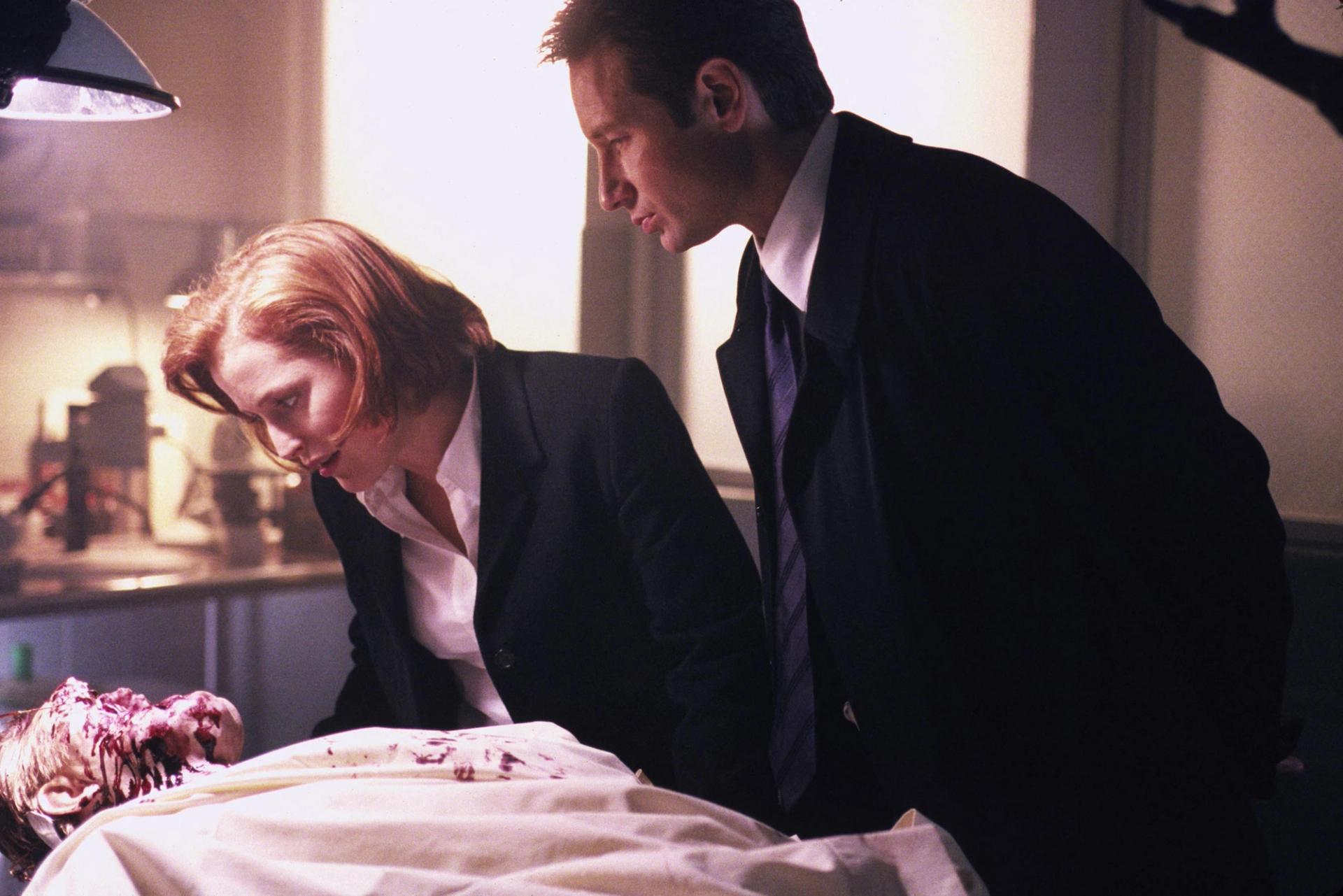
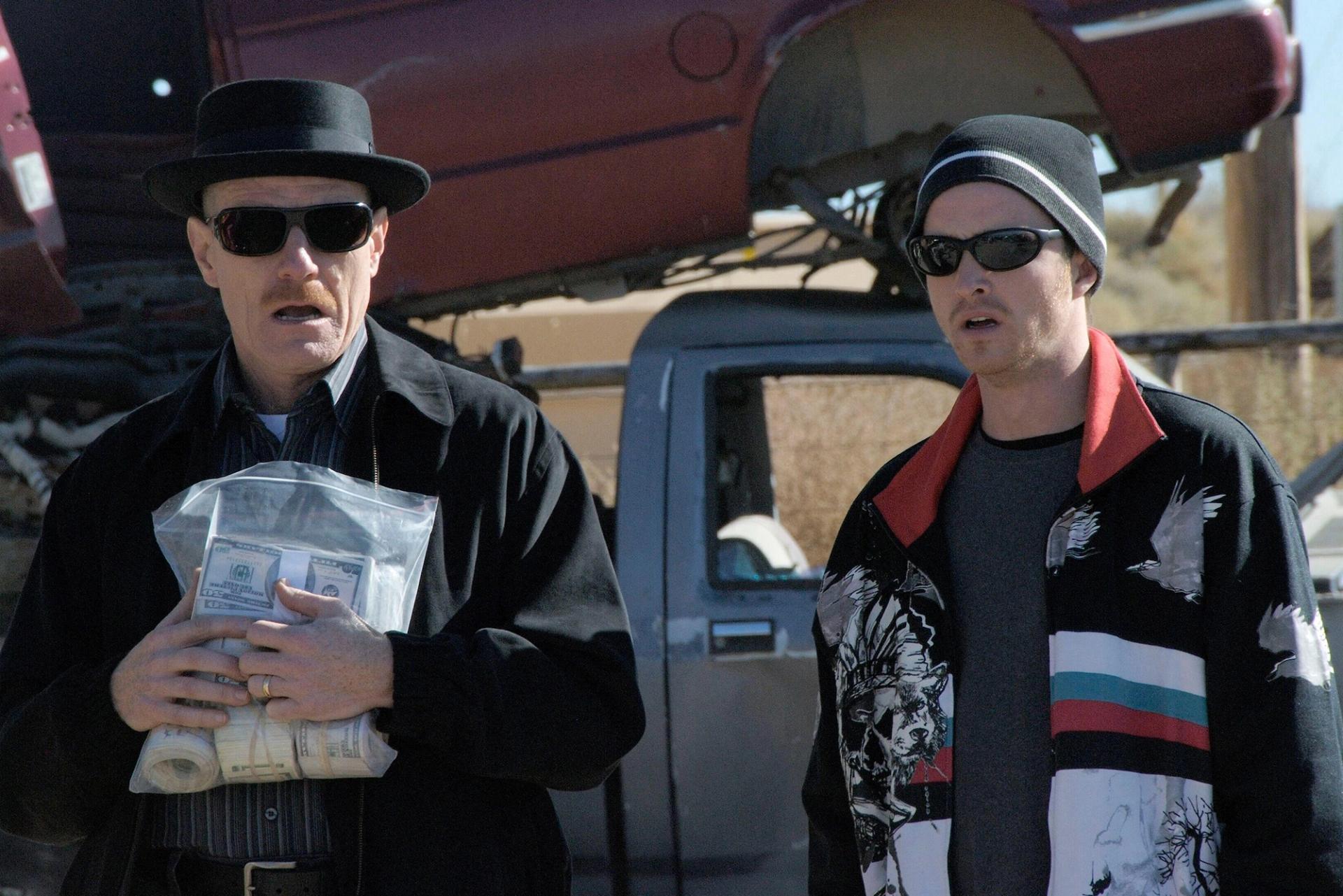
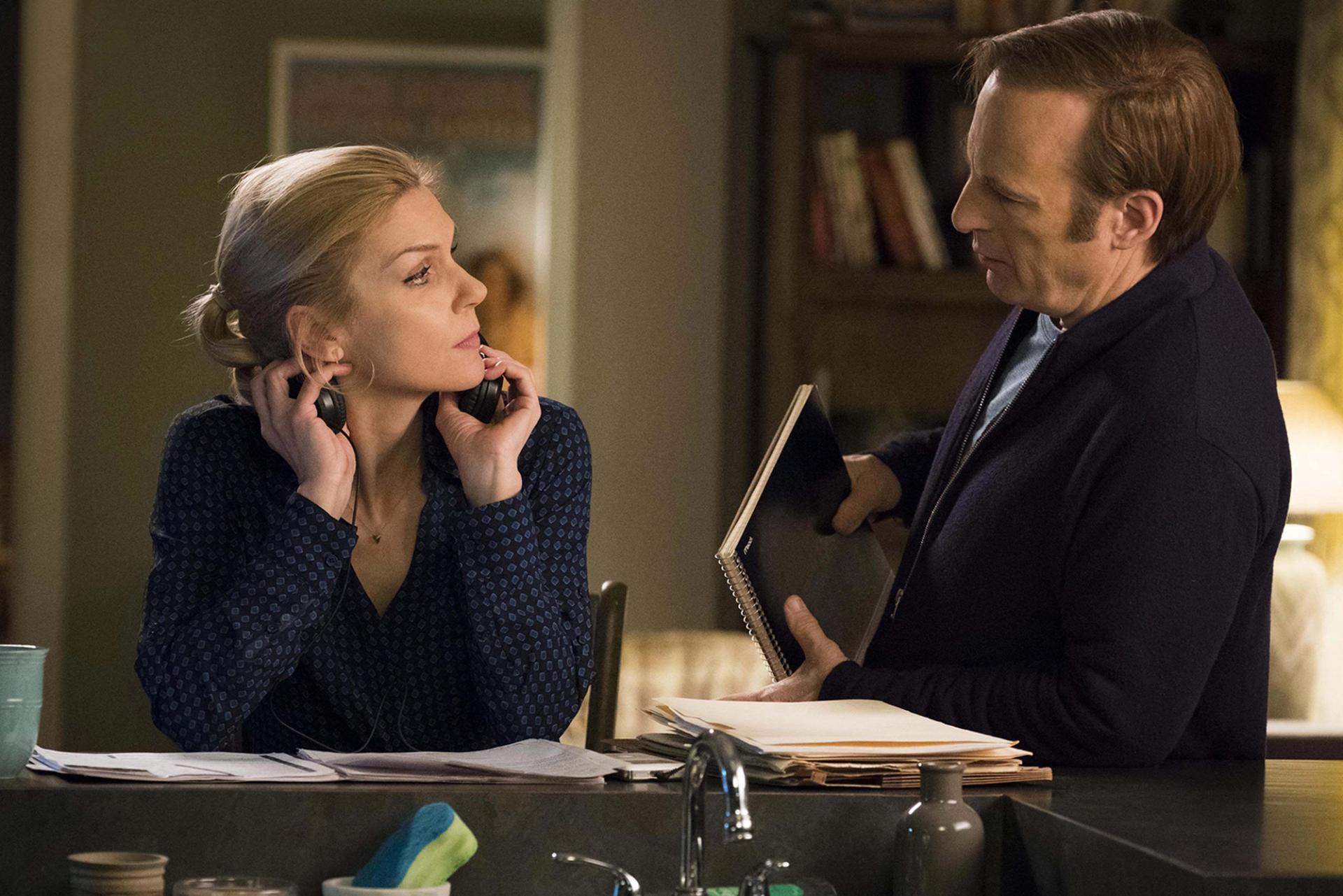
You and the people you work with are very consistently able to take things that should be on paper, really boring, like Mike Ehrmantraut on Better Call Saul dismantling a car to find a tracking device, and make them interesting. What is the key to doing that?
The key is great actors. The key is watchable, charismatic, skilled, talented actors. If you put me in that scene instead of Jonathan Banks, I could have done everything he did, physicality-wise, but you would’ve flipped to another station within 10 seconds because he has charisma and I don’t. And I’d like to give credit to the shot-making and the music and the sound effects, and the cinematography. It’s the whole package, but first and foremost is the actors. It really truly is.
I love those kinds of moments, too. When they’re working, it’s one of the greatest feelings ever. And when they’re not working, you cut it down with the scissors. You edit big swaths of it out in the editing. You can always make it shorter.
Process is interesting to people. I really truly believe that. Stephen King wrote a book about the writing process called On Writing. And I remember he says that people like to read about or watch other people doing their jobs. Don’t disregard that as a writer. If the goal is dramatic, you can watch that kind of stuff all day.
There are certain directors who, if you didn’t go in knowing they were involved, you would see a couple of sequences and get it. You’re one of those directors. What would you say are some of the aesthetic ideas you’re often going back to?
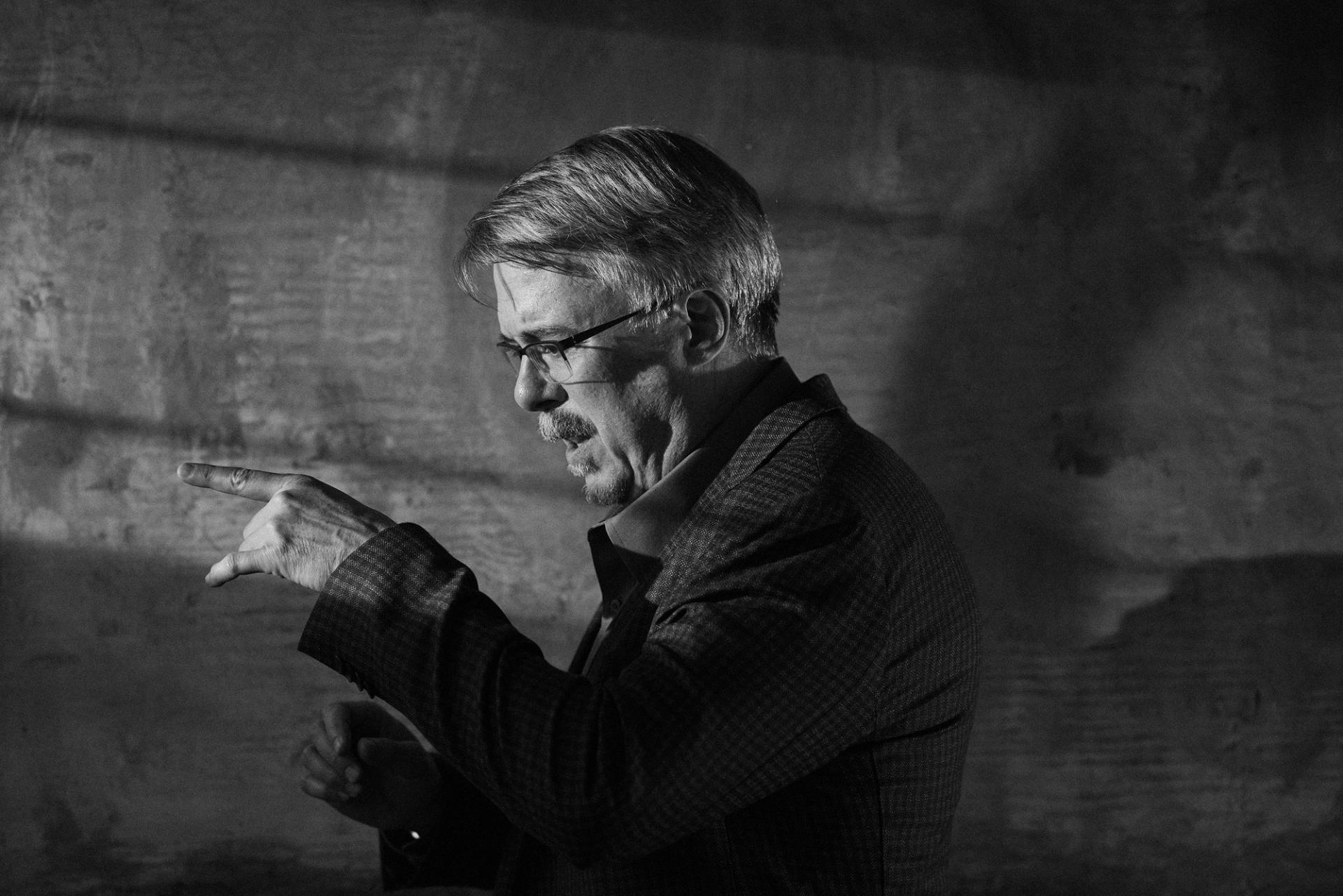
First and foremost, it’s point of view. I learned that from Chris Carter working for The X-Files for seven years. First and foremost in the writers’ room, know who the point-of-view character is in every scene. Chris would explain that to us when I first got there. He’d say, “Whose point of view are we in?”
It took me the better part of a year or so to really understand, and finally one day it clicked. And it doesn’t mean, as a director, that you’re always in a strict point-of-view shot where you don’t see the person whose head you’re in. You can do those, too, those can work. But it’s subtle things.
For instance, in coverage, I don’t always like clean singles [a shot where no other character is visible in frame]. And by the way, there’s nothing wrong with it. Some of the best directors in the world do clean singles. For instance, who’s better than Kubrick? In The Shining, when you first see those two little girls (opens in new window), you’re over the shoulder of Danny on the big wheel. But then I think the famous shot, when you cut to them, it’s a clean single. You’re not looking over someone’s shoulder. It works like gangbusters.
But I prefer to be over someone’s shoulder, because I like a sense of geography. I like the audience knowing where everyone is in space relative to one another. And also that over-the-shoulder shot helps to establish point of view.
In Breaking Bad and Better Call Saul, there were shots from the point of view of inanimate objects—you’re seeing a vat being filled up with chemicals. Where did the inspiration for that kind of shot come from?
Well, it’s not like we invented it, but we did become known for a shot inside a refrigerator (opens in new window) looking into Walt’s face. You start in blackness. And then the refrigerator door opens and there’s Walt. Or in the very first episode, you’re in the laundry dryer and the door opens (opens in new window), and there’s money swirling around. It’s not intended to be the dryer’s point of view. It’s simply that this is what’s important in a movie. This is your $60 million worth of privilege, as our wonderful production designer, Robb Wilson King, used to say on Breaking Bad.
This is what the audience is paying to see. Not the special effects, not whatever. If you’ve got actors who are worth getting a close-up on, you get a close-up on them. Like in the scene with the dryer, I wanted to see the money and Walt’s reaction to it all in one shot. In the editing room, I said I don’t want to make that next cut. I want to hang in the shot as long as we can. That’s where it came from. It was about seeing the actor’s face.
Hopefully it never feels self-conscious. Hopefully it never feels like the director put a camera in a weird place, and you’ve never seen a shot like that. All of these shots, no matter how “tricky” they might first appear, hopefully they all ultimately feel like they have a purpose in regard to advancing the storytelling. And then it’s about seeing Walter White’s face or Carol Sturka’s face. It’s about seeing the star.
How do you feel the business has changed, even from 10 years ago when Saul debuted?
Well, when Saul debuted, I guess we were on the cusp of the streaming wars. Then suddenly, there’s so many TV shows, which was a wonderful development. But I remember thinking in the back of my head, “This cannot last.” Because I have a great school understanding of economics and finances. You think to yourself, “How is this going to sustain? How can all of these shows turn a profit?”—or even 70 percent of them, or whatever the necessary threshold is. I remember thinking, “This is not going to last forever.” Now, there’s this contraction going on, which seems unfortunate but understandable.
But the business has changed so much in the 37 years I’ve been doing this, and it’s always going to continue to change. And it always feels like, when it’s in the midst of change, the sky is falling, and it’s not. The biggest worry now for me and a lot of writers and a lot of creative people, period, and a lot of human beings in general, is AI.
But then some deeper part of me says that human beings are always going to want stories created by other human beings. They are not going to want stories created by scraping, much in the way that strip mining is done.
I don’t think people are going to want that. Unless AI develops into a truly sentient being instead of the world’s most expensive, energy-intensive plagiarizing machine—then it has a right to tell its own stories. And it has a right to not be owned by any one company, and it’s a free-thinking, independent being at that point, or should be. And if it’s not allowed to be that, then it’ll be a slave. And then that’ll be a whole other can of worms, ethically speaking.
But if AI ever gets to that point, then we got a real problem. Right now, this amazingly complex parroting act that it does is not something I think people are going to want to get their stories from. I think people are always going to want stories from people.
You’ve written several feature films, but the only one you directed was El Camino, which went straight to Netflix. Are movies an ambition you have, or are there other things that you still want to do?
I’d love to make movies. But my thinking on this has evolved over the years. I used to think movies were the height of artistry. And I don’t think that anymore. I feel like I bought into the okey-doke, as Harlan Ellison used to call it. I bought into the hierarchy that Hollywood has created for itself. I would put the best TV shows anybody’s making against the best movies anybody’s making. I think the philosophy, albeit oftentimes unspoken, that the best TV show is less than the worst movie ever made, is in the process of evaporating. I hope so.
One of the things that’s driven me nuts over the last 10 to 15 years is the number of writers or producers who come to television and say, “Well, we’re not really making TV. This season’s a 10-hour movie.” And it’s not even really episodic. You came out of doing a procedural show, The X-Files, that had some serialized elements. How do you go about making serialized TV that makes the viewer feel like they’re getting a satisfying experience out of watching for an hour?
I was trained on commercial, ad-supported television. The shape of an X-Files episode is the exact shape of a Breaking Bad episode, is the exact shape of a Better Call Saul episode, is the exact shape of a Pluribus episode. Which is to say we have a teaser and four acts. You don’t notice it when you’re watching Pluribus because we don’t have commercials in there. But if you were to see the index cards on the corkboard that we put up for an episode, they look exactly like Breaking Bad. They look exactly like X-Files.
It’s a teaser. And at the end of the teaser, you have to give an audience reasons to continue watching during the commercial breaks. And then you get to the end of act one, and there’s a mini cliffhanger, again, to keep you sitting through the commercials. And that still works. Even if you’re creating a TV show that does not have commercials, it does not hurt to have a mini cliffhanger—some more engaging than others. They can’t all be grand slam home runs. But that’s the way we still continue to break these things. And that has never changed for me.
Again, this is not an IP show. It’s an original idea. It’s expensive. It’s not driven by a huge star—not yet, at least. How many people besides yourself at this moment in the television business do you think could get this show made?
I don’t know. I try not to go down those rabbit holes of thought, because the more I start thinking about that, then I think about how quickly everything can go south, and suddenly, I can’t get anybody to answer my phone calls. But yeah, it is unusual now.
I’ll leave you with this. Star Wars is great. Marvel Comics is great. All of those movies have a wealth of opportunity, dramatically speaking, to be continued. But if new generations can’t have their own touchstone things that were created for them, and not for people who were in their fifties and sixties or seventies, that makes me very sad and it makes me very concerned for the future of—this sounds very highfalutin—but for the future of the culture, for the future of civilization.
People deserve their own thing. Young people deserve their own thing. That’s the way I see it.