Your Favorite Music Producer’s Favorite Magazine
Tape Op keeps the DIY dream of the ’90s alive.
September 10, 2026
Before there was Tape Op magazine, there was Vomit Launch: a band formed, like so many others, as “an excuse to drink beer.” The bass player was Larry Crane, who would go on to found and edit the closest thing to a Bible for the religion called making records. John Baccigaluppi, who would later handle the Bible’s business side, was a recording engineer.
The year was 1987. A hardcore punk band called 7 Seconds, already legendary within the militantly do-it-yourself subculture that spawned it, had tapped Vomit Launch to open a show in Sacramento. They wanted Baccigaluppi to record their own headlining set for a live album. Baccigaluppi, stationed outside the venue in a van containing his mobile studio rig, couldn’t see Crane and his bandmates onstage, but he caught their set through the microphones he’d set up to document 7 Seconds. He dug Vomit Launch’s sound, which was more dynamic and tuneful than you might expect from the name, and ended up producing a couple of their albums.
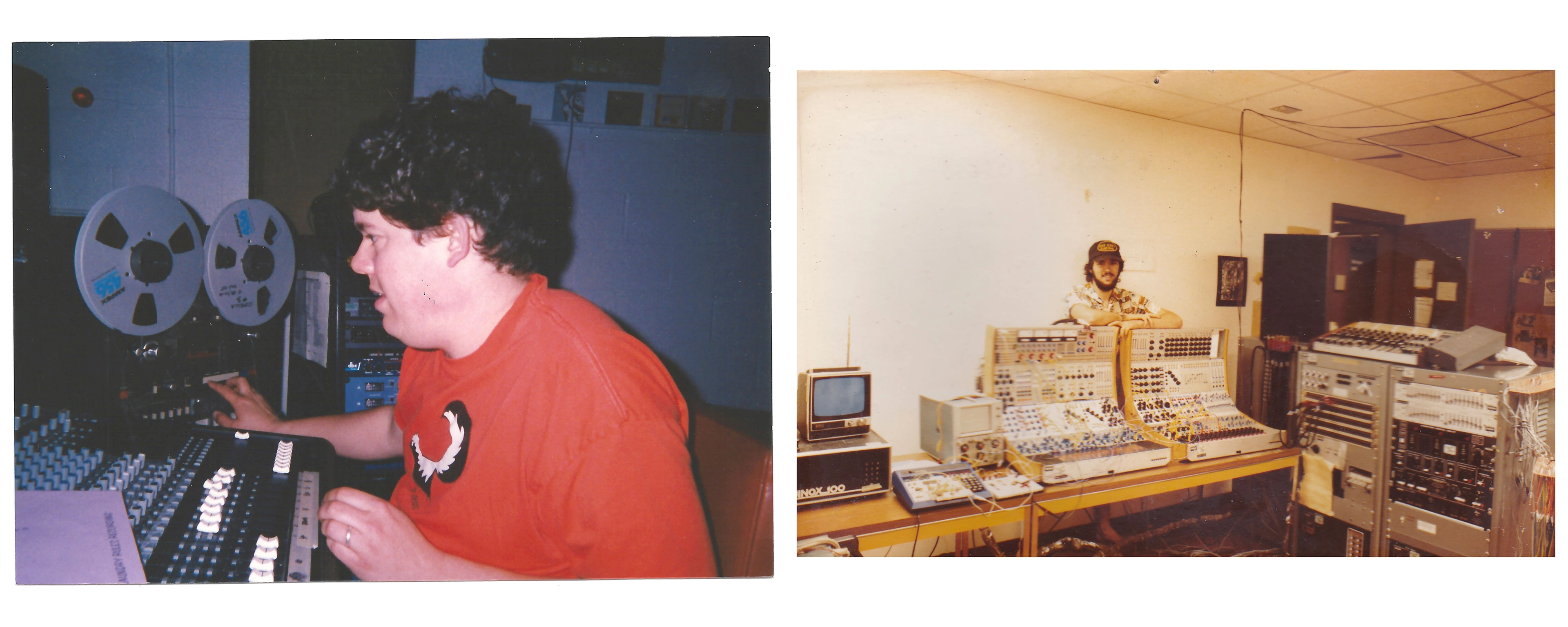
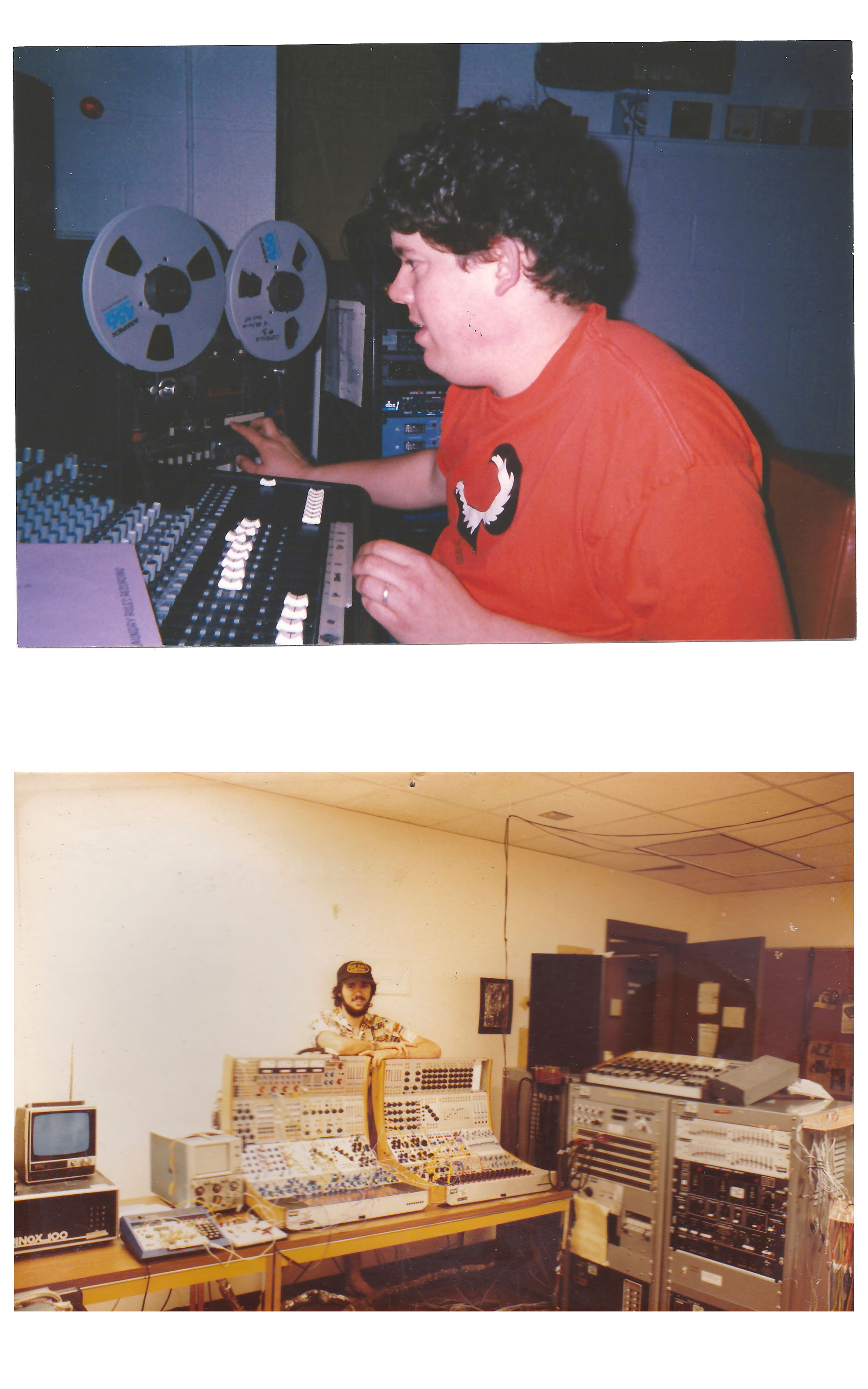
Larry Crane in 1997; John Baccigaluppi in 1983.
Credit: Courtesy of the subjects.It was a fitting introduction for the collaboration that would follow, Baccigaluppi pointed out four decades later from his current studio on the Marin County coast, two hours southwest from the scene of that initial encounter, a surfboard propped up in the corner behind him. Before laying eyes on each other, the two men met via audio.
Walk into any recording studio in America and there’s a good chance you’ll find a few Tape Op issues somewhere: on coffee tables and mixing desks in control rooms filled with polished wood and blinking lights, the kinds of places where major-label albums get made; or maybe piled on the floor of the bedroom where some aspiring pop auteur is learning to record her own vocals for the first time. It’s not the only remaining print magazine about audio recording, but it does claim the highest circulation of any still standing. Not bad for a publication that the bassist of Vomit Launch started as a one-man operation, laying it out with a razor blade and glue stick, printing it on a Xerox machine, and assembling it with friends at beer-fueled stapling parties. When Crane wanted an abstract splash of color on the cover of an early issue, he took every copy out to his front porch and spray-painted them all.
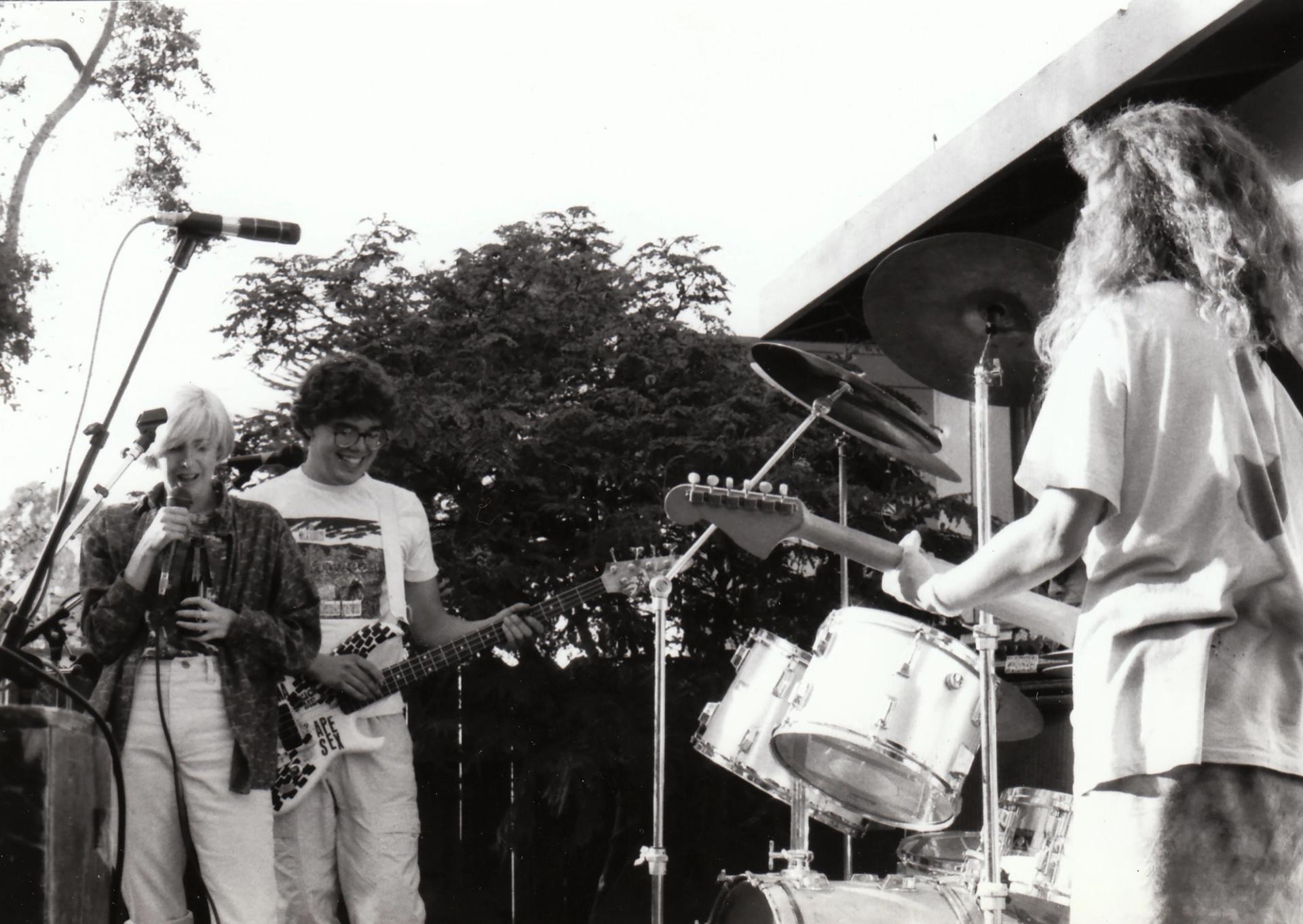
Vomit Launch performing in September 1988.
Credit: Courtesy of Vomit Launch.Now, Tape Op is celebrating its 30th year of publication with the release of Making Music (opens in new window), a book of interviews that originally ran in the magazine. Featured record producers include Brian Eno, Susan Rogers, Lee “Scratch” Perry, Jack Antonoff, RZA, and many others. It’s a delightful book—part technical reference manual and part compendium of gossip, hearsay, and firsthand testimony about some of the greatest albums ever made. For Crane and Baccigaluppi, it’s an opportunity to look back proudly on the legacy of a publishing project that, even now, can feel ephemeral. “It just feels like you finish one, you start doing the next one,” said Crane. “No one reviews magazines. Nobody says, ‘Oh, 173 was an amazing issue.’ You don’t get that kind of feedback, which is understandable and fine. But it’s also like, ‘Look, 30 years, look what we’ve done.’ We wanted something tangible to show people.”
Tape Op enjoys a certain beloved status among working musicians that the likes of Sound on Sound and Mix can’t touch, owing partially to its longstanding free subscription model and partially to an editorial sensibility that is unpretentious, generous with information, and free of bullshit. It dispenses wisdom mainly in the form of long, chatty interviews with various studio rats, like the ones collected in Making Music. The subjects get the same relaxed but respectful treatment whether they’re famous or known only to those accustomed to squinting at liner notes. The interviews tend to meander in and out of technical minutiae and broader discussion of the craft, with occasional digressions about the virtues of the bicycle for commuting to the studio or the indignities of life as a freelancer in a precarious industry. The shoptalk format encourages interviewees to loosen up and speak freely where they might otherwise hew to a script. The latest Tape Op features a particularly involved discussion with Kenneth Blume, formerly known as Kenny Beats, who made the jump from hip hop utility player to the kind of marquee-name producer who can work in any genre he chooses, thanks to his production of Geese’s 2025 rock blockbuster, Getting Killed. Blume spoke with equal candor about his social dynamics with various collaborators and mentors, his outsider status as a white guy from Connecticut in the rap scene he came up through, and the role of the TubeTech CL 1B compression unit in the vocal sound he captured from Cameron Winter (“nothing fancy or that complicated”).
Reviews of recording gear tend to be written by working engineers in a tone that Crane likens to “sitting down with another engineer after you’ve been recording all day and having a beer and going, ‘Hey, I found this thing, and it’s a good mic.’” If a reader asks why they haven’t covered this preamp or that plug-in, Crane will ask if they want to write the review themselves. The editorial voice neither drowns the reader in ostentatious jargon nor condescends to them with beginner-level explanation of every last detail. It is informed by Crane’s and Baccigaluppi’s own decades-past apprenticeships in a trade that one acquired mostly by showing up and paying attention. The magazine was named after the tape operator—“which, back in the early days, was the only job you could get in a studio,” Baccigaluppi said. “If you did that for long enough, maybe you could ask a question at the end of an eight-hour day. And that’s sort of how you learned.”
In-Depth
The Tape Op Interview That Changed Sasami’s Career

Sasami, a producer for Hand Habits and King Tuff and a genre-crossing alt-pop artist in her own right, encountered Tape Op the way musicians often do: by picking up an issue from a stack at a studio and paging through it during a bit of downtime from recording. At the time—it would have been around 2016, she thinks—she was playing keyboards in the band Cherry Glazerr, which was cutting an album at Oakland’s Tiny Telephone Recording. Sasami had not yet started her career in production or thought very much about what the craft might entail. She’d been educated as a classical French horn player, a background that had encouraged her to think of music recording primarily as a utilitarian adjunct to live performance, with little creative potential of its own.
She subscribed to the magazine after the recording session and had something of an epiphany while reading an old interview with Brian Eno (opens in new window). The hugely influential ambient musician and producer talked about his early experiments with recorded sound, conducted while he was a student of visual art in the late 1960s and involving the creative misuse of tape recorders. He would deliberately capture sounds at the wrong speeds, or emphasize the wobbles in pitch produced by a device with a faulty motor, and thus jury-rig his own primitive audio effects. “I started exploring the plasticity of sound,” he said. “As soon as sound is not just something in the air but on tape, it’s a plastic material. It’s malleable, like paint is. It all seemed completely consistent somehow that the material I was working with, instead of color, was sound.”
This insight had a profound effect on Sasami. “My understanding of music has always been so theoretical,” she said. “I played French horn, and I was in the symphony, and I was obsessed with theory—not even obsessed, but it was just shoved down my throat. Hearing Eno talk about how he was using tape manipulation, it was almost like I was seeing sound in this three-dimensional space, where I had always thought about it as two-dimensional—like, ‘There’s harmony and there’s melody.’ It really unlocked something in my brain about how sound is this three-dimensional object.”
With Tape Op as her guide, Sasami took an obsessive interest in music production. She made her first album as a solo artist, 2019’s Sasami, on tape and with analog gear, in part because it would encourage the kind of tactile exploration that Eno talked about in his interview. These days, even when she’s working on a digital session, she thinks about his conception of the recorded space as a medium with characteristics to be manipulated rather than as a blank receptacle. And she still regularly looks to Tape Op’s conversations with producers and artists for new inspiration.
“A lot of people refer to this metaphor of songwriting or musical composition as like a lightning bolt strike. You can have a practice, you can show up to your studio from nine to five, five days a week, but that doesn’t really guarantee it’s going to materialize into anything interesting or inspiring,” she said. “Tape Op feels a little bit like putting an aluminum hat on your head and going out in a thunderstorm. It really increases your likelihood of having some sort of inspiration. Hearing how diverse everyone else’s processes are, and about relationships between artists and producers and engineers, hearing how many different ways that you can do the same thing, which is making an album—it’s endlessly inspiring. It’s really cool and humbling just to see how we’re all just humans fumbling through the same kind of combination of mystery, confusion, and delight when we’re in the studio.”
Nine years passed between the night Baccigaluppi first heard Vomit Launch and the first issue of Tape Op. In that time, the band broke up and Crane opened a studio in his basement in Portland, Oregon, where he recorded Cat Power and Stephen Malkmus alongside a host of lesser-known clients. (Eventually, he found a cheap storefront across the street from a cemetery and opened a new studio called Jackpot! with his good friend Elliott Smith.) Crane had always been involved with zines, the small-scale, communitarian, often handmade publications that chronicled and helped to define the subcultures of hardcore punk and indie rock, its slightly mellower offspring. When an alt-weekly newspaper that he’d been writing for in Portland shuttered, he had the thought of starting his own publication, one that would bring a scrappy, zine-like personality to the sometimes stuffy world of recording.
Baccigaluppi, too, had a basement studio, a place where you had to hunch over to avoid hitting your head on heating ducts and where he could afford to take on independent projects that struck him as more interesting than the commercial R&B records he was cutting at his day job. It was an exciting time: Bands too weird and noisy for the mainstream music industry could build audiences outside of its old power structures, through zines, college radio, and relentless touring, and the recording process itself was decentralizing in similar and more enduring ways. The shift would accelerate with the advent of the personal computer and all the new possibilities it wrought. A decade or so after Tape Op’s first issue, Soulja Boy would spend weeks at No. 1 with a song he made with little more than a pirated piece of beatmaking software and a microphone he bought at Walmart for 12 bucks.
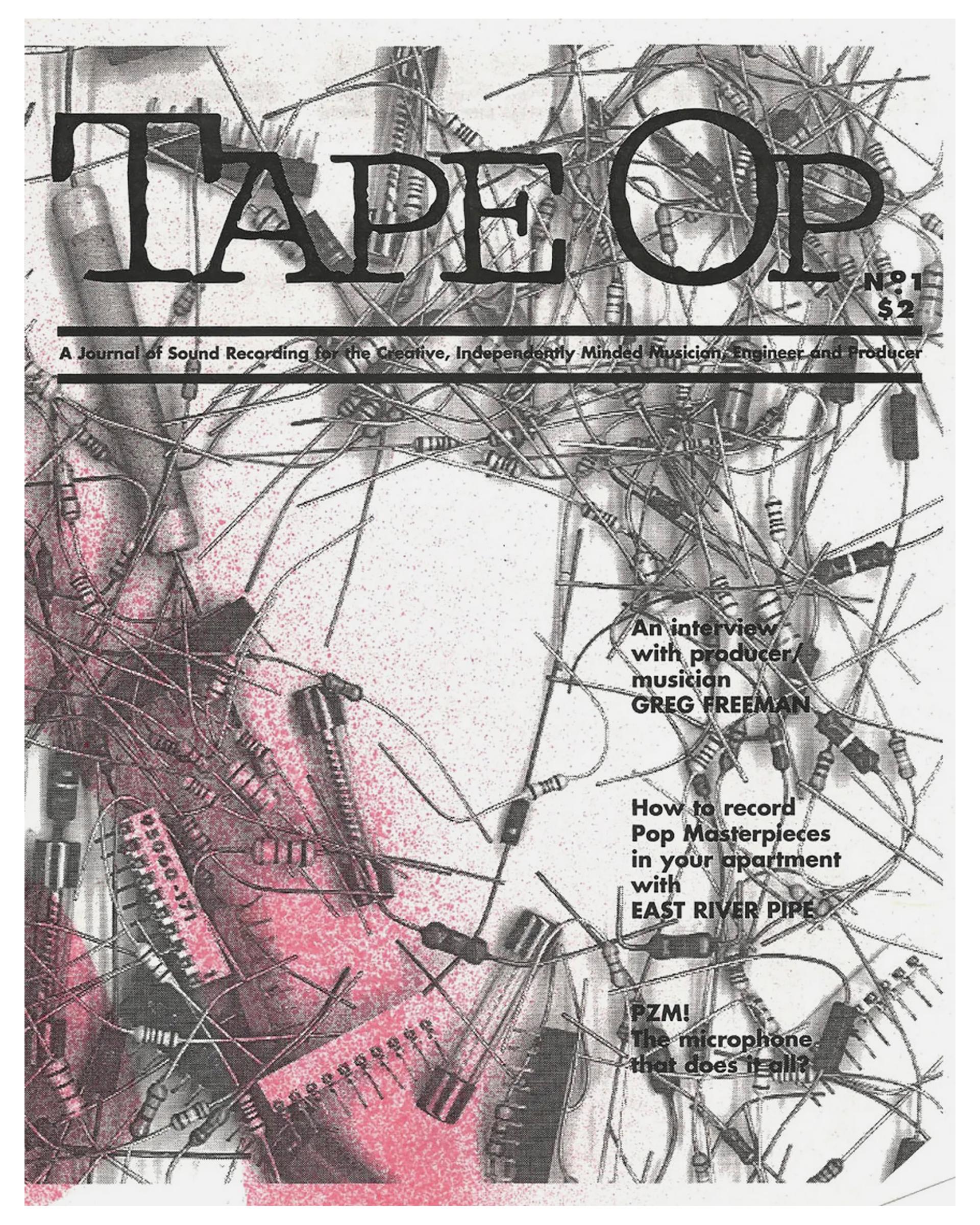
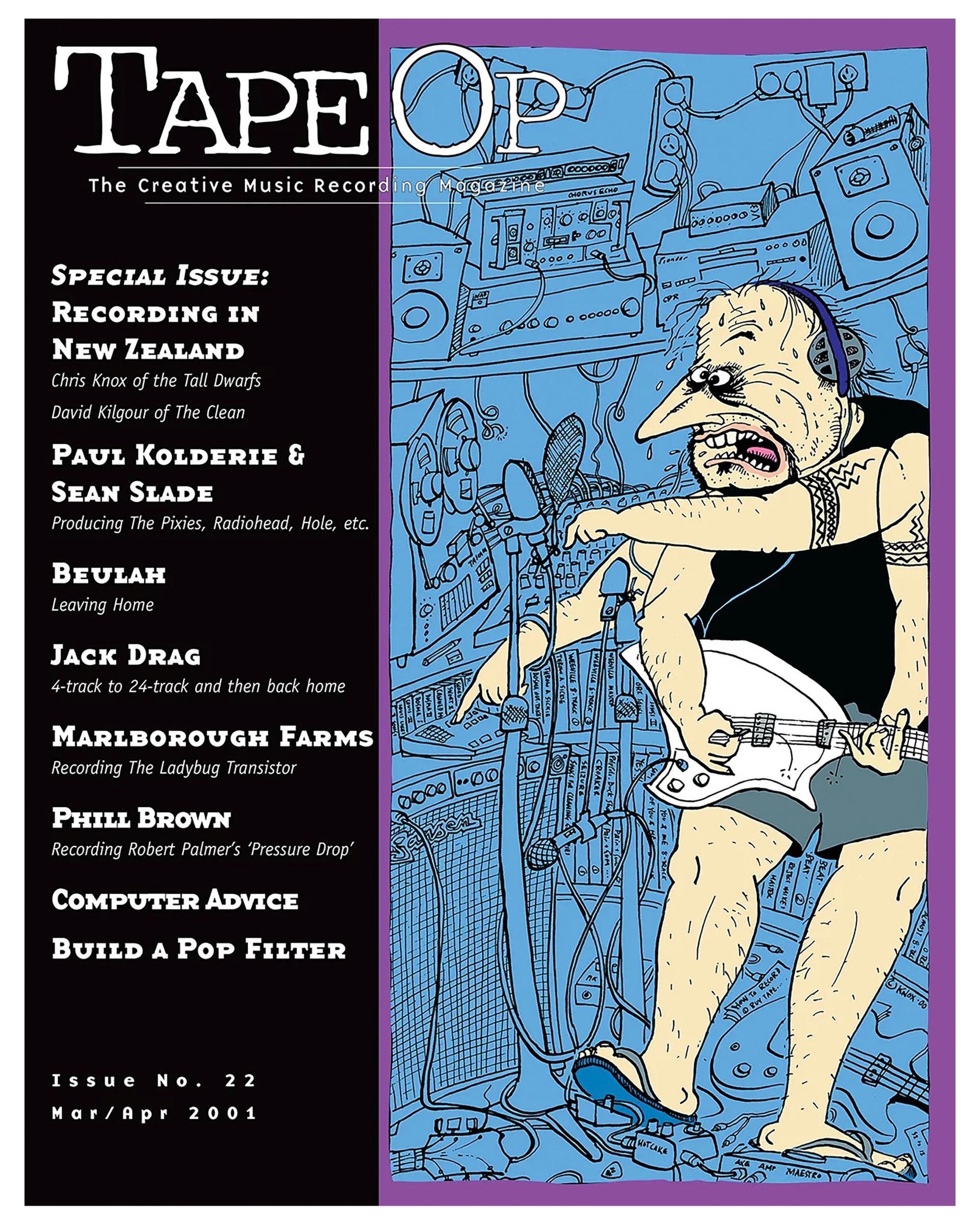
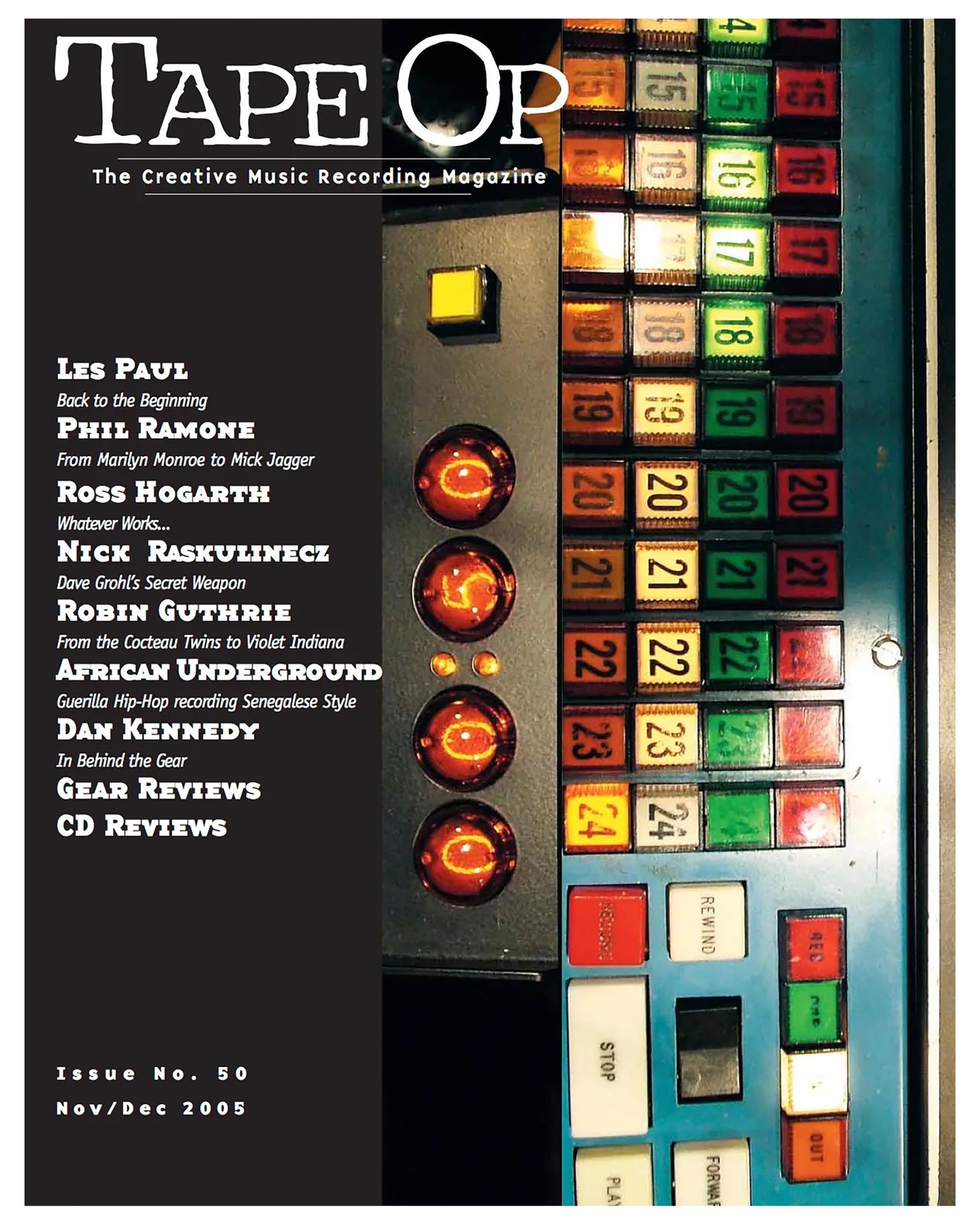
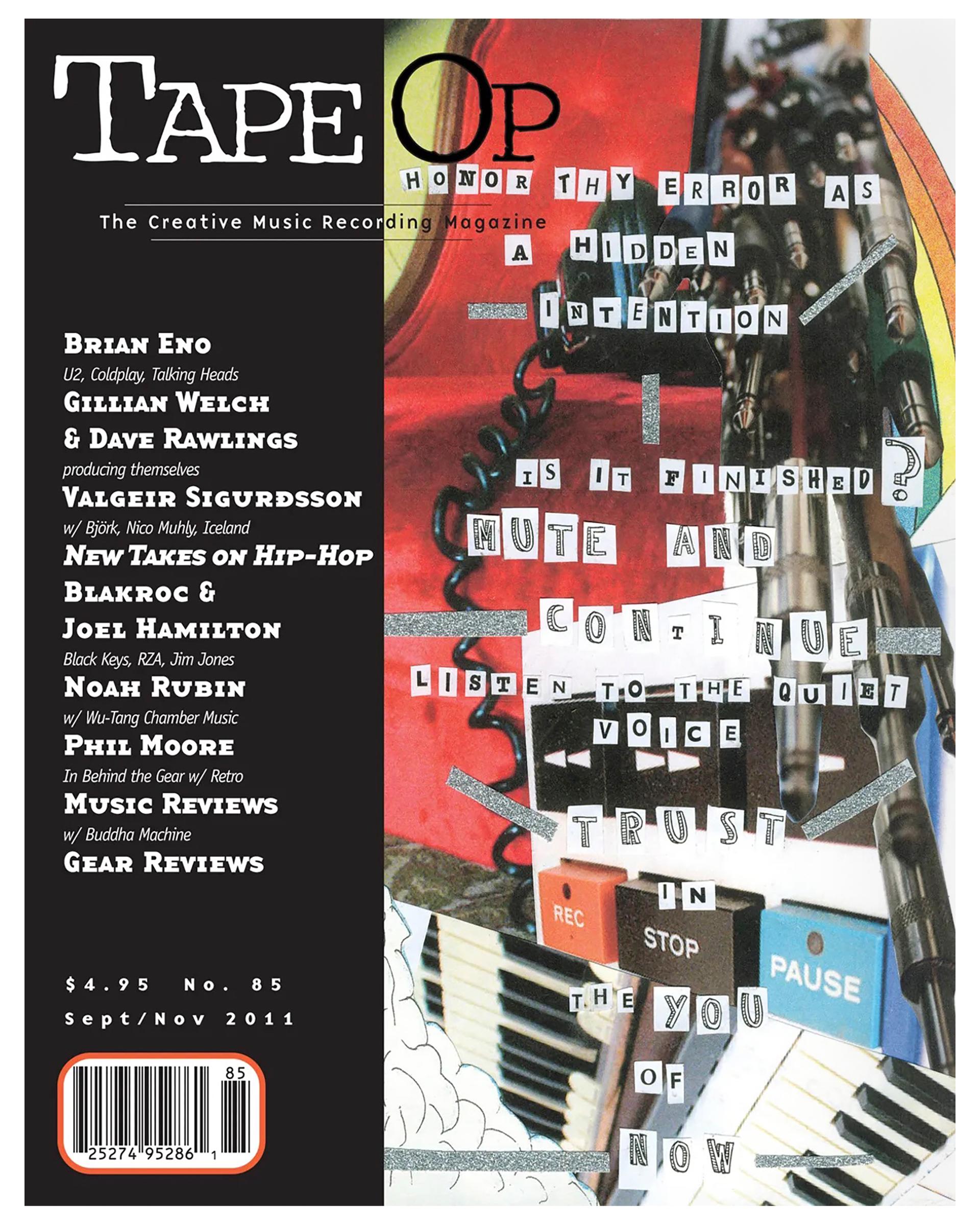
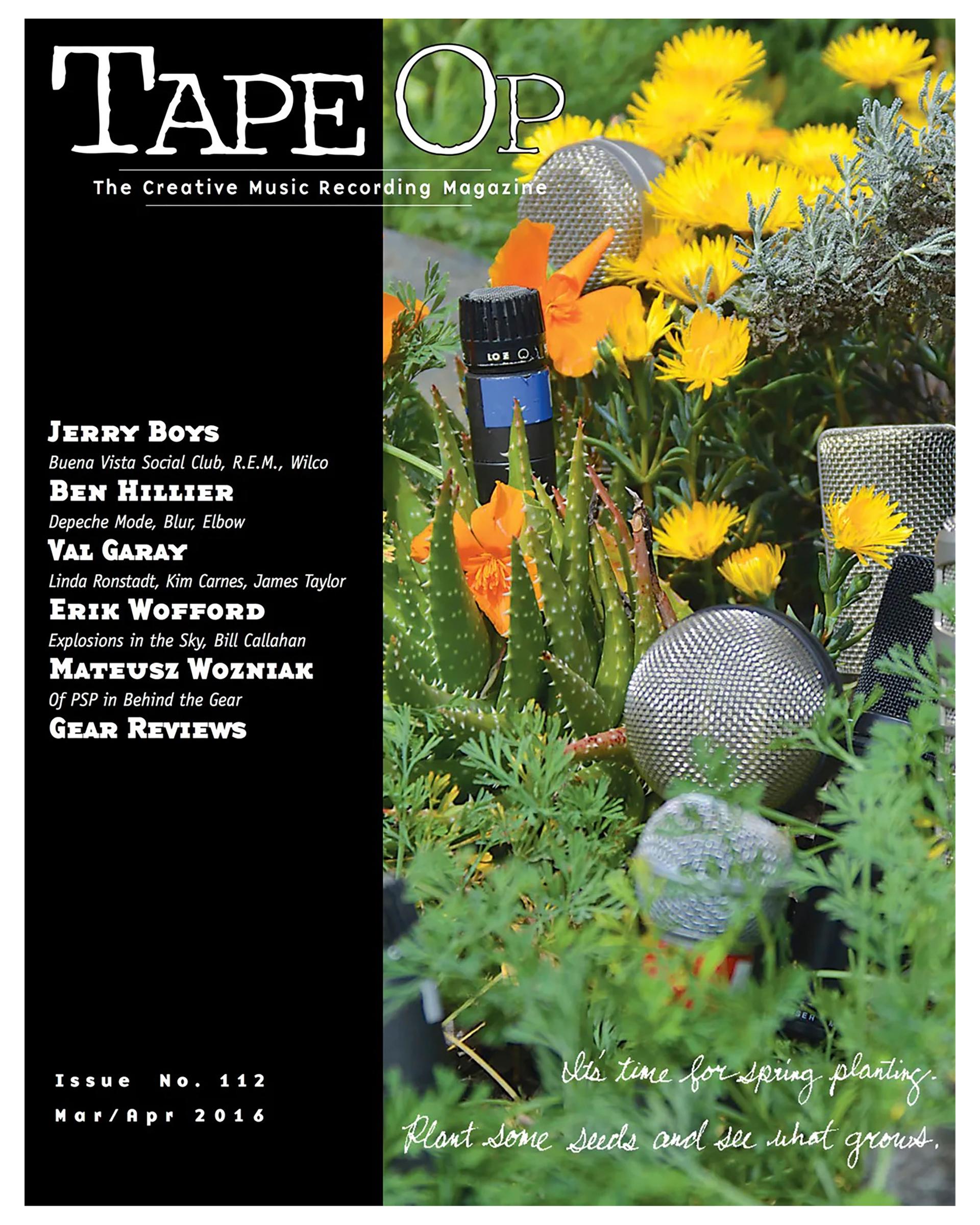
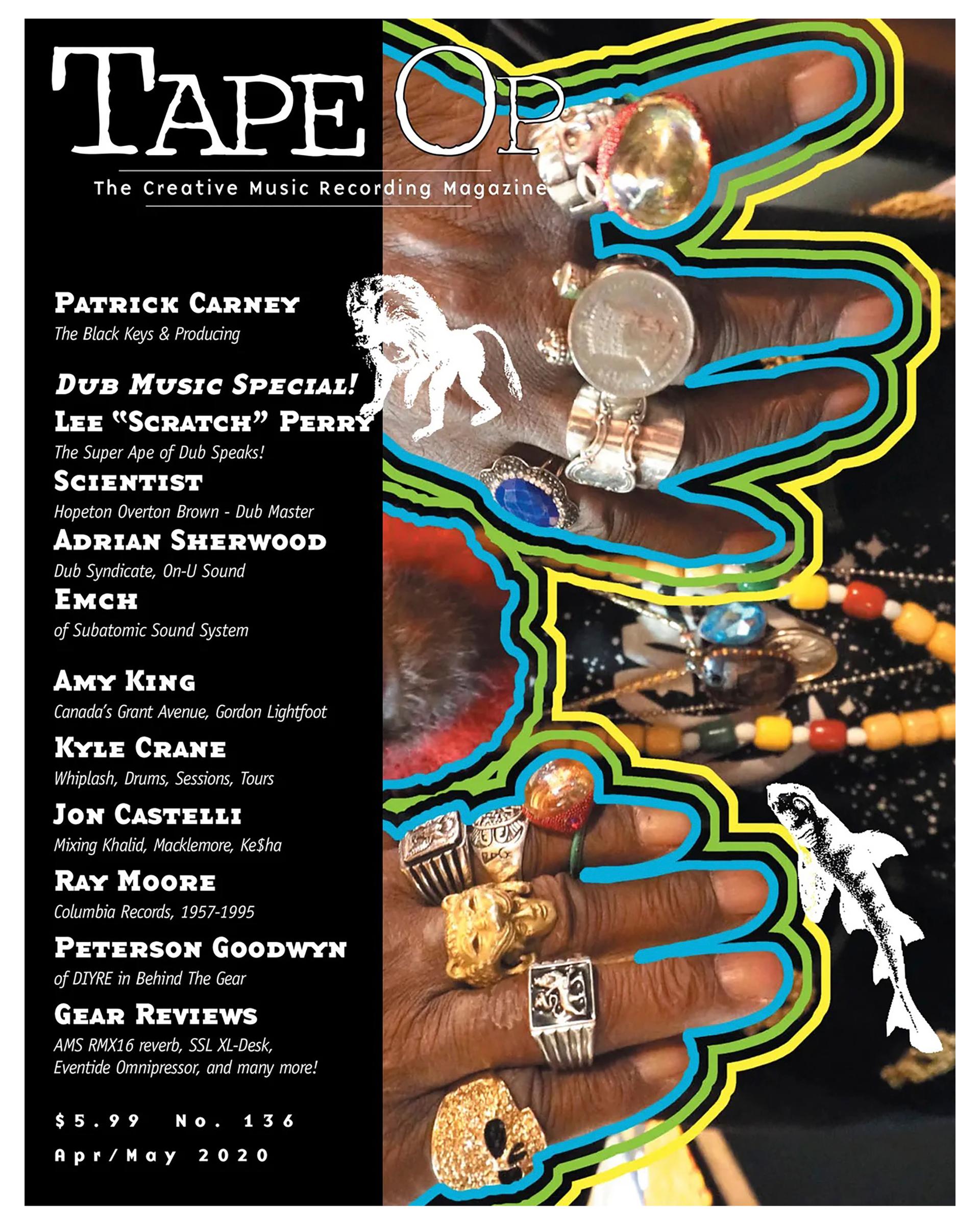
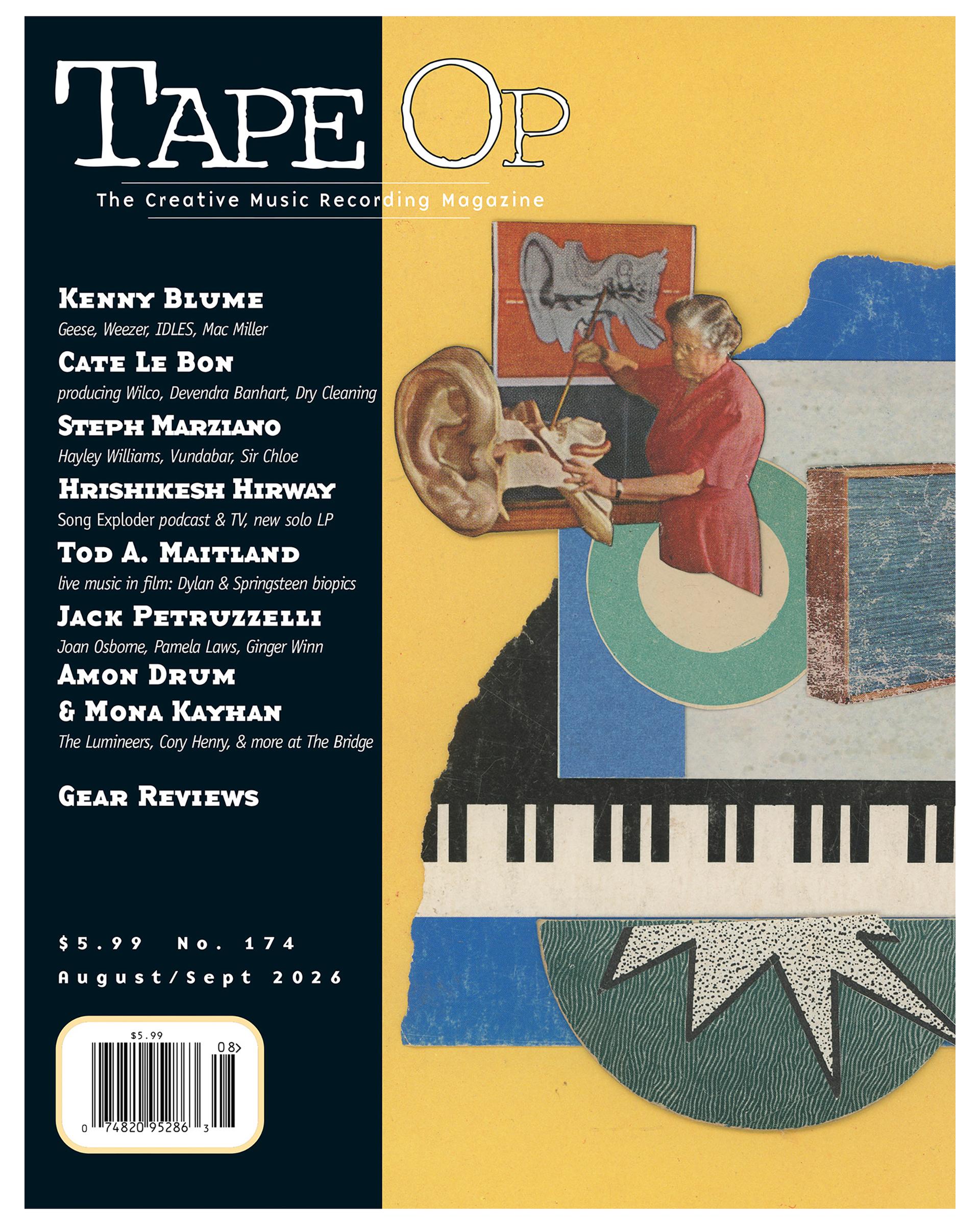
Though it also gives plenty of coverage to more professional studios, Tape Op was the first recording publication to acknowledge and give serious consideration to the change in how music is recorded. The idea that there is no one right way to make a record is perhaps the magazine’s central tenet; that an album made cheaply by amateurs can be just as good as or even better than one with a major-label budget is an axiom so obvious to the magazine and its readers that it hardly bears mentioning. One of Tape Op’s first interviews was with Fred Cornog of the band East River Pipe, who made his albums at home with relatively inexpensive consumer equipment. (“I have a Tascam 388,” Cornog told Crane. “It’s an 8-track reel-to-reel but it lays flat and it’s on 1/4" tape. It’s incompatible with anything. You can’t bring that tape into a real recording studio.”) This year, Crane interviewed Will Toledo of Car Seat Headrest, who produces his own albums despite a professed lack of knowledge about how basic recording tools work.
“I just thought that no one’s ever writing about these kinds of people,” Crane said. “Some of the magazines would talk about people using gear like that, but they kind of made them feel marginalized, like it’s just a hobby. And I didn’t appreciate that either, because I knew, in my basement, I was cutting things that ended up on Pavement B-sides.”
Before joining Tape Op, Baccigaluppi cofounded a magazine called Heckler, which covered skateboarding, snowboarding, and alternative music. Over time, it had grown from a zine to a publication with a staff of 10 and a new corporate owner in the Times Mirror company. In 1998, Baccigaluppi approached Crane about coming on board as co-owner and publisher of Tape Op and helping to scale it up similarly. The two agreed early on that the magazine should remain free for anyone who wanted to subscribe. Their decision was informed by their shared roots in DIY music as well as Baccigaluppi’s experience in corporate magazine publishing, where most of the revenue came from ad sales anyway. The gear manufacturers who were their most obvious potential advertisers sometimes needed convincing that the readers of this scrappy little magazine were worth spending money on. Other recording magazines gave away subscriptions to people who could prove they were professionals, asking them to fill out forms about the size of the studio where they worked and their purchasing power there. Tape Op parodied this practice with subscription cards that asked the reader to check boxes on a list of more esoteric credentials: “I have the first Black Sabbath LP on vinyl,” “I know the difference between a ribbon mic and a bowtie,” “I saw Nirvana play in a little club with 17 people.” The last checkbox on the list read, “I’m not shit, have pity on me.” In other words: All are welcome.
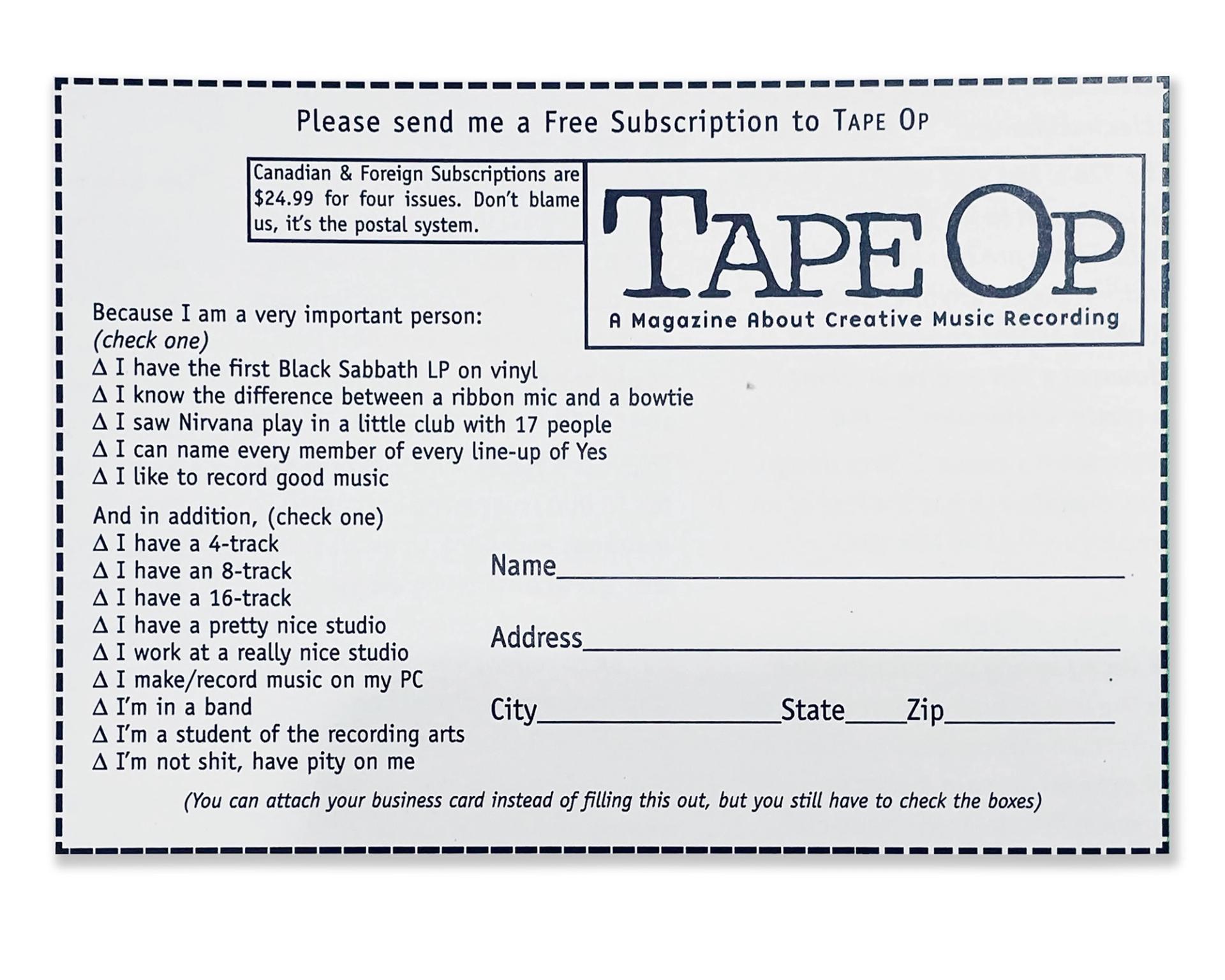
Tape Op subscription card
The music industry, like the world at large, soon moved on from the moment of utopian promise brought on by indie rock’s flowering two decades ago. Major labels swooped in to sign the most exciting indie bands. Zines gave way to blogs gave way to influencers. Streaming kneecapped artists who could once build careers with modest but devoted audiences, pushing everyone to think in terms of scale. Against this backdrop, Tape Op has remained staunch in its old-fashioned ideals. The subscription cards are gone, but the magazine is still free, sustained by advertisers who have long since come around—a minor miracle in an era when new paywalls seem to spring up daily. Its covers come adorned with hand-drawn illustrations and cut-and-paste collages rather than photos of expensive gear or any famous people who may be interviewed inside. Its reviews section often features write-ups of equipment that isn’t even new; the writer just had something worth sharing about it. (A recent issue featured a detailed breakdown of a headphone mixer Baccigaluppi bought used three years ago.) All of this contributes to the feeling of Tape Op as an island in the stream of commerce, holding fast as everyone else is carried along toward the rapids. I think of a sketch from Carrie Brownstein and Fred Armisen’s comedy series about the city Crane still calls home: “The dream of the ’90s is alive in Portland.”
Both Crane and Baccigaluppi are still working producer-engineers in addition to magazine editor-publishers. Neither music nor journalism, in 2026, is known as a particularly lucrative field. But between both gigs, they say, they’ve managed to sustain a middle-class living. Sometimes, they’ll use ad space in Tape Op to promote their own recording services, framing them with the same mix of expertise and humility that make the magazine a trusty companion in the studio.
“Tape Op editor Larry Crane can totally mix your recordings,” reads a recent one, alongside a list of gear and qualifications: “Neve 5088 console. Voted ‘Best of PDX.’ Pro Tools HDX & Logic Pro X. 2-inch analog (16- and 24-track).” And then the most important one of all: “Not a jerk.”
Header image: Art by Rob Vargas. Source photographs from Alamy, Domino Recording Company, Getty Images, and Tape Op.