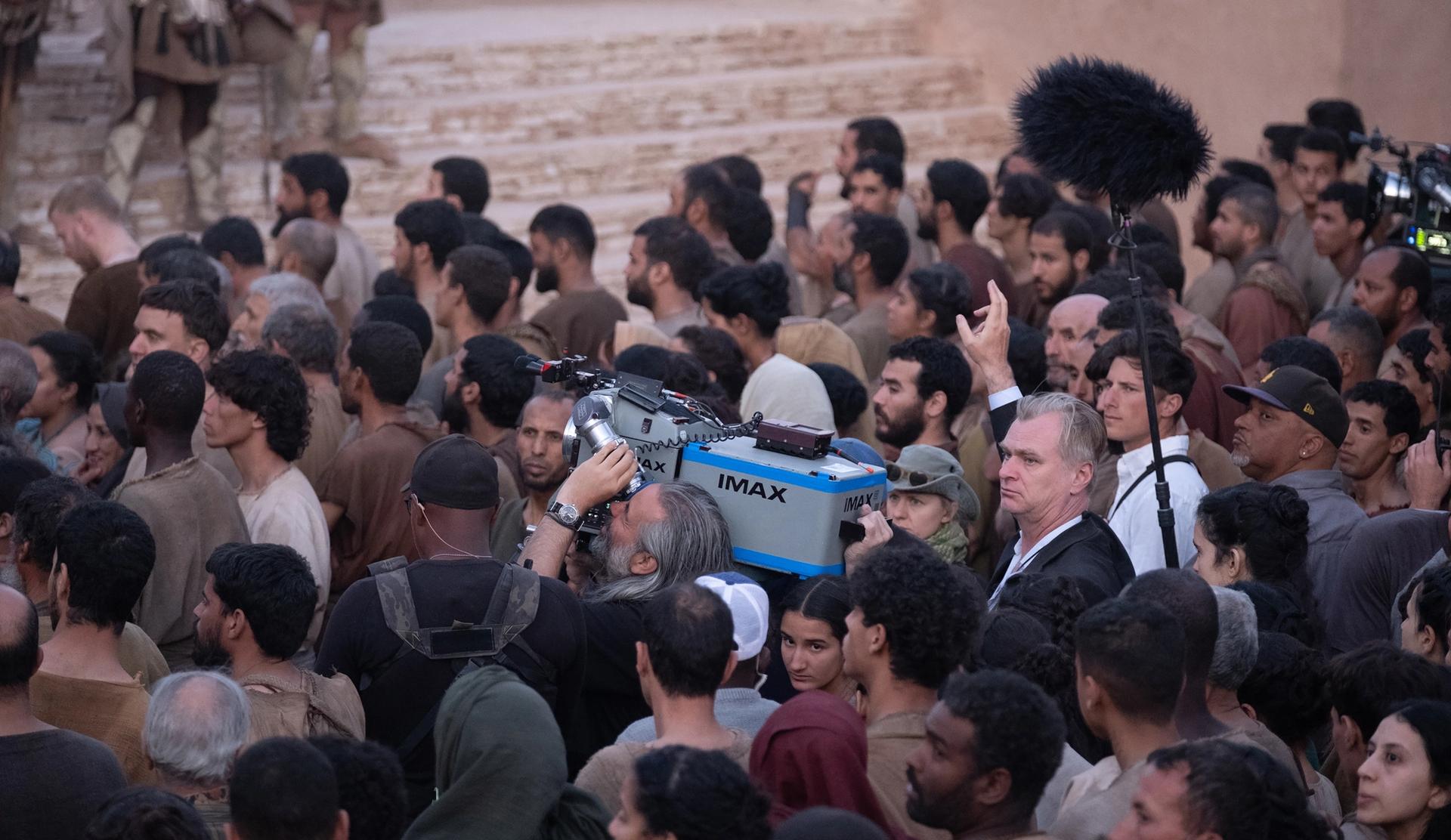
How Michael Bauman Cooked Up a Visual Language for “Tony”
The cinematographer shares his photo diary capturing the “controlled chaos” behind Matt Johnson’s Anthony Bourdain biopic.
October 22, 2026
Michael Bauman is a habitual chronicler of occupational headaches. On the set of One Battle After Another, the cinematographer kept an unusually exhaustive photo diary documenting the challenges of each shoot day, whether it was mounting a camera to a car door or staging a scene in a cramped bathroom with a massive VistaVision camera taking up half the space. “Dude,” he said, “I have over 12,000 of these photos.”
Bauman brought these habits to his next feature, Tony, Matt Johnson’s 2026 coming-of-age drama about a young Anthony Bourdain (portrayed by Dominic Sessa, channeling his Holdovers petulance) raising a ruckus in 1970s Provincetown, Massachusetts. For Johnson—a Canadian filmmaker known for high-energy, low-budget indie productions like Nirvanna the Band the Show the Movie—Tony was a steep initiation into the American studio system. The project came with A24 execs to placate, more production rules to observe, and even a protected shorebird to avoid while filming on the beach. The resulting film is a reflection of those tensions—the Hollywood biopic machine coming face-to-face with a rabble-rousing indie director. And Bauman, nimble enough to jump between realms, was just the cinematographer to define its aesthetic.
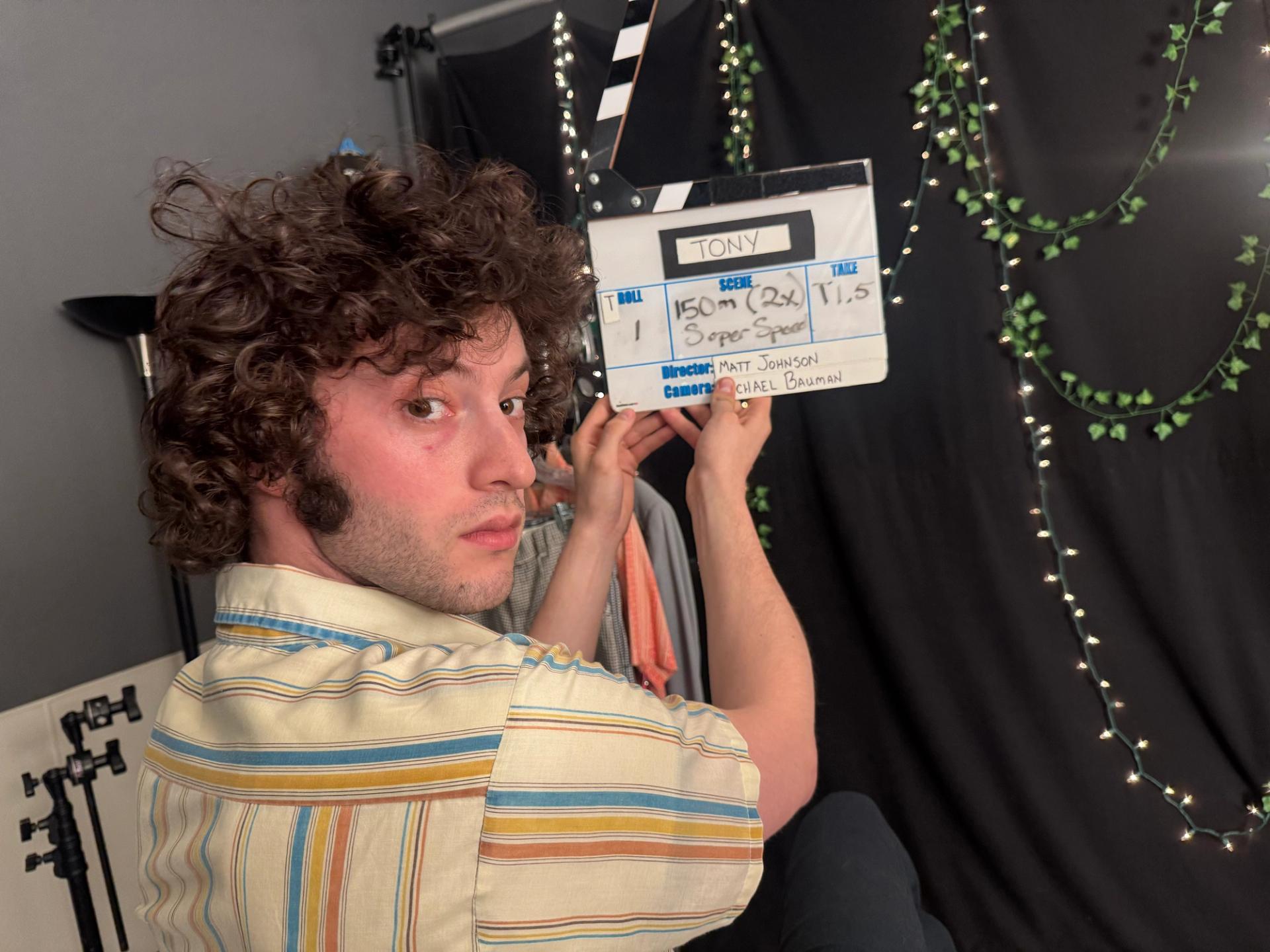
Dominic Sessa behind the scenes of Tony.
Credit: Courtesy of Michael BaumanAfter graduating from the American Film Institute’s cinematography program in 1992, Bauman worked in the electrical department on productions ranging from music videos to Gregg Araki’s The Doom Generation. He climbed the ladder from best boy to gaffer and learned how to harness light: sourcing it, powering it, tweaking how it enters the frame and in what hues. As a gaffer and lighting technician, he worked on films ranging from Steven Spielberg’s Munich to the Adam Sandler comedy You Don’t Mess with the Zohan, before embarking on a creative partnership with Paul Thomas Anderson that changed the course of his career. After working as a lighting technician on PTA’s The Master and Inherent Vice, Bauman stepped into the vaguely defined role of “lighting cameraman” on Phantom Thread before sharing a cinematographer credit with Anderson himself on Licorice Pizza. With last year’s One Battle, he finally took the leap to sole cinematographer and earned himself an Oscar nomination.
Now, 30-plus years into his career, Bauman is suddenly an in-demand cinematographer, fielding calls for DP roles on high-profile projects. As his first feature film after One Battle, Tony found Bauman right at that hinge point. Back in August, he called from the Warner Bros. lot (where he was shooting Nancy Meyers’s long-awaited next film) to walk me through his behind-the-scenes photo diary from Tony, explaining everything from the importance of lens testing to how you can learn to light a set by watching Bob Ross.
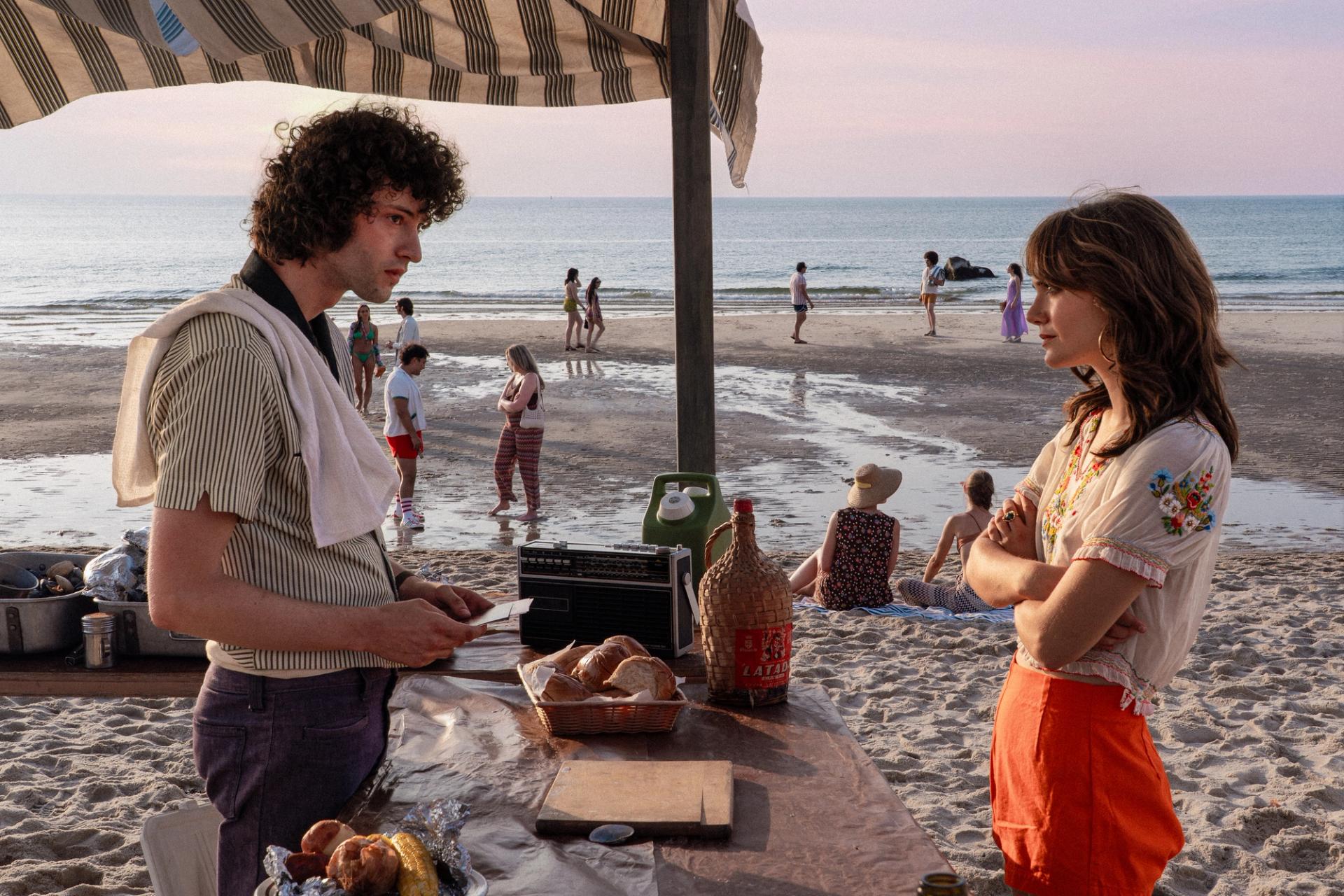
Dominic Sessa and Emilia Jones in Tony.
Establishing “That ’70s Vibe”
How’d you come aboard the movie?
I had a Zoom meeting with Matt, and we just clicked. It was short. But he was like, “Yo, let’s do this thing.” A week later I met with the producers. Their biggest concern was that they had to do the movie in 25 days. And just like, “Can you deliver?” Because this is a period movie. It’s in Cape Cod. It’s challenging logistics. It’s in the height of summer season. We’re going to shoot in Provincetown, which is its own kettle of fish. I was doing Monster season three. High-quality episodic television can really sharpen your creative blades because you have to deliver everything you do on a movie, but you have to be able to make your days. We were doing between 20 and 30 setups a day on Monster. Coming out of that and moving into this movie was critical.
Did you end up actually doing that many setups a day on Tony?
Depended. Matt was coming off Nirvanna the Band the Show the Movie, where they shot 200 days in the streets of Toronto for $1.3 million or something crazy. And he’s walking into this film, which is his first union, by-the-book, very traditional narrative structure. The studio is very concerned about the material, it’s a very revered subject, blah, blah, blah. So you’re talking about two ends of the scale. Here’s somebody who had complete free rein on his last film creatively. There’s a lot of instances on Tony that could have easily thrown him off. Not that he wasn’t thrown off at times, but it was, “Okay, we didn’t get access to that. We have to do it this way.”
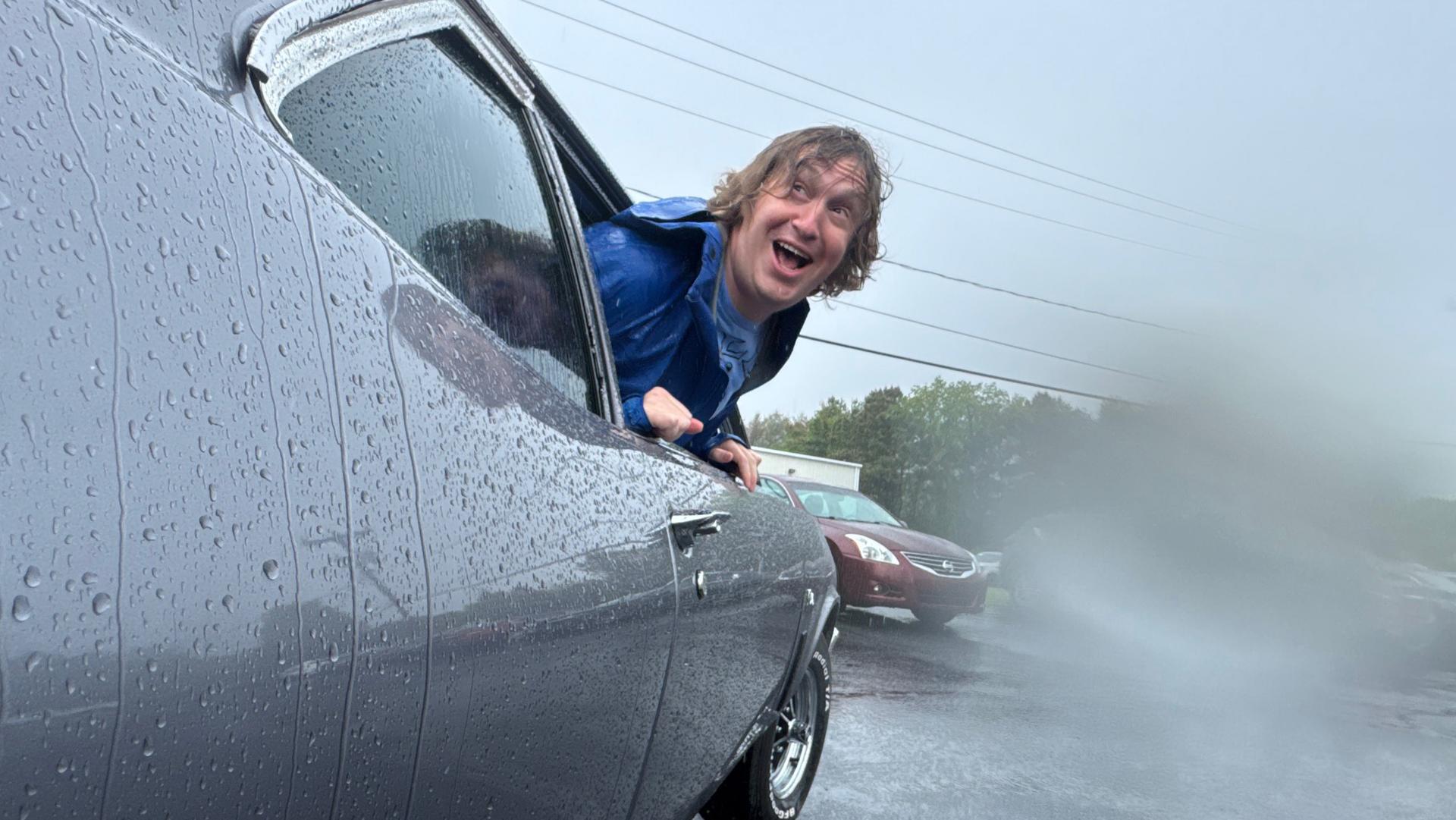
Matt Johnson on the set of Tony.
Credit: Courtesy of Michael BaumanAnything that we shot on the beach, for example. There’s some bird that nests on the beach at a certain time of the year, which of course is when we’re shooting the damn movie. So they’re like, “Okay, you cannot go over there. You cannot go over there.” So you’re just like, “Okay, we have this little patch of sand to do this whole scene in.” Shooting on the Cape in the summer is a very, very difficult space to be in.
I understand that you did lens testing at the Panavision offices in New York. What does a day of lens testing there look like?
Testing is critical because it’s an opportunity to develop the language. Since Matt and I hadn’t worked together, I don’t know what he really likes. So we went to Panavision, and I’ve had a good relationship with them because of all the stuff I’ve done with PTA. They had a buffet of lenses that we were able to test. We had some of the GW, which is stuff that we’ve used with Paul, which are supposedly rehoused glass that [legendary ’70s cinematographer] Gordon Willis used. That’s why they’re called “GWs.”
All this stuff has a soft quality to it. There’s interesting flares. Matt and I started talking about how we capture the language of the ’70s and the feel of all that. So we did a day there shooting in a room.
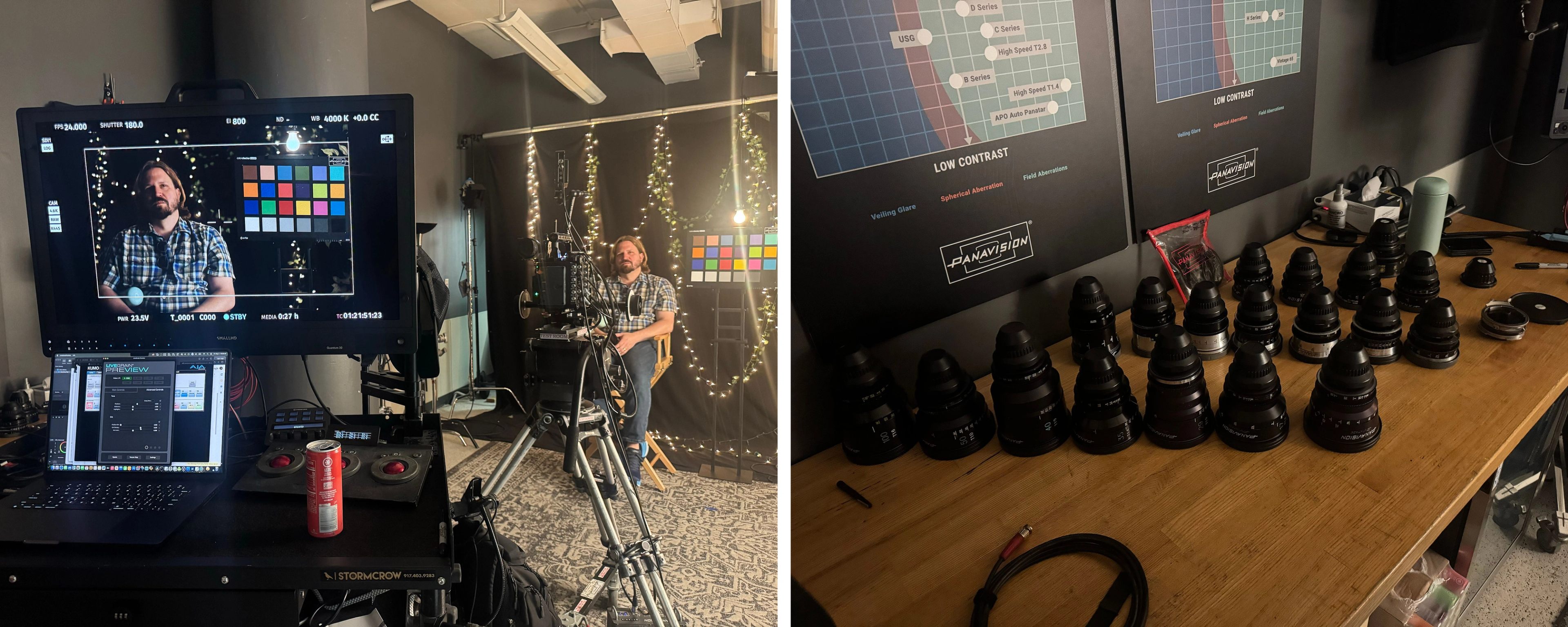
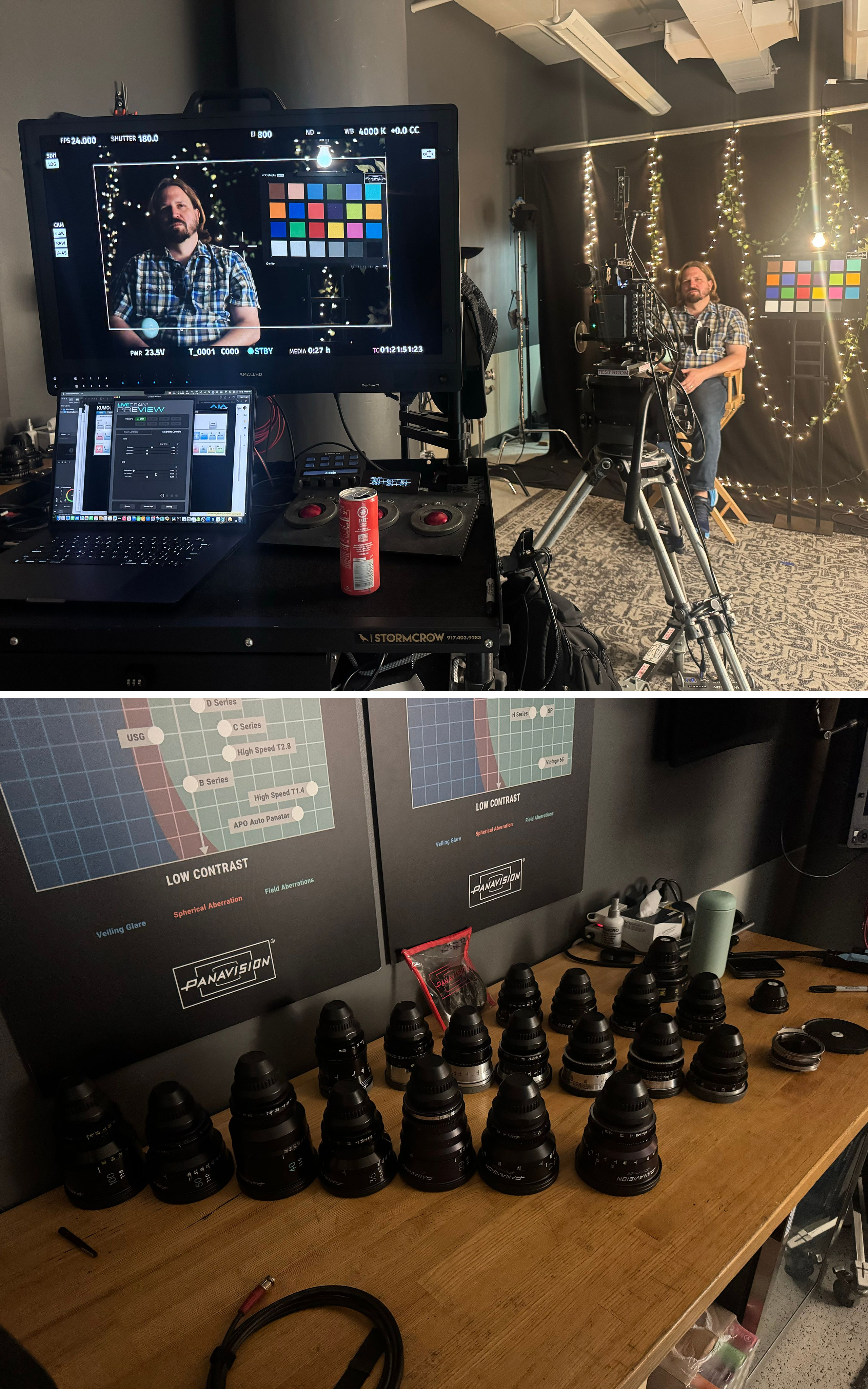
Lens testing at the Panavision offices.
Credit: Courtesy of Michael BaumanIn terms of reference points, were you thinking about the two ’70s-set PTA movies you’ve worked on, Inherent Vice and Licorice Pizza?
A little bit, but a lot of the shot deck I built for Tony—it’s weird sources. Beautiful Boy, Eternals, Ford v Ferrari, definitely some Inherent Vice, Reservation Dogs, Tree of Life. I generally start by going through the script and trying to collect images and develop that language. We had stuff where we’re on the beach and they’re burning fires. And you just start a dialogue: fluorescent-lit environments, silhouettes, fire. And then in that ’70s vibe, desaturated colors.
You worked for a long time as a gaffer, meaning you came to cinematography from the lighting and electrical side rather than rising through the camera department. How’d that impact your work as a cinematographer?
I was a gaffer for about 25 years, and I got to work with so many great cinematographers. I really enjoyed gaffing. Gaffer is the head of the lighting department. You’re really in charge of translating how the cinematographer sees light and being a sounding board in that process. One of the jobs I did was with—it was his last film—Harris Savides. We were doing The Bling Ring, a Sofia Coppola movie. Harris unfortunately had been diagnosed with brain cancer. So this was really going to be it for him. And I was lucky enough to do that movie and see someone who was such a profound cinematographer. I don’t think there’s a single person who hasn’t been influenced by the work that Harris has done. And he was just like, “Let’s fuck up. Let’s just try some stuff…And if we mess up, just blame me.” It was incredibly liberating to hear somebody say that.
His other thing was, “Just keep it simple.” I think that is such a profound statement. PTA is the same way. All these elements were very influential on Tony because we didn’t even have a rigging crew. Normally on a movie, you have a crew that’s setting things up in front of you as you come in. The cable’s laid and the lights are all there and you start working. This film was like, we come into the location, we gotta be shooting in an hour, 90 minutes.
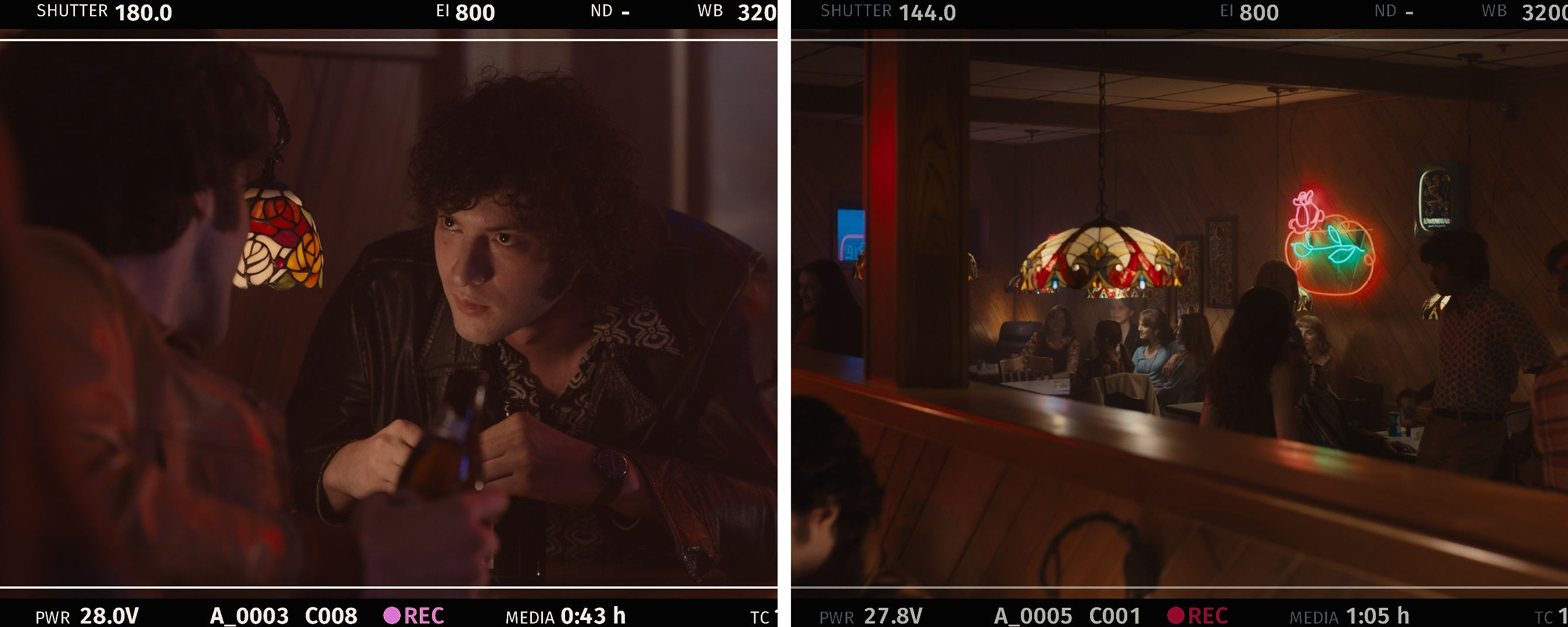
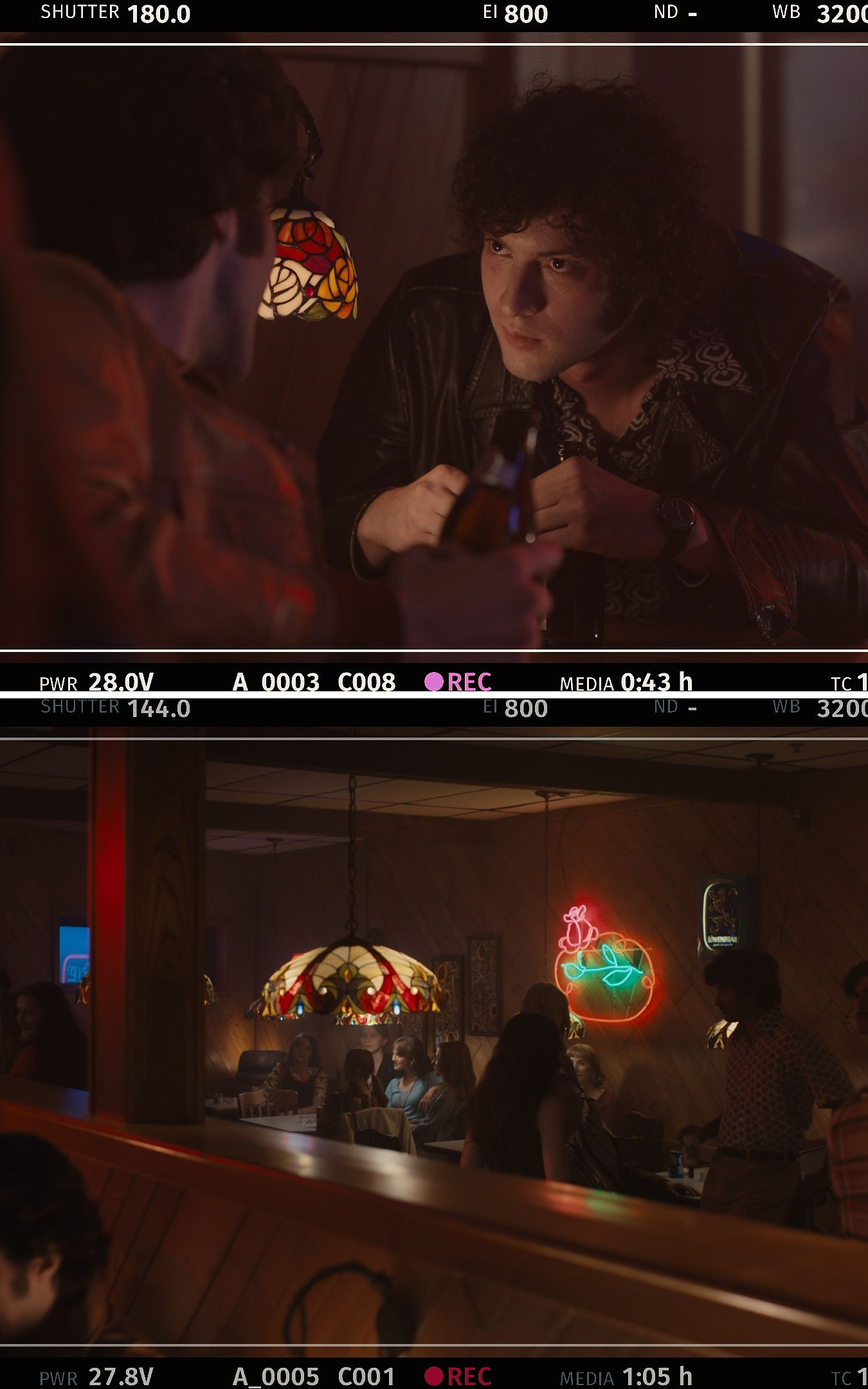
Monitor stills from Tony.
Credit: Courtesy of Michael BaumanHow were you working with Ryan Warren Smith, the production designer, here? The light sources mainly seem to be diegetic, all reds and blues.
Ryan and I talked a lot about this. We were like, “Dude, it should look like old Pizza Hut.” The MO for this was to have as many practicals [actual lights that appear on camera] as possible—to integrate the lighting into the scene. What we do is build off of that and augment accordingly.
The things that are making up an image in a bar: You have to have neon signs, you have to have practicals, you have to have smoke. In the ’70s, everybody’s smoking like crazy. That was actually one of the hardest things in the film: getting people who knew how to smoke. I remember one time we were shooting in Provincetown—the scene where Tony sees Nancy by the boats and they’re having a conversation—and one of the extras, who was in his seventies, had clearly lived through this period. He was like, “Hey, can I just say that you need to have way more people smoking?” Because back in the day, everybody was puffing.
So any interiors, there was always some sort of smoking going on. By putting atmos [artificial smoke] in the bar, it just helps the light and helps spread the color and diffuses the image a bit.
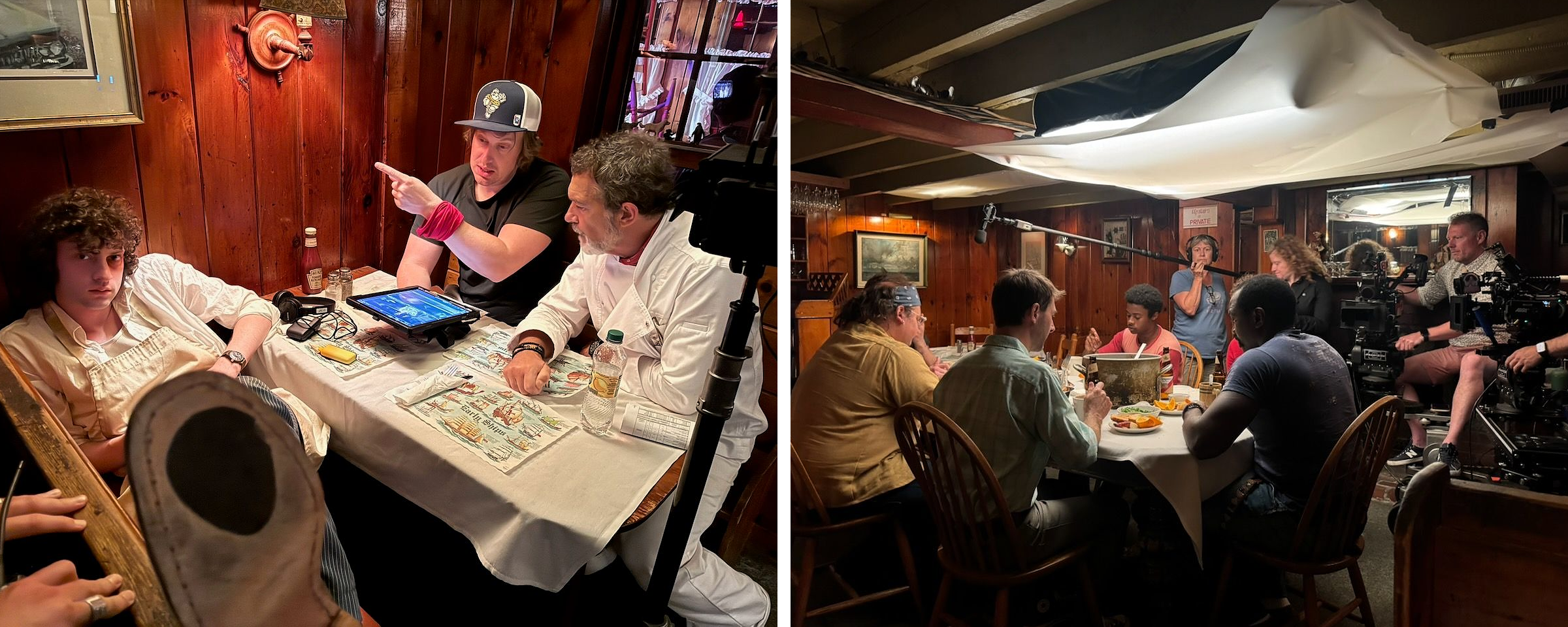
Behind the scenes of Tony.
Credit: Courtesy of Michael BaumanKnowing What to Preserve
You’ve said that the relationship between a cinematographer and their gaffer is different on every set. Since you’ve done both jobs, what do you look for now in your gaffers?
Everyone comes to gaffing from different spaces. Justin Dickson, the gaffer on Licorice Pizza and One Battle, he didn’t come up through the electrical department. I did, meaning you’re just one of the folks, and then you become the best boy, and then you become the gaffer. So you’re used to power and running cable and lights and all that. Justin came from learning how to light by Bob Ross. He watched Bob Ross videos. I was like, “What?” I couldn’t understand it until I started watching some of the videos that he recommended. When you look at how you create an image from a painter’s point of view and how light behaves and how Bob Ross was inspired by that, that was the language that Justin learned.
Just from watching Bob Ross’s show?
Yeah, and that’s the kind of thing that’s like, “Wow, okay, cool.” I really look for a collaborative partner who can bring ideas to the table.
Most of my time as a DP is spent working with the director on getting the images. Sometimes you come in and you’re like, “Hey, the plan’s out the window because the cast is late or this happened or that happened.” And you’ve got to be able to roll with that stuff.
It all comes down to—and I learned this from [Oscar-winning cinematographer] Bob Elswit—really understanding the core of the script and what every scene is about so you know the elements that you have to preserve. Like, “Okay, we’re going to do these 10 shots to make the scene. But what’s our plan if we have to do this in two shots since we have to be out of here in an hour?”
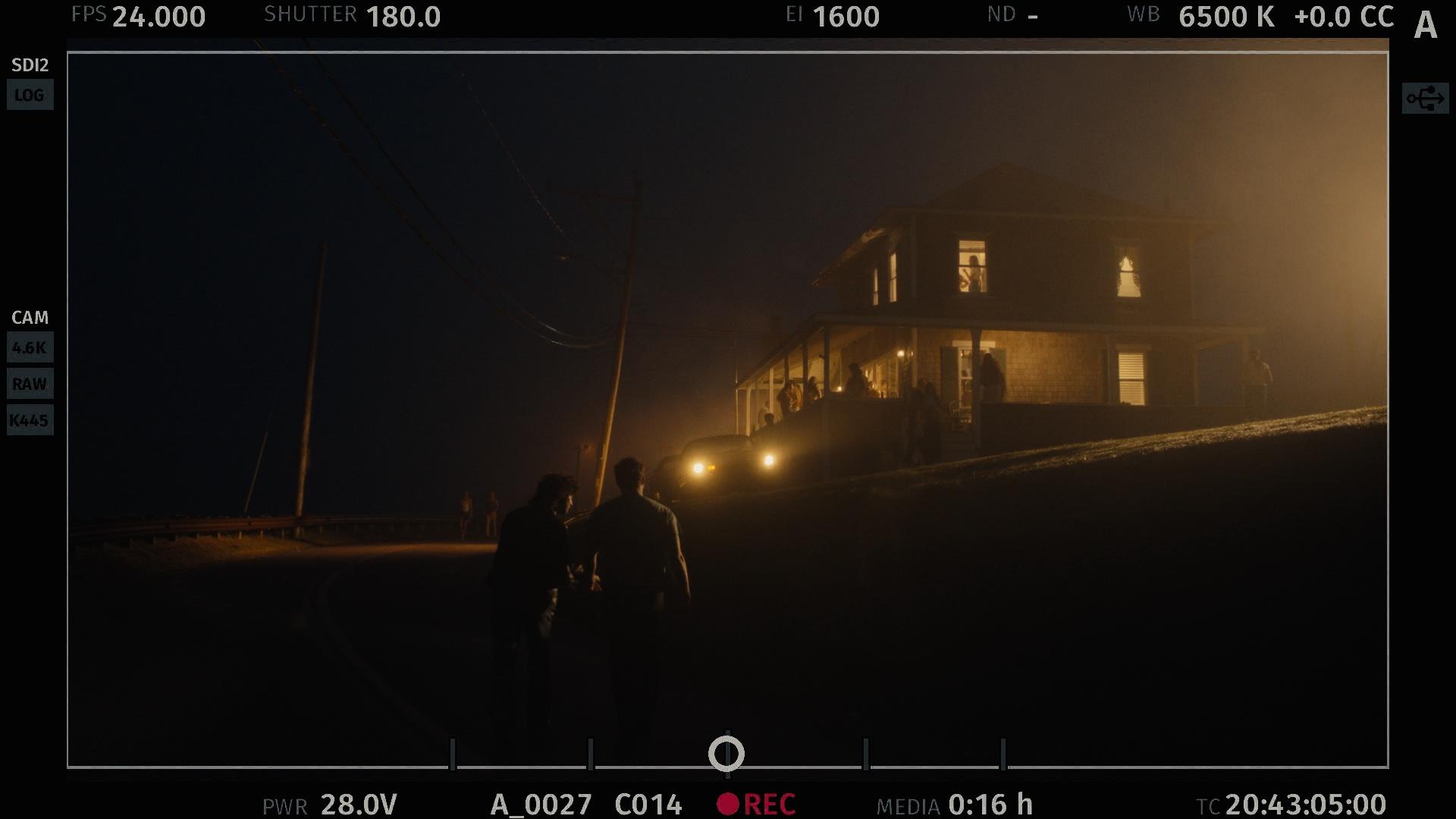
Monitor still from Tony.
Credit: Courtesy of Michael BaumanWhat’s an example of that from shooting Tony?
There’s a scene where they’re going to a house party. And we were shooting in the house and it just went long. It’s a tight space, it’s complicated. It’s a practical home. And you have smoke, and you have to have atmosphere. And we’re shooting during the day, so they had to tent the whole house.
Then we have to film the part where Tony and Sal are outside walking up to the house party, but at this point, it’s getting late and we don’t have enough light. I was talking to Chris Hill, the gaffer, like, “Dude, we’re going to try and get light in the sky so we can separate it [from the house], but it might not happen.” Matt and I were like, “What can we do?” And I was like, “Let’s park the car up on the hill. There could be people just parking their cars outside the house party with the headlights on.” Then Chris augmented inside with some bounces in the rooms to get a little more exposure inside the windows. He’s got a light up here on the hill, and then he put some behind the cars just to spread around the light that’s supposedly from the headlights. All this had to happen really fast because you can see how dark it’s getting in the sky. We had to just jam. And it was kind of misting outside, so we had a free wet down, which always helps.
For reflected light?
Yeah, exactly. Just pick up any port in a storm.
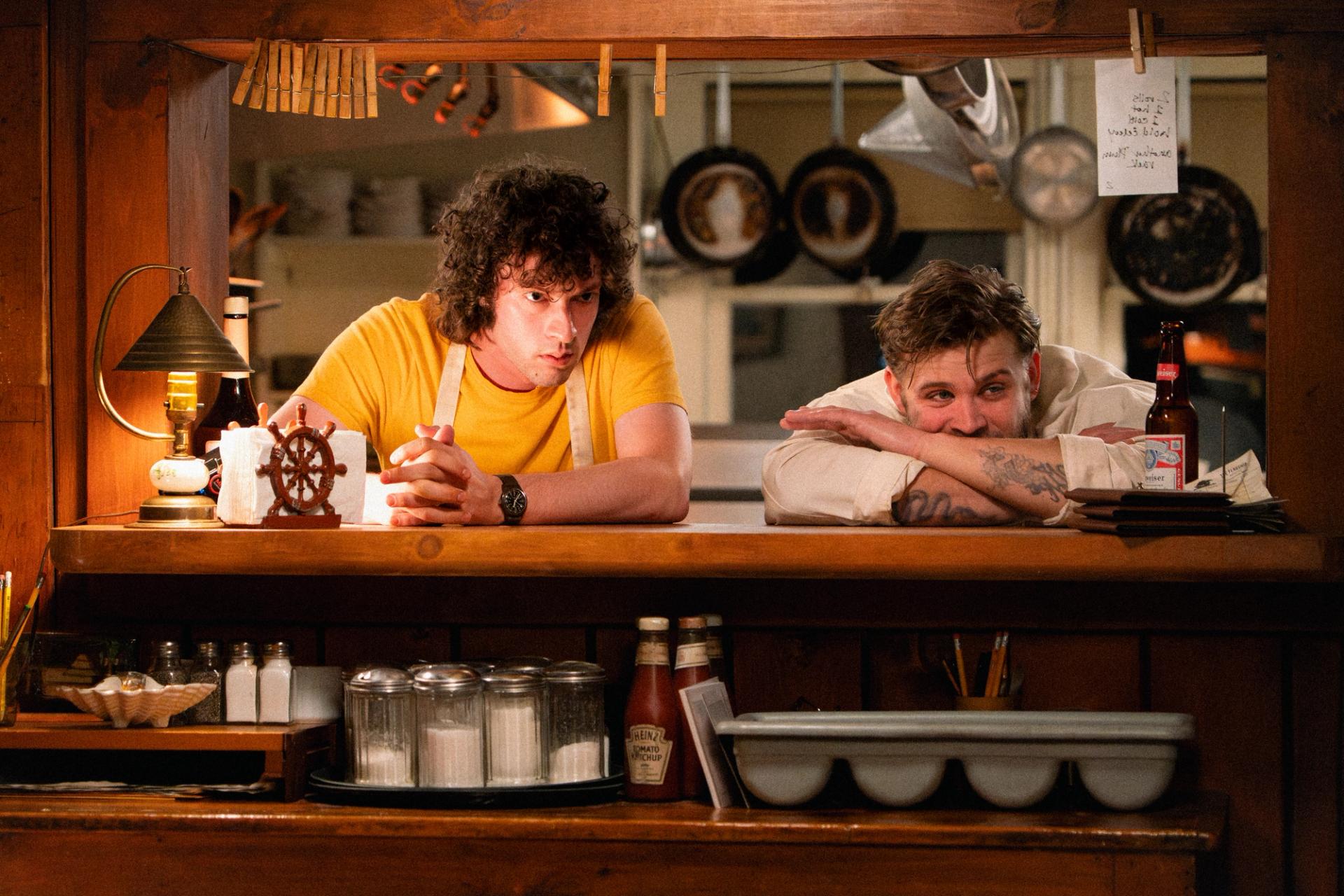
Dominic Sessa and Leo Woodall in Tony.
Credit: Courtesy of A24Kitchen Confidential
The kitchen at the lobster-roll place is obviously one of the most-used settings in the film, and those scenes have their own visual language, where you’re often up close with the camera and tracking frantic little moments with it—someone rattling a broiler or shucking an oyster or slamming a fry cutter. A lot of that was heavily improvised, right?
We just needed to create an environment in the kitchen so that we could put the camera in any direction. So the idea was to have some sort of ambient interior light that would create fluorescent kitchen-y overcast. And then the windows outside, we could bang light through as if it’s sunlight, and we could introduce contrast in that manner. But it was a practical kitchen. We couldn’t fly walls, we couldn’t do any of that. So it was really like, how are we going to jam all this in there? We cut this pass in the middle of the wall so we could have a way to look into the kitchen and find more angles.
Matt excels in improv. That’s his world. He knew Stavs [Stavros Halkias] and he knew Leo Woodall, and he knew what they could bring to the table. A lot of times he would just say, “Hey, Stavs. Give Leo shit about that.” All you need to do is give Stavvy that, and it’s on. They would instantly be going at him.
Terrence [Hayes], the camera operator, and I talked a lot about how we were going to have to go handheld at some point to capture those moments.
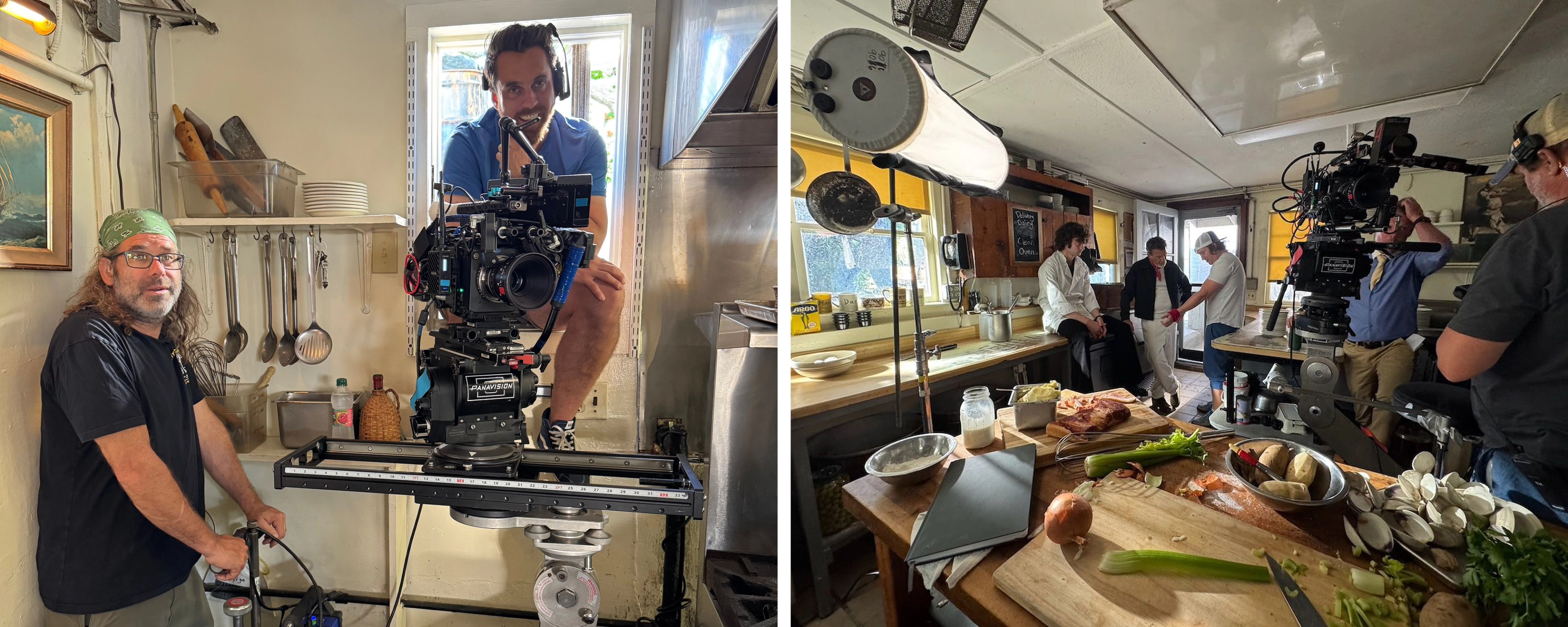
Behind the scenes of Tony.
Credit: Courtesy Michael BaumanThat moment when Stavvy pretends to jerk off with the lobster claw—was that improv?
Total improv.
So how do you capture that in the moment—the camera moves to it?
Terrence comes from doing a lot of documentaries. So that’s all about hiring the right crew and having people who can just roll with it. The MO in the kitchen environment was, anything’s up for grabs. You had to be able to give these guys as much leash as possible, because all the good stuff came out of that.
Behind the scenes of a night shoot for Tony.
Credit: Courtesy of Michael BaumanThe striper scene is the closest thing to an action set piece in the movie. Tony is woken up in the middle of the night for an impromptu fishing expedition. Every chef in town hits the water to catch as many as they can during a feeding frenzy. It’s all chaos. Antonio Banderas wields a shotgun. Is there a quick anecdote you can give me from shooting this scene?
Oh God, dude, that craziness. That was a night shoot. To agitate the water, they built these rigs out of Home Depot supplies. The special-effects guy built sprinkler heads that he would sink in the water so he could agitate it to look like a fish swarm.
It was about being raw. We had a crane that we could get out there and get stuff, but a lot of it was just handheld, shot from the boat. We had a lighting platform that we could push light from. And then Matt is like, yelling instructions out at two in the morning, and this is on a lake where I’m sure people paid a lot of money for their Airbnb for the weekend, and they’re hearing this crazy film crew going to town out there.
Matt’s yelling, “Shoot the gun now,” or something?
Yeah, all that stuff. [Laughs.] But it worked. It was just like, “Okay, we’re trying to do this over the course of two nights.” I think the rawness of it worked really well. Chris had some guys just with flashlights going, “All right, light that face real quick.” It was just controlled chaos.