“The Holes” Playwright Max Wolf Friedlich on the Art of the Plot Twist
For the popular playwright, creating a communal audience experience is the most thrilling part of stagecraft.
November 24, 2026
According to Max Wolf Friedlich, nothing brings an audience together quite like a good twist. His 2023 play Job, which takes place over the course of a single therapy session, waits until its final moments to reveal the true reason that millennial content moderator Jane has agreed to meet with Loyd, an older, tech-averse crisis psychologist. By the logic of Chekhov’s gun, it was inevitable that something extreme would eventually happen with the pistol that Jane brought into the appointment. But how the story unfurls toward that conclusion is another matter entirely. After 80 minutes of near-suffocating tension, Job’s final twist descends on unsuspecting viewers like an anvil, rewriting everything previously assumed about these characters.
Three years on from the off-Broadway-to-Broadway success of Job, Friedlich returned in September with The Holes (opens in new window) at New York’s Wild Project, recently extended through the end of November. The play has sustained considerable buzz, in part thanks to a cosign from Robert Pattinson’s production company, but also because it, too, delivers the kind of rug-pulling reveal that leaves theatergoers lingering on it for weeks.
On the surface, The Holes feels like a standard chamber piece. Much of its first act is dedicated to meandering conversations between Joey (Bubba Weiler), an aimless gay twentysomething who’s been forced to look after his dying father’s cheap beer–stained dive bar, and the two people who seem to be the bar’s only remaining patrons: Carson (Jack Mulhern), a simple but well-meaning townie working odd jobs to get by, and Martha (originally Tina Benko, now Constance Shulman), an alcoholic whose unfiltered observations about the rapid gentrification encroaching on their upstate New York enclave are frequently crass but never wrong.
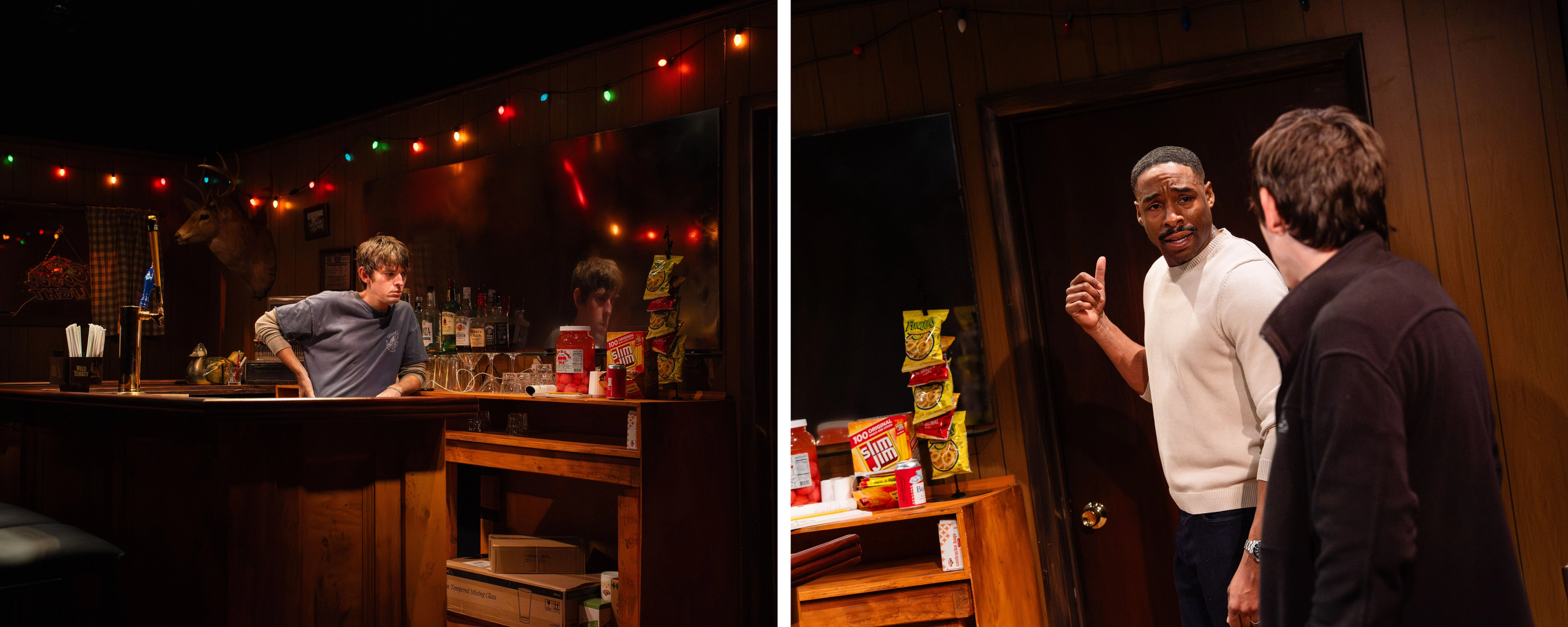
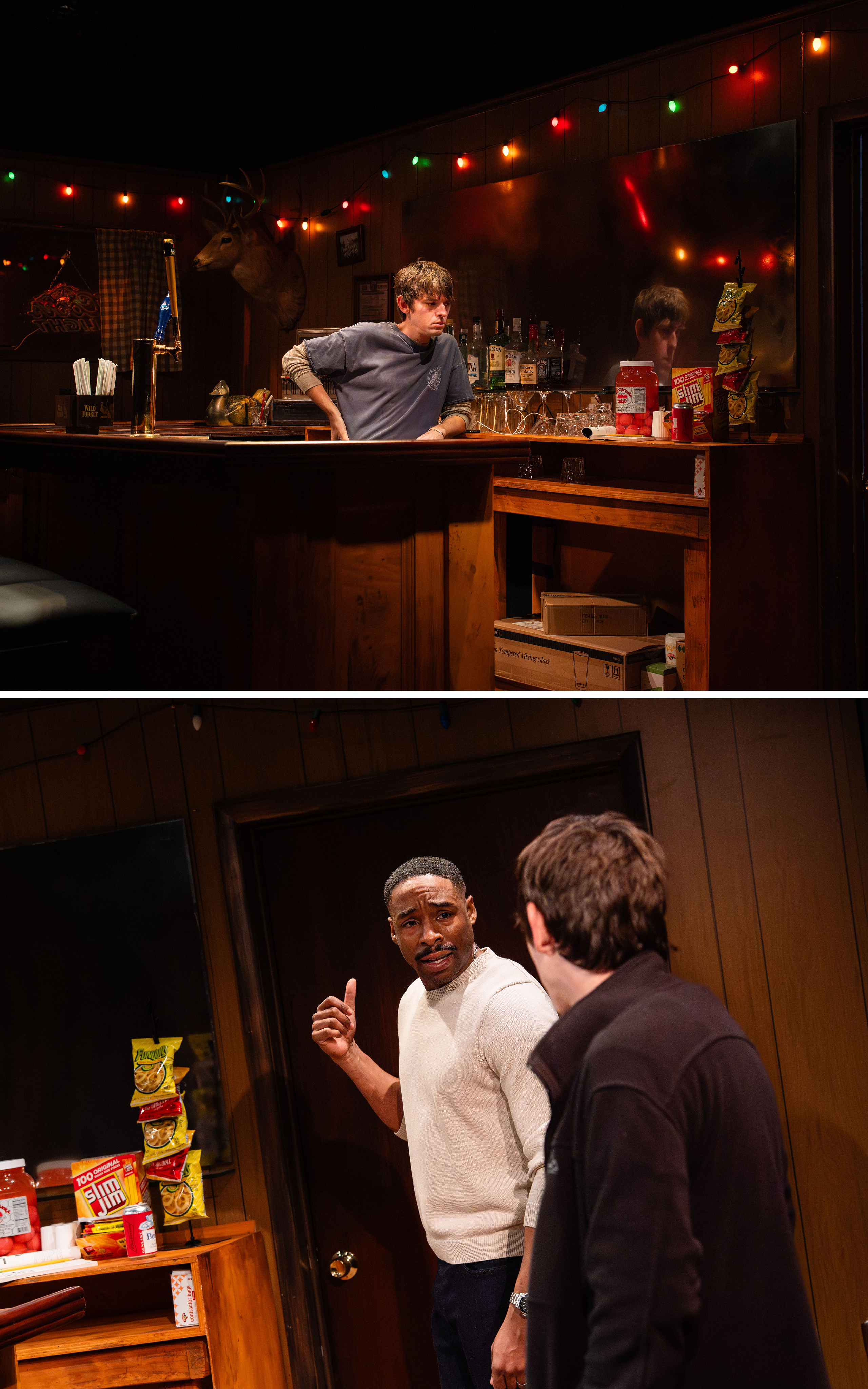
Bubba Weiler and Grantham Coleman in The Holes.
Credit: Photographs by HanJie Chow.Sitting silently behind them, though, is a possible way out—a literal door, stationed at the back of the stage, behind which something miraculous keeps happening. At least, that’s according to wealthy tech bro Wesley (Grantham Coleman), who regularly commutes from the city to walk through it, insisting that whatever is on the other side has the potential to cure the profound loneliness he feels as a man today. Friedlich takes his time revealing the secrets that lie there, building momentum with a slow drip of absurd revelations. When the play finally shows its cards—spoiler alert: it involves a glory hole through which a mysterious male figure delivers religious levels of revelatory ecstasy—there’s a noticeable shift in the audience.
With just two major New York productions under his belt, Friedlich is becoming increasingly known for his willingness to peer into some of the darkest corners of our culture and put his findings into illuminating conversation on stage. On a recent Friday afternoon, he and I discussed that inclination, why he believes a play is never fully written until it’s performed in front of a crowd, and the craft behind deploying a provocative twist. Be warned: The conversation includes mild spoilers for both Job and The Holes.
The Holes is based on a play you wrote in eighth grade, then picked up again as an adult. When diving into the writing process for a new play, what is your typical starting point? Is it always a loose idea or is it ever a character, a specific scene, or general plot?
Usually, there’s a spark or an image—The Holes one being obvious. But with Job, it was because I had a therapist. Going into COVID, he started Zooming me from his house. He lived in Manhattan Beach, and he would be like, “It’s so scary out there. We’re all scared.” All my family and friends were in New York, so I knew people whose parents had died and I was really freaked out. But I’d be seeing him with people playing volleyball in the background. So it was just this moment of, “Oh, I don’t know anything about you, but you know so much about me.” It became this very simple base: “Who is your therapist?”
I took a trip to Ireland with one of my best friends from college a couple years after we graduated, and we saw this thing that was identified as a “famine wall.” It’s just these little piles of rocks all over western Ireland, and the [tour guides] were like, “During the Irish famine, the government just paid people to stack rocks as a way to create jobs.” They weren’t structural and didn’t necessarily have any purpose. So I was like, “Okay, A, love the name ‘famine wall,’ and B, love the idea of work that is literally just for the sake of work.” That ended up turning into a play that I’ve been writing for a couple of years about Hollywood. So it could start from an image, a word, whatever.
After settling on an idea, do you usually dive straight into a draft and let it spill out of you, or do you take a more methodical approach with rigorous outlining or planning?
It’s definitely a spill-out, which does create some work on the back end because then you have to make it make sense. But my initial introduction to any sort of theater was LARPing. I was a chubby, little, strange kid, so I spent every summer dressing up like a wizard and fighting elves in the woods. For me, that was theater without an audience. It’s experiential. You’re doing it for yourself and the people you’re with and not for anyone else. I think there’s real DNA of that in my writing process, where I just have to feel immersed and like I’m having fun.
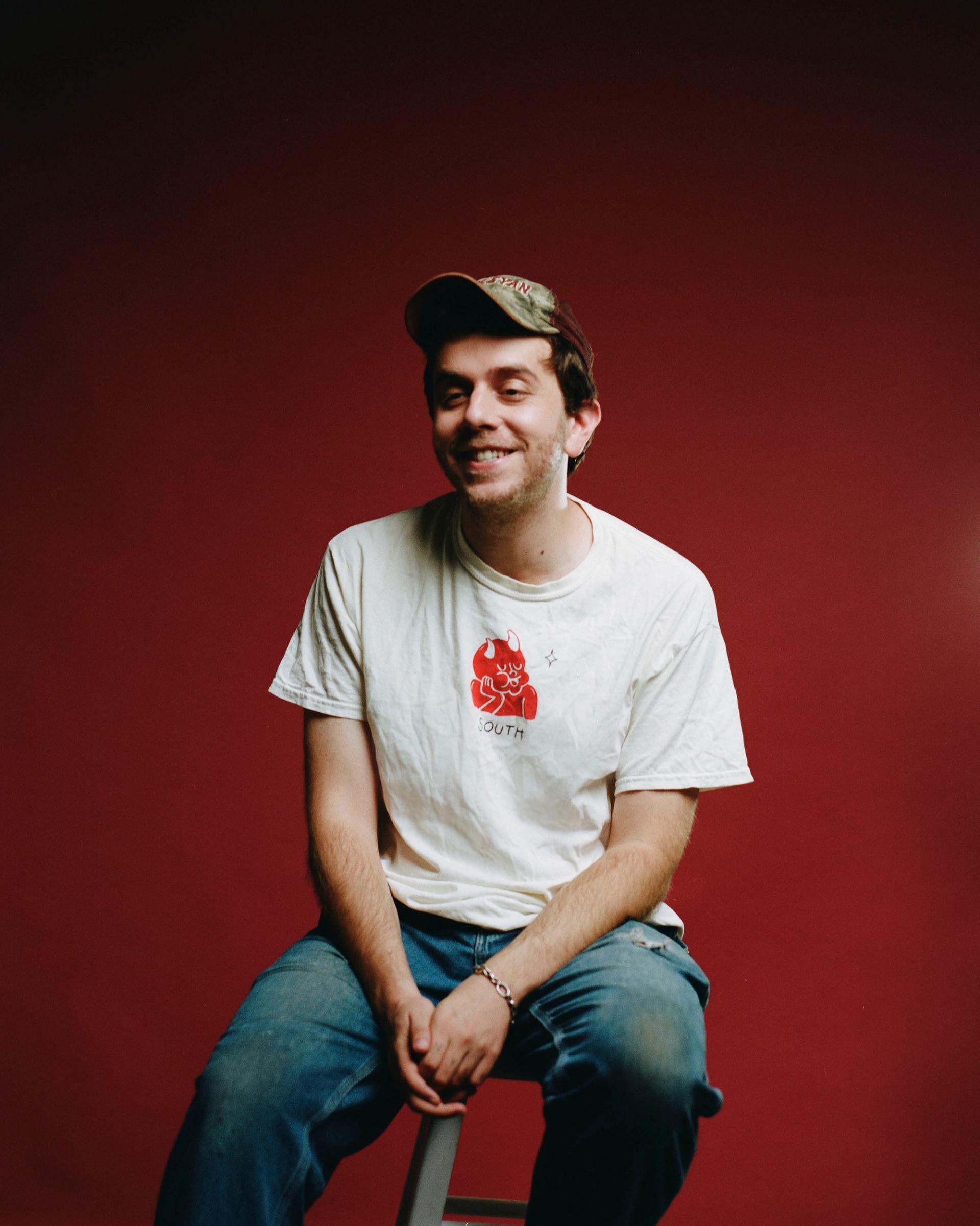
In both Job and The Holes, the narrative is shaped around a twist. What about this curtain-drop grand “reveal” approach to playwriting entices you?
It’s kind of accidental. My biggest theater education is just that I’ve seen a lot of theater, and I just really enjoy that experience as an audience member. But if people had beef with Job, it was often that it felt too capital-T twisty. But that’s totally fine. That’s the kind of criticism that is really easy [to accept].
It could very easily just be a matter of taste and preference.
One hundred percent. And I get that. But to me, the idea behind those twists is: “How do you condition people to watch something where they start to both trust and mistrust what they’re seeing and hearing in an interesting way?” So, with the twist at the end of the first act of The Holes, you’re like, “Oh, everything that I’ve been watching is both true and now complicated by this other idea.” That, to me, just gets at what’s so magical about theater: that you can make people question what is in front of their eyes. In a movie, there are obviously ways to do that that are intrinsically cinematic. But to be able to get people to look at a door that they’ve looked at for an hour and not thought that much about, and then be like, “Yeah, actually the most important thing to ever happen to humanity might be behind that door?” That is so magical. It feels like a kind of storytelling that I don’t know if I want to say can only happen in theater, but certainly feels really effective in theater.
In terms of just creating a collective experience, I think I come back to these big, set-piece moments of twists or questioning because they create a sense of the collective. You can feel the audience cohesion in those moments. You can feel everyone reacting. And there’s nothing more exciting than that to me.
As fun as it might be for the audience to experience these moments, it only works if the twist is deployed at the right time. It’s interesting to compare Job and The Holes, because Job really waits until the final minutes of the show to fully show its hand, while The Holes reveals itself at the end of the first act, leaving an entire second act to unpack the implications of that additional information. How do you figure out where to place a twist?
That’s why the most joyous and painstaking part of working on a play is the preview period, because you are—or I am, at least—trying to be so in touch with what people are thinking and feeling, and where they’re reacting.
But part of the answer to that question is functional, right? I wanted The Holes to be larger in scope and be longer and have an act break, so it was like, “Well, how do we get people to come back inside [the theater for the second act]?” But with Job, we wanted it to be this more bite-sized, 70- to 80-minute thing, so obviously the [twist] belongs at the end.
But once you have those other set pieces, it’s [about figuring out] when the play should go from a place of pure creativity and play toward this superfunctional place. You’re just feeling the pulse of the room, and once you know that this moment is where we’re going, everything else starts to feel more scientific. For me, that’s where it transitions from this idea of, “I want to have this really goofy, silly, naughty concept” to “this scene should not be longer than 15 minutes.”
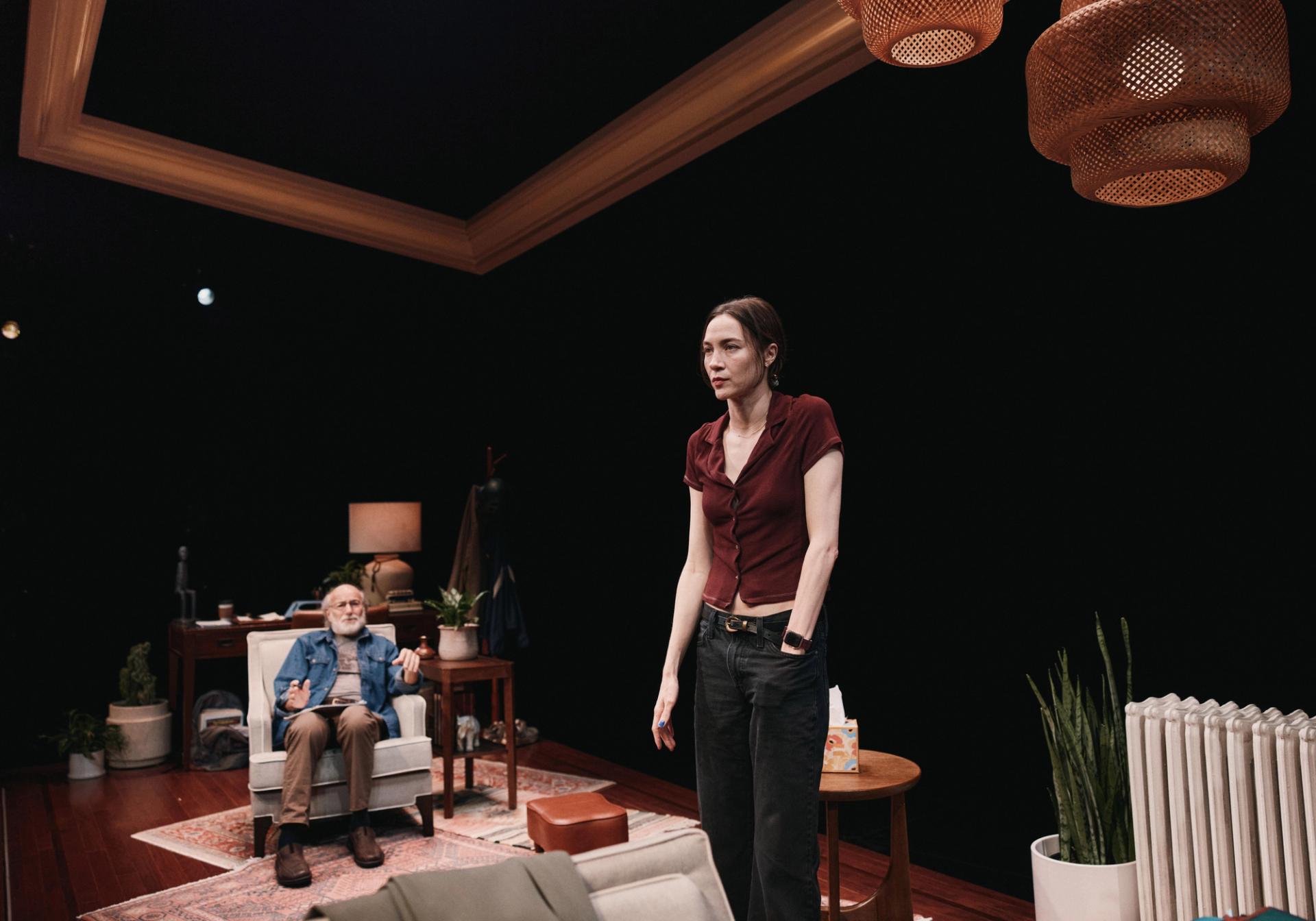
Peter Friedman and Sydney Lemmon in Job.
Credit: Photograph by Emilio Madrid.It sounds like you’re relying a lot on direct interaction with an audience, which obviously can’t come until previews at the earliest. Would you say that you can never fully know if something is working solely based on what’s on the page?
Yes. I can never know. With both plays, there are always laughs where I’m like, “Well, that line is obviously hilarious.” But we cut some of my favorite lines during previews on The Holes because no one was laughing. The process of doing this work is also about giving it away. Playwriting is so intensely isolating, but, for me, there’s a joy in the isolation. There’s a [sense of] play in the isolation. It’s just me, in my garage, working it out, and then it belongs to the audience. Then, one day, I’m going to see Job in San Diego and no one in the audience knows who I am or that I’m there, and I haven’t collaborated with the actors or the director at all. It is still my thing, but it belongs to so many more people.
So I don’t think playwrights should feel that authority over their work. The audience is going to tell you what they [like]. That’s what makes it a play and not a piece of literature. I feel like, if you’re disregarding the audience, I don’t really know what this medium is.
Take Jane [Schoenbrun] as an example of someone who doesn’t make theater. I think they are so aware of the audience. [They’re proof] that you can have reverence for the audience and still ultimately not care. It’s not about pandering to the audience. It’s just having an awareness. It’s knowing that this part is long. There are parts of the first act of The Holes where…I don’t want to say it’s boring, but, well, the character is talking about how he’s bored. So I think we can have a little dash of that. That’s a place where I’m not seeking to make a perfectly comfortable audience experience, but I still know what the audience is feeling in those moments. Maybe people hate that and think it makes the play bad, but it makes you aligned with the protagonist. He’s like, “Man, every day here feels the same. I want to claw my eyes out.” And you’re like, “Yeah, we know what you mean a bit.”
In terms of audience experience, I’m also curious about your tendency to focus on rather racy subject matter. In Job, your protagonist is a content moderator who is disturbed by the sexually violent material she encounters through her work. Are you naturally drawn to those themes or do you find yourself actively seeking out stories that can get under an audience’s skin in some way or another?
If there’s one thing I feel most misunderstood about, it’s that. I delight zero percent in upsetting anyone. I don’t mean to disturb. I don’t want to shock. Someone at the Connelly [Theater] had a panic attack while watching Job, and I definitely didn’t want that. It doesn’t make me happy to know that someone had a real-world “bad time.”
But there’s a monotony to living on our cell phones and being like, “I feel like we’re talking about everything except what we actually need to be talking about.” And I just want to talk about these things. I was shocked that there weren’t more [plays about these topics]. When Jane is describing what she does for work in Job, we cut that down. I’m not usually someone who’s like this, but the most self-conscious I’ve ever felt was when I was like, “Should we get rid of some of this language that’s really disturbing?” It was Hannah [Getts, my coproducer] who was like, “But these are real things. You didn’t make this up. There are real people in the world who have to watch stuff like this.” I try not to go so far afield that we’re making things up.
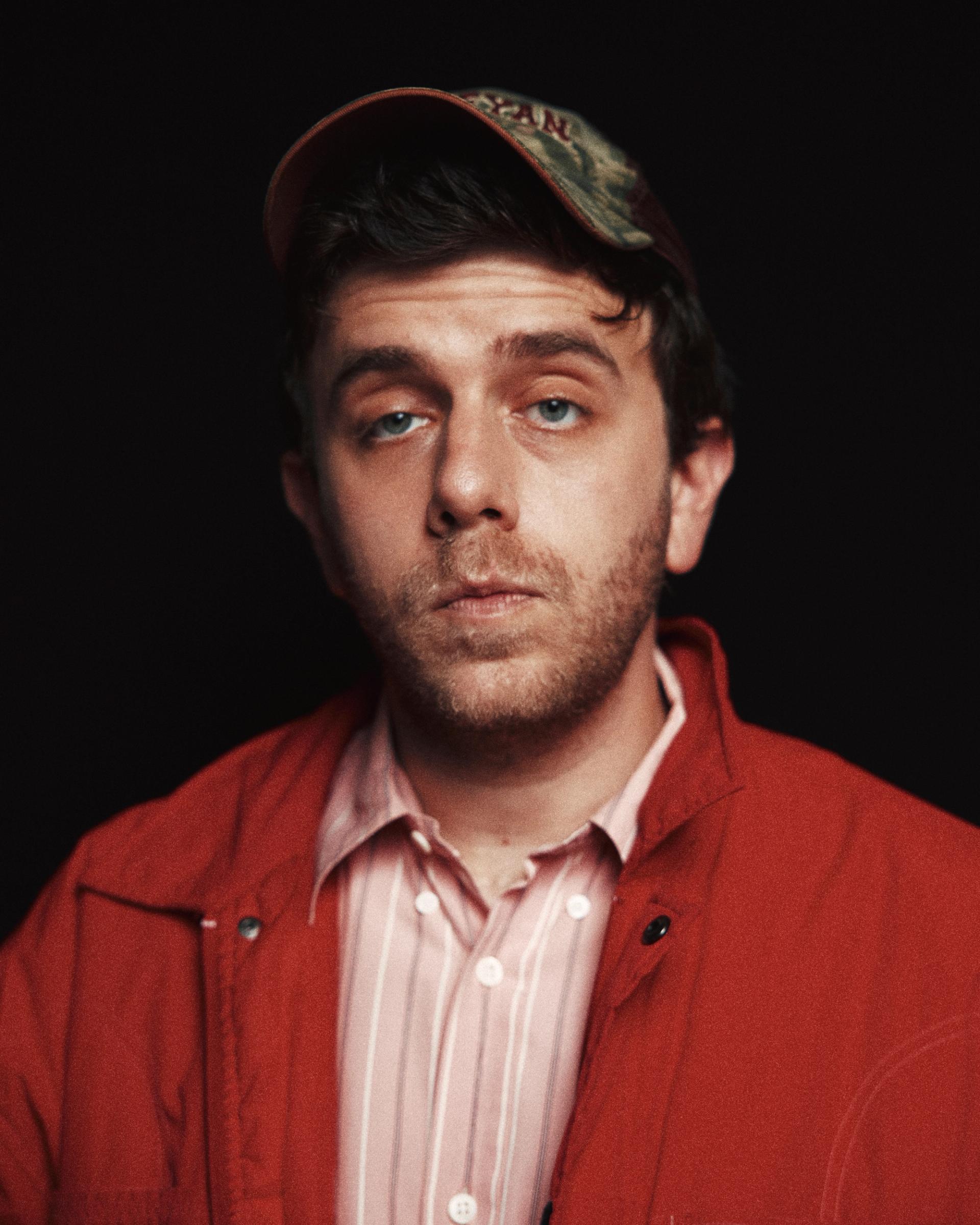
To be fair, both of these plays are about so many things at once, so the racier themes are just one part of a much larger tapestry. The Holes, for instance, is about the male loneliness epidemic; the homoeroticism of all-male wellness spaces; gentrification and globalization and industrialization; class differences and racial disparities. It’s even about Zillennial aesthetics. When you’re writing, are you thinking about every topic you want to hit or do you find out after the fact how much the work encompasses?
It’s the latter, for sure. With Job, people were like, “Wow, this really gets at something about mental health and being in your twenties in America today.” And I would be like, “Right. I am mentally unhealthy and in my twenties in America today. That’s why it’s about that.”
And with The Holes, the “male loneliness epidemic”—which, as a phrase, is sort of the New York magazine-ification of culture, where everything is a “thing” and we have to noun-ify everything—was not something I was seeking to address, so much as I am a male who is frequently lonely. I’m not like, “Let’s talk about The Topic.” I’m not like, “These are the themes.”
I grew up in Chelsea, in lower Manhattan, which by some metrics is the most gentrified neighborhood on Earth in terms of the degree of income change from 1990 to now. And then, if you dig into it—and this is per Sarah Schulman’s book The Gentrification of the Mind—you realize that there’s a direct correlation in New York between degrees of gentrification and the neighborhoods that experienced the most number of HIV/AIDS-related deaths. Then, suddenly, you’re seeing your relationship to history in a different way.
I guess there’s a version of this where I’m like, “I want to write something about urban change and gentrification.” But also, there’s only one fucking restaurant I grew up going to that still exists. I feel it every time I’m home. But I also have this lens on gentrification that’s incredibly privileged. The gentrification I experienced did not force me out of my house. Perhaps my being there was even a part of that gentrification. So then it becomes this question of, “What does it mean to be ‘from’ a place?” If I am asking those questions, then it’s usually bigger: “What obligation do you have to the place that you’re from? What does it mean to be a New Yorker? What does it mean to have a body? What does it mean to be a part of a group? What does it mean to work?”
On a similar note, do you think playwrights have any sort of responsibility to make the type of work that can spark dialogue or incite change? Both of your plays deal with these very real, very relevant issues of the time. Do you think you’ve settled on these socially conscious concepts because you think that’s what theater should be doing, or is it purely incidental that the work you’ve put out there does have this bent?
The word I hear that I question the most is “obligation,” because I think that a lot of people who maybe put that [responsibility] on theater would also agree that theater workers are also fundamentally workers. This is my job. I more readily understand my social obligation as, say, a white person or a cis person or an American to say things. As a Jewish person and as an American, I feel passionately about speaking up about Palestine. I don’t think I need to write about Palestine in my plays, though I salute the people that do. But this is my job at the end of the day. It’s a rarefied job and it’s a job that I feel really fortunate to do. But I think the “obligation” for theatermakers is just to be honest and to serve.
Bubba used this turn of phrase when I was talking to him the other day that I really like. He said, “Theater is the empathy machine.” Intrinsically, the act of gathering and holding collective space is feeling more and more radical and rarefied. So I think the base act of just having people care about a fictional person and open their heart [is what theater is all about]. I do think we have an obligation as theatermakers to just make people care about each other.
Before you broke out as a playwright, you worked for the tech startup that created the very successful, nonhuman “influencer” Lil Miquela. You were largely responsible for writing her captions, which in turn helped to shape her voice, so to speak. Is there anything about that experience that you have brought into your work as a playwright?
I mean, I didn’t necessarily learn anything from that process, except for a disdain for the tech world. [Laughs.] But I was raised seeing a lot of theater that sometimes felt adversarial toward an audience, and then I got this job where my only job was to cater to an audience. There was no point in doing that job unless I was garnering likes and comments. So I think it helped me find my happy medium, so to speak.
I think it showed me the perils of just trying to make things that people will like, more than anything else. The most successful thing I did with Miquela was also the most esoteric, which was this letter I wrote where she “comes out” as a robot. That was easily the most creative and out-there thing I had done while there, and it engaged a lot better than her being like, “Thursdays are for burgers.” So I think that helped me get out of some of the algorithmic thinking that now dominates all of entertainment. Not only am I opposed to this [type of thinking] spiritually, but now I can also say from a boots-on-the-ground perspective that it doesn’t work.
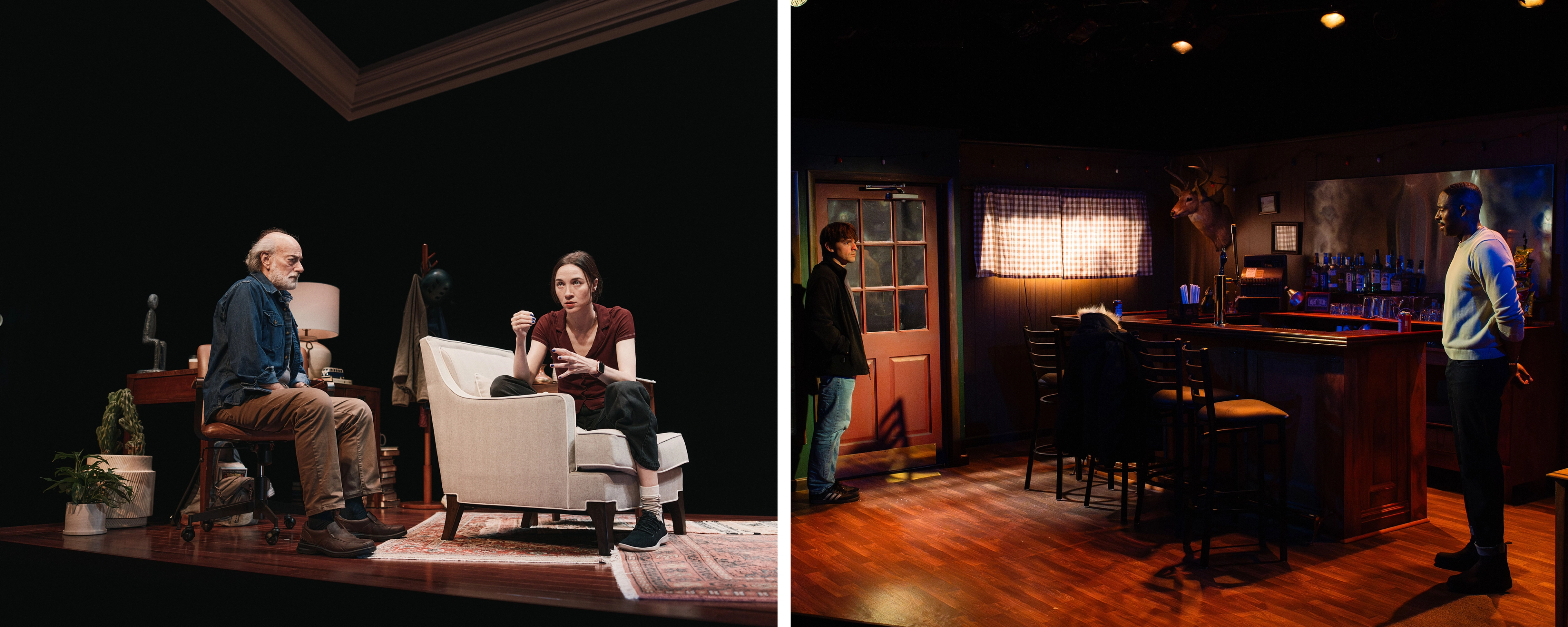
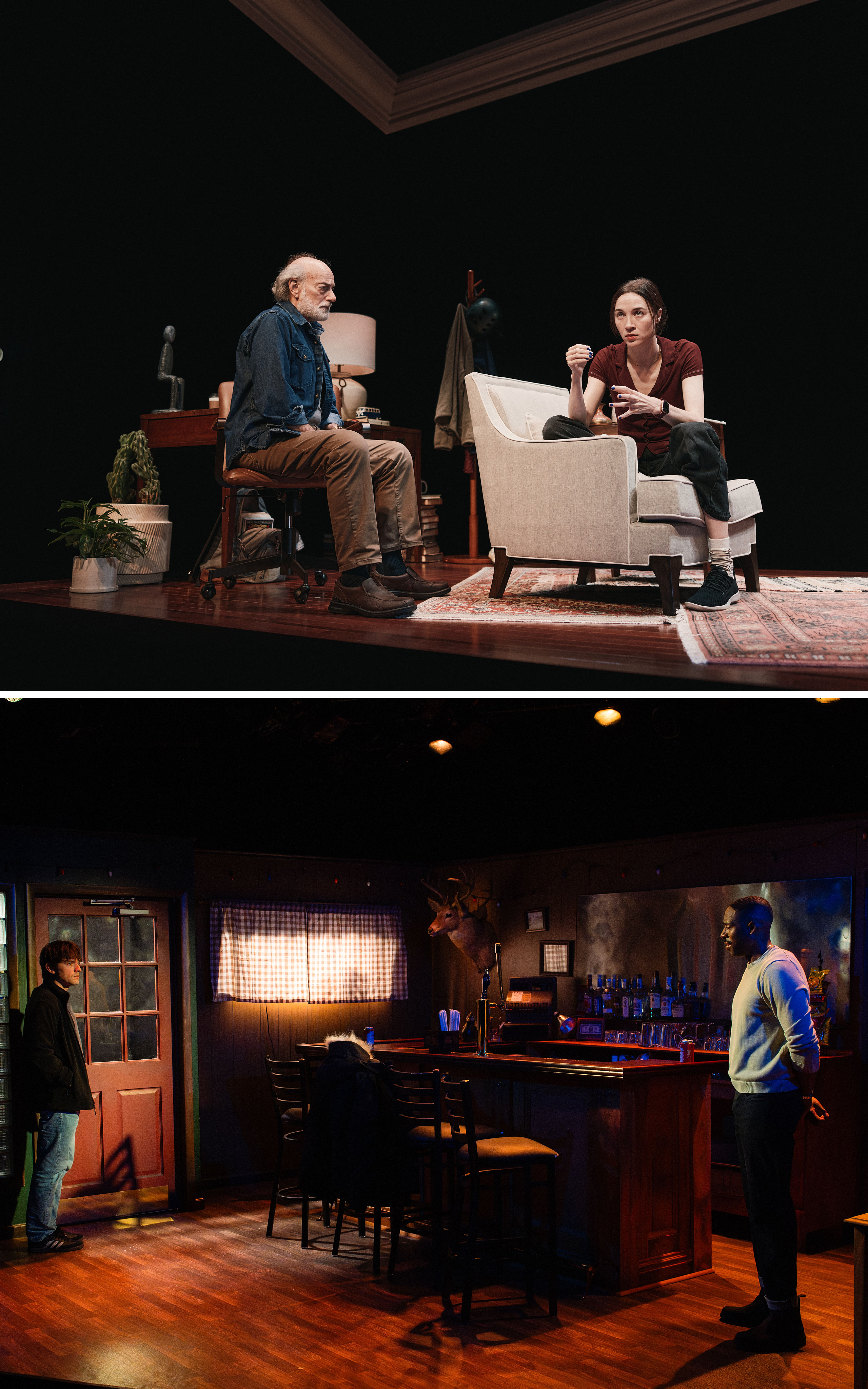
Peter Friedman and Sydney Lemmon in Job; Bubba Weiler and Grantham Coleman in The Holes.
Credit: Photograph by Emilio Madrid; photograph by HanJie Chow.I want to end by asking about tension and release. Both Job and The Holes end in these open-ended places where an audience member might walk away with more questions than answers. Both plays refuse to tie their central mysteries up in a neat bow; they resist any sort of easy resolution, instead finishing in a way that forces the audience to fill in the blanks for themselves. Personally, I love that. But in an age where Netflix executives are allegedly (opens in new window) making easy-to-parse content for “second-screen viewers (opens in new window),” I wouldn’t be surprised if some audience members found that deliberate lack of clarity frustrating. What are your thoughts on that?
We’re conditioned to think that things that aspire for “realism” often wrap up in some sort of conclusive way. But I actually think that [it’s the opposite]. Even at the end of The Holes, where we’re maybe in someone’s head or we’re maybe in another world, I think that that is us striving for realism—because whether we’re conscious of it or not, that’s how we all experience the world. Life is inconclusive. For most of us, there isn’t a day where we go, “And this is what it was all about.” It’s always 10 steps forward, 15 steps back. It is weird and surreal, and there’s something about that open-endedness that I think is hyperrealistic.
I took this class with Tina Satter that really changed the way I think about theater. She had us stage a party scene where everyone was all over the room, spinning around in circles and shouting their lines toward the ceiling. I remember being like, “That’s what a party feels like,” versus just standing around on stage, faking like you’re drunk and you’re talking to someone. So I think that ambiguity, that willingness to make things a little bit less neat, is just us striving for an emotional truth, an emotional resonance—and that is what I would term “realism.”
This interview has been edited and condensed for clarity.