Dorothy Tse’s Visions of a Hidden Hong Kong
In City Like Water, the writer finds her hometown’s deepest truths in the surreal.
August 17, 2026
Near the end of 2019, the writer Dorothy Tse spent several days alone in a cheap hotel room in downtown Hong Kong, trying to finish her second novel. Her first, Owlish—a finalist for the National Book Critics Circle Gregg Barrios Book in Translation Prize and one of the New Yorker’s best books of 2023—took her more than a decade to write, but she completed its follow-up, City Like Water, in a matter of months. Part of the impetus was a looming grant deadline, but what really spurred her on were the massive citywide protests that had gripped Hong Kong since the early summer of that year.
“I’m glad I tried to write it very quickly,” Tse said. “The feelings when I witnessed it—I think it’s important to capture in the moment. I think if I wrote it now it would be very different.”
The hotel where Tse wrote was in the dense commercial district of Wan Chai, one of the neighborhoods that saw the highest frequency of protest action in 2019, from the early summertime marches that wound down Hennessy Road, one million strong, to the chaotic evenings of police chases and acrid tear gas. It was also one of many hotels in Wan Chai—cheap, nondescript, anonymous—into which protestors had sometimes fled to evade the authorities, for a few hours or overnight, or even just enough time to change their clothes before disappearing into the city.
Disappearance is everywhere in City Like Water, which was published in English in March. Teachers and siblings go missing, without warning or explanation, from classrooms and homes; lotus roots vanish from wet markets and restaurant menus; dismembered ears, loosed from their persons, sail “like butterflies” through the streets.
It is the lotus roots that trigger a protest movement among a group of housewives, who organize peaceful demonstrations after they are sold counterfeit produce and the police shun their calls for help.
“There was a time in the city when protests were everywhere, and, in order to deal with tear gas, people were wrapping their bodies in plastic wrap and using cheap plates they used for steaming fish to extinguish the smoke,” Tse said. She was struck by the way these quotidian items, put to extraordinary use, seemed to embody “the spirit of everyday people.” In her novel, she sought to capture something of that spirit, depicting the transformation of housewives into protesters—ordinary people, disinterested in politics in their daily lives, who have been thrust by circumstance onto the world-historical stage.
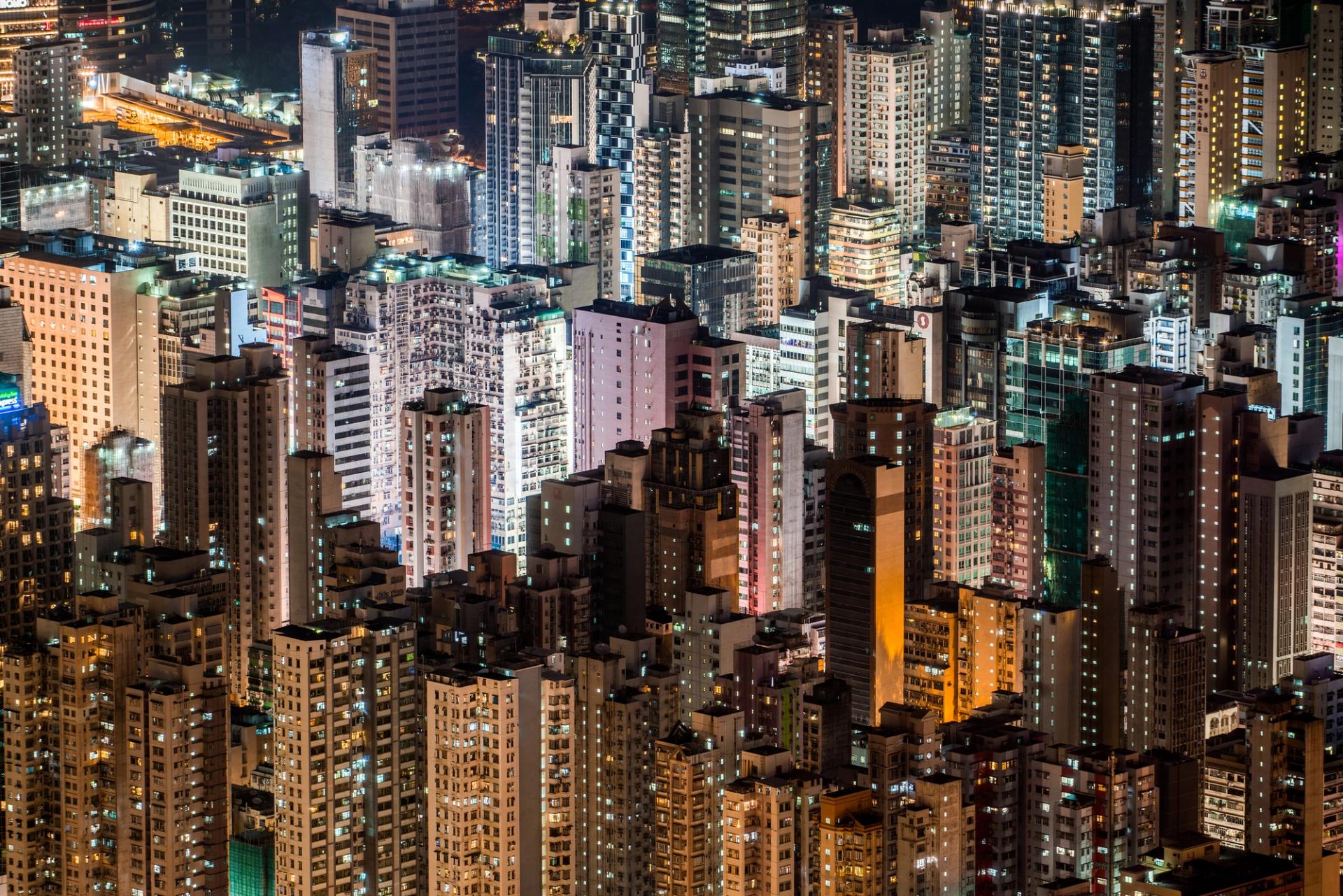
Tse—who, in addition to her novels, writes short stories and poems in Chinese and English and maintains a day job as a professor of creative writing—is from Hong Kong, and it is central to her work. Like Owlish, City Like Water is set in a place that resembles Hong Kong, not so much an alternate reality as a refraction of reality. Owlish takes place in the coastal territory of Nevers, first ruled by the Valerian Empire and then handed over “like a gift” to the authoritarian Vanguard Republic, a straightforward transposition of Hong Kong’s 1997 transfer from the British Empire to the People’s Republic of China. And though the titular city in City Like Water goes unnamed, it is an unmistakable facsimile of Hong Kong, specifically the Hong Kong of the 2019 protests, when demonstrations against a proposed extradition bill—seen as an encroachment by Beijing on Hong Kong’s autonomy—swelled into a mass pro-democracy movement of unprecedented scale that lasted until the government’s eventual, brutal crackdown snuffed it out.
“I do think [the books] are set somewhere that suggests Hong Kong. I just don’t like using the term ‘Hong Kong’ because I think there are a lot of assumptions about what Hong Kong is,” Tse said. “Like most of the words we use, we always have assumptions—what is a woman? What is a man? So I try to avoid using it directly, just to open it up a little bit, and also to give myself a little flexibility.”
For a long time before beginning work on City Like Water, Tse had toyed with the idea of writing about “things disappearing” in Hong Kong. She imagined a book with “short pieces, each chapter built as a drawer, preserving different objects or things in the city.” Even before the events of 2019, she regarded Hong Kong as a place marked by disappearance: buildings knocked down so that shinier, taller ones can sprout in their place; old flags and languages and histories swapped for new ones. The 1997 transfer of Hong Kong’s sovereignty from the UK to China, she said, created “an urgent need for the new authorities to rewrite the city.” Then, and again in the aftermath of the 2019 protests, official narratives shunned continuity and aimed to wipe the historical slate clean. Such efforts are disorienting for those who live through them; Tse’s literary drawers might function as a repository for memory, a space to stow and preserve what might be lost if it is not written down.
At the same time, Tse stressed that she is not writing historical fiction. Her preoccupation with fragmentation and disappearance is an existential concern. In one chapter, the narrator says of their home, “Everything in the apartment looked intact, but I knew that on the inside it had crumbled. The softest touch, and it would all fall apart.”
“I don’t want to write about what has actually happened, like stories you can find in the newspaper,” Tse said. “I want to write about what’s underneath.”
Still, stories in the newspaper have provided the seeds that germinate into fiction. For an earlier collection of stories, Monthly Matters, Tse gave herself an exercise: Each month she would pick a Hong Kong news item and turn it into a story. Parts of City Like Water eventually grew out of these stories.
There is also the swarm of bloodied, airborne ears. The ears might seem fantastical, but to Tse they reflect reality. In the novel, a news anchor announces that people’s ears are falling off in the street. No cause is given. Tse was inspired by a November 2019 incident in which a man bit off the ear of a democracy activist. (opens in new window) She recalled watching the news and seeing a chyron describing the event in hilariously euphemistic terms: “Someone’s ear has fallen off on the street.” These and other “fragments” from the news and her surroundings are threaded into City Like Water, painfully visible to some readers and merely allusive to others.
“You may read it as magical realism, but for me everything is very real,” Tse said. “I think for many people who witnessed what happened in Hong Kong, they would get it immediately.”
She meant this, perhaps, in a literal sense—people who were in Hong Kong at the time will remember the protests, and the bitten-off ear, and recognize their echoes in Tse’s novel—but also in a less literal sense: the experience of those days on the streets, of the startling intrusions of violence into the placidity of everyday life.
Tse shies away from labels like “magical realism,” though her work shares some similarities with the genre (in Owlish, a dowdy professor begins an affair with a music-box doll who springs to life). Nor does she regard the surrealistic elements of her fiction as necessarily metaphorical.
“When I talk to my students, I often tell them, ‘Try not to be too quick to interpret something as symbolism.’ I just think that way of reading would limit the text itself,” she said. “If you think of them as part of the plot of the story, then it just opens up the meaning. You just read it as it is.”
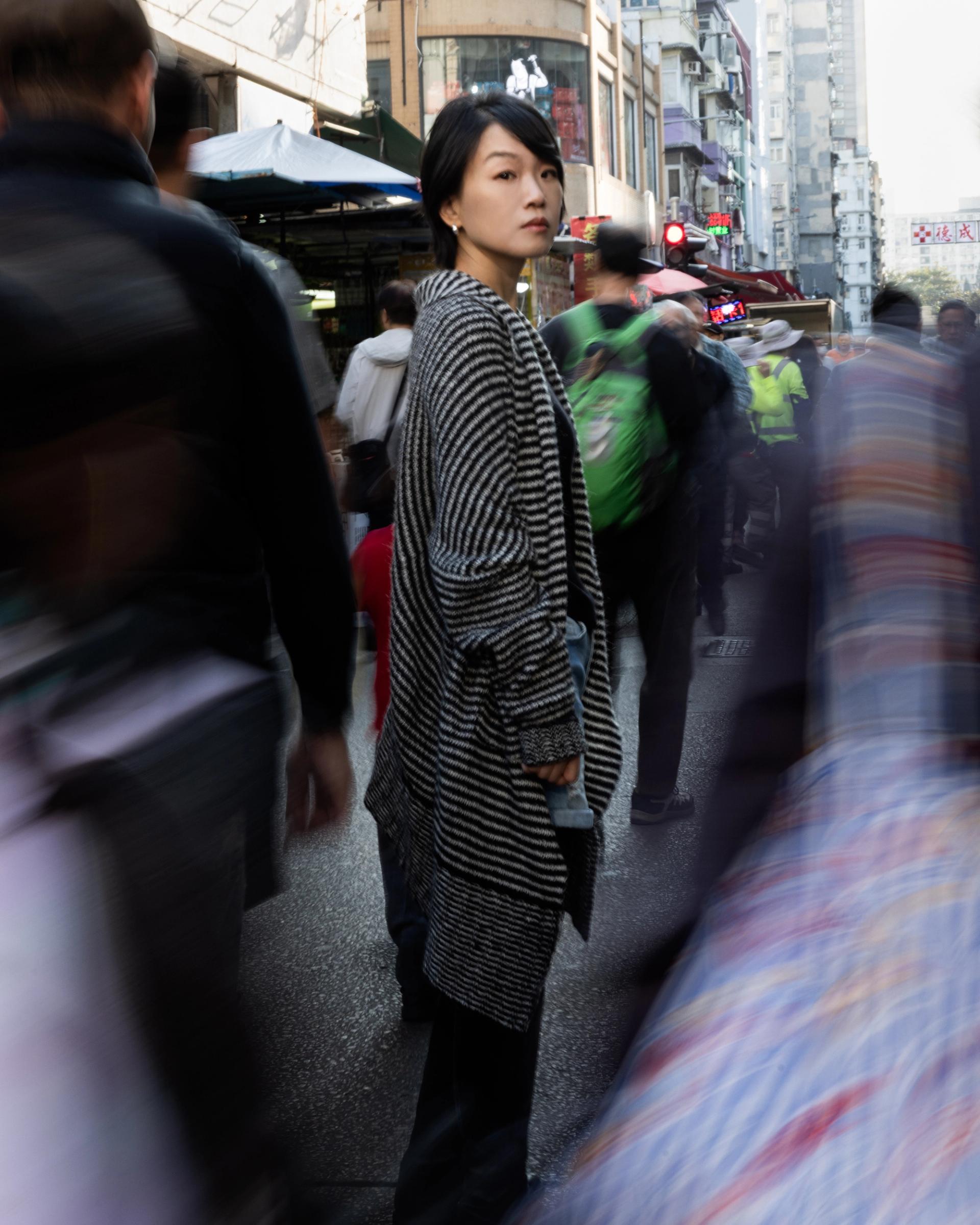
Tse’s path to becoming a writer began when she was a student herself. She found the routines and social mores of school and university oppressive. Books became a way to escape the stultifying dailiness of those institutions. At her religious grade school, the stories in the Bible fascinated her; later, she attended the Chinese University of Hong Kong, starting out as a journalism major but sitting in on literature classes and eventually switching her focus to Chinese literature.
Literary theory helped Tse understand literature as “a way to resist reality.” She read the novels of mainland Chinese writers like Can Xue, Yu Hua, Mo Yan, and Han Shaogong, all of whom grew up during the horrors of the Cultural Revolution and who, in their fiction, tended toward the avant garde and favored narrative fragmentation and dark humor. Like many chroniclers of turbulent totalitarianism, they leaned into the dreamlike and the surreal as a way to grasp the almost ungraspable absurdity of real life. Those novelists were themselves inspired by writers such as Gabriel García Márquez and Franz Kafka, the latter of whom Tse counts among her own foundational influences, along with the French philosopher Gilles Deleuze, the Hong Kong writers Xi Xi and Dung Kai-cheung, the German cultural critic Walter Benjamin, and the Polish writer Bruno Schulz.
Of Schulz, Tse said, “His language is very fluid and almost magical in a way—almost shiny to me.” She is attentive to language’s effects by necessity. She writes primarily in Chinese and works closely with her English translator, Natascha Bruce, who has become one of her close friends. Tse trusts Bruce to transpose the “strangeness” of the Chinese—wordplay, made-up terms, colloquial Cantonese phrases, deliberately awkward or defamiliarized images—into English.
Last year, Tse enrolled in a yearlong MFA program in creative writing at Boston University. It was a self-imposed challenge: She would be writing in English, in an unfamiliar workshop setting, and in keeping with the traditions of the program, she would be compelled to write in the realist mode—not her usual style by any means.
“It’s interesting to switch your brain a little bit, to just write in another language,” she said.
She also taught an undergraduate writing course and enrolled in art classes in which she made drawings and experimental collages. Perhaps unsurprisingly, one of her favorite painters is Hieronymus Bosch; she also loves the Surrealists and “anything that brings you out of the world that you see.”
“I don’t want to write about what has actually happened, like stories you can find in the newspaper. I want to write about what’s underneath.”
Now she is back in Hong Kong. The constraints of the workshop proved fruitful: She wrote a handful of short stories that she has begun translating into Chinese, and she started a novel in English that she plans to complete. But it is in Hong Kong that she is at her most productive.
“What gives energy to my writing is the movements in Hong Kong,” she said. “I feel it’s the subconsciousness of the city coming to the surface.”
Tse is fond of an image from Bruno Schulz’s short story The Book, wherein he describes reading as a clandestine connection between the reader and the author, who, through the writing, looks the reader in the eye and squeezes their hands. Schulz writes, “For do we not all hold one another’s hands in secret under the table that divides us?”
“That’s the feeling I had when I was writing the book,” Tse said. She wrote City Like Water “right in the middle of the movement,” feeling “so much energy pouring into me” from those weeks that stretched into months of blockaded expressways, tear gas, water cannons, and rubber bullets, pitched street battles between black-clad teenagers and riot police. The turmoil upended the city and changed it forever; more than six years later, it has vanished from international headlines but remains indelible in the memories of the people who lived through it.
“It was almost like a feeling of something burning,” said Tse. “Like I have to get something out before it disappears.”
Correction: In a previous version, Tse’s quote about Bruno Schulz was mischaracterized as being about Franz Kafka. The text has been updated.