Angel Dimayuga, the Chef Who Became a Broomsquire
The acclaimed chef has made more than 300 brooms, sourcing materials with the same instincts that guide their culinary work.
July 7, 2026
In March, Angel Dimayuga came to Brooklyn to cater the launch of T Kira Madden’s debut novel, Whidbey. The spread was made up of edible sculptures conjuring memorable scenes from the story: a lilikoi olive oil cake piled with used motel soaps molded from marzipan, a mossy pond dotted with anchovy-stuffed olives and ringed with black sesame soil. Rather than stick around the city after the gig, Dimayuga then drove up to the Pocketbook Hudson, holed up in a suite for three days, and made 30 brooms by hand.
Dimayuga is best known for their work as a chef, applying classical techniques to Filipino immigrant home cooking and broader Asian diasporic cuisine. Born and raised in San José, California, they came up in New York City kitchens, eventually serving as executive chef at the acclaimed restaurant Mission Chinese Food and later as creative director of food and culture for the Standard Hotels. In 2021, they published their debut cookbook, Filipinx: Heritage Recipes from the Diaspora (opens in new window), coauthored with Ligaya Mishan. The book is at once a robust culinary anthology and an autobiographical take on generational memory and Filipino American identity.
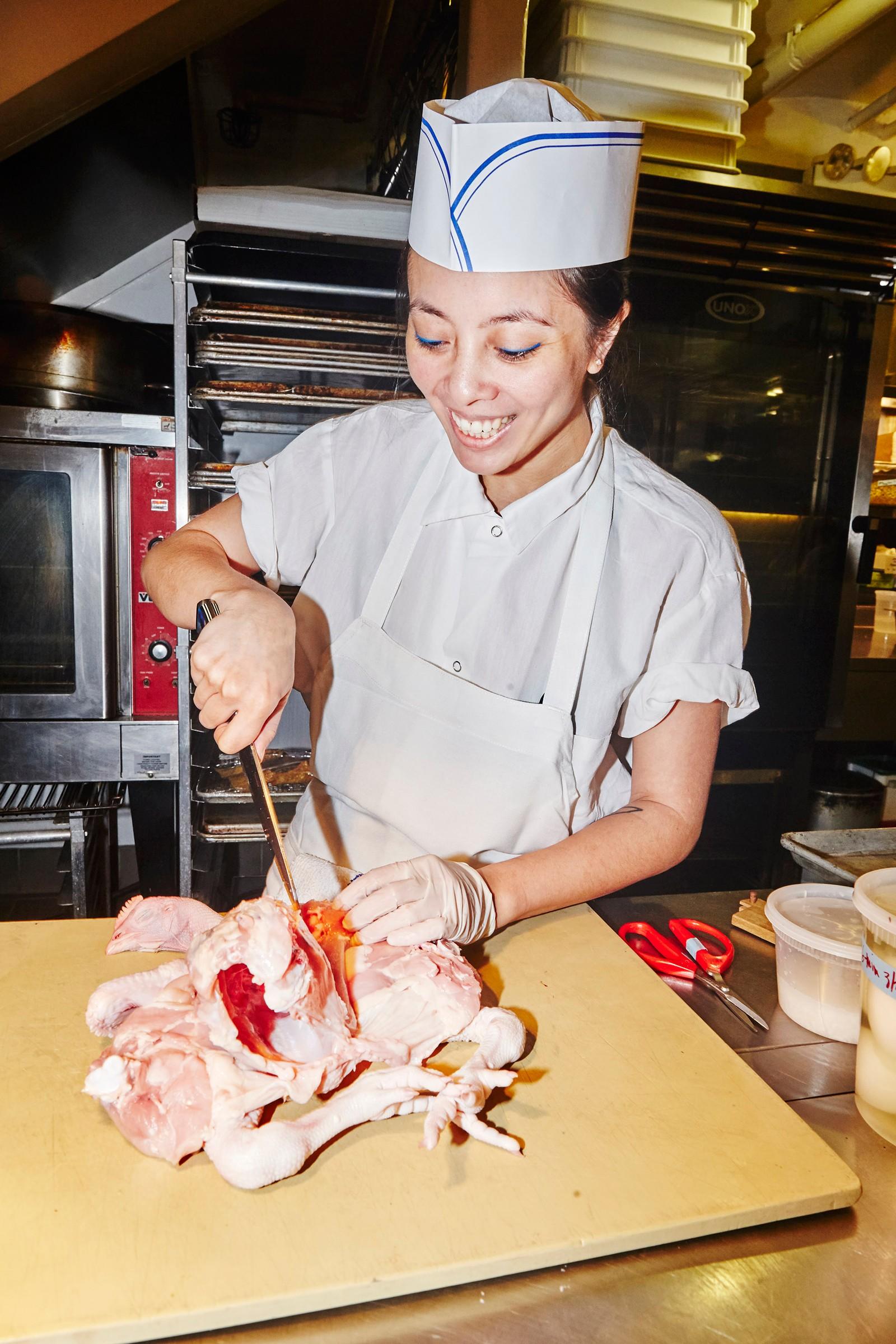
Dimayuga in the kitchen at Mission Chinese Food in 2014.
Credit: Photograph by Alex Lau, courtesy of Angel DimayugaNow based in Los Angeles, Dimayuga has become a sought-after collaborator for art institutions worldwide, increasingly brought on to produce immersive dining concepts that use food as a medium for cultural excavation and world-building. Some recent commissions include an experimental talk show staged inside a living room installation, complete with a midshow dinner delivery from the fake restaurant Angel’s World; a pop-up “11-Eleven” convenience store selling artisanal renditions of Asian junk food; and a Swiss gala where hors d’oeuvres were served through glory holes.
In the past year, Dimayuga has also been trying on a new title: broomsquire. What began as a deliberately noncommercial side quest has recently yielded their first large-scale commission: Each of the brooms they made that March weekend at the Pocketbook Hudson will live in a suite at the hotel, which will also house a showroom for their hand brooms and brushes.
Here is Dimayuga, in their own words, on how broom making has become an essential complement to their cooking, even if they still feel like a beginner.
— Sarah Burke
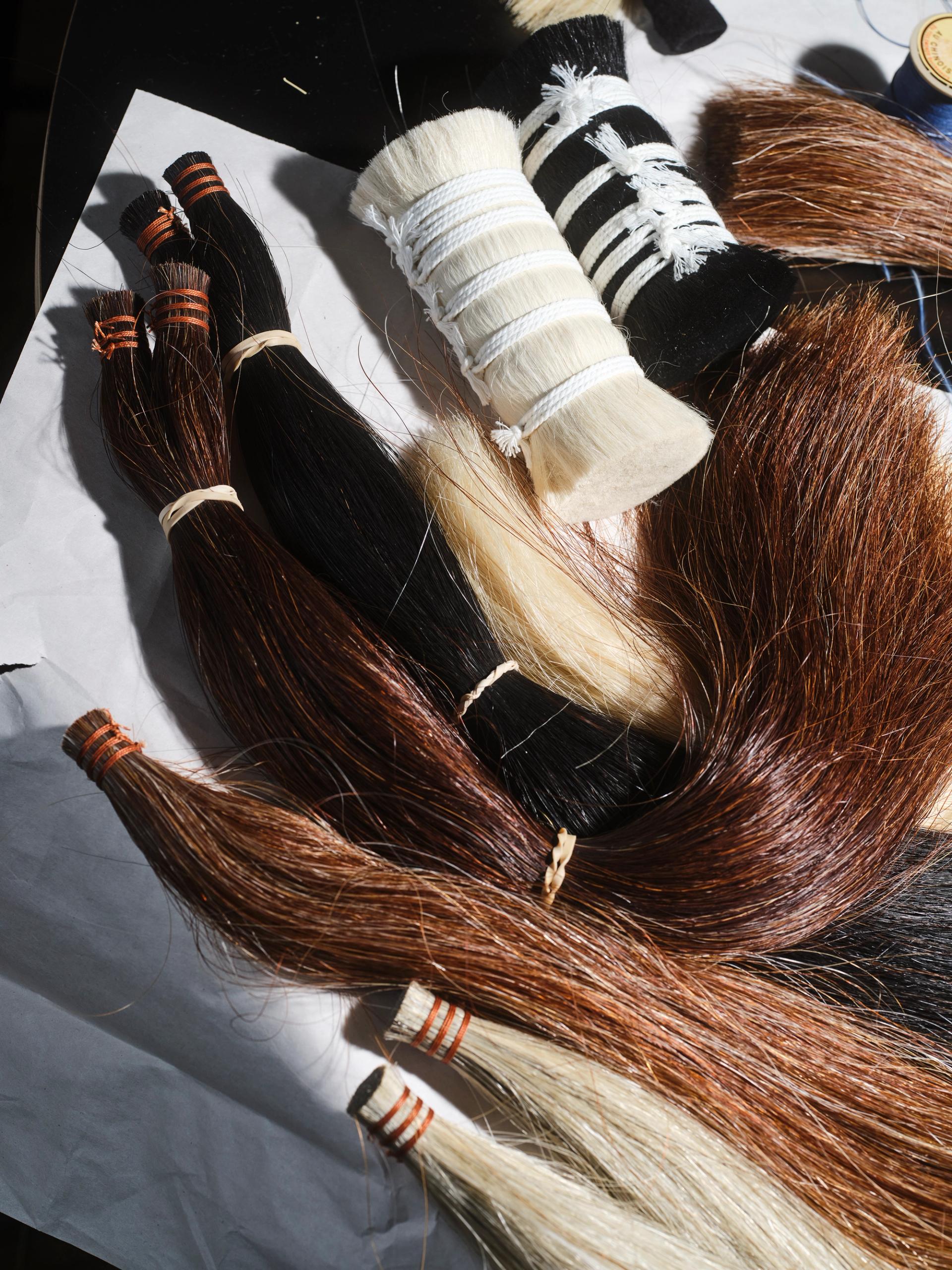
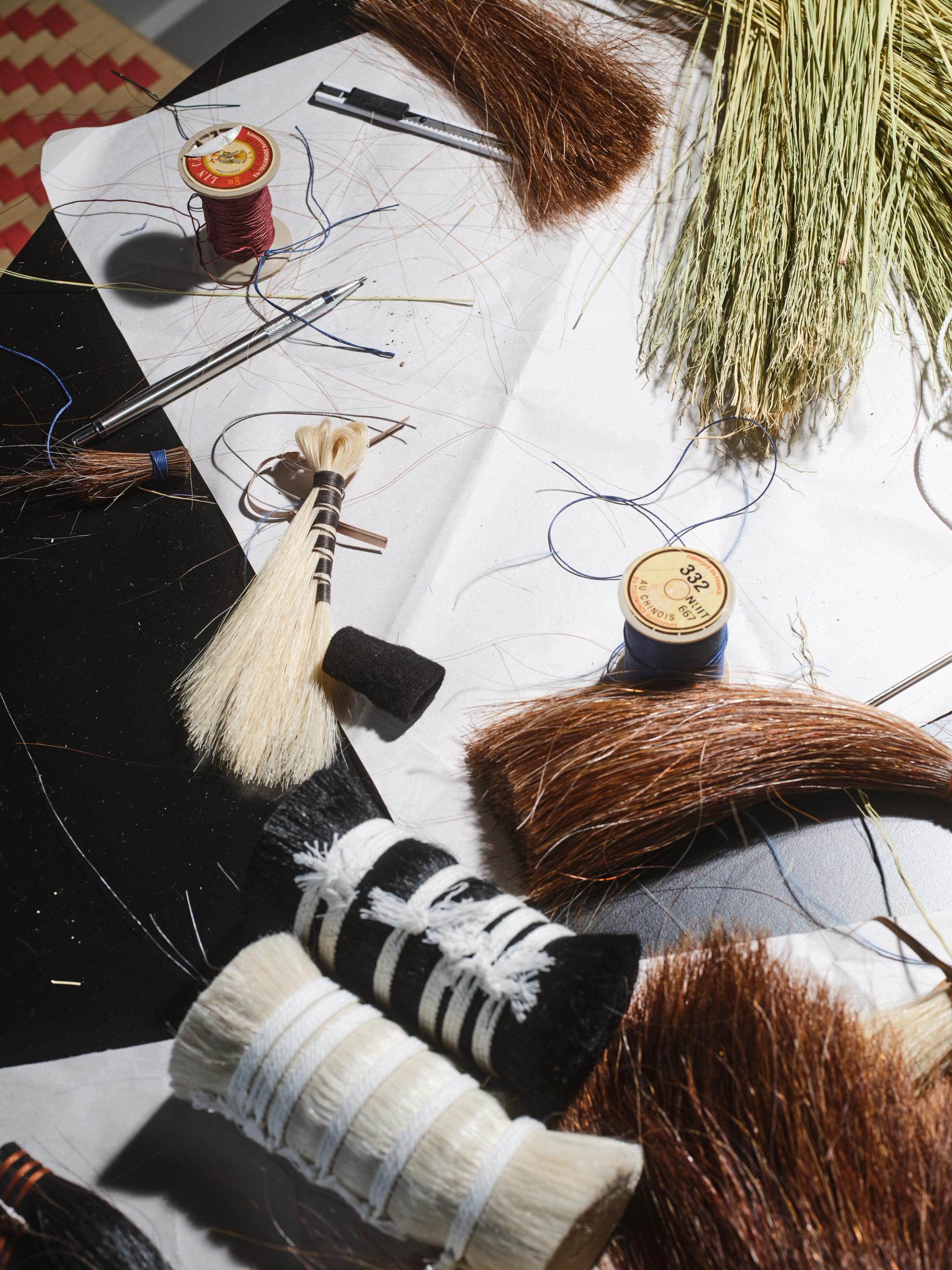
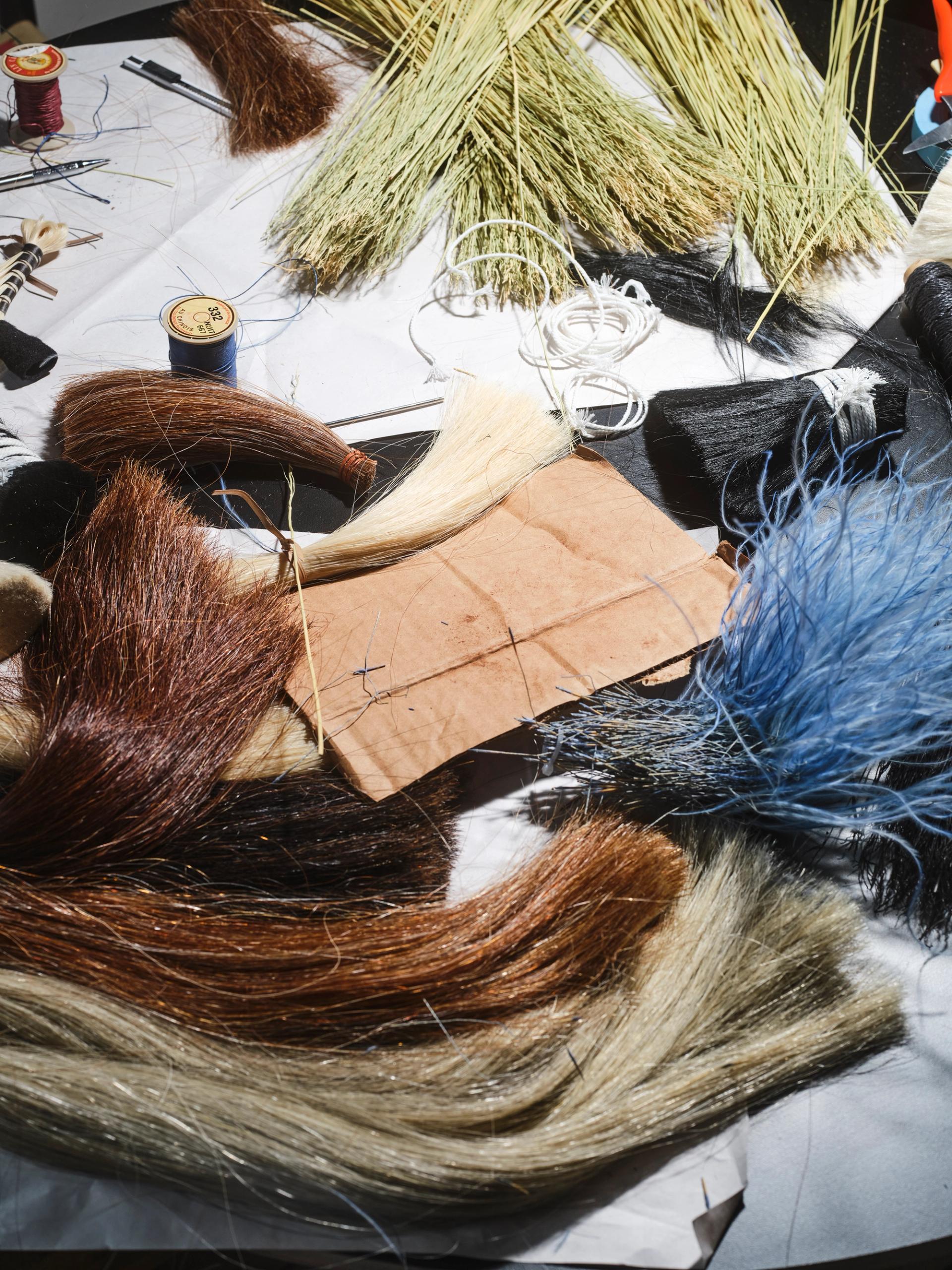
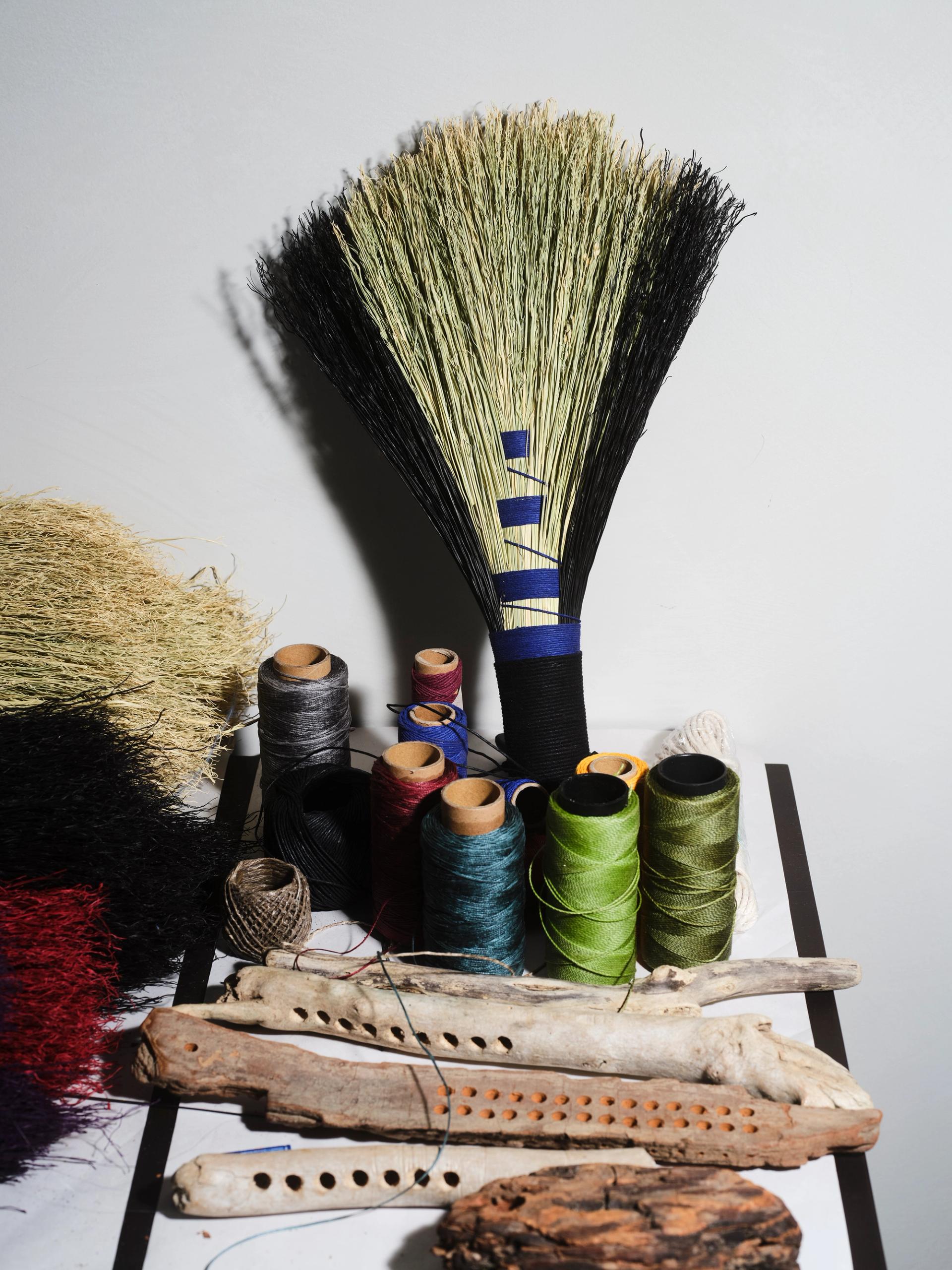
Details of Dimayuga’s pop-up studio at the Pocketbook Hudson
During a broom-weaving class I took last August, the teacher told us, “Once you start making a broom, you can’t stop making a broom.” She meant this literally. Broom making is all about tension. Start by wrapping thick cordage around a large spool. Holding that under your feet, pull the cord taut. Once you’ve bunched your fiber—in the US, usually straw—to just the width and length you want, wrap the cord snugly around one end of the tuft by pulling it toward you and rolling it away at the same time. If you can constrict a hand’s width of bristles and secure the cord, you have a small broom. But if you loosen up at any moment, the whole thing unravels.
My teacher’s warning turned out to be doubly true for me: Since that class, I haven’t been able to stop making brooms. I was in Honolulu with my partner when I took the three-hour workshop, which was taught by a weaver from Hawai‘i Island who had learned from a woodworker in the American South. It was me, the teacher, and a handful of retired women in their seventies. A perfect scenario. I made two Appalachian-style hand brooms in that session, bought materials from the instructor on the way out, and made three more as soon as I got back to the apartment. Soon after, I caught COVID, and for a week straight, I just made brooms. Fifty of them, maybe. I was sending my partner out to buy versions from Lowe’s and the Chinese market so that I could check out the guts. On walks, I was eyeing every tree for usable fibers, like some cord-collecting gremlin.
Typically, I’m someone who’s always zipping around. As a project-based chef, I’m constantly traveling, tangled in the weeds of production for one gig while plotting the next. I loved that this required me to stay seated, my attention uninterrupted. Plus, it’s so satisfying to finish something in one sitting. I can have an idea for a broom, and then within 30 minutes or an hour, I get to use my new tool to sweep away the scraps.
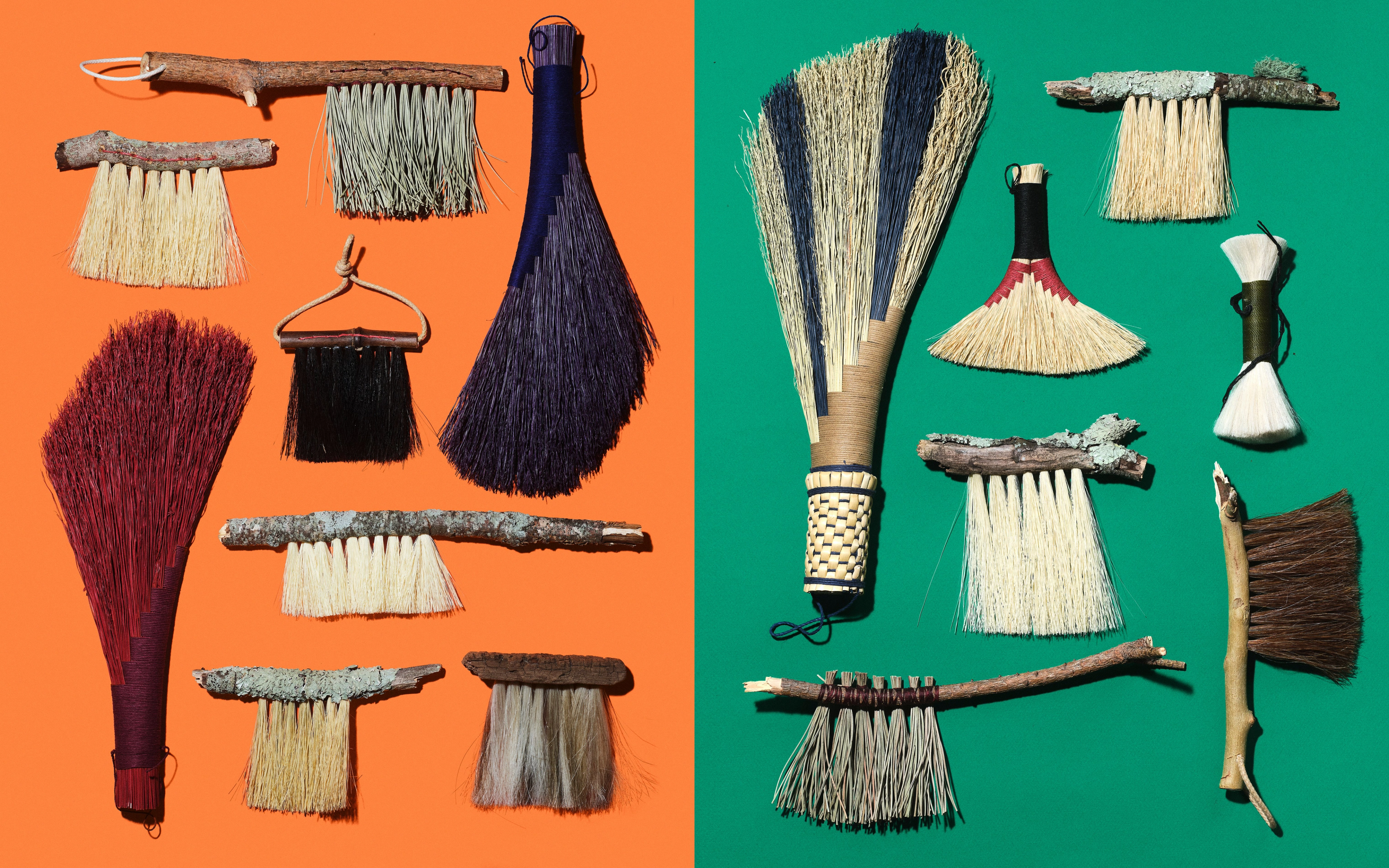
I’ve probably made more than 300 hand brooms and brushes since August, teaching myself how to attach wooden handles, creating new weaving patterns, and pulling in found materials to play with texture, length, and heft. Mastering the tension is the most crucial and challenging part. As you get better, your idea of “tight” gets tighter. And the tighter your brooms are, the longer they last. The first time I improvised my own design, I made a tiny two-sided brush, then curved it back on itself and cut the bristles short to create a kind of pastry brush with a looped handle. Broom binding is like cooking in that, once you learn the principles, you can iterate endlessly.
For some time, I’ve had a fantasy of rigorously working at one physical craft until finally, in old age, becoming a master. When I was 21, working under Jean Adamson at Vinegar Hill House in Brooklyn, she told me to keep hobbies, or else cooking would become my whole life. I knew she was right—that picking up other media would ultimately be an asset in the kitchen. I made ceramics for a while, tried metalwork, took painting classes. My spoon carving stint had potential—during a solo road trip in Iceland, I spent nights sipping whiskey by the fire and whittling wood with a single knife. But until now, nothing really took.
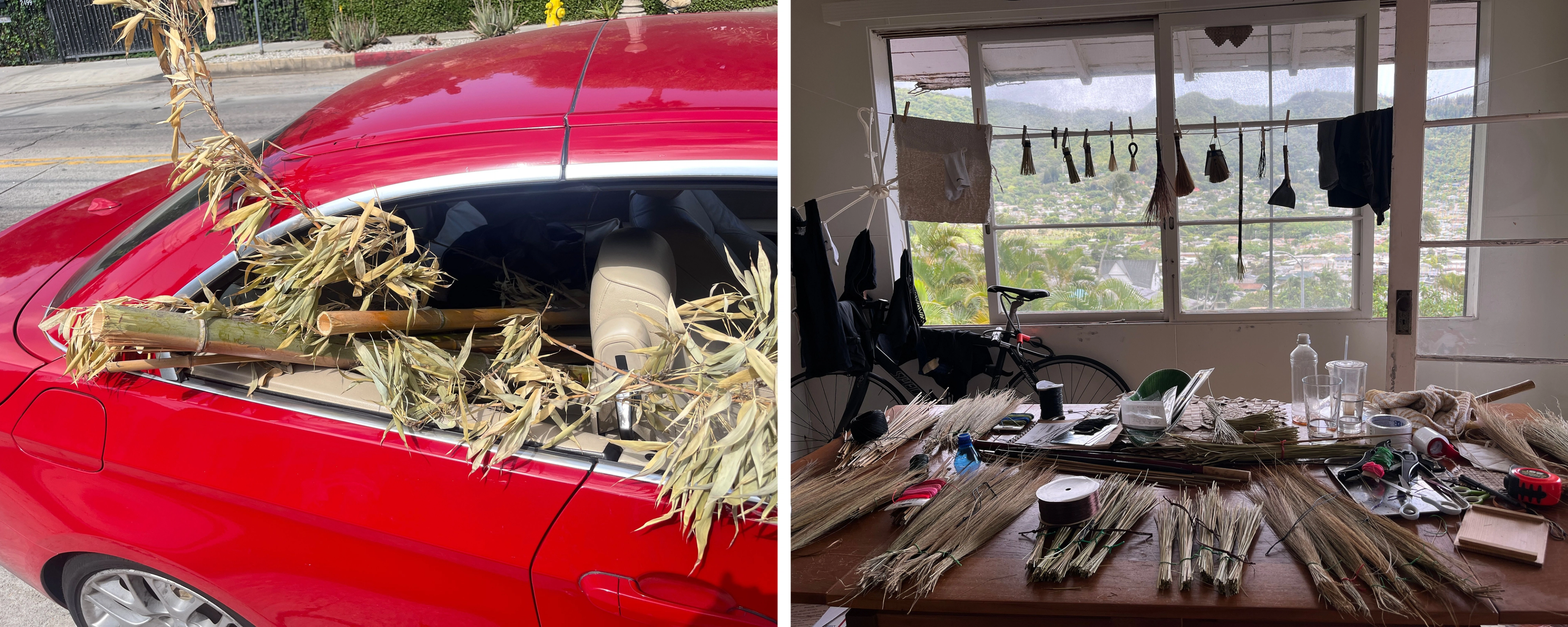
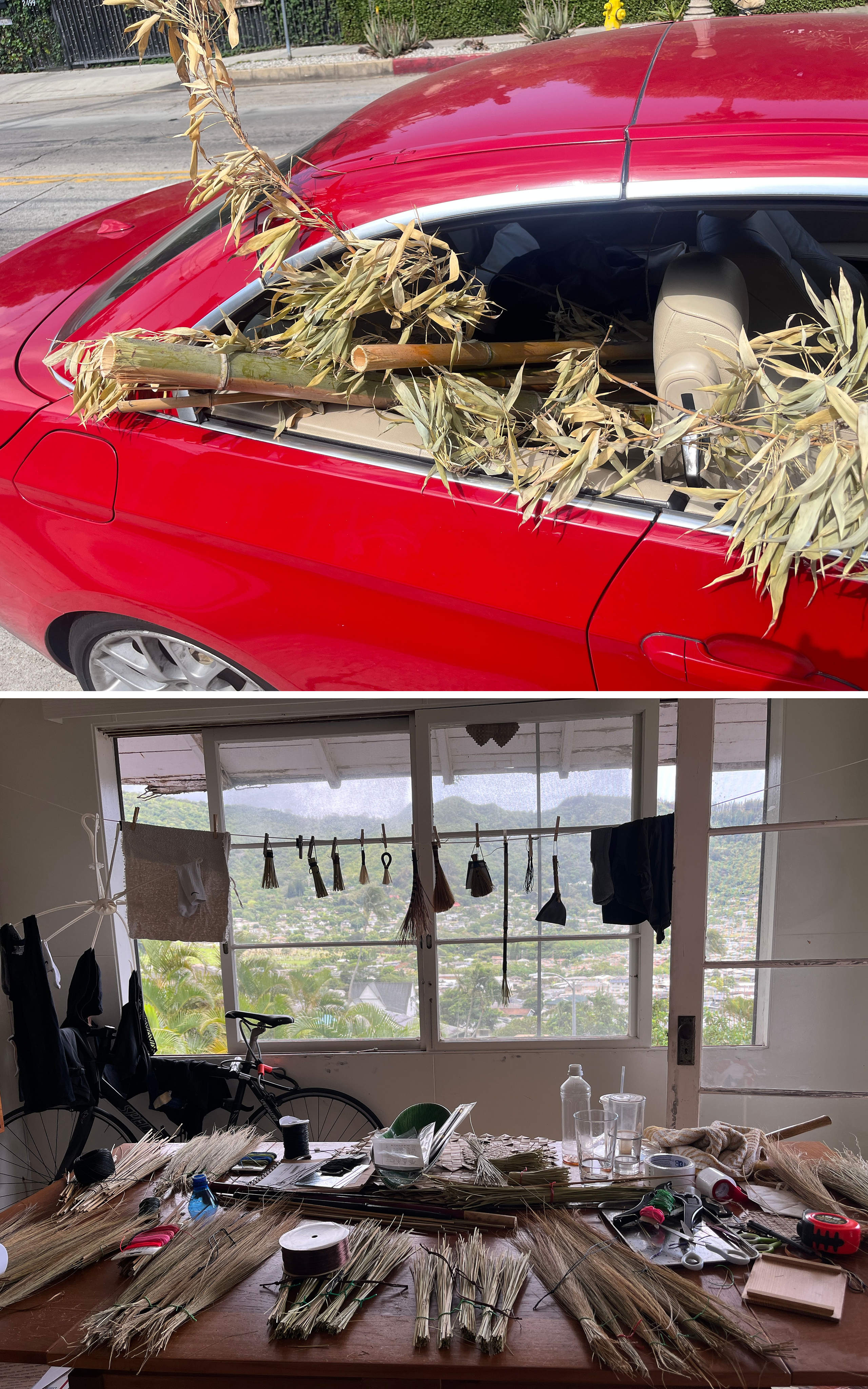
A haul of yard waste that Dimayuga salvaged in Los Angeles; Dimayuga’s temporary studio in Manoa Valley
Credit: Courtesy of Angel DimayugaI’d been curious about brooms for a while. As a gearhead, I appreciate a purposeful object crafted with care. I also love that the methods for making this household device are almost the same throughout the world, but the materials get determined by local agriculture and customs. In Appalachia, they use sorghum straw grown specifically for brooms; in the Philippines, coconut palm and tigergrass; in Mexico, agave and yucca fibers. That versatility lets me customize each broom by treating it as a container for my own mix of materials. It’s the same approach I take to sourcing ingredients. Even when the techniques are inherited, the unlikely flavor combinations—often references to different experiences I’ve had and places I’ve been—are what make each dish personal.
When I’m somewhere new, I’m always interested in the relationship between the land and its people—what’s growing, how’s it being used, and what’s being wasted? In Honolulu, I repurposed ikebana bamboo usually bought by immigrant Japanese grannies. Back home in Beachwood Canyon, I stopped on the side of the road to pull pine branches out of a mansion’s yard waste. During a residency in Sag Harbor, I combed the empty beach for hours after a nor'easter, collecting driftwood. These moments make me feel like I’m working with a place, not just in it. It’s like when someone thinks they have nothing in their fridge, but I whip up a meal for them anyway, making something new out of only what’s been offered.
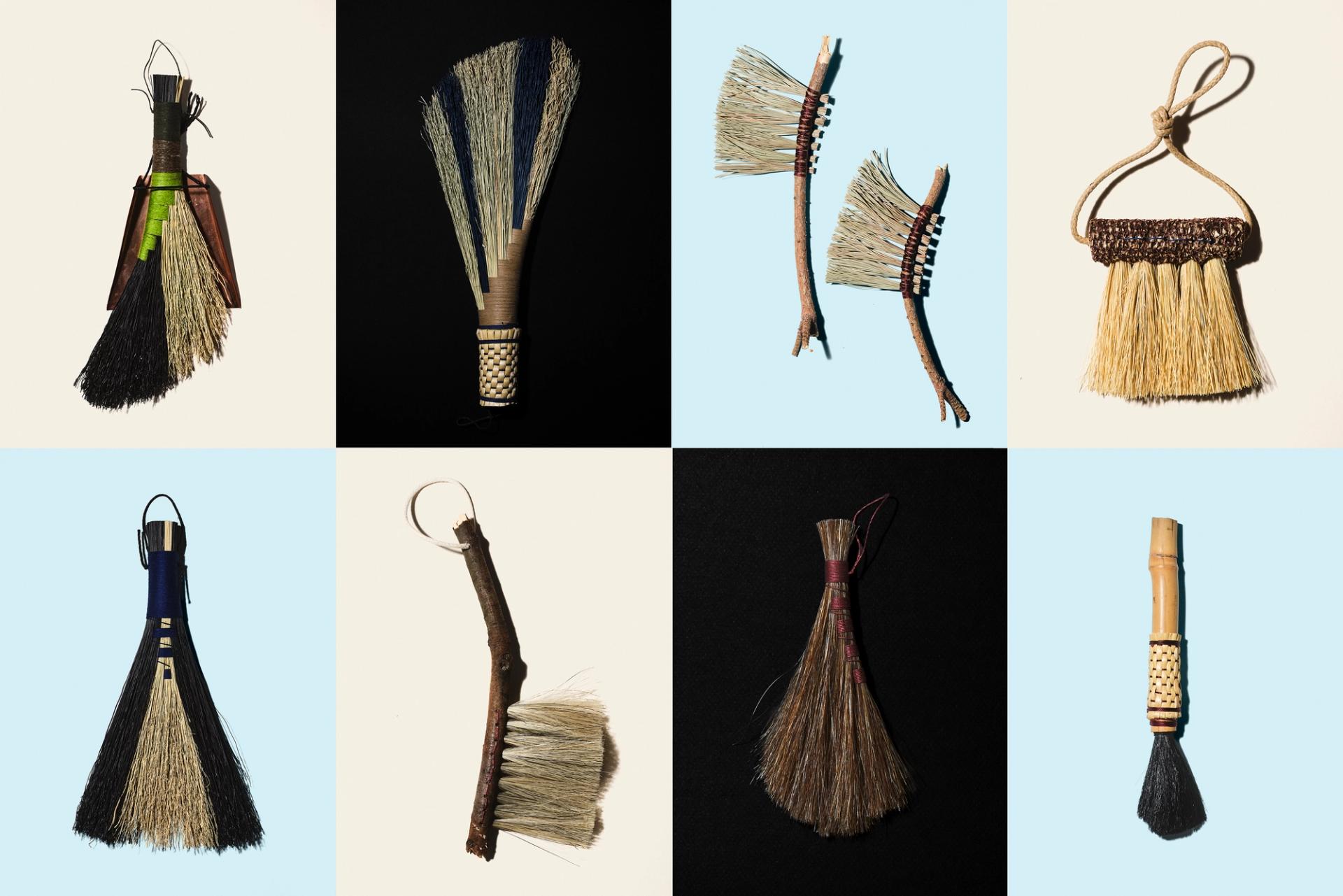
The work becomes even more collaborative when you factor in the broom’s destiny. A few months in, I started selling extras at markets in LA, sometimes vetting customers based on usage then adjusting the price accordingly. (I hate to imagine my brooms becoming wall decor, but was happy to sell to a perfumer who needed a brush for her bottles and an artist looking to clean their altar.) I also started taking commissions from friends: a pair of bamboo jazz drum brushes for one of my favorite drummers, a set of matching dusters for a Filipino healer’s doctoring kit. I recently received a request for a wedding broom—a Black American tradition where the bride and groom, or in this case two brides, jump over a broom at the wedding then use it in their new life together. Once I master bamboo knotting techniques, I’ll expand into making other household tools and small furniture items.
Throughout my work, I’m often energized by invitation, excited by the social meeting point of filling a specific lack or need. It’s extra gratifying to know that these objects find use as instruments in other people’s practices, homes, rituals. While cooking is all about the ephemeral magic in a particular room or moment, a broom lasts. It can be passed down, shared, even regifted. I like to visualize the lives of my brooms after they leave me—thinking about the one in the toolbox of a San Francisco pastry chef or the other hanging next to industrial pliers on a silversmith’s peg board. They’re like little extensions of me getting to show up in creative places I’ve always been curious about.
When I was younger, I used to call myself a “culinary artist” instead of a “chef,” but at some point, it started to feel too precious. Recently, I’ve picked it up again, along with the label “broomsquire.” I don’t think broom making will ever knock off my chef hat, but it feels like the more enduring, solitary counterweight to cooking that I’ve long reached for. I have this new fantasy of owning a broom studio where I weave all day then open for dinners at night. Maybe someone drops in now and then, but we don’t talk for very long. My whole career has been a social practice. Lately, I don’t mind being a silent object in someone’s studio.