Collected

Eartheater’s Mom Pop, Alice Neel in Portugal, and a Superior Sconce

What we’re obsessed with this week in craft and culture.

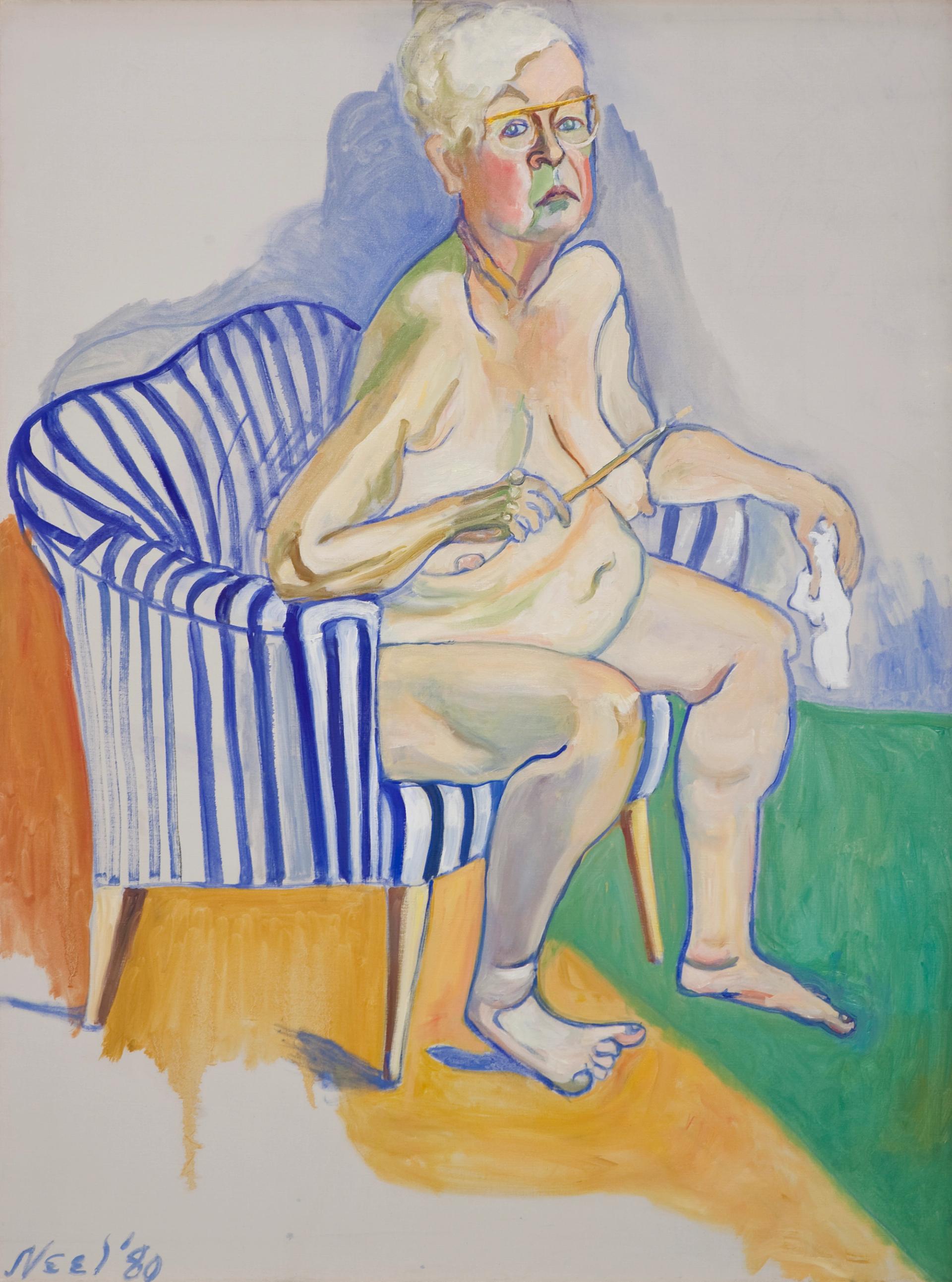
Painting of an elderly nude woman with white hair and glasses seated in a blue-striped armchair, holding a paintbrush and cloth, rendered in loose pastel tones against a sparse interior.
Credit: Alice Neel, “Self-Portrait” (1980). Courtesy of National Portrait Gallery, Smithsonian Institution.

Alice Neel at the Serralves Museum

The title of Julie Phillips’s 2022 book, The Baby on the Fire Escape, comes from a story about Alice Neel: One night—allegedly—the artist placed her wailing infant outside on the fire escape of her apartment so she could concentrate on her painting. Phillips tells us the story is likely false, a concoction of Neel’s in-laws. But the tale represents a real dilemma Neel struggled with for much of her early creative life: how to balance the demands of motherhood and domesticity with those of her art.

It was a dilemma Neel never quite settled in her personal life, but one that bled beautifully into her work, with psychologically astute and almost painfully intimate paintings like Well Baby Clinic (1928–29) and Self-Portrait (1980), the latter completed just four years before her death at 84. Those paintings and almost 90 others are on show today in a retrospective at the Serralves Museum (opens in new window) in Porto, Portugal. It is one of the largest-ever European showings of Neel’s work.

Considering Neel’s decades-spanning paintings alongside one another is revelatory. Well Baby Clinic, begun when she was 28, a new mother, and estranged from her flighty husband, is a miasma of maternal anxiety and dread. In it, babies with wormlike limbs writhe on narrow beds, mothers bare too-large teeth and sport reptilian eyes, and Neel herself appears with a blank, gray face. Half a century later, we reach Self-Portrait and see a wrinkled, white-haired, stark-naked, and utterly dignified Neel staring right back at us, paintbrush in hand, full of composure, vaguely unimpressed, having now seen it all and survived.—NXE
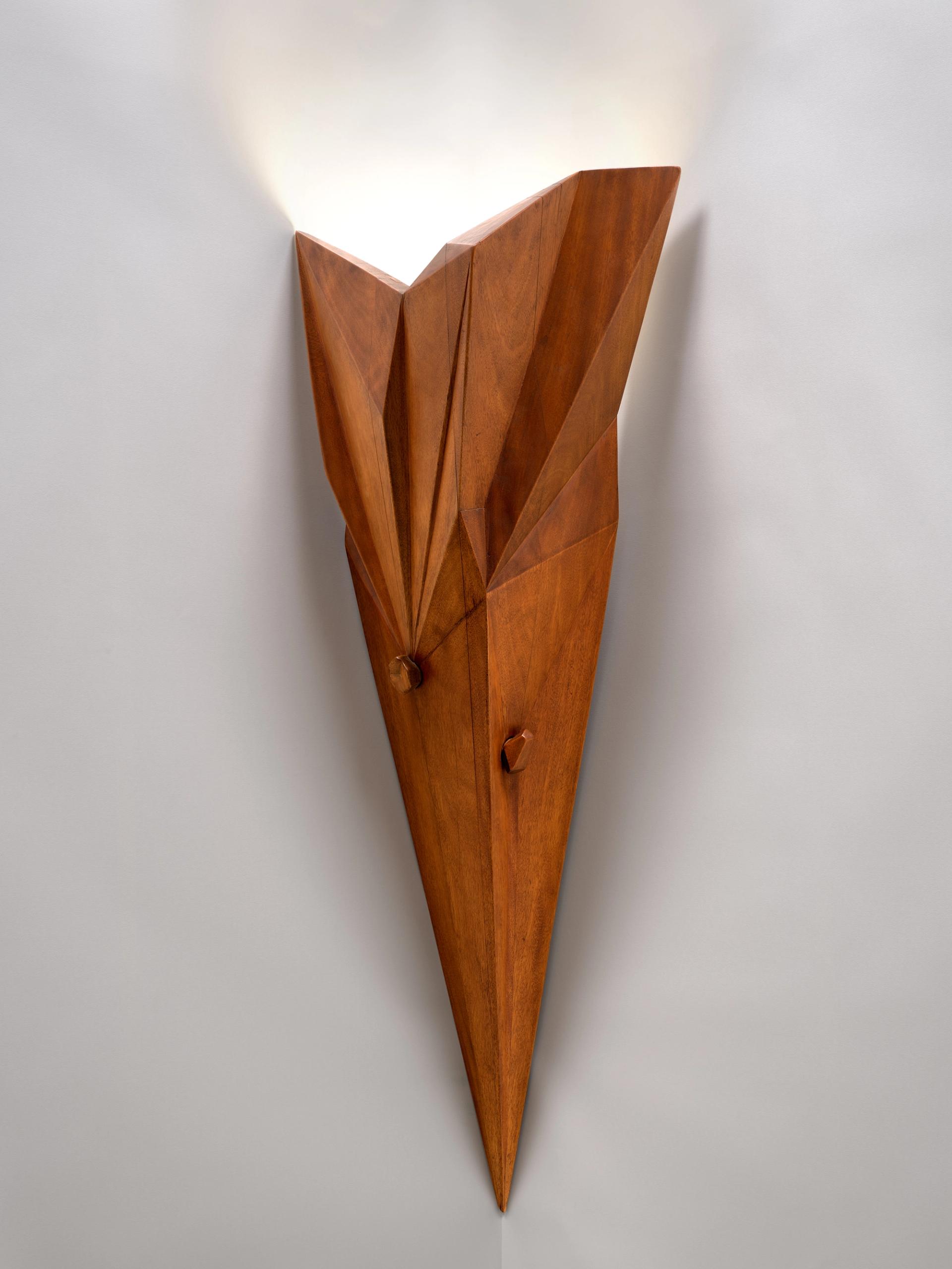
Geometric carved wooden wall sconce with faceted, angular planes tapering to a point, mounted on a white wall and casting soft upward light.
Credit: Wharton Esherick, “Sconce for the Curtis and Nellie Lee Bok House, Gulph Mills (now Radnor)” (c. 1936-37). Courtesy of the Philadelphia Museum of Art.

Sconce upon a time

I have mentioned before that I love lighting, and it is a small tragedy for the illumination enthusiast that some of the most beautiful lights in the world are not, in fact, for sale. I’m thinking, for example, of a sconce by Wharton Esherick, now on view in the Philadelphia Museum of Art’s new “Workshop of the World” (opens in new window) exhibition. Made in 1936–37 for the home of the Philadelphia philanthropist Curtis Bok, the hand-carved wood sconce was part of a suite of furnishings and fixtures (like a fireplace and doorway, also at the PMA) that Esherick devised for the Bok family. The arrowhead-shaped sconce has the knots and grains of the wood that Esherick always sought to preserve in his functional sculptures, and a pleasingly jagged irregularity that makes it look like an Art Deco Olympic torch.—NXE

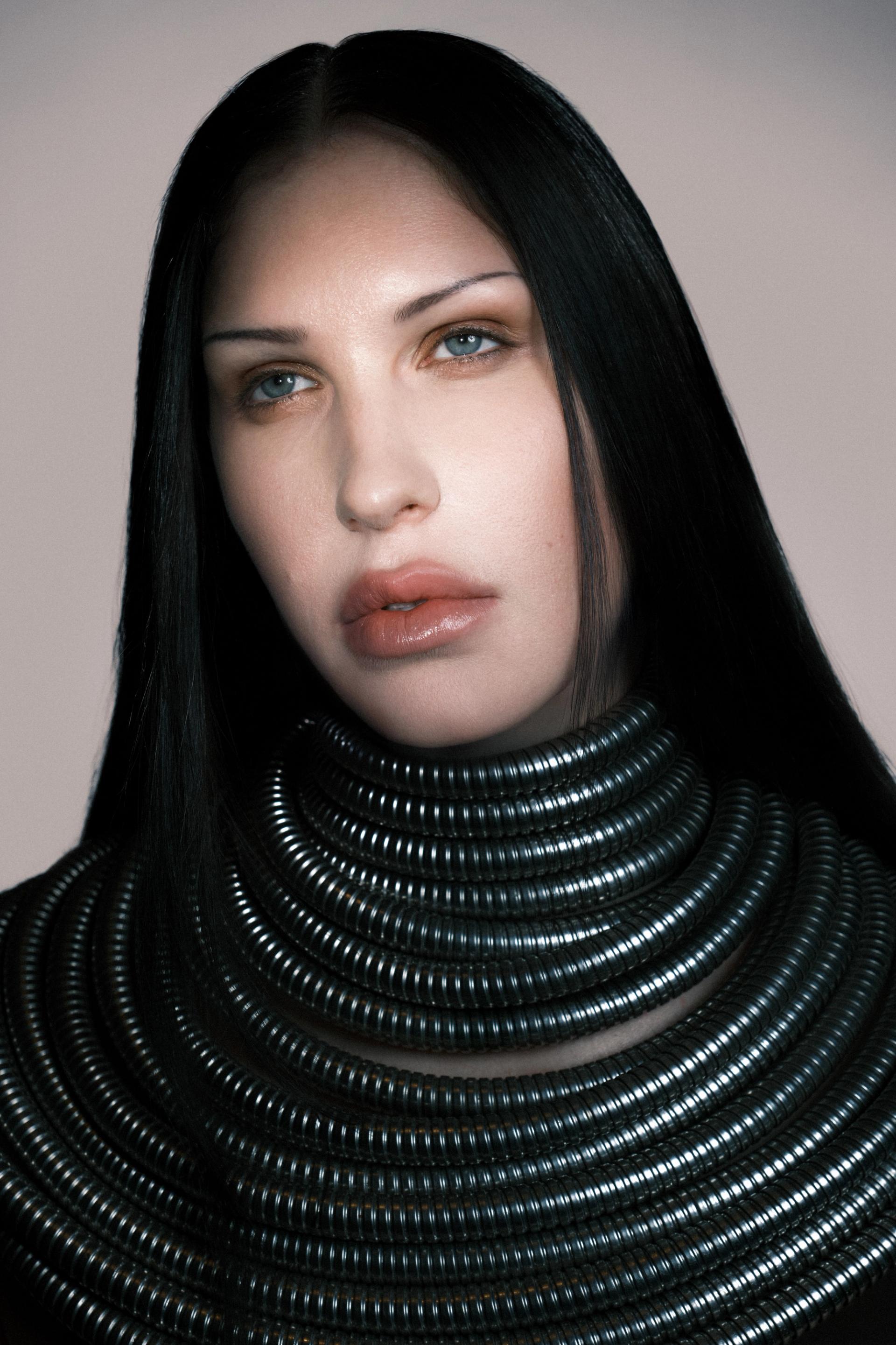
Studio portrait of a person with long black hair wearing layered black coiled tubing around the neck and shoulders, gazing directly at the camera against a plain background.
Credit: Photograph by Vidar Logi.

Oh baby baby

Alexandra Drewchin is fascinated by transformation; it’s a defining theme of the nebulous art-pop she’s been making for the past decade under the moniker Eartheater. In one of my favorite Eartheater songs, “Solid Liquid Gas,” (opens in new window) she describes herself passing through different states of matter as a metaphor for the physical effects of obsession.

It’s no surprise, then, that a literal and life-altering transformation—pregnancy and new motherhood—inspired her latest album (opens in new window), which she began making just a few months after her daughter was born. The title, Heavenly Body: If I’m the Bottle You’re the Message, is a touch histrionic, but Drewchin managed to capture both the profundity and the banality of the experience, at one point describing motherhood as an ancient and unbreakable lineage, and later deadpanning about being her daughter’s “favorite maid.” She’s ruthlessly funny: One song explains the pain of childbirth as being “like 10 million wasp stings around my G-string.”

The sound of the record is similarly wide-ranging, braiding together visceral club beats with strands of sacred music and retro synth-pop. I’ve been thinking of it as a weirder cousin to another excellent album from earlier this year, Robyn’s Sexistential, which touched on similar themes. Motherhood is historically underexplored in the world of pop, but for both Eartheater and Robyn, the topic has borne fruit.—OH

Join our community