Collected

Woven Clay, Surrealist Portraiture, and Grown-Up Night Lights

What we’re obsessed with this week in craft and culture.

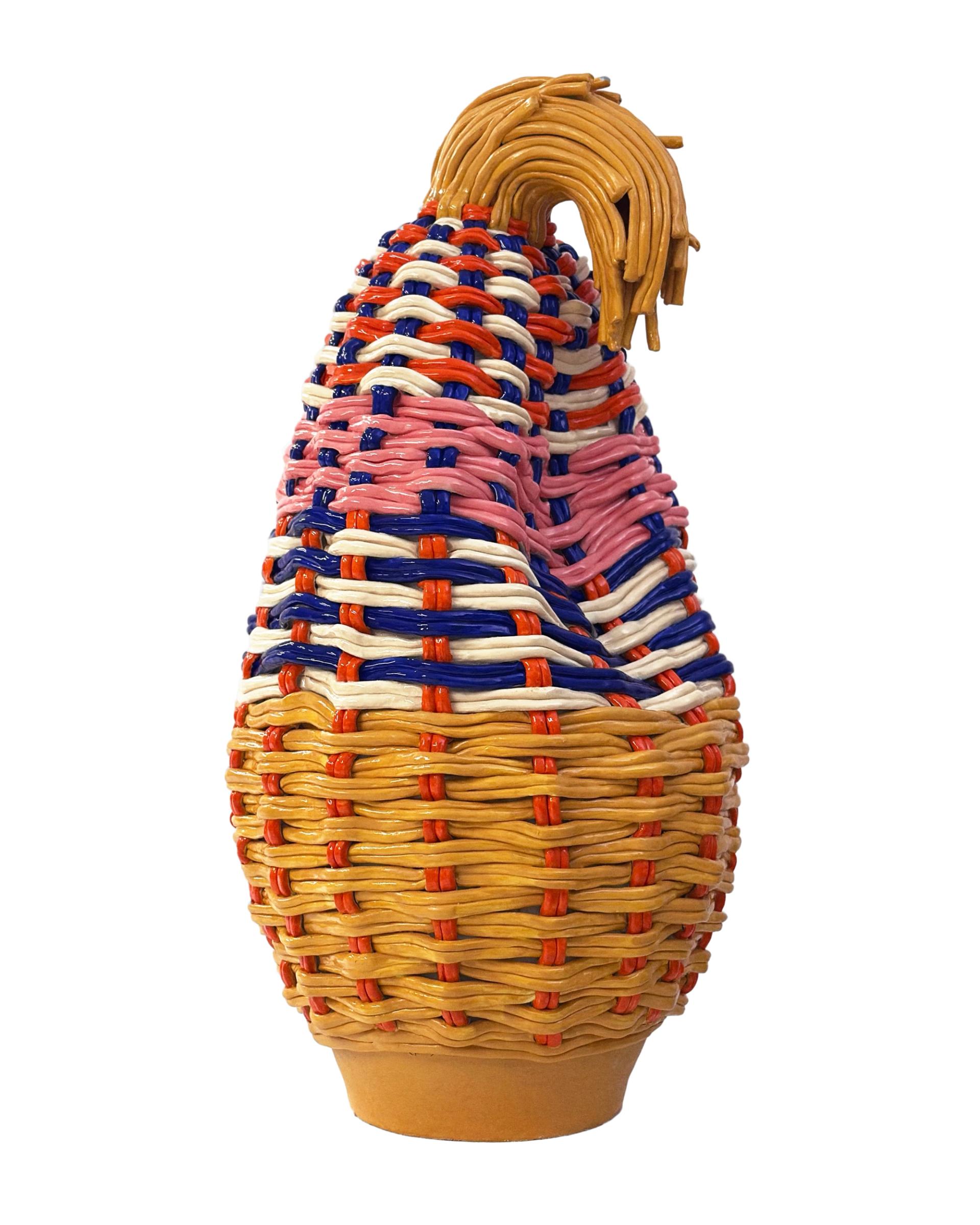
Glossy woven ceramic vessel in red, blue, cream, and pink basketlike pattern.
Credit: Xanthe Somers’s “The Caretaker’s Clotheshorse” (2025). ©Xanthe Somers. Courtesy of LOEWE FOUNDATION.

How to weave clay

Xanthe Somers, a finalist for this year’s (opens in new window) Loewe Foundation Craft Prize, creates eye-popping polychromatic vases nearly as tall as she is, made of a trompe-l’œil ceramic that expertly mimics woven basketry and embroidery. The London-based, self-taught ceramicist draws on the craft heritage of her home country of Zimbabwe—the “weave” of her ceramics mirrors that of traditional Binga baskets, for example—but also probes at its complicated past. In an interview for Totei, she told writer Meara Sharma: “My history is in colonial legacy. I only started to unpack it once I left.” Read the full profile here.
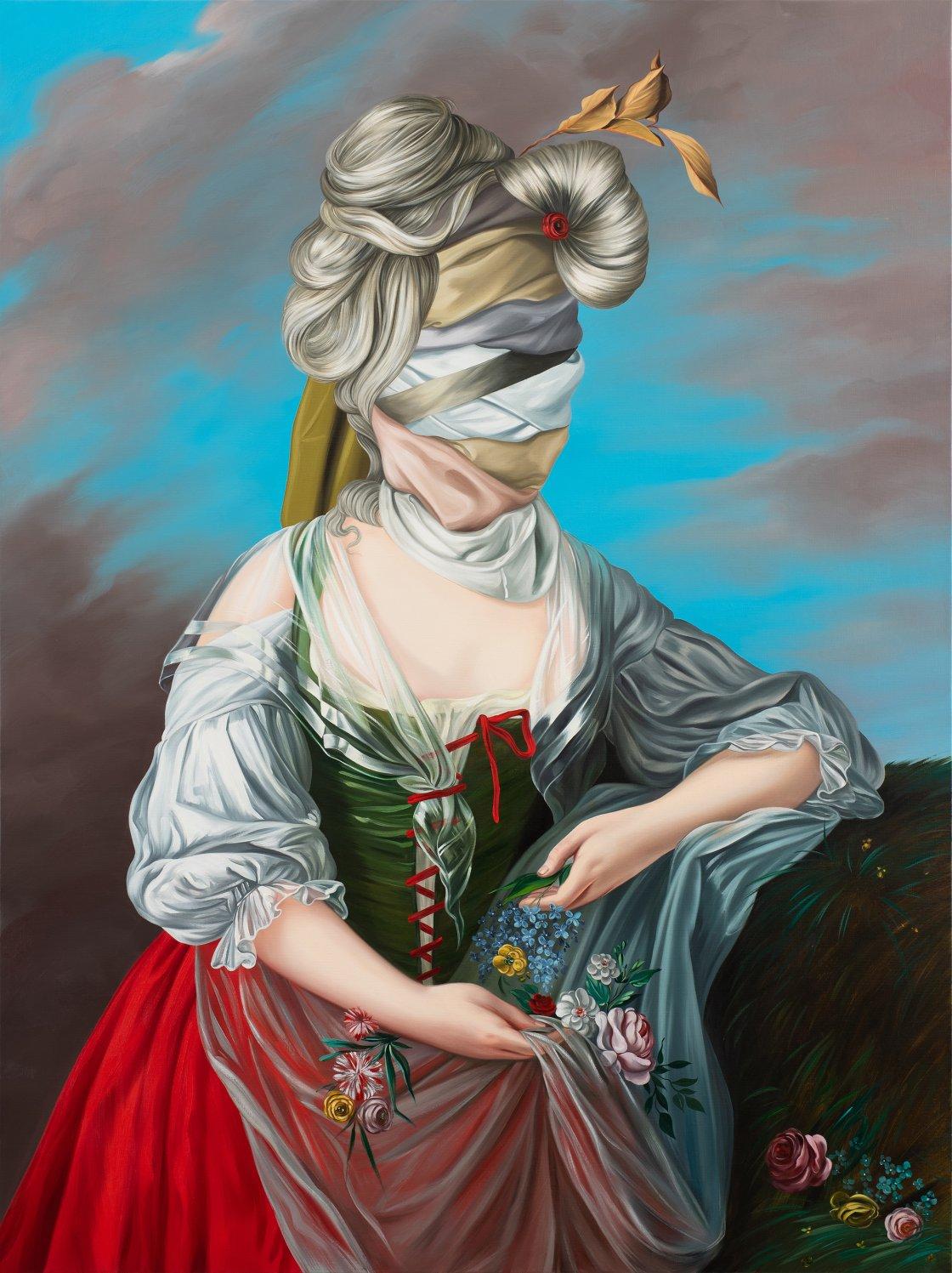
Surreal portrait of faceless woman in historical dress holding scattered flowers.
Credit: Ewa Juszkiewicz’s “Untitled (after Élisabeth Vigée Le Brun)” (2021). © Ewa Juszkiewicz. Courtesy of Museo Nacional Thyssen-Bornemisza.

Canon play

Last month I visited Madrid’s Thyssen-Bornemisza National Museum for the first time, and it catapulted to the top of my list of Art Museums I Love. I’m bummed that I went before I could catch the new Ewa Juszkiewicz exhibition (opens in new window), which opened this week and runs until September. It’s Juszkiewicz’s first solo museum show—not a bad starter venue!—and brings together more than 20 of her paintings. The Polish artist is known for Surrealist riffs on 18th- and 19th-century portraiture, with paintings that evoke the discombobulating wonder of Magritte—her ladies’ heads are often obscured by wreaths of fabric, like the couple in The Lovers (opens in new window)—and the colorful, sensual flowers of Georgia O’Keeffe. I see her work in conversation with two other contemporary painters I admire, the Thai artist Natee Utarit (opens in new window) and the South African artist Johannes Phokela (opens in new window). Like Juszkiewicz, they play with and upend Western art historical traditions, using and subverting the canon to explore themes commonly marginal to it. So, for those planning summer trips to Spain: Go!

Illuminated geometric wall sculpture and ceramic lamp glowing in warm amber tones.
Credit: Photo by Antoine Bootz. Courtesy of Ralph Pucci.

Let there be (layered) light

A great American artist once said of overhead lighting that it was “hideous” and “tortured” her, and these days I am never not pondering Mariah Carey’s proclamation (opens in new window). Certainly I could do with some more tasteful illumination at home. A dream acquisition is one of John Wigmore’s paper light sculptures, a handful of which are now showing (opens in new window) at Ralph Pucci in New York, alongside a selection of lamps with ceramic bases hand-built by Wigmore. The lights are made of layers of colored Moriki paper—delicate, handmade Japanese washi used for traditional crafts like ink-wash painting and bookbinding—stretched over metal frames. Some of them (opens in new window) echo the work of Donald Judd, while others resemble a gently glowing pie chart (opens in new window) or a painting of a landscape at dawn (opens in new window). Any one of these would make quite the night light, no?

Join our community