Collected

Film by the Sea, Cities Painted from Above, and Two New Novels

What we’re obsessed with this week in craft and culture.

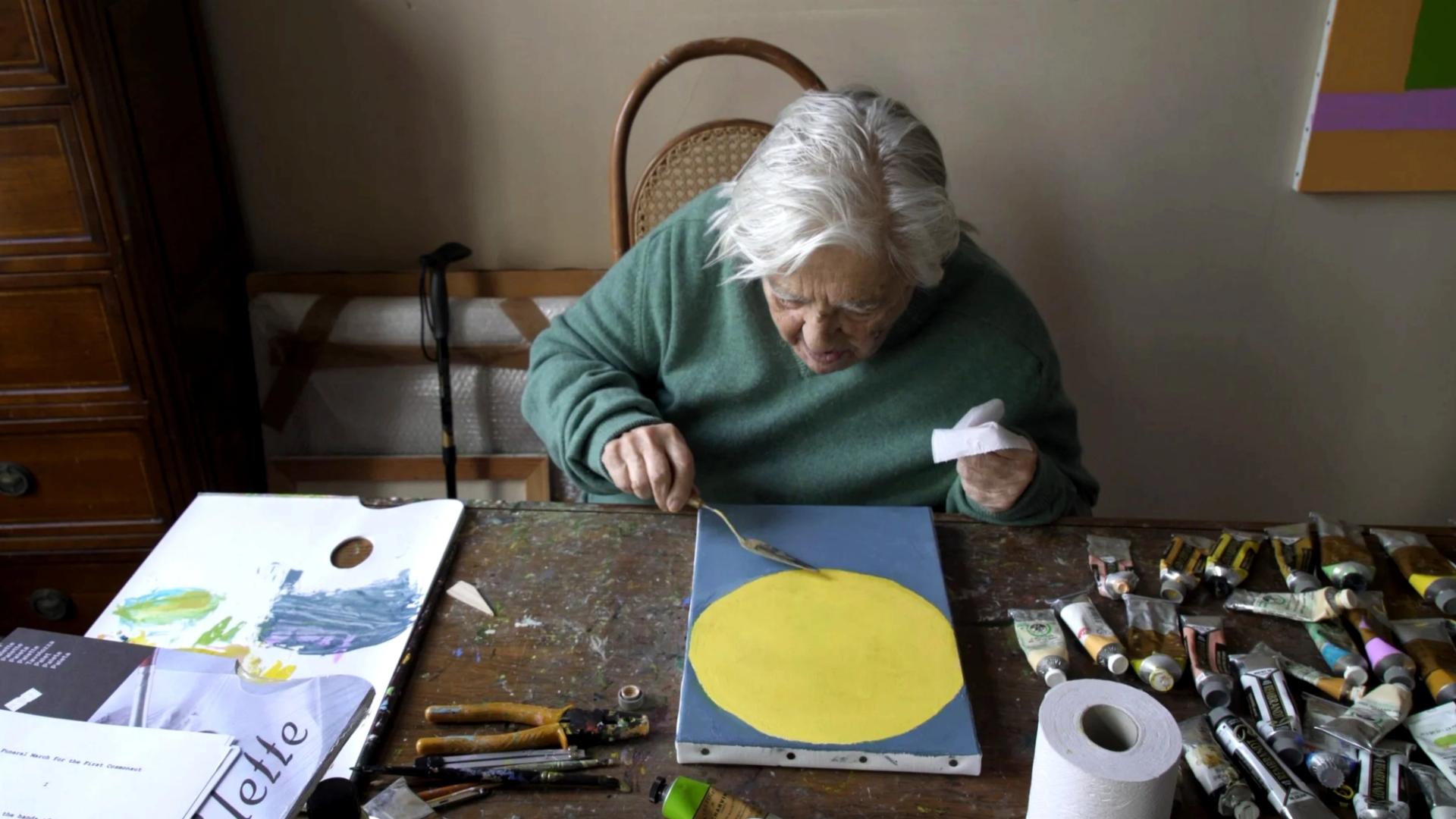
An elderly woman with white hair leans over a worktable, painting a yellow circle on a blue canvas, surrounded by paint tubes, brushes, and a palette.
Credit: Still from “Adnan being and time” (2025). © Marie Valentine Regan.

Last picture show

The first week of September is cuspy season—past the dog days of summer, not yet time for galleries and museums to roll out their fall blockbusters. Which makes the Rockaway Film Festival (opens in new window), running through Sunday at the open-air Arverne Cinema, the right way to spend the last weekend of summer. Sunbathe or catch the swell in the morning (the festival site tracks the tide), then walk over for an extraordinary program of independent film.

Catching my eye: Ulysses, New York, Caveh Zahedi’s Charlie Kaufmanesque restaging of Bloomsday in 2022 New York, which cuts between a stage production of James Joyce’s novel and the actors’ actual day. The Infra-ordinary, a program of object studies curated by the artist and writer Jenny Odell after Georges Perec, is another standout, as is a diptych of sorts: Adnan being and time, Marie Valentine Regan’s portrait of the poet, novelist, and painter Etel Adnan, alongside a restored Leila and the Wolves. The latter, Heiny Srour’s 1984 drama, follows a Lebanese woman in London helping assemble an exhibition of photographs from the Palestinian and Lebanese resistance. She notices the women have been left out of the frame, then travels back through a century to find them. If there’s one film not to miss, it’s this one—banned across the Arab world for decades, and in much of it banned still.
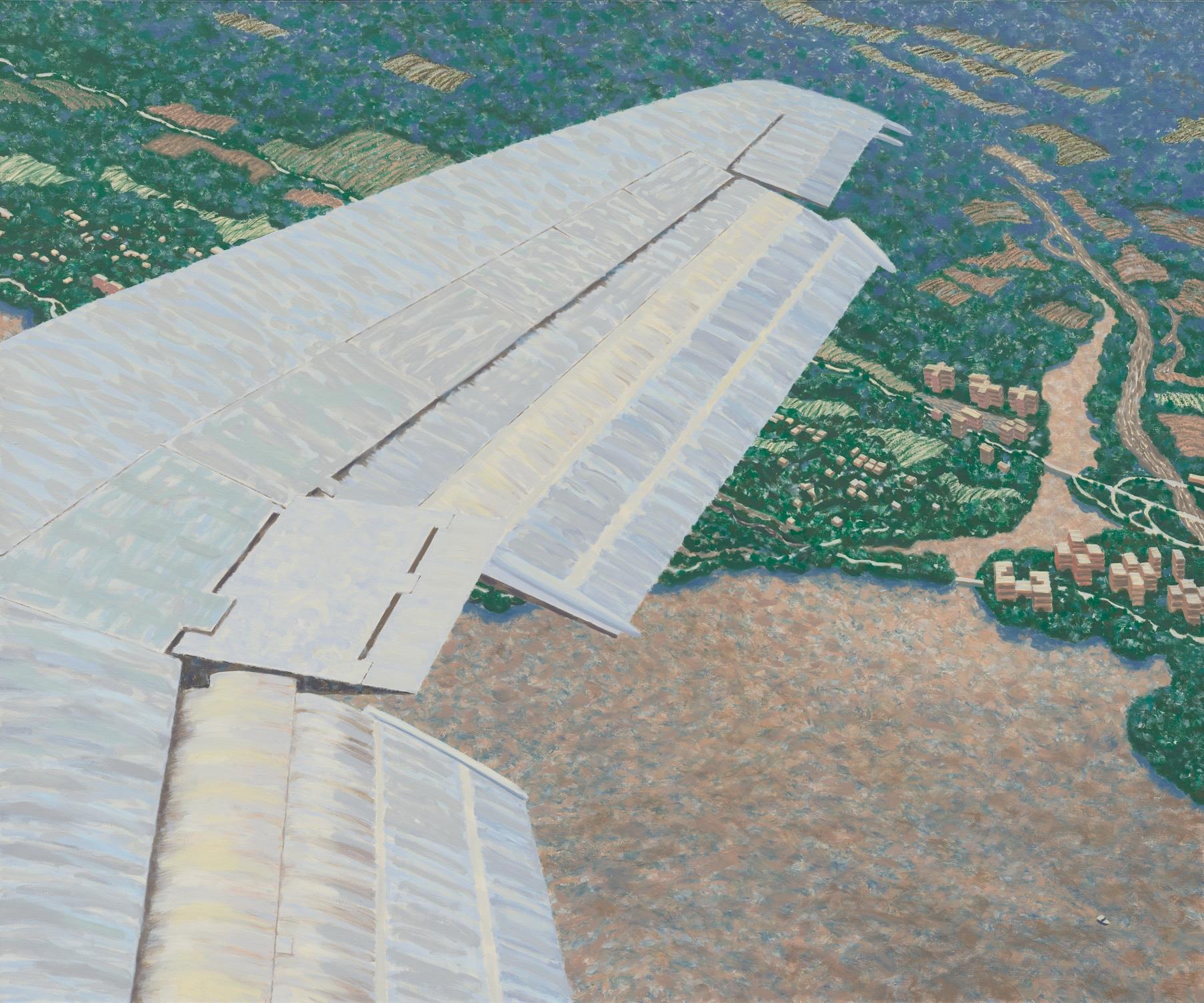
A painting of an airplane wing viewed from a window seat, with a patchwork aerial landscape of fields, vegetation, and small buildings visible below
Credit: Yvonne Jacquette, “Wing Over Washington II,” 1990. © Estate of Yvonne Jacquette. Courtesy of the Estate and Karma.

Window seat

Through the 1960s, Yvonne Jacquette (1934–2023) painted her Manhattan loft from odd angles: through windows, looking up at the ceiling, down at her son’s toys on the floor. A 1969 flight to San Diego offered her the vantage she’d maintain for the next five decades. She chartered planes to circle Maine, rode helicopters over Manhattan at night, drew the city from the upper floors of the World Trade Center, and worked those charcoal studies up into paintings where streetlights glint and blur like stars scattered across an inky ground. In a 1989 interview, Jacquette described her trajectory as a slow descent from a “high, detached position” toward the evidence of people living, until she could look into a landscape “as if I could see myself in there.” By 2019 she was painting the Atlantic from a parking area on Mount Battie in Camden, Maine—four boulders in the foreground, the view no less enormous for being at eye level.

“From the Air,” (opens in new window) which opens at Karma in New York today and runs through October 31, is the gallery’s first solo exhibition of her work, gathering paintings and works on paper from 1971 to 2019. One more reason to go: In 1981, Jacquette and the poet Edwin Denby published Aerial, a journal pairing her images with work by John Ashbery, Eileen Myles, Joe Brainard, Ron Padgett, and Peter Schjeldahl. While preparing this show, someone turned up a maquette for a second volume in her old studio. Karma Books is publishing it as a facsimile, with a launch and reading (opens in new window) at the gallery on September 23.


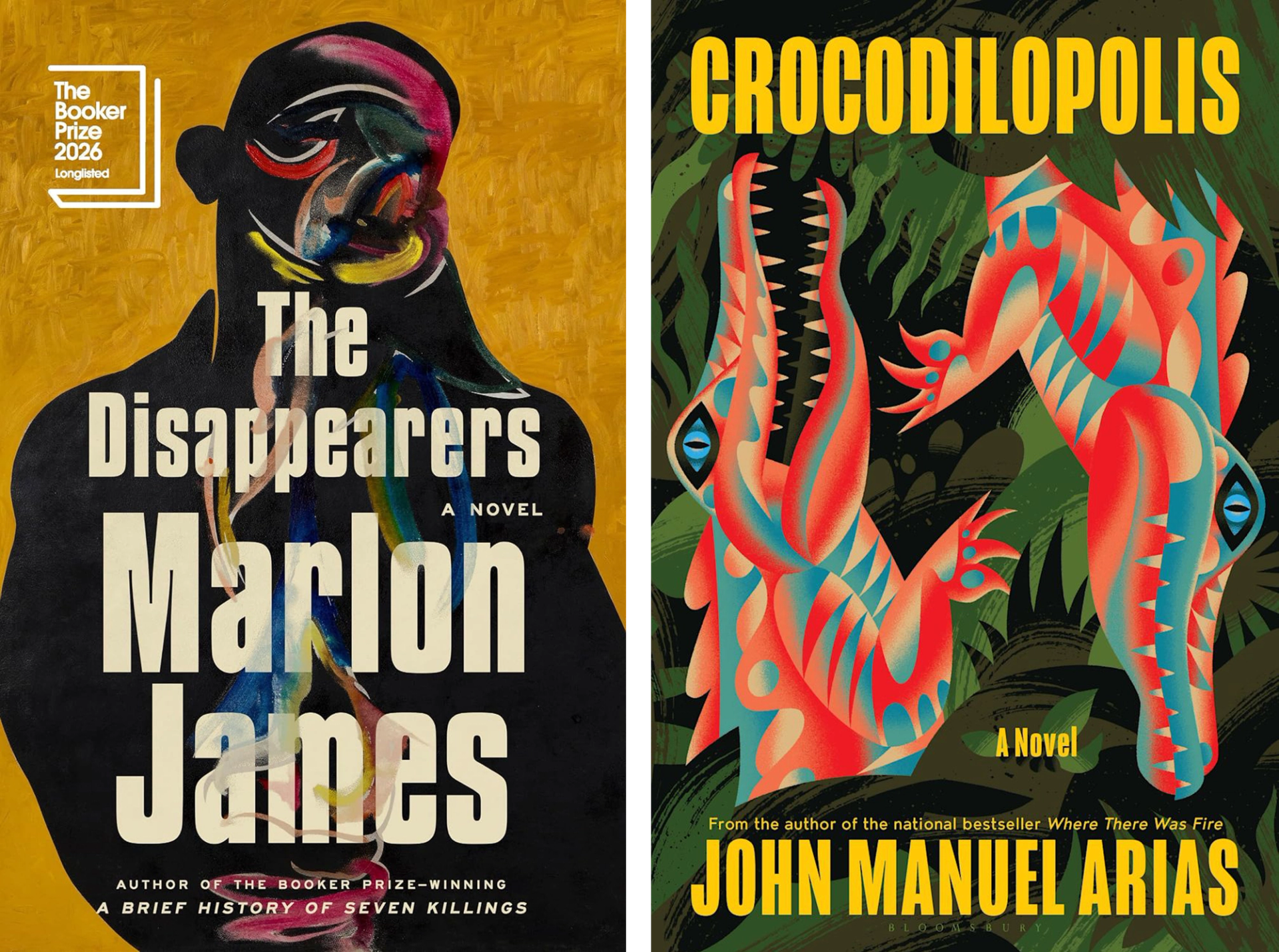
Two book covers side by side: The Disappearers by Marlon James, featuring a dark silhouette with colorful abstract markings on a gold background; and Crocodilopolis by John Manuel Arias, featuring stylized red and blue crocodile figures on a dark green background

Vanishing acts

Two novels land a week apart and deserve to be read together.

Marlon James’s sixth, The Disappearers, opens in Kingston, Jamaica, in 1988, where eight gay men have begun rehearsing a play. One night they are beaten and one of them is killed. What follows is a crime story—propulsive, funny, unsparing about sex—and also a study of what each survivor decides to do with the rest of his life. John Manuel Arias’s Crocodilopolis tells a biblical revenge story with the wit of a telenovela. Seth Oreamundo, born into a corrupt Costa Rican political dynasty and now exiled in Washington, DC, comes home to feed his younger brother to the crocodiles. The book cuts between Seth’s schemes and the childhood on the family coffee estate that produced them.

James won the Booker Prize in 2015 for A Brief History of Seven Killings, telling three decades of Jamaican politics through dozens of voices; Arias’s debut took on a fictionalized fruit company and the Costa Rican banana plantations. Here both writers shrink the scale, trading the national epic for a country’s inherited rot as it turns up among friends and brothers. And both are books about being made to disappear, circling a shared question: Who’s left to say anything happened?

Join our community