Goddess of all things
Arundhati Roy is a writer with inimitable range. Her political writing critiquing Hindu nationalism, caste discrimination, and anti-Muslim violence is unwavering, sharp, and angry. It has made her one of India’s most controversial and important political thinkers. Her recent memoir about the life and death of her mother, with whom she had a fraught relationship, is endlessly nuanced, willing to consider her mother’s motivations from every angle. There’s her fiction: vivid, precise, and humid with emotion, and yet there’s a sense, too, that so much is going unsaid, that she is glancing at you between the words on the page with a wink and a nod.
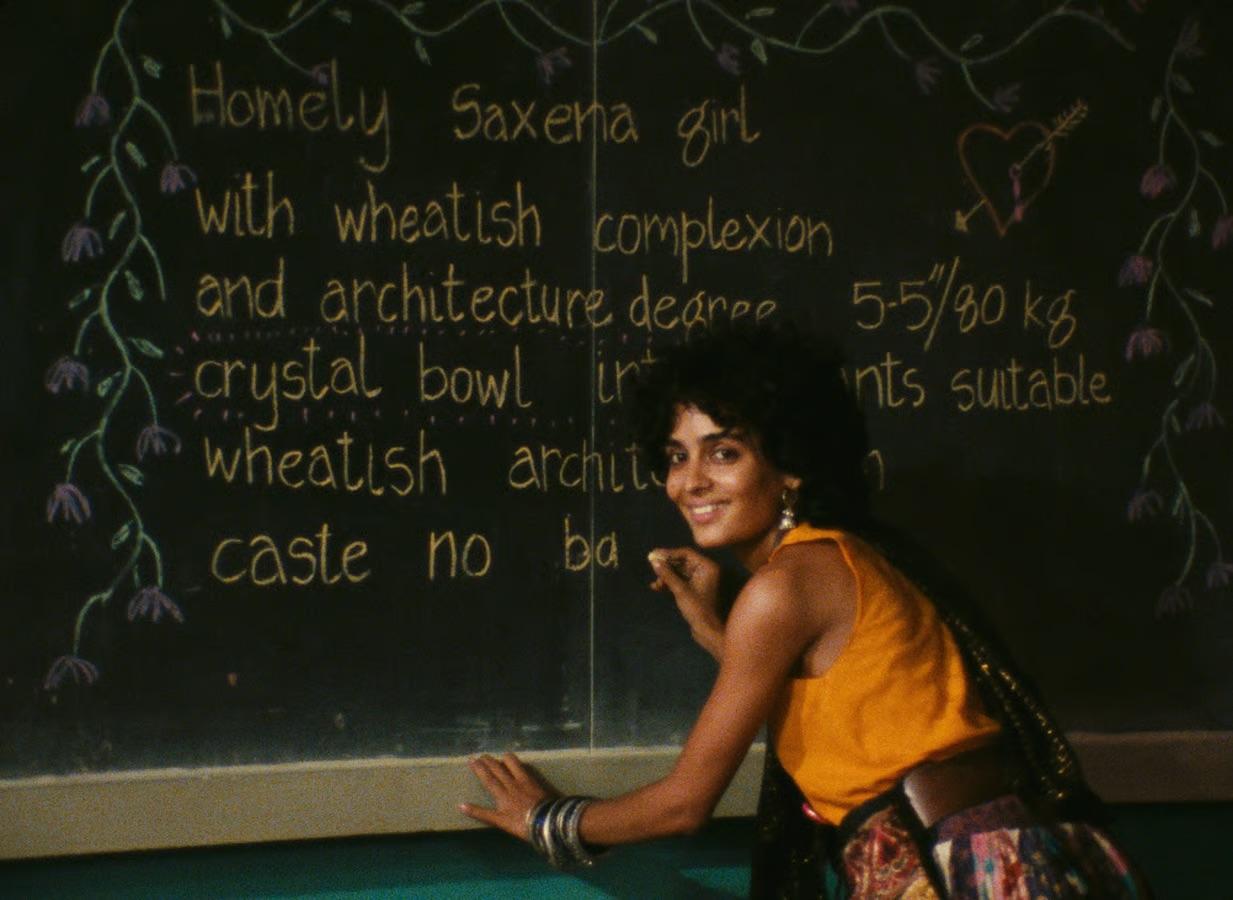
The God of Small Things, a devastating and gorgeous novel about a forbidden and ultimately doomed intercaste love in 1960s Kerala, was her literary debut. It was a smash success, making her the first Indian woman to win the Booker Prize and cementing her as a literary great. It seemed to many, especially in the West, that she was an overnight success. But before The God of Small Things, there was a screenplay, her first, which would turn into the 1989 film In Which Annie Gives It Those Ones.
The movie follows Annie, who is repeating his fifth year of architecture school for the fourth time. He has a gaggle of chickens in his dorm room, dreams of social transformation, and a sharp tongue that he uses to mock the school’s principal. He is accompanied by a group of friends who are just as whimsical and wayward as he is. It’s a film in which, as Roy wrote in her memoir, “there were no heroes…everybody was a screwball of some sort. Some overt, some covert.” (The movie even gave Bollywood icon Shah Rukh Khan his first acting role—a small one, because, as director Pradip Krishen said in an interview (opens in new window), “that’s what we thought he deserved at the time.” They weren’t looking for typical, larger-than-life Bollywood superstars; they wanted actors who could embody uncertainty and vulnerability.)
A newly restored version of the film is screening (opens in new window) next week as part of the New York Film Festival (tickets are still available for October 3; you might try the standby line for the other showings). It is a sweet and funny film worth watching of its own accord. But it’s most exciting to me because it shows the seeds of the writer Roy would go on to become: her ability to see people not as definitively good or bad but just as themselves, the pleasure she gets in looking at life sideways, her need to constantly challenge authority. It provides an important perspective on the making of one of India’s most brilliant, hilarious, and heart-wrenching writers.