
Collected

Three Dolly Parton Deep Cuts to Celebrate Her Legacy

What we’re obsessed with in craft and culture. This week, we honor the late singer-songwriter Dolly Parton with three gems from her vault.

A CD in a jewel case with cover art showing a silhouetted figure holding a guitar against a sepia background, with the cursive title "Dolly" in white script

“Gonna Hurry (As Slow As I Can)” (c. 1957–62, released 2009)

Despite having a personality like a Lisa Frank lunchbox (that’s a compliment), Dolly shone when writing what she called “sad-ass songs.” (opens in new window) She was a precocious yearner, as heard on “Gonna Hurry (As Slow As I Can)” (opens in new window)—a song that didn’t surface until 2009, when it was released in demo form as part of a sprawling box set, but dates to somewhere between 1957 and 1962, when Dolly was as young as 11. Cowritten with her uncle Bill Owens, it’s spiritually and sonically akin to another of my favorite songs, Patsy Cline’s “She’s Got You,” from 1962. Both are midtempo ballads and exemplars of the pop-adjacent Nashville sound of the ’50s—a touch schmaltzy, but deeply felt anyway. Dolly, as the narrator of “Gonna Hurry,” has been stabbed by a lover who’s cast her off for another, and uses wry humor to twist the knife herself: “I’m gonna leave you, and I’m gonna hurry just as slow as I can.” At under two minutes, the song is an economical marvel that leaves you wanting more—a subliminal message, perhaps, for its wayward subject.—Olivia Horn
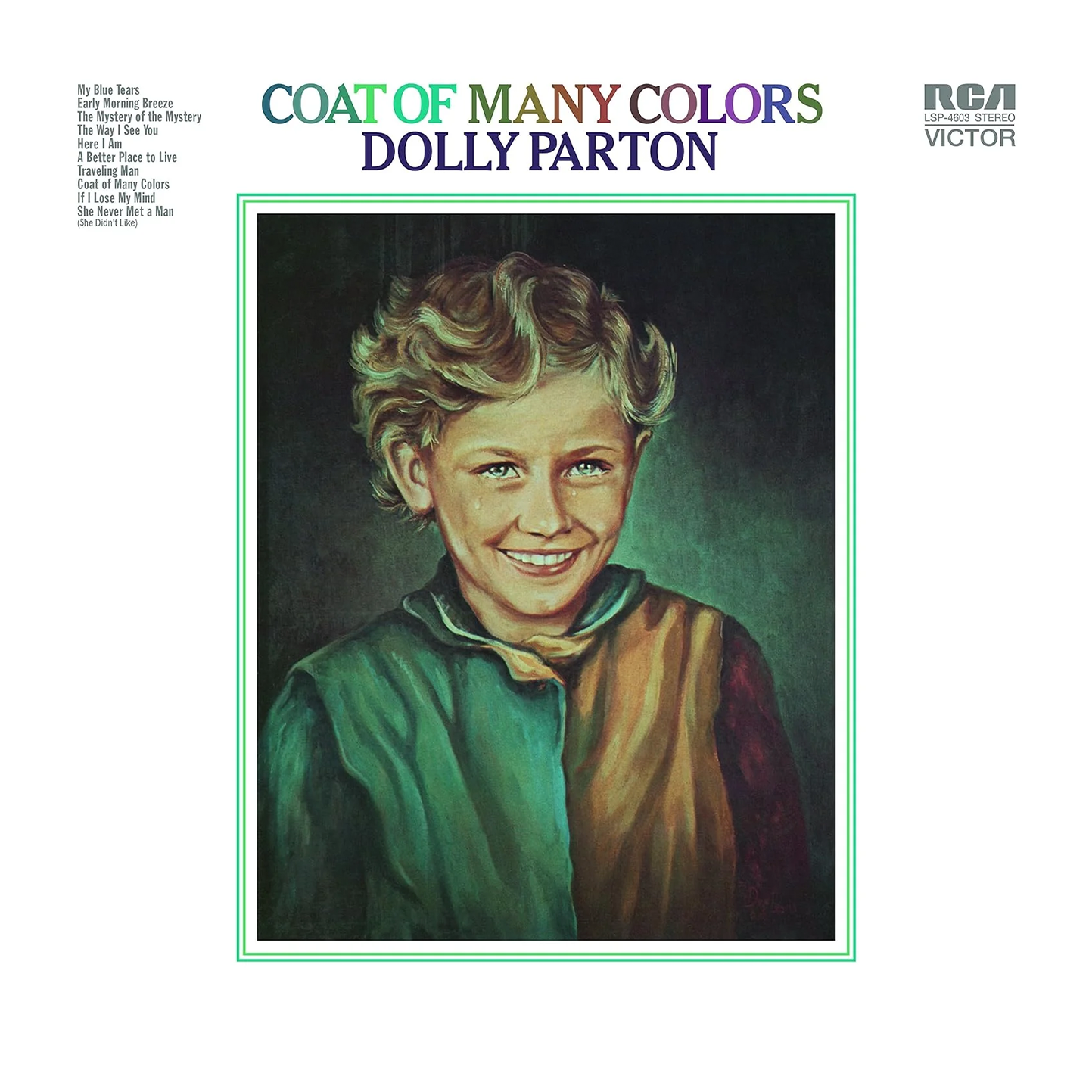
The album cover for Dolly Parton's Coat of Many Colors on RCA Victor, featuring a painted portrait of a smiling child in a multicolored garment.

“Early Morning Breeze” (1971)

My friend Usamah is probably the most aloof person I consider a close friend. Many times, in order to figure out what’s going on in his life, I ask what songs feel particularly moving to him and triangulate from there. When we were texting about Dolly’s passing, he sent over “Early Morning Breeze,” (opens in new window) from 1971’s Coat of Many Colors—a gentle, lilting folk song about reveling in natural beauty as a way of getting through the slog of your daily life. I thought it was a nice insight into the perspective of a friend who, for all his reservedness, has been known to be deeply moved by a striking sunset—and, I suppose, by the asters and the dahlias. That’s the gift of much of Dolly’s music, which is plainly stated yet deeply observed and felt—it’s the kind of thing you can text to your friend without thinking too much about it, while also showing them who you are.—Vrinda Jagota

A cassette tape of Dolly Parton's Real Love on RCA, with a soft-focus portrait on the cover and a track listing printed on the lower half of the case

“I Hope You’re Never Happy” (1985)

The mid ’80s are not generally regarded as a high point of Dolly Parton’s musical career. Though her songwriting instincts remained as country as could be, her records came adorned with the slick synthesizers and bouncy rhythms of the era’s pop music. Radio listeners might not even know that she was still writing with her same old humor and pathos, because RCA Victor, her label since the late ’60s, was now picking songs by slick Nashville pros as singles and relegating her own material to album-track status. Which is why the best song on 1985’s glossy Real Love, her final album for RCA, is tucked in at the end.

“I Hope You’re Never Happy” (opens in new window) is a little softer than its fantastically bitter title would have you believe, but not much. In the first verse, Parton plays the role of the dignified ex, sending her lover off with a smile and good tidings. “I wish you all that you wish for,” she begins quietly, then turns up the brass for the twist: “But only if you’re with me.” The arrangement is almost sinister in its chipperness. Keyboards chime malevolently; in the chorus, an honest-to-god reggae upstroke arrives to goad any man who would dare cross Dolly. (The ’80s were crazy.) As “I Hope You’re Never Happy” goes on, a subtler second twist reveals itself. This isn’t a breakup song at all; it’s a song about the singer’s own jealousy and possessiveness, as well as a plea, and a warning, to a guy she genuinely hopes will stick around despite it all. If he doesn’t? May the Lord have mercy on him.—Andy Cush


Join our community