Collected

Three Influential IMAX Films, Including the 1976 Movie That Made Christopher Nolan an Obsessive

What we’re obsessed with in craft and culture. This week, contributor Chris Stanton writes in about three influential IMAX films that changed the way the movies are made.


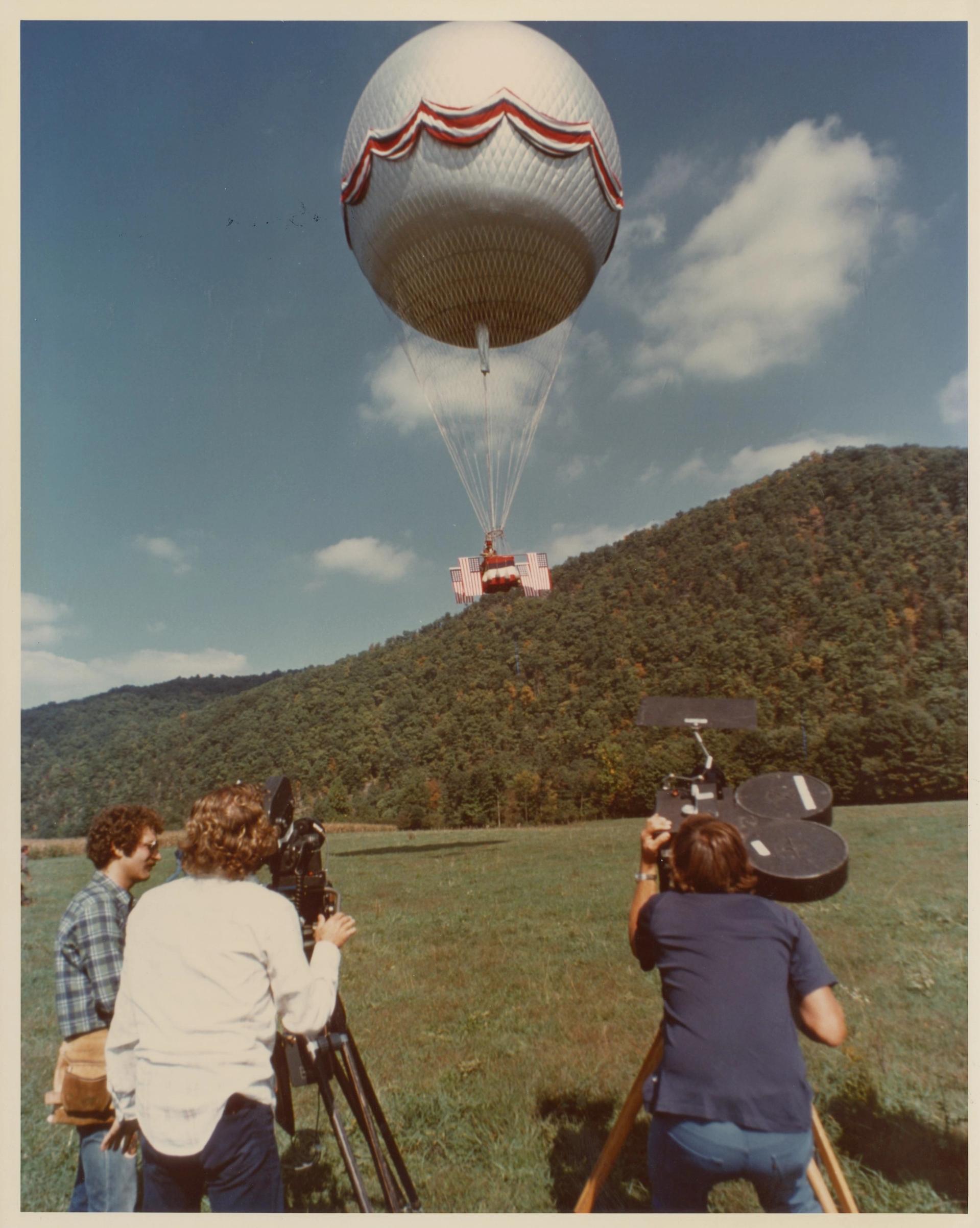
People behind the camera filming a hot air ballon.
Credit: Courtesy of MacGillivray Freeman Films

To Fly! (1976)

Most early IMAX films were nature documentaries designed to transport museumgoers for half an hour as they rested their feet. The theaters had been built as extensions of museums, science centers, and aquariums, with the massive screens functioning as multimedia exhibits. To Fly! premiered in one of them in 1976: the Smithsonian’s National Air and Space Museum.

Only 27 minutes long and relegated to the cinematic silo of institutional didacticism, the movie nevertheless has to be counted among the most successful and consequential short documentaries ever made. It tells the story of American innovation in flying, tracking the evolution from 19th-century ballooning to a space-rocket launch in 1975. Codirectors Jim Freeman and Greg MacGillivray mounted an IMAX camera to airplanes and helicopters, at one point flying a chopper through the St. Louis arch. (No permit required for that one back then, as MacGillivray recalls. (opens in new window) The film has had a long, strange legacy, keeping IMAX’s lights on with its initial success before playing for 50 consecutive years (and counting) at the National Air and Space Museum IMAX—now called, in true D.C. fashion, the Lockheed Martin IMAX.

To Fly! was also the IMAX activation point for Christopher Nolan, who saw it in Chicago as a kid and couldn’t shake the experience. “There was a moment in the film where we're flying over a ridge, and then the camera banks to one side,” Nolan said. (opens in new window) “I looked at the audience and saw that all of the heads were tilted in that direction at the same time.”
Credit: Photograph by Murray Close / Getty Images

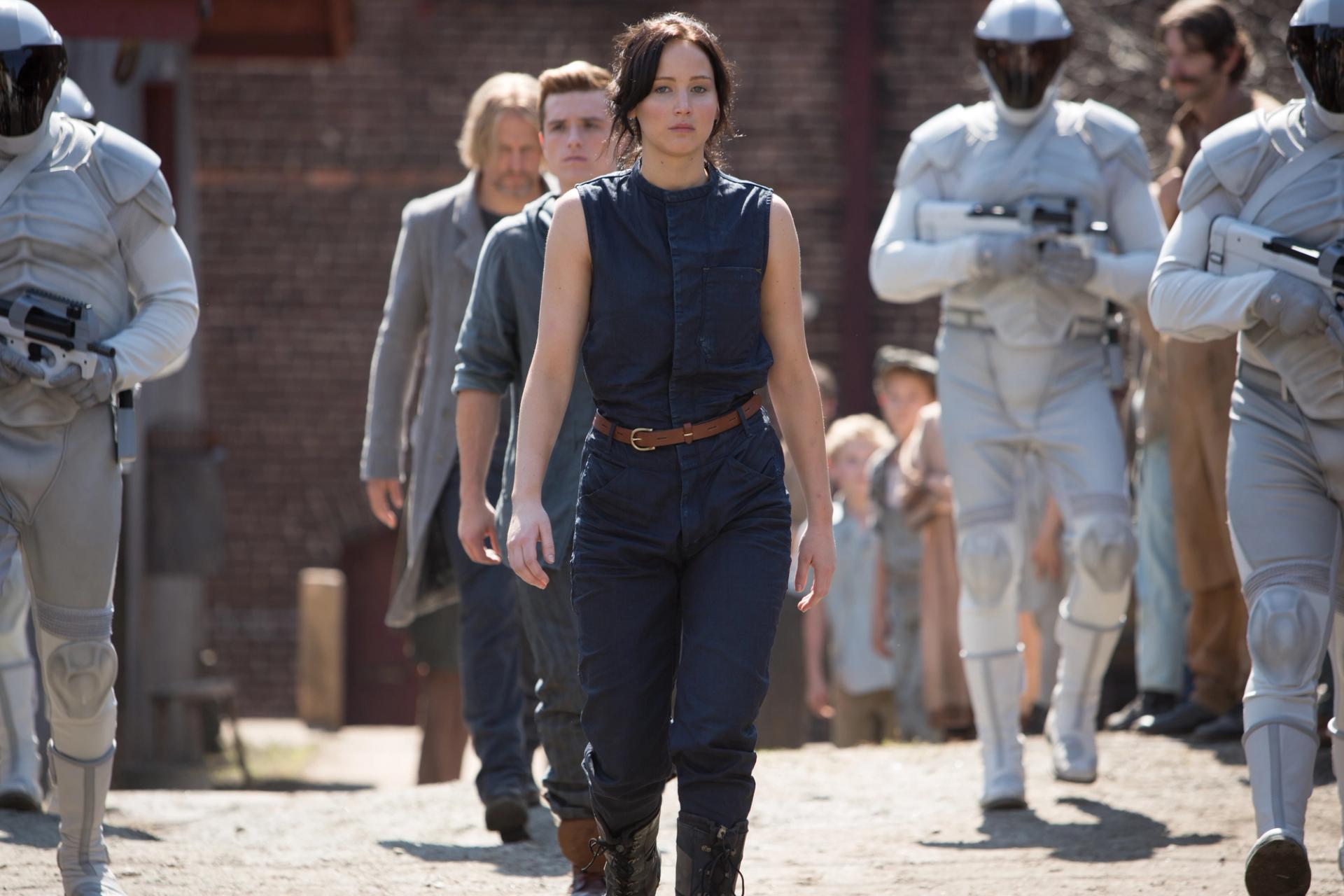
Hunger Games: Catching Fire (2013)

When I reported last year (opens in new window) on IMAX and the rise of its obsessive fandom, every superfan I spoke to cited a Nolan movie as their entry point—Interstellar came up a lot, and several fans characterized an IMAX rerelease of Nolan’s Batman trilogy as a kind of all-night baptism. That was to be expected. What I hadn’t anticipated was the reverence among IMAX nerds for the second Hunger Games movie, Catching Fire.

Up to that point, when Hollywood movies incorporated IMAX 70mm, they often used it by default during action sequences, which benefit from the immersion provided by the expanded aspect ratio (i.e., when the image expands during the movie from widescreen to IMAX 70mm’s tall, 1.43:1 ratio). Catching Fire does something similar, but it pointedly weaponizes that transition in the same way that The Wizard of Oz uses Technicolor—director Francis Lawrence withholds it for most of the movie, then deploys the transition right as Katniss (Jennifer Lawrence) takes an elevator into the massive, overwhelming arena where the titular Games take place. The image expands as the character’s world is being reconfigured and remains expanded for all 48ish minutes in the arena. For the fans I spoke to, that moment made them realize IMAX wasn’t just a cool-looking technology but also a tool for viscerally conveying themes and perspectives.

Credit: Photograph from Pictorial Press / Alamy

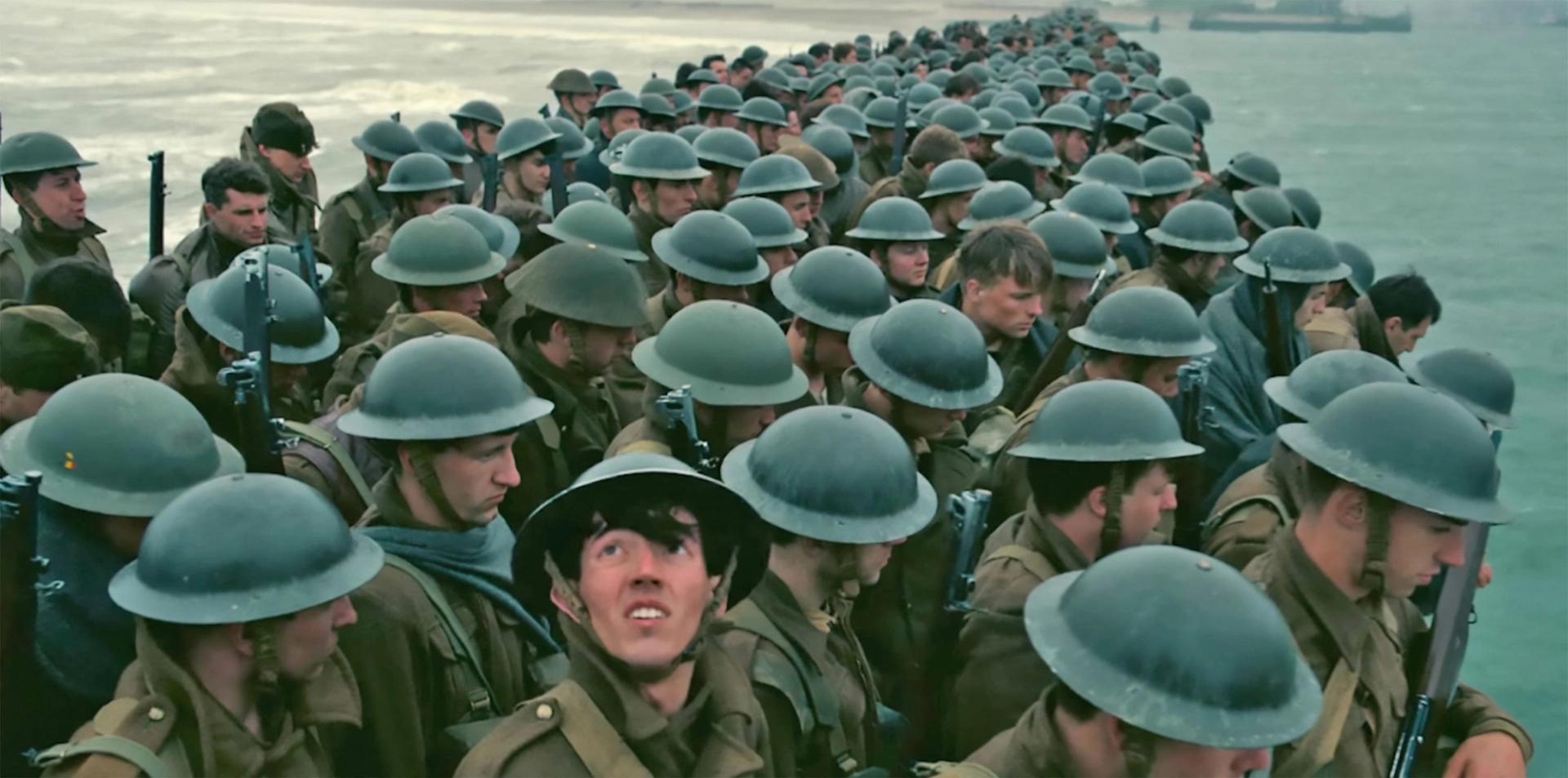
Dunkirk (2013)

I had to include a Nolan on here, so I’m going with one that similarly toys with the aspect-ratio shifts as a means of thematic expression. As one astute IMAX superfan pointed out to me, there’s a moment when Barry Keoghan’s naïve character—sailing toward the battlefield in a civilian effort to rescue stranded soldiers—passes a boat full of traumatized soldiers headed in the other direction. When the camera cuts to the spectacle of the soldiers’ boat, the aspect ratio expands to 1.43:1, then remains expanded even as it returns to Keoghan, reflecting how his world has tripled in size. Those boat and battle sequences also prepped Nolan and cinematographer Hoyte van Hoytema for more extensive work on The Odyssey. After Steven Spielberg and Ron Howard convinced him that filming on a boat was best done handheld, Nolan had van Hoytema shoulder a 54-pound IMAX camera for many sequences, allowing them to “shoot IMAX as if we were shooting with a GoPro camera,” even on a crowded boat. Hopefully the lighter, nimbler Keighley camera developed for The Odyssey gave the Dutch cinematographer’s spine a break.

Things came full circle for Nolan, in IMAX terms, when Dunkirk was released. He saw the film at the Cinesphere in Toronto, the first permanent IMAX theater, and was transported back several decades, to the day in Chicago when he first saw To Fly!. “[T]here's a moment during a dogfight where the camera banks on the plane,” Nolan recently said of that Dunkirk screening. “I looked at the audience, and I could see everybody's head tilting to one side.”

Join our community