Collected

Margiela on Auction, Ayana V. Jackson, and Chiaroscuro Charcoal

What we’re obsessed with this week in craft and culture.

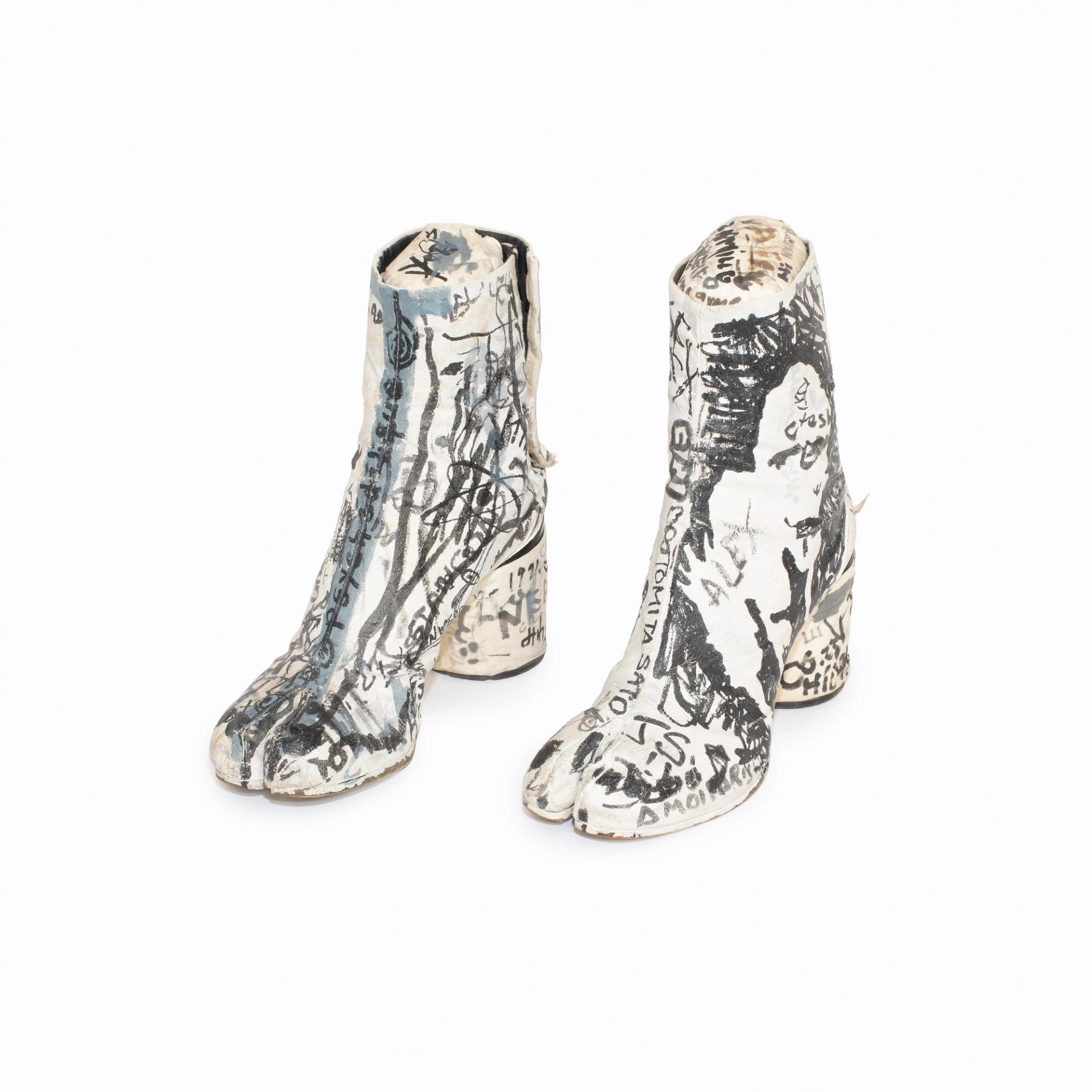
Pair of white split-toe ankle boots covered in black hand-drawn graffiti-style illustrations and handwritten text.
Credit: A pair of graffitied Tabi boots from 1991. ©Marc Chatelard.

Margiela on the auction block

An unusual and tantalizing auction opened in Paris today: a comprehensive sale of objects from Martin Margiela’s archive, curated by the designer himself. The auction features more than 200 photographs, drawings, and objects, including Margiela’s own white work coat, appropriately paint-spattered. The collection mostly spans 1984 to 2008, but also includes later items, like a group of Barbie and Ken dolls dressed in miniature Margiela outfits that the designer made during the pandemic to replace a treasured set of dolls he’d lost.

The auction is a reminder of how iconoclastic Margiela was at so many moments of his career, even if his influence is now so ubiquitous as to seem unremarkable. Take, for instance, the pair of graffitied Tabi boots from 1991. When Margiela first debuted the boots a few years earlier, in his own words (opens in new window), “Nobody liked them.” He kept showing them anyway; now Tabis are incredibly popular (opens in new window), an it girl staple.

Margiela sifted through his past and decided what to share with the world. The auction spans the elusive designer’s fashion career, which ended in 2009 when he left his eponymous label to focus on his own art. It’s also a testament to all the weirdness and mystery of Margiela: Even though he is offering up his own personal effects, I’m not sure how much more I learned about the man behind the brand, who almost never gives interviews and has been publicly photographed only a couple of times in his decades-long career. Of course, the weirdness and the mystery are core to his appeal. It seems he has fun staying in the shadows; I hope he continues to do so.
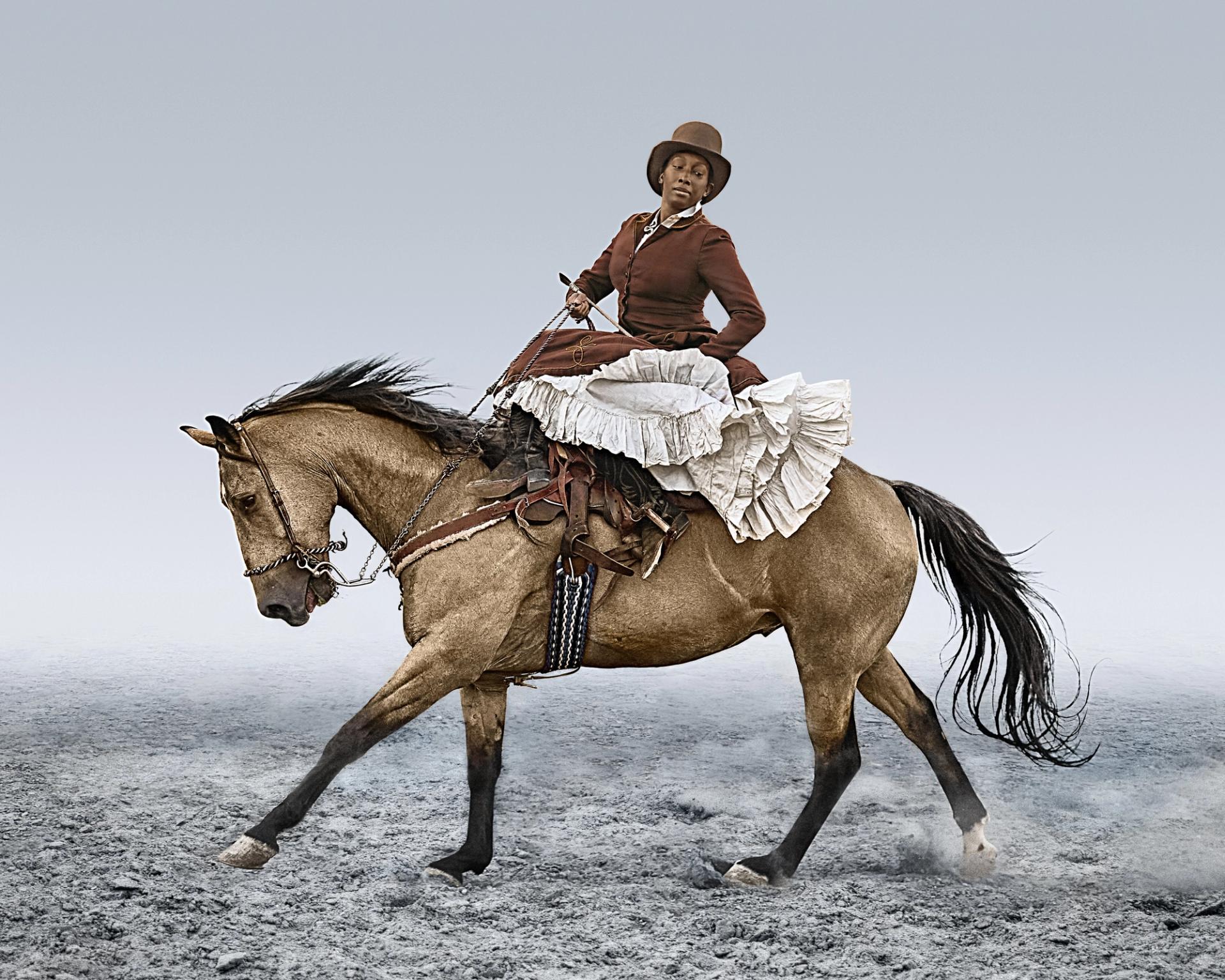
Rider in a Victorian-style dress and top hat astride a galloping horse against a pale, misty landscape.
Credit: Ayana V. Jackson, “To be Black And Female in the Spanish South West, in the Style of Selika Lazevski” (2023). Courtesy of the artist and Mariane Ibrahim.

Ayana V. Jackson at Arles

In 1826 or 1827 in France, Joseph Nicéphore Niépce made the earliest surviving camera obscura photograph in the world, the Niépce Heliograph (opens in new window), now in the permanent collection of the Harry Ransom Center in Austin (and currently on view). To commemorate it, the French government is hosting a bicentennial for the “photographic gaze” (opens in new window) spanning this year and next. Celebrations are already underway at the Rencontres d’Arles photography festival, which opened this week in Provence.

I was thrilled to see that the photographer Ayana V. Jackson (opens in new window) is exhibiting. Jackson is in many ways the perfect artist to consider on the bicentennial of the photograph. She often recreates archival images in dramatic high contrast with an elaborate, almost painterly touch. The work she is showing at Arles features a series of equestrian portraits inspired by figures like Selika Lazevski (opens in new window), and has everything that makes Jackson so compelling: a sense of grandeur and irony, as well as the cinematically staged poses and slightly muted colors that evoke the gelatin silver prints of the late 19th century.

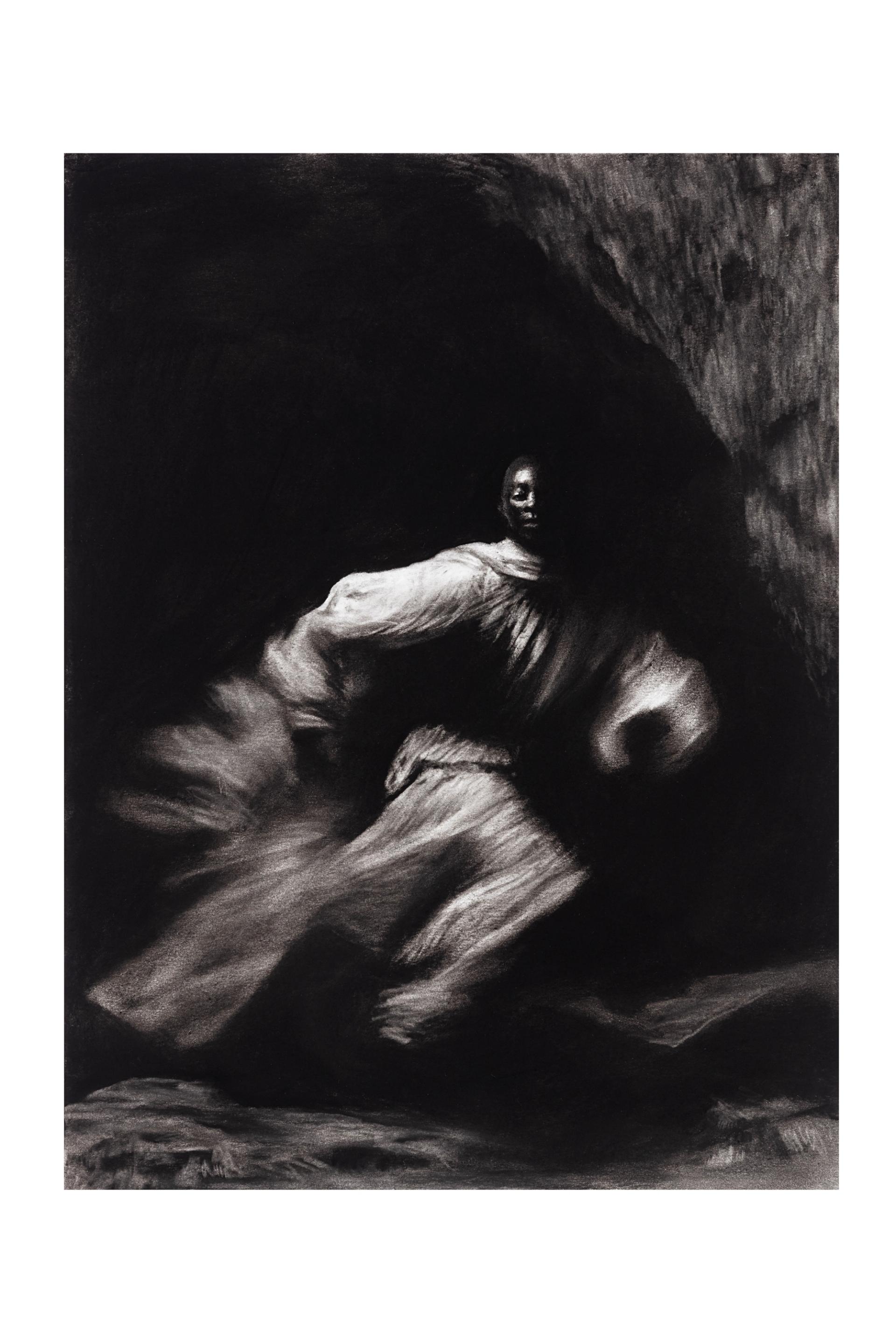
Charcoal drawing of a figure in flowing robes emerging from deep shadow, with sweeping, blurred strokes suggesting movement.
Credit: Gustavo Nazareno, “Capella,” from the series “Passage” (2025). © Gustavo Nazareno. Photograph by Everton Ballardin. Courtesy of GUSN Studio.

Gustavo Nazareno

There are photographs that remind me of paintings and there are paintings that remind me of photographs. Jackson’s work can be the former and Brazilian artist Gustavo Nazareno’s (opens in new window) is sometimes the latter. Nazareno, who is showing at Opera Gallery Paris from now until July 15, uses both oil paint and charcoal, but it is the charcoal works in particular that hypnotize me. Nazareno employs intense chiaroscuro and energetic mark-making; in works like Rafflesia and Capella, from the 2025 series “Passage,” his figures are in motion, and their blurred movement conjures up the eeriness of a daguerreotype in which the subject shifted while the camera was still collecting light.

Join our community