
Collected

Ann Patchett’s New Novel, Stop-Motion Heists, and Paul Klee in New York

What we’re obsessed with this week in craft and culture.

A woman in a green jumpsuit sits in a patterned armchair, smiling gently in a cozy living room.
Credit: Ann Patchett photographed by Emily Dorio.

A new novel for the summer

Ann Patchett’s 10th novel, Whistler, came out this week. I read it in a day and a half. It’s a wry and very moving look at how certain relationships and events from childhood, seemingly forgotten, can burst up again decades later. (But a trauma plot (opens in new window) it is not.) The book’s title comes from a story-within-the-story about a woman whose horse, named Whistler, saves her from death in the wilderness. It’s told to the story’s protagonist, Daphne, by her stepfather, a book editor who gleaned the dramatic tale from a proposal that had landed on his desk. I was delighted to discover from this interview (opens in new window) with Patchett that the embedded narrative about Whistler the horse is in fact the plot of a novel she had tried to write. Although she ended up abandoning that book after “an awful lot of research,” she found a way to integrate it into what became Whistler. How’s that for adaptive reuse?
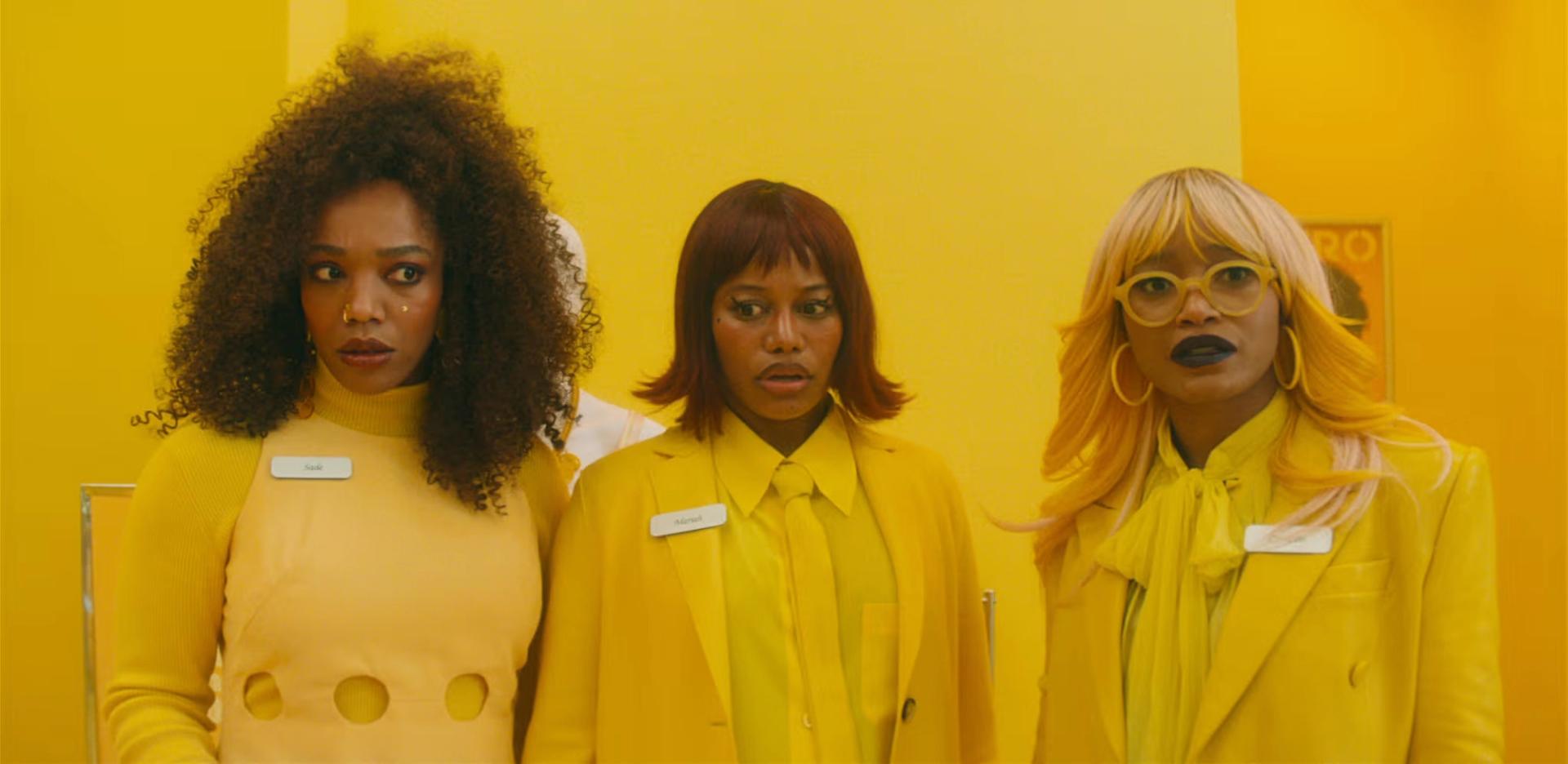
Three women in matching yellow-toned outfits stand in a vivid yellow room, staring off-camera with surprised expressions.
Credit: Boots Riley’s new film “I Love Boosters” (2026). Courtesy of Neon.

Stop-motion chaos

One thing we can all agree on is that Boots Riley’s psychedelic new Marxist heist film, I Love Boosters, could only have been made by Boots Riley, and definitely could not have been made by AI. The movie is cartoonish and sometimes shocking, in the best way, with a wackadoodle plot, absurdist gags, outlandish sci-fi contraptions, and raucous, colorful costumes designed by the inimitable Shirley Kurata (opens in new window). Much of the movie’s maximalism is handmade, including stop-motion animation and a car chase in miniature (opens in new window).

The filmmaker’s commitment to the tactile earned the praise (opens in new window) of ardent stop-motion fan Guillermo del Toro, and Riley’s behind-the-scenes (opens in new window) posts of physical set building are a treat. Riley did not (opens in new window) use CGI, saying (opens in new window) it looks “too smooth in the wrong ways,” nor did he employ AI in any measure. In that light, his polite but spirited debate with Parliament-Funkadelic frontman George Clinton about whether they can and want to use AI in their work—read it here (opens in new window)—is an intriguing companion piece for the movie. “When I listen to music or look at a piece of art, it’s not about how technically good it is or how it sounds, it’s about the passion of the artist,” Riley argues. “And AI can’t do passion.”

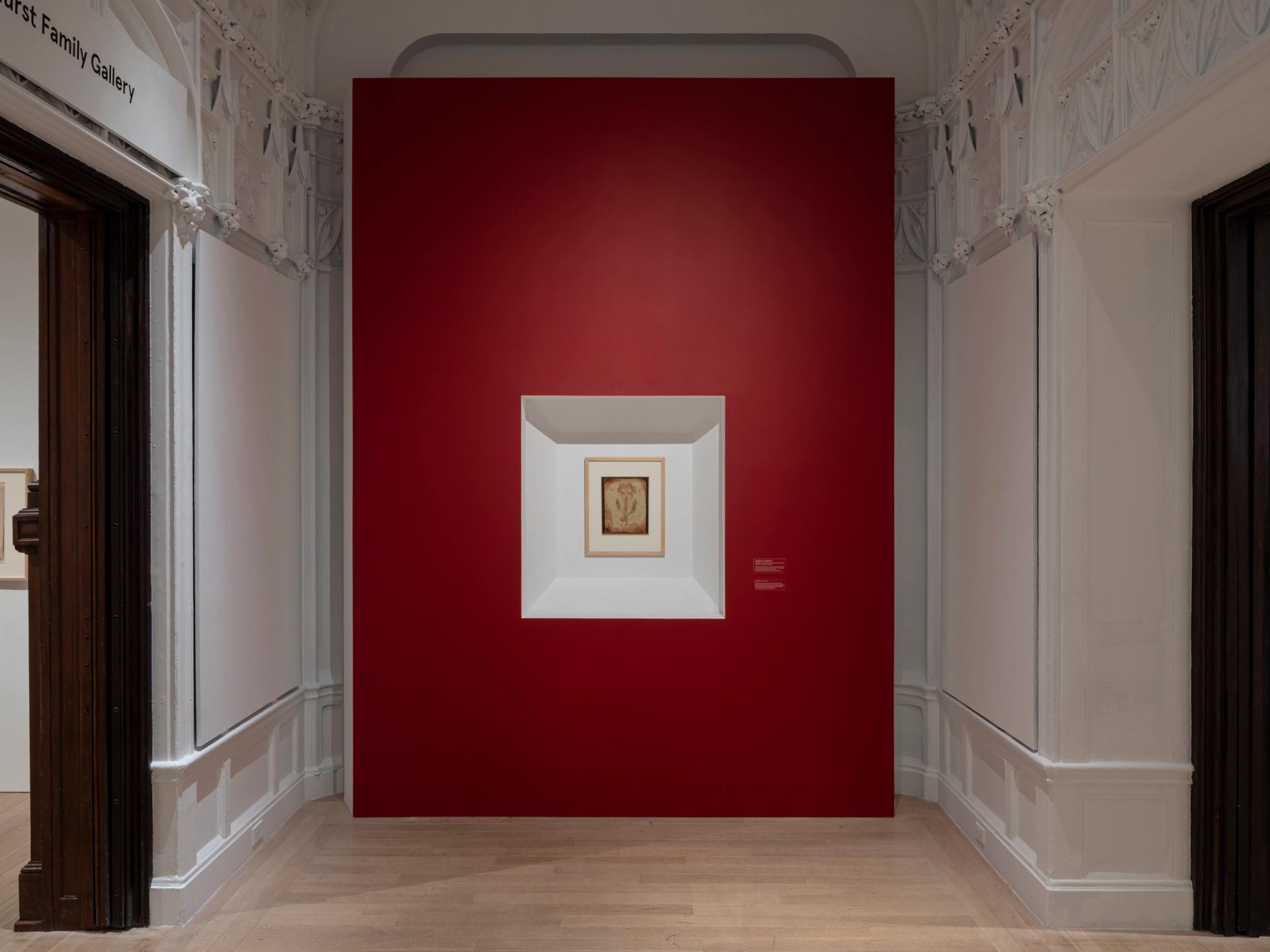
A small framed artwork is displayed in a recessed niche within a large deep-red wall inside an ornate gallery space.
Credit: “Angelus Novus” in “Paul Klee: Other Possible Worlds” at the Jewish Museum. Photograph by Kris Graves Projects / Julian Calero.

The angel of history

Did anyone else get to read the German theorist Walter Benjamin in college? If so, do you remember the “angel of history” from his disquieting final work, On the Concept of History (opens in new window)”? Well, if you’re in New York, you can see the Paul Klee work that inspired it: Angelus Novus is on view (opens in new window) at the Jewish Museum until July 26. I must admit, the first time I saw an image of Angelus Novus projected onto a screen in a dim classroom, I was perplexed: This modest, slightly goofy figure was what inspired Benjamin’s haunting prophecy? (A sampling: “His face is turned toward the past. Where we perceive a chain of events, he sees one single catastrophe which keeps piling wreckage and hurls it in front of his feet.”)

But seeing it in person was different. In the exhibition, Angelus Novus hangs on a wall of its own, and its placement emphasizes its small size. The paper is yellowed and smudged with ink. It may have (opens in new window) just been something Klee doodled for his son. But it captivated the young, broke Benjamin, who borrowed money to buy it and kept it with him for more than a decade, until he had to flee the Nazis in 1933, at which point he gave it to a friend for safekeeping. He never saw it again, but it remained indelible in his mind: Seven years after parting with Angelus Novus and only months before his death, he wrote, “His eyes are staring, his mouth is open, his wings are spread. This is how one pictures the angel of history.”

Join our community