Collected

Queer Yearning, Creative Companions, and a Star-Spangled Candle

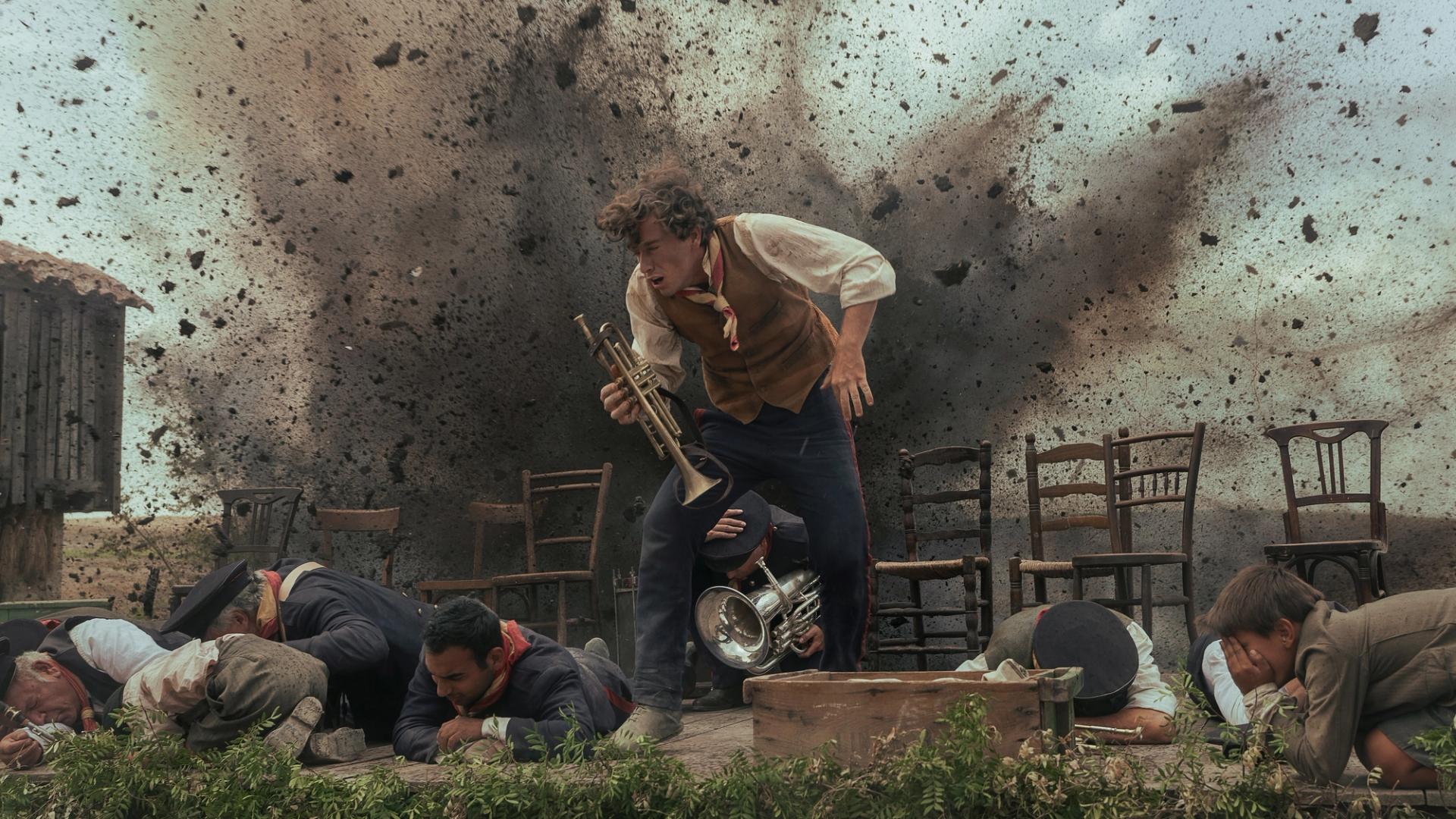
A horizontally oriented film still of a group of men sheltering from an explosion; one man with light skin tone and brown hair stands in the center holding a trumpet.
Credit: Courtesy of Netflix.

Epically queer

If you aren’t already familiar from all the Oscars buzz, La bola negra is a new epic from director duo Los Javis that, at 159 minutes in length, braids together three stories of queer male longing across three eras of Spain: the suffocating homophobia of 1932, the fervent nationalism of 1937, and the liberated but apathetic Grindr era of 2017. Despite the film’s elaborate intercut storytelling, its most memorable moments are the gorgeously lush montages during which the plot is allowed to stand still—nude soldiers running with wild abandon beneath fireworks on a deserted beach at night, a tightly shot flamenco scene that drops the viewer right into the heart of a hypnotically thumping seguiriya song. In another stunning musical sequence, Penélope Cruz plays a cabaret singer performing for soldiers with a deliciously flirtatious and demanding stage presence (and wig), akin to early Madonna. Perhaps ironically for a film that’s so much about masculinity, the women’s performances throughout are the strongest. Lola Dueñas, in particular, steals the film as a fantastically embodied addict and mother who leaves her son emotionally stranded after being abandoned herself. All in all, La bola negra is not a perfect film, but it’s beautifully ambitious and bursting with feeling—worth watching in theaters simply to see its brightest moments at their colossal intended scale.—Sarah Burke
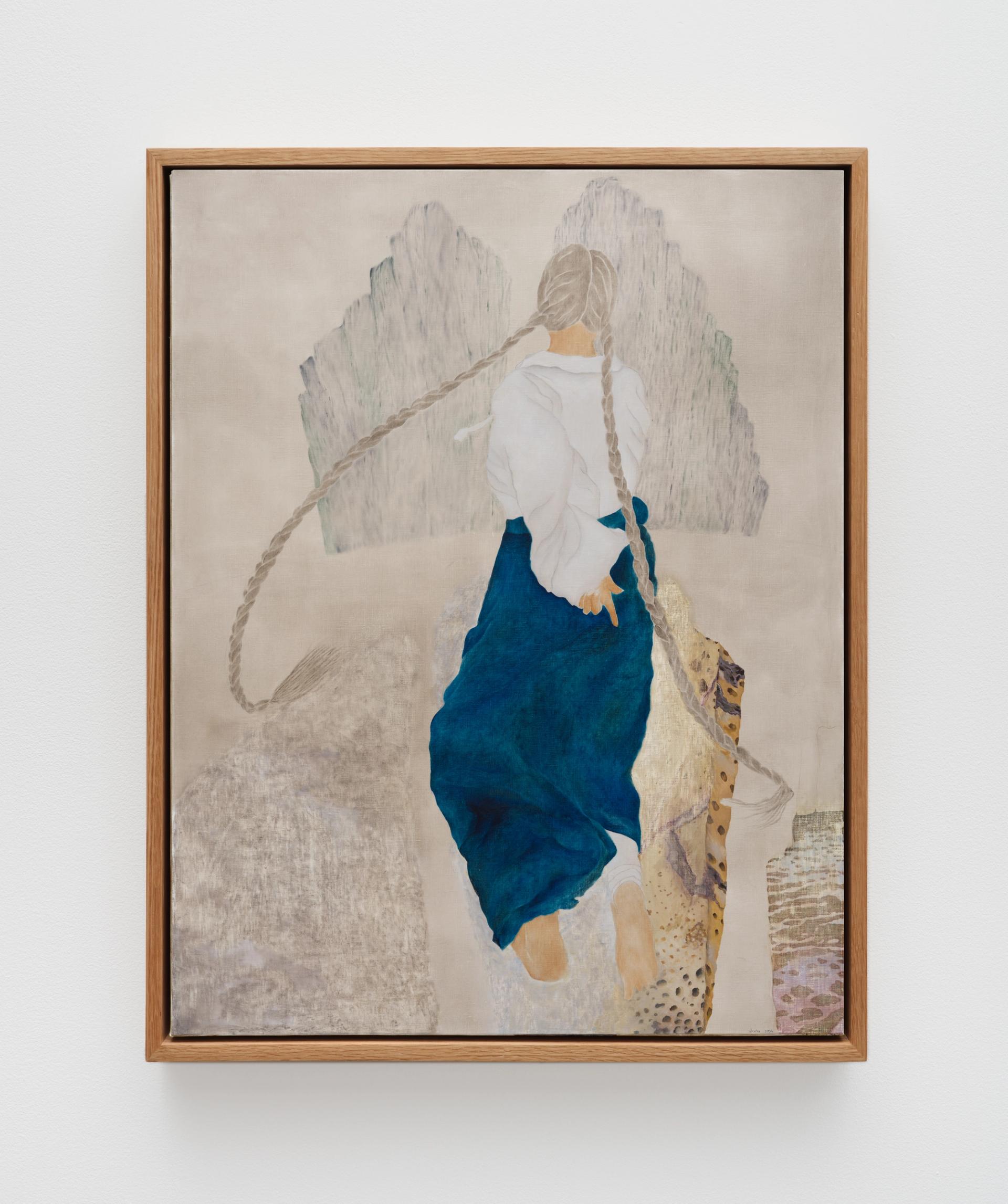
A vertically oriented painting of a figure in a blue skirt and white blouse facing away from the viewer while walking into a river, their hair extending out in two long white braids.
Credit: Cecilia Vicuña, “Dos trenzas” (2026). Photograph by Studio Kukla. Courtesy Cecilia Vicuña and Lehmann Maupin, New York, Seoul, and London.

Received ideas

In 1969, the 21-year-old Cecilia Vicuña and her friend Coca Roccatagliata visited Leonora Carrington in Mexico City. Vicuña stayed only a few days on her way home to Chile, but Coca lingered behind, studying the elder artist’s process. Back in Santiago she passed on to Vicuña what she’d learned: how to make a thin wash of burnt-sienna oil, left to half-dry, and how to draw an outline with a fine brush in pale, whitish color. Nothing could be revised or painted over. Modeled on the flat devotional images that Spanish colonizers taught Indigenous painters to produce, the result was a figure floating on a liquid ground, every stroke—and every mistake—left visible. Before starting a painting Vicuña imagined her pictures whole, “like in a vision,” and Carrington’s technique offered a way to transfer her epiphanies intact. So she adopted the method for her calcomanías—colonial saints recast as Chilean goddesses and garlanded revolutionaries.

“Leonora Carrington & Cecilia Vicuña,” on view at Lehmann Maupin in New York (opens in new window), is the first exhibition to show the two artists together, revealing their shared lineage: Carrington’s Eye Witness (1987) and a 1954 study for Rueda de los caballos hang beside new Vicuña work, including Dos trenzas. Both distrusted automatism, treating the image as something received (even divined) and then carefully transcribed. They part ways over matter. Carrington cooked egg into pigment and sealed her hybrids in a luminous state of permanence; Vicuña’s knots and sticks are made to be undone by water.

The pairing casts light on shared technique—and shared vision—between two artists enjoying the height of institutional attention. Vicuña’s “Quipu of Encounters: The Dream of Water” is at MOCA Grand Avenue through June 6, and “Living Threads” is at Whitechapel through February 14, following Carrington’s 126-work retrospective at the Musée du Luxembourg this year. A second chapter opens in San Francisco in January.—Will Fenstermaker

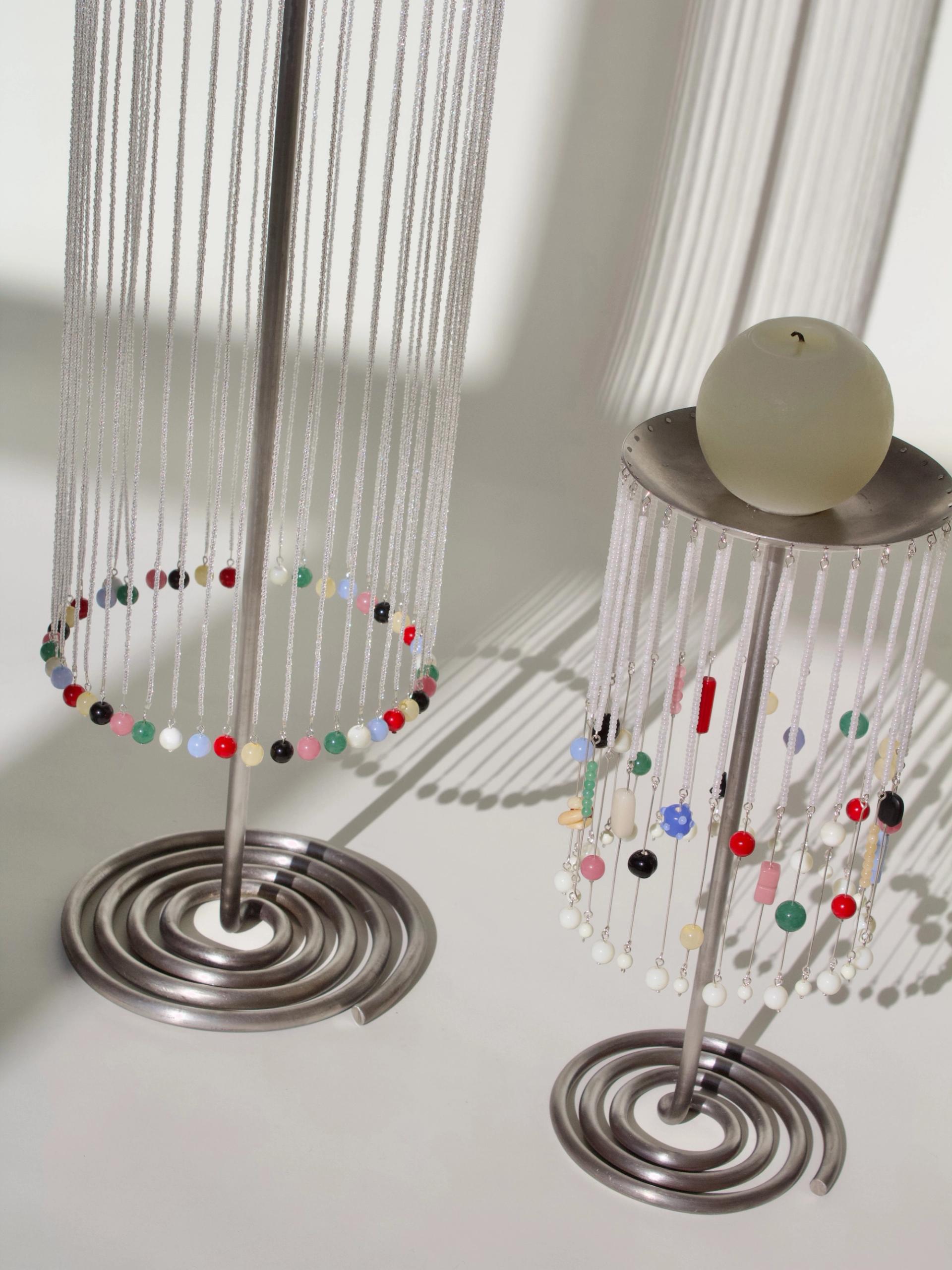
A vertically oriented photo of two silver candelabras with spiral bases and long spangles with colorful beads at the tips.
Credit: Courtesy of Sophie Collé and Emily Etta.

Beholding a candle

My love for a flickering open flame is positively moth-like, to the extent that I have a running Notes app list of all my favorite candles. While I’m less of an expert in candle-adjacent art, a couple of shows have set me alight recently. Earlier this fall, Ellie Rines Gallery in Manhattan (formerly 56 Henry) showed an eclectic display (opens in new window) of architectural candelabras by the artist Christopher K. Ho that located the overlap between functional object and monument (and between gallery opening and fire marshal’s cautionary tale). And just last week, the Brooklyn gallery Piscina opened “Candelabra Palaver,” (opens in new window) an exhibition of more than 80 candle-related objects by various designers. My favorite is a whimsical, spangled candlestand (opens in new window) made by the furniture designer Sophie Collé and jeweler Emily Etta, combining Collé’s signature wavy organic forms with Etta’s mobile-like beadwork. Setting a candle atop one of these would feel like putting it in the world’s most fabulous flapper skirt—just my kind of putting on the Ritz.—Olivia Horn

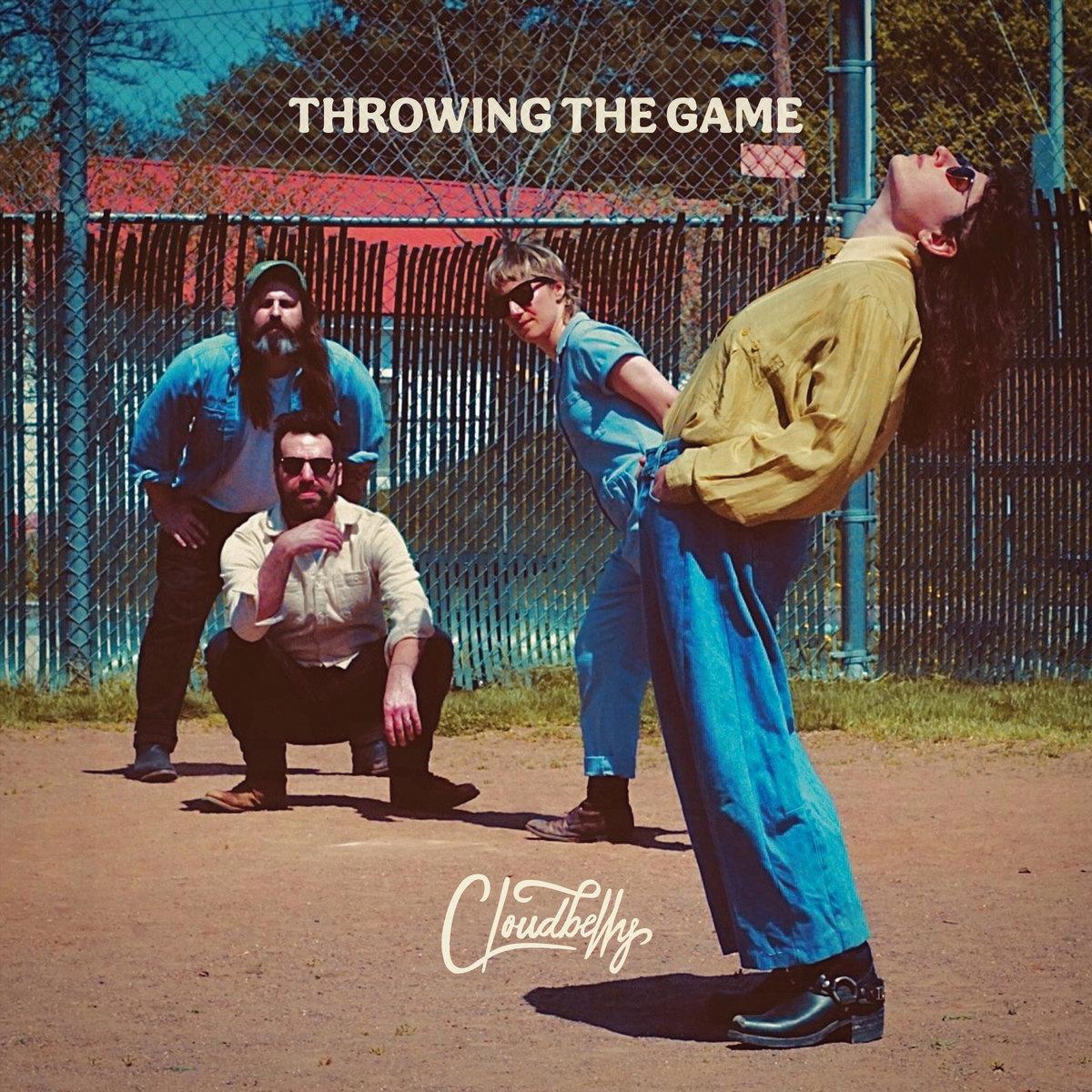
A square photo of four people, all with light skin tone, crouching and standing on a patch of dirt in front of a silver fence. The person closest to the camera throws their head back to the sky.

Cloudgazing

The newest release from indie folk quartet Cloudbelly, Throwing The Game (opens in new window), is tender in all senses of the word: Though the record overflows with love and care, an ache lingers close to the surface of its skin. There is grief here—growly, danceable guitar riffs on “Oh, Antarctica!” belie the climate anxiety and bittersweet ephemerality at the song’s core, while trembling violin scores the unraveling of a friendship on “Phantom Lung.” But there is celebration, too—the album is alive with a spirit of everyday revelry, much of it deliciously queer (“Drag takes what love can do, puts it in overdrive,” vocalist Corey Laitman muses on “Star-Making Machinery”).

Laitman’s lyrics are both confessional and abstract, as if you’re reading their journal or listening in on their silent, late-night supplications (“Holy gods inside me / why can no one love me / without running aground? O, violent sound,” they wonder on “Phantom Lung”). Producer and drummer Nate Mondschein’s detailed arrangements weave the specificity of Laitman’s lyrics into the music itself, from the shimmering strings on “You, The Dark & I” to the quiet ticking of a turn signal on “Throw the Game.” On the penultimate track, “Up in Smoke,” vocal layers blossom and multiply, pierced through by a melancholy guitar solo that viscerally captures the “sweet loneliness” Laitman sings of. Heartfelt but unvarnished, Throwing the Game explores the sharp edges of human connection even as it exalts the joy we find in it.—Mer Wade