Collected

Three Must-See Fall Art Exhibitions

What we’re obsessed with in craft and culture. This week, our fall must-sees: Taryn Simon takes over the Guggenheim, Gemini G.E.L. turns 60, and Georgia O’Keeffe leaves the flowers behind.

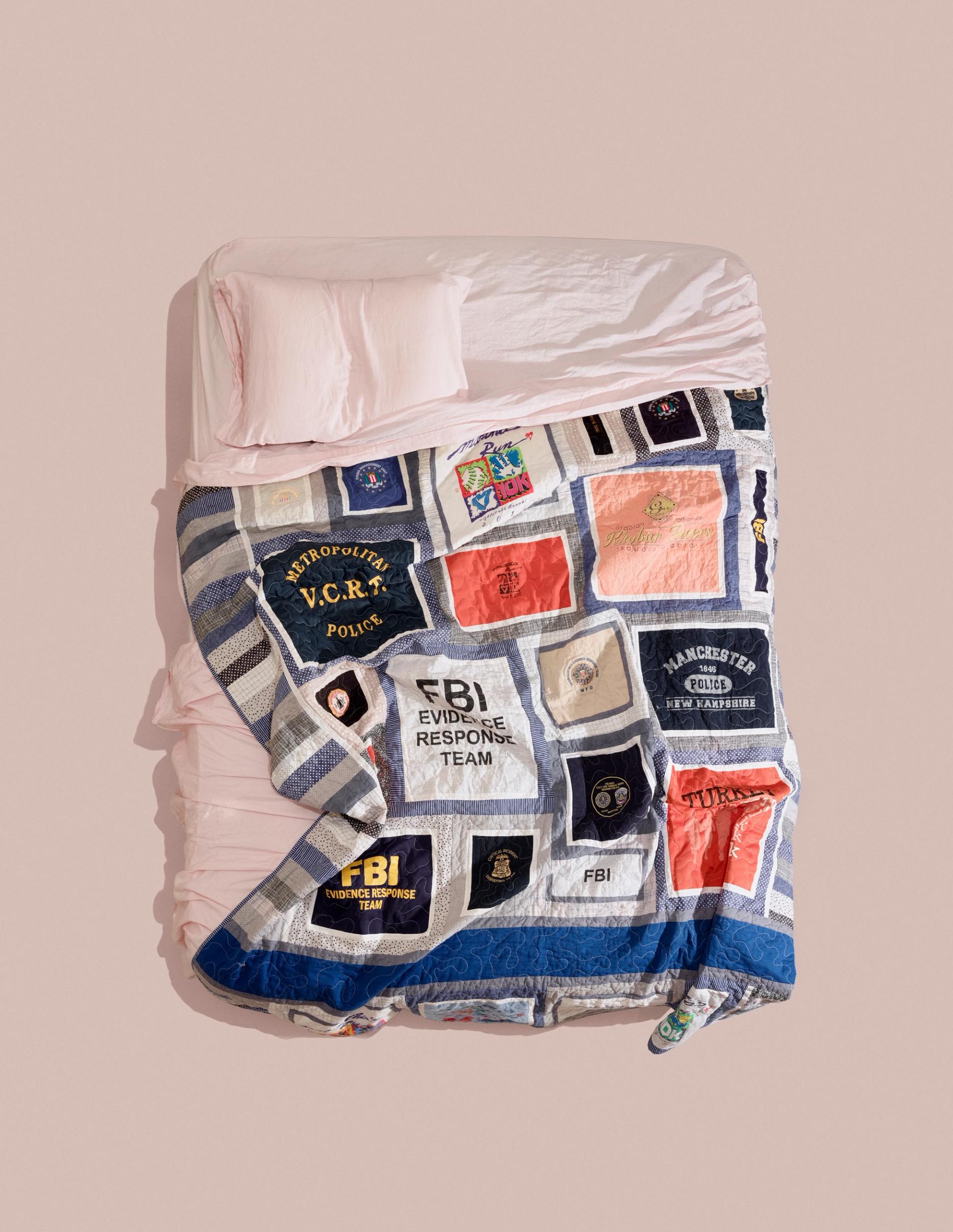
Color photo of a bed viewed from above, with pink sheets and a patchwork quilt made from law enforcement T-shirts and patches
Credit: Taryn Simon, detail of “I sleep under it every night” (2026). © 2026 Taryn Simon

Person of interest

For more than two decades, Taryn Simon has documented the banal dimensions of power. In An American Index of the Hidden and Unfamiliar (2007), she photographed radioactive capsules at a nuclear-waste facility, a black bear hibernating in her den, and dozens of other sites the public rarely sees. Paperwork and the Will of Capital (2015) saw her rebuilding the bouquets that sat between heads of state as they signed deals on arms, railways, and satellite navigation. Her new project began in some FBI files from the 1990s. There, she came across an agent with a Forrest Gump–like gift for being at the center of the action. He shows up as an extra in The Silence of the Lambs, and decades later he is working the 2024 Republican National Convention. Simon spent roughly 10 years interviewing him.

The result is “Father Country I Do Love You,” (opens in new window) winding up the Guggenheim’s ramp across 42 chapters. Each pairs narrated text with photographs, video, and sculptures that wander off on tangents, exploring things like clothing designed by a relative connected to the Marion Barry sting and memorial renderings tied to an abortion-clinic bombing. The FBI agent is never named. At each end of the ramp, teak installations are dedicated to Simon’s father, who worked for the U.S. government abroad and who later, improbably, went into arcade games. The two biographies blur until it’s hard to say whose secrets you’re seeing.

This is reportedly (opens in new window) the largest debut of new work in the history of the Guggenheim, a museum known for its extensive retrospectives, and the first time a lens-based artist has taken over the entire rotunda. The works will enter the museum’s permanent collection, an apt home for work about what institutions keep and what they bury.

“Taryn Simon: Father Country I Do Love You” is on view at the Guggenheim, New York, through March 14, 2027.
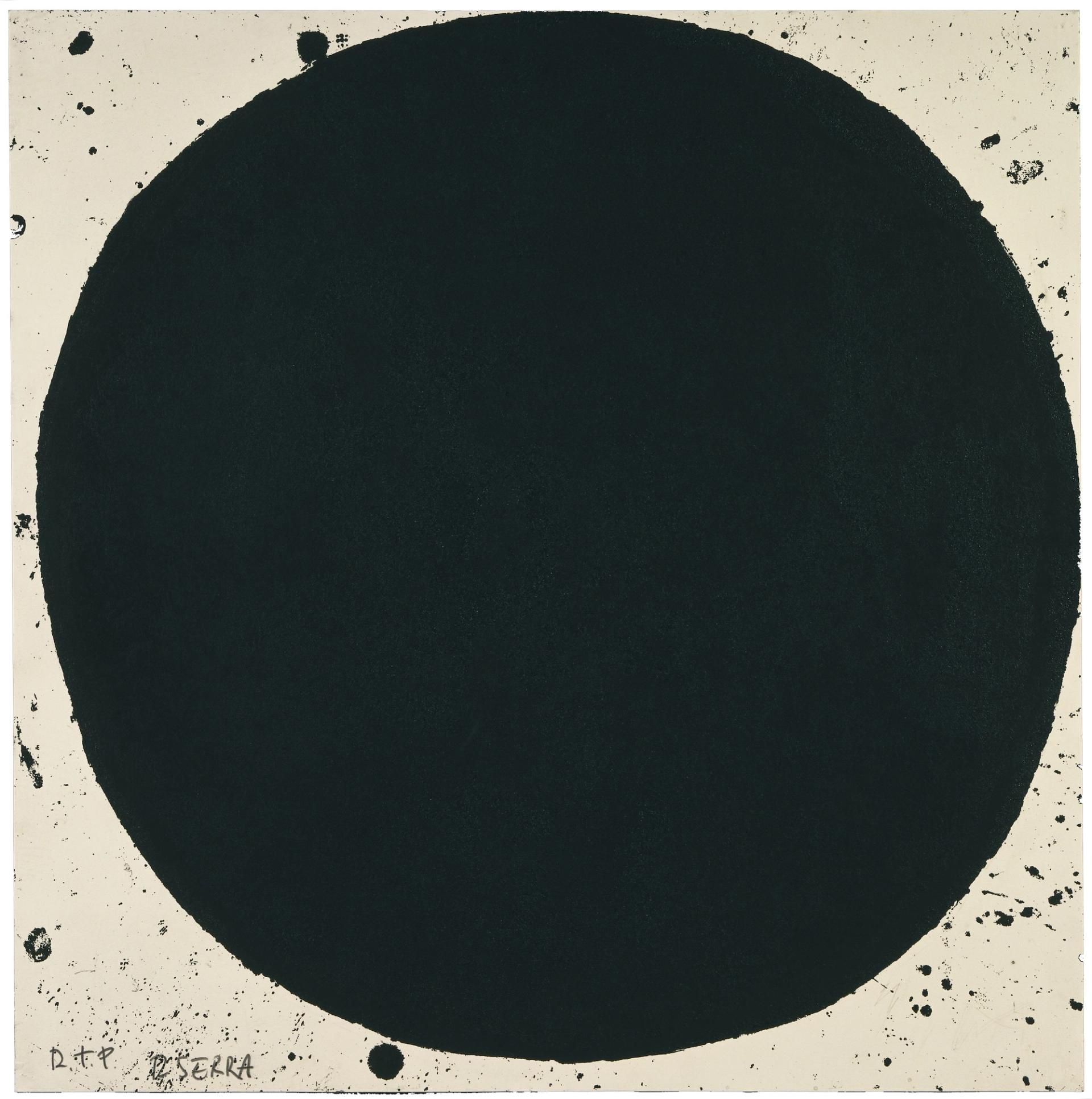
Black-and-white print of a large, solid black circle on cream paper, with ink spatter marks scattered around the edges and a handwritten annotation reading "R.T.P. R. Serra" in the lower left corner.
Credit: Richard Serra, “B.B. King” (1999). © 1999 Richard Serra and Gemini G.E.L.

Pressed for time

In 1966, USC fraternity brothers Sidney Felsen and Stanley Grinstein went into business with master printer Kenneth Tyler in Los Angeles. They bet that painters and sculptors would treat a print shop as a second studio, not a reproduction service. They were right. Their early roster of Josef Albers, Robert Rauschenberg, Jasper Johns, and Claes Oldenburg reads like a syllabus of postwar art, and the workshop’s first results were not exactly modest. Rauschenberg’s Booster (1967) was, at the time, the largest hand-pulled lithograph ever made. Oldenburg’s Profile Airflow (1969), a transparent, flexible relief of a streamlined car, took two years to engineer. Richard Serra went on to make more than 300 editions there over half a century, many in close collaboration with master printer Xavier Fumat.

“(Almost) Every Year: Sixty Years of Printmaking at Gemini G.E.L.” (opens in new window)plays the greatest hits. Curators Susan Dackerman and Helen Molesworth chose a work from nearly every year of the shop’s existence and hung them in chronological order, framing the show around “changing cultural contexts, artistic strategies, and individual styles” instead of individual careers. Albers and Ellsworth Kelly work through color. In the 1970s, Johns, Ed Ruscha, and Ed Kienholz made art out of light bulbs, cheese wedges, and gasoline. Julie Mehretu’s Six Bardos: Dream State (2018) brings the shop’s history to the present. Molesworth credits Gemini’s invitations with helping to land its artists in the canon. The founders’ daughters now run the workshop, along with Joni Moisant Weyl, Felsen’s widow.

“(Almost) Every Year” is on view at Gemini G.E.L., Los Angeles, through January 8, 2027.

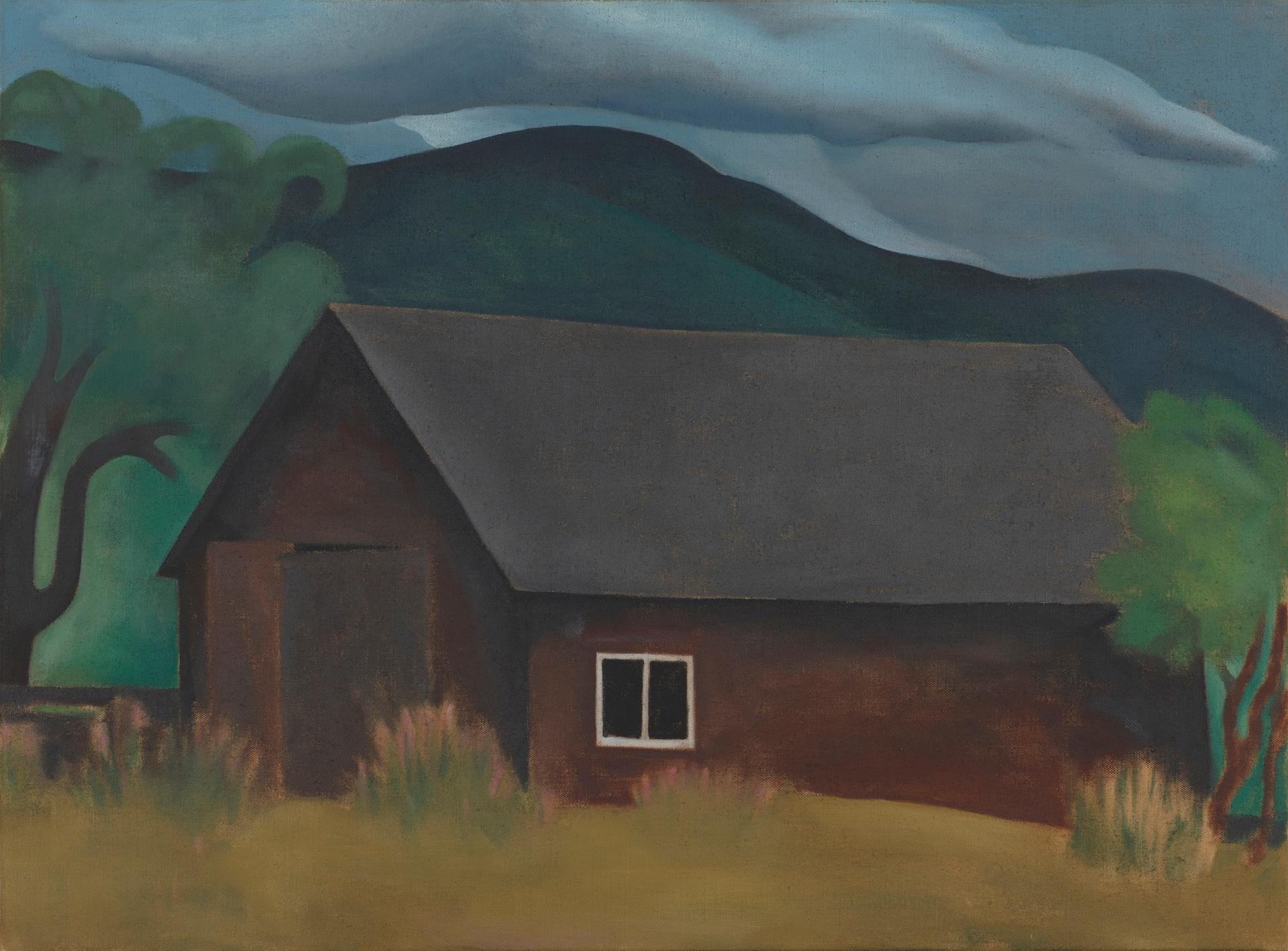
Painting of a dark brown shingled cabin with a steeply pitched gray roof and a single white-framed window, set against layered dark green mountains and a cloudy blue-gray sky
Credit: Georgia O'Keeffe, “My Shanty, Lake George” (1922). © 2026 The Georgia O’Keeffe Foundation/Artists Rights Society (ARS), New York

House painter

Fans of Georgia O’Keeffe who visit the Detroit Institute of Arts may be disappointed to find that the only painting by the artist in the museum’s magnificent collection is not one of her iconic flowers or abstract oil paintings. It’s the underappreciated Stables (1932). Curator Benjamin W. Colman makes a case for the significance of this squat red barn with an entire exhibition (opens in new window) dedicated to her buildings. About three dozen paintings from the 1920s to the 1960s show barns and shanties around Lake George; Manhattan seen from the 30th floor of the Shelton Hotel, where she lived with Alfred Stieglitz; and the adobe walls of northern New Mexico.

The buildings were a provocation. Of My Shanty, Lake George (1922), O’Keeffe recalled thinking (opens in new window), “I can paint one of those dismal-colored paintings like the men…all low-toned and dreary with the tree beside the door.” The New York canvases, including East River from the 30th Story of the Shelton Hotel (1928) and New York Street with Moon (1925), extend the dare into the city. The skyscrapers have the same close-up severity as her petals.

In New Mexico, her interest became an obsession. She bought her Abiquiú house for a single feature: its door. Then she painted it for years, simplifying the patio each time until it was a flat rectangle on a pale wall, as in Wall with Green Door (1953). The show closes on the poetic Ladder to the Moon (1958), floating free of any building and hovering in the sky.

“Georgia O’Keeffe: Architecture” is on view at the Detroit Institute of Arts through January 3, 2027.


Join our community